

Geothermal energy harnesses the natural heat of the Earth’s interior to generate electricity and provide direct heating. At the end of 2024, the world had about 16,873 MW of installed geothermal capacity spread across 35 countries, led by the United States, Indonesia and the Philippines (ThinkGeoEnergy 2024). What exactly is geothermal energy, and why is it considered one of the most reliable renewable sources on the planet?
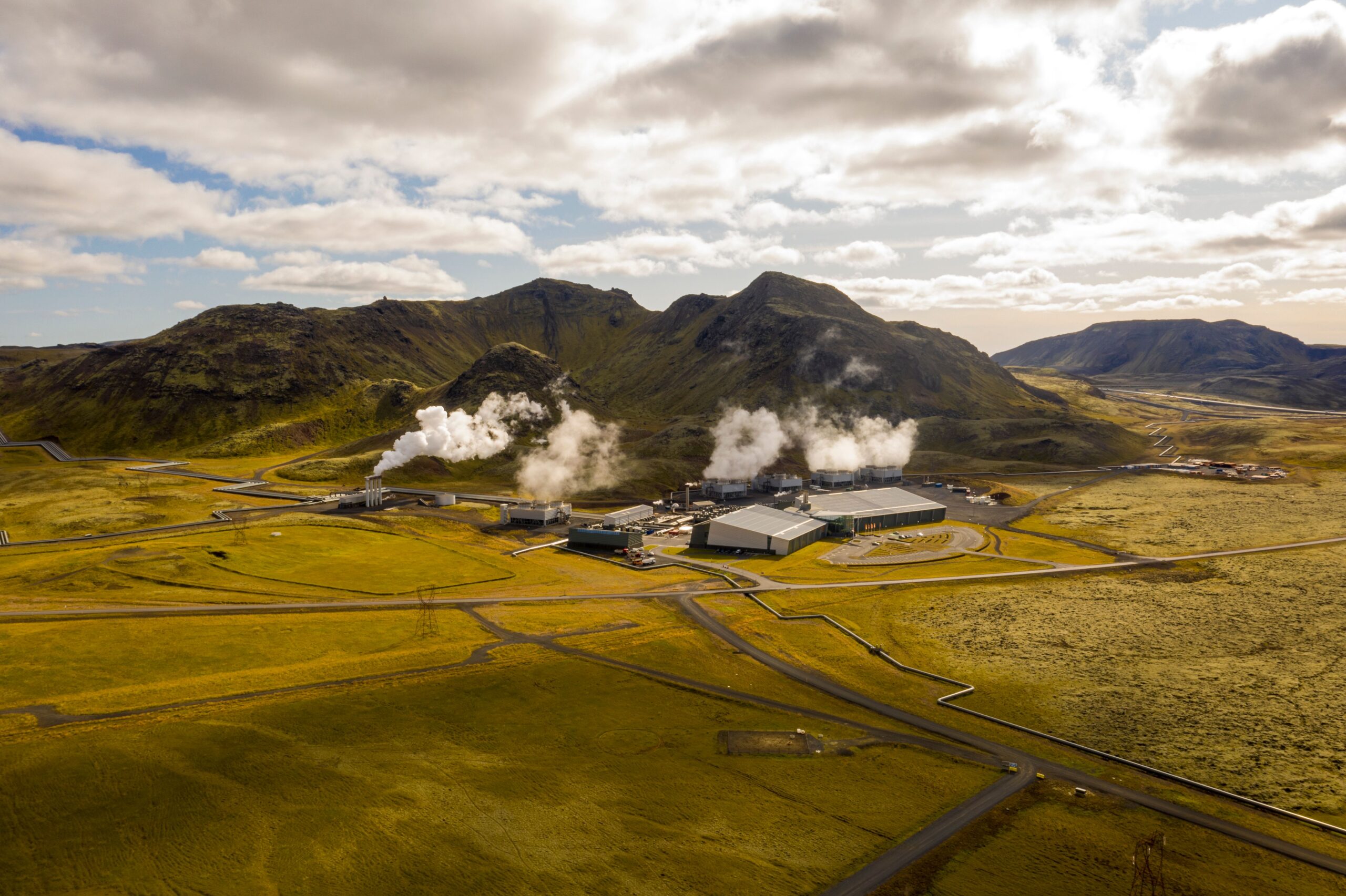
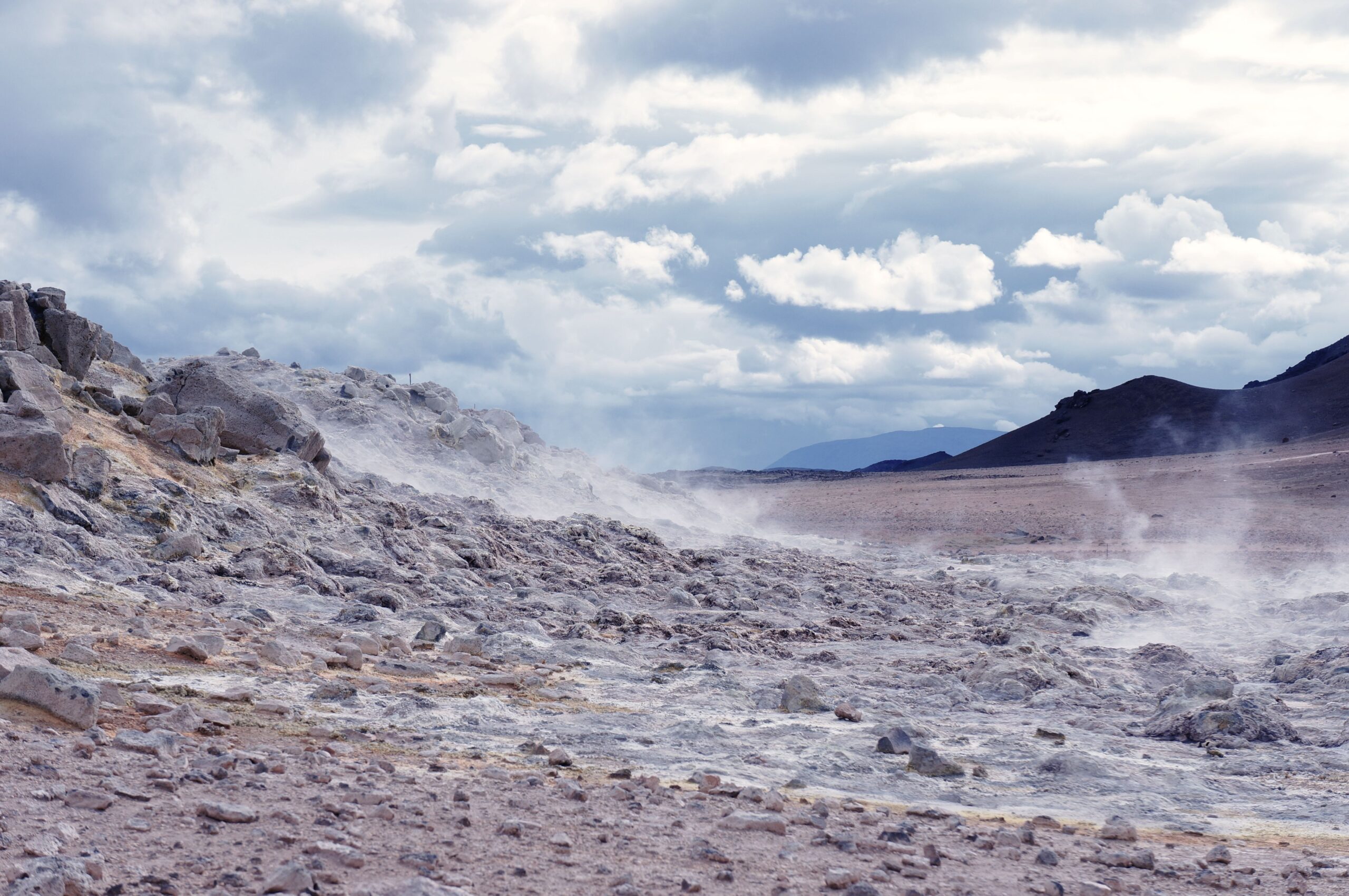
Geothermal energy is the heat stored beneath the Earth’s surface, a resource that comes both from the planet’s original formation and from the continuous decay of radioactive elements in rocks. This heat shows itself in geysers, hot springs and volcanoes, and it can be captured through wells to heat homes or to drive turbines that produce electricity. Because it replenishes naturally faster than we consume it, it is classed as one of the renewable natural resources and is part of the range of alternative energy sources to fossil fuels.
Contents
Its great advantage over solar and wind is consistency: a geothermal plant can run 24 hours a day, 7 days a week, whereas solar and wind only generate about a third of the time (Britannica 2024). In addition, the International Energy Agency estimates that geothermal could meet up to 15% of the growth in global electricity demand between now and 2050 if costs keep falling (IEA 2024).
How does a geothermal power plant work? What is it used for beyond electricity? Which countries lead its development, and what are its real advantages and disadvantages? In this guide we answer all of these questions with verified data from IRENA, the IEA and ThinkGeoEnergy.
Natural resources
Natural resources are materials or energy sources provided by or found on Earth that are useful to humans. Every product we manufacture is made up of natural resources.
- Renewable resources: these can be restored by natural processes faster than the rate at which they are consumed. Examples include solar radiation, wind, hydroelectric power, water when used properly, and plant and animal life.
- Non-renewable resources: once extracted, these are depleted and cannot regenerate. Examples include hydrocarbons, metals and minerals.
What is geothermal energy?
The term “geothermal” comes from the Greek geo (earth) and thermos (heat). It refers to the heat that builds up in the Earth’s crust and mantle, where temperature rises with depth at a rate of about 25 to 30 °C per kilometer. In certain areas, especially along tectonic plate boundaries and in volcanic regions, this gradient is much steeper and the heat is concentrated near the surface, which makes tapping it economically viable.
Unlike non-renewable natural resources such as oil or coal, the Earth’s heat flow is practically inexhaustible on a human scale. That is why geothermal energy is considered a clean, low-emission source, capable of generating electricity continuously without depending on the weather.
How does a geothermal power plant work?
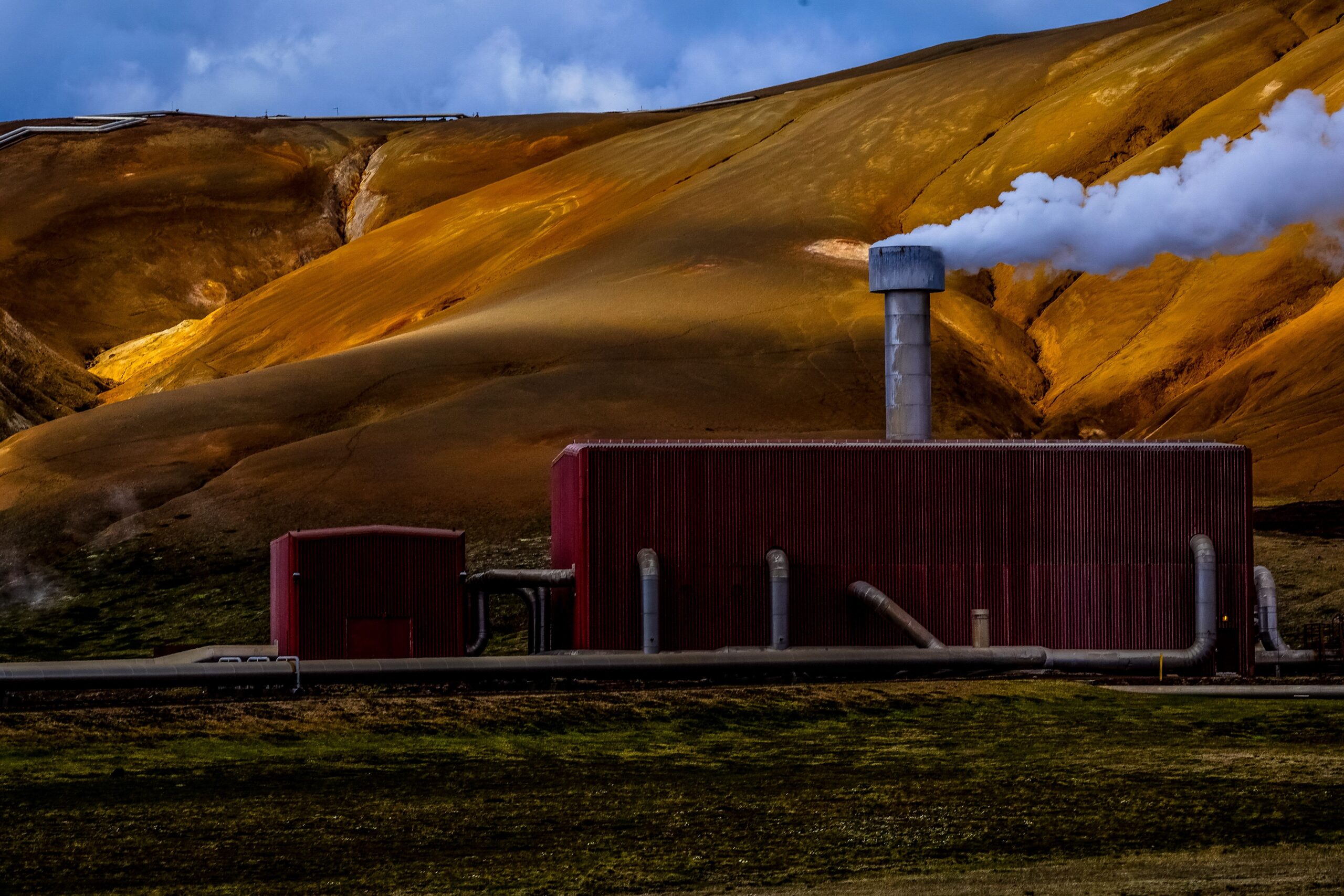
The principle is simple: wells are drilled down to underground reservoirs of hot water or steam, and that fluid is brought to the surface to drive a turbine coupled to an electric generator. According to Britannica, there are three main geothermal power plant technologies (Britannica 2024):
- Dry steam: steam from underground is piped directly to the turbine. It is the oldest technology, used at Larderello (Italy) and The Geysers (California).
- Flash steam: high-pressure, high-temperature water is depressurized and turns into steam, which drives the turbine. It is the most widespread system in the world today.
- Binary cycle: the geothermal water heats a second fluid with a low boiling point through a heat exchanger; that fluid vaporizes and drives the turbine. It makes it possible to use medium-temperature reservoirs and is the fastest-growing technology.
After passing through the turbine, the water is reinjected into the reservoir to maintain pressure and extend the life of the resource, which turns the system into a practically closed loop.
Uses of geothermal energy
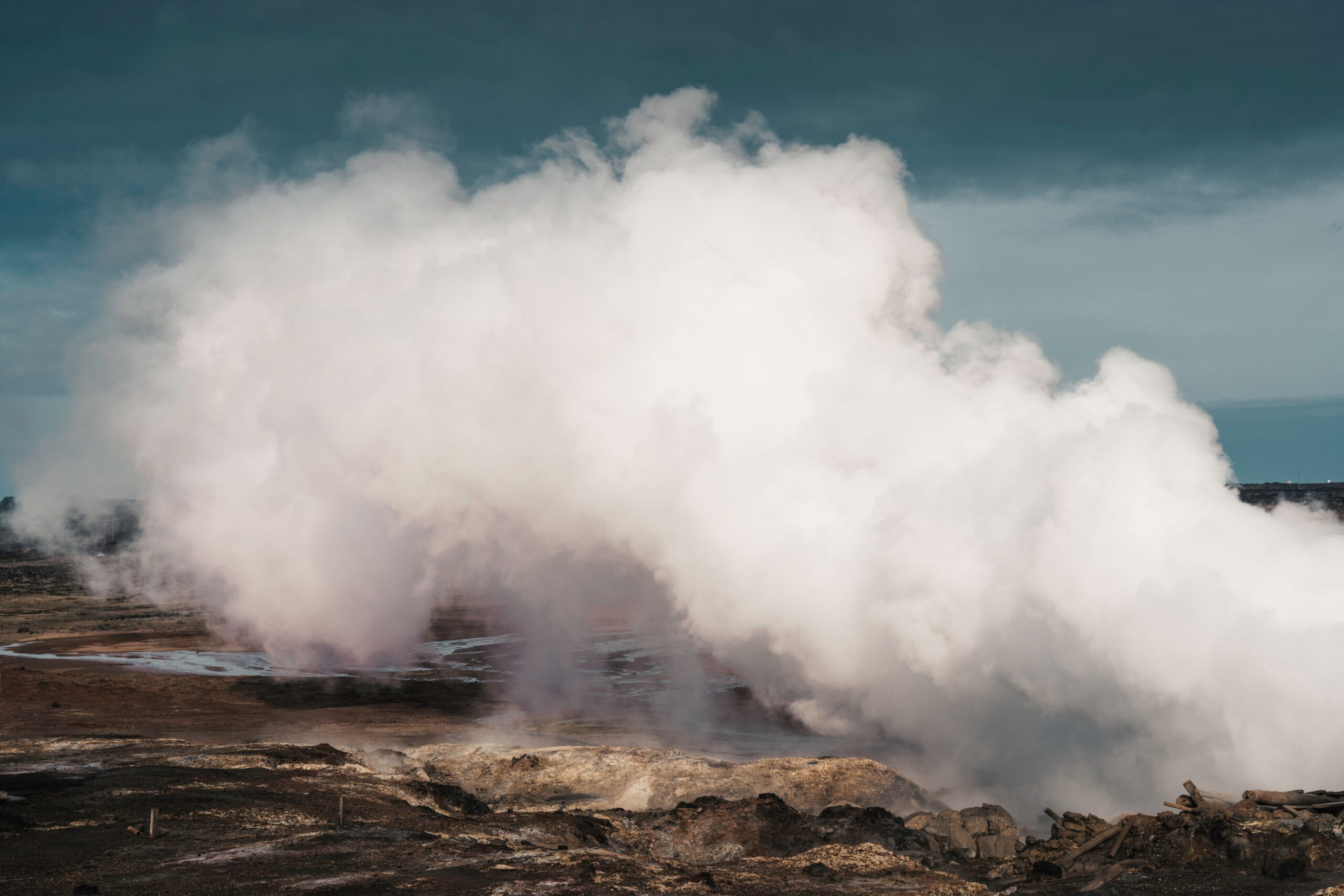
Geothermal energy has two main applications: electricity generation and direct use of heat.
Electricity generation
It requires high-temperature reservoirs (generally above 150 °C) and is the application that dominates the global rankings of installed capacity. Geothermal plants supply baseload power to the grid, complementing intermittent sources such as solar and wind.
Direct use of heat
Hot groundwater is used directly to heat and cool buildings, to heat greenhouses, swimming pools and spas, to dry food, pasteurize milk and melt snow on streets, and in fish farms (Britannica 2024). The most striking example is Iceland, where about 90% of homes are heated with geothermal energy through district heating networks (Business Iceland 2024).
A third option, increasingly popular in temperate climates, is shallow geothermal heat pumps, which use the stable temperature of the ground to heat and cool homes with high energy efficiency.
Global capacity and leading countries
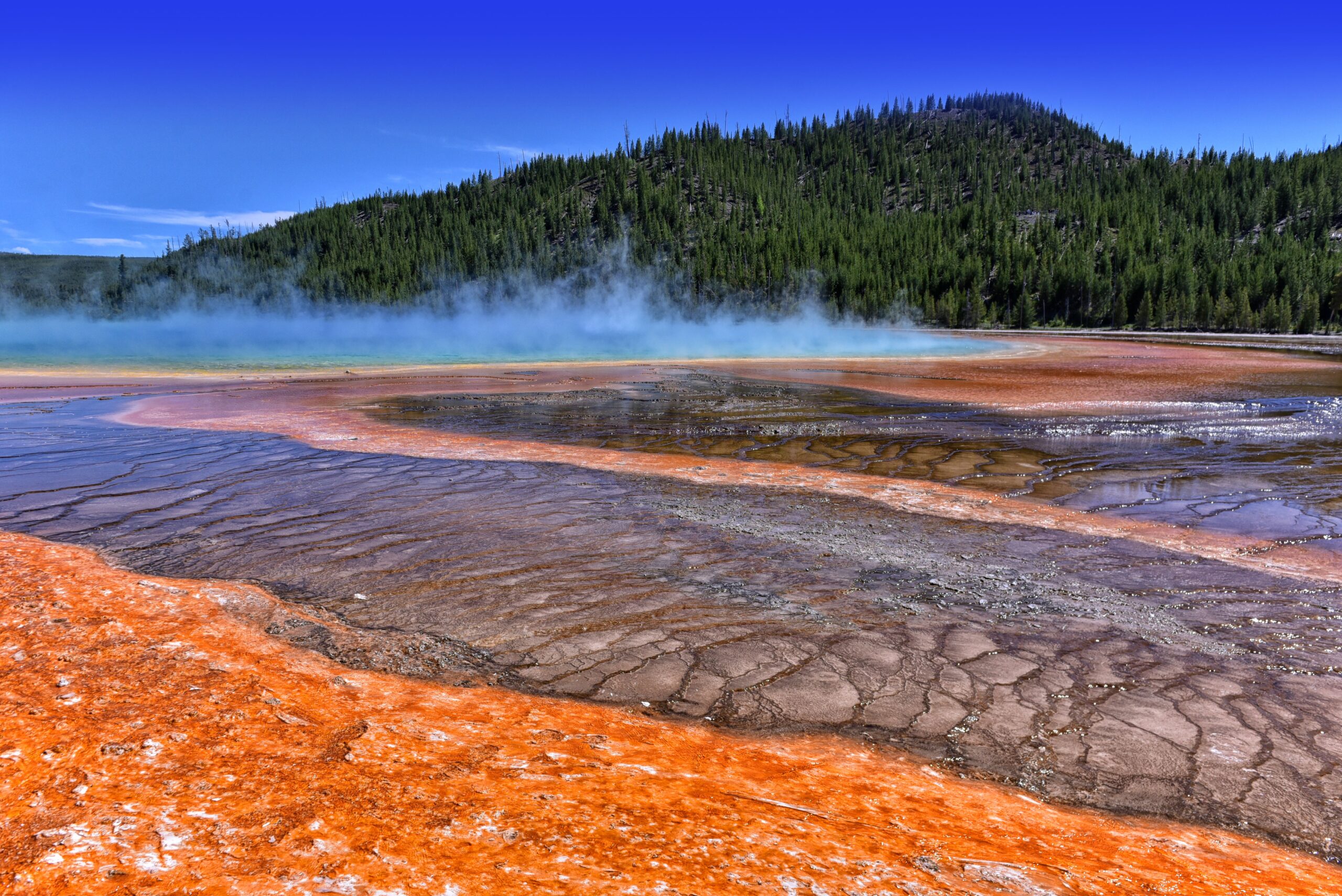
At the end of 2024, the world’s installed geothermal power capacity stood at around 16,873 MW across 35 countries, after 389 MW were added that year through 14 new plants and expansions (ThinkGeoEnergy 2024). IRENA puts the figure at around 15 GW and notes that in 2024 the levelized cost of geothermal electricity fell by about 16% (IRENA 2024). Ten countries account for 93% of all that capacity.
The United States tops the list with 3,937 MW, followed by Indonesia (2,653 MW) and the Philippines (1,984 MW). Next come Turkey (1,734 MW), New Zealand (1,207 MW), Kenya (985 MW), Mexico (976 MW), Italy (916 MW), Iceland (786 MW) and Japan (601 MW) (ThinkGeoEnergy 2024).
Kenya is especially significant in Africa, where the Rift Valley offers enormous potential, while Italy holds historic value: the world’s first geothermal power plant was built at Larderello and began generating electricity in 1913.
Advantages of geothermal energy
- Continuous availability: it provides baseload power 24 hours a day, with capacity factors far higher than those of solar or wind (Britannica 2024).
- Low emissions: it produces a tiny fraction of the CO₂ emitted by coal- or gas-fired power plants.
- Competitive cost: Britannica puts the cost of geothermal electricity at between 5 and 10 cents per kilowatt-hour, comparable to that of coal.
- Small land footprint: a plant takes up much less land than a solar or wind farm of equivalent capacity.
- Huge future potential: the IEA estimates that next-generation geothermal could reach up to 800 GW of capacity by 2050, with cumulative investment in geothermal reaching $1 trillion by 2035 (IEA 2024).
Disadvantages and challenges
- High upfront investment: drilling deep wells and building the plant require heavy spending before a single watt is produced (Britannica 2024).
- Limited locations: high-temperature reservoirs are relatively scarce and tend to be concentrated in volcanic or tectonically active areas.
- Local environmental risks: it can release gases such as hydrogen sulfide and, if the water is not properly reinjected, deplete the reservoir or induce microseismicity.
- Long development times: exploring the resource and confirming its viability can take years.
Emerging technologies, such as enhanced geothermal systems (EGS) that create artificial reservoirs, aim to overcome this geographic limitation. The IEA stresses that up to 80% of the investment needed in geothermal draws on skills transferable from the oil and gas industry, which could speed up its global expansion.
History of geothermal energy
People have used the Earth’s heat since antiquity: the Greeks and Romans were already channeling hot springs into their baths and using them to heat buildings. However, the leap to electricity generation did not come until the early 20th century. In 1904, Prince Piero Ginori Conti carried out the first test of producing electricity from geothermal steam at Larderello, in Tuscany, Italy, lighting several light bulbs. Nine years later, in 1913, the world’s first commercial geothermal power plant went into service, also at Larderello — a complex that is still operating more than a century later and that established Italy as a pioneer in the sector.
Over the 20th century, the model spread to other volcanic regions. New Zealand opened the Wairakei plant in 1958, the United States launched the giant The Geysers complex in California in 1960, and countries such as Mexico, the Philippines and Iceland developed their own resources in the decades that followed. This gradual rollout explains why geothermal energy is present in 35 countries today (ThinkGeoEnergy 2024).
Geothermal energy and sustainable development
In the context of the energy transition, geothermal energy offers something most renewables cannot guarantee: firm, predictable power. While solar and wind depend on the weather, a geothermal plant runs almost without interruption, which makes it an ideal complement for stabilizing grids with a high share of intermittent sources. That is why the IEA ranks it, alongside hydropower and nuclear, among the cheapest options for dispatchable low-emission electricity (IEA 2024).
Its role among alternative energy sources is also strengthened by its versatility: in addition to electricity, it provides heat for homes, industry and agriculture, reducing fossil fuel use in heating applications where electrification is costly. The IEA estimates that employment in the sector could increase sixfold to reach one million jobs by 2030 if next-generation geothermal grows strongly. For developing countries with volcanic resources, such as those in Africa’s Rift Valley, it also offers a path to energy independence and a way to diversify their renewable natural resources.
Sources used
- ThinkGeoEnergy — Top 10 Geothermal Countries 2024 (Power)
- IEA — The Future of Geothermal Energy (2024)
- IRENA — Renewable Power Generation Costs 2024 (via ThinkGeoEnergy)
- Encyclopædia Britannica — Geothermal energy
- Encyclopædia Britannica — Geothermal power
- Business Iceland — 90% of house heating in Iceland is geothermal
Geothermal energy combines a virtue that is rare among renewables: it is clean and, at the same time, constant. Although its expansion is held back by high upfront investment and the scarcity of high-temperature reservoirs, advances in enhanced systems and heat pumps are broadening its reach. With the backing of bodies such as the IEA and IRENA, everything suggests that the Earth’s heat will play a growing role in the transition toward a more sustainable energy model.
Related articles
Last updated: September 26, 2026

Leave a Reply