

The history of sustainable development comes from two ideas meeting: development, tied to the notion of progress since Greek and Roman times, and sustainability. The word sustainability was already in use among German foresters in the 18th century, and thinkers such as Thomas Robert Malthus were warning about the limits of population growth. So where does sustainable development come from?
Sustainable development combines “development” and “sustainability” — two concepts with separate histories that eventually converge in a single new term.
Table de contenidos
History and evolution of sustainable development: the history of the idea of development
Development as we know it today grows out of the idea of “progress”: moving civilization in the right direction in technological, economic and moral terms.
Versions of this idea existed in ancient civilizations such as Greece and Rome.
The history of development seen from religion
Religion did much of the early work on the concept of “development”. First, Hebrew and Christian theology developed the idea of time as a single, forward-moving succession of events.
Second, it advanced the idea of a divine design unfolding gradually from the beginning of human history, reaching perfection in the next world.
Finally, religion contributed several ideas that feed into what we now call development: millenarianism, utopian thinking, and the importance of improving this world in preparation for the afterlife.
The history of development seen from technological and economic progress
The philosophers and scientists of the Enlightenment were convinced that science was the road to the future and the means by which humanity would become master of nature.
In the 18th and 19th centuries, with the Industrial Revolution, people settled on the belief that it was right to dominate the natural order and reshape it to produce the goods and services that met human needs.
Under that view, only goods made by people had value. A forest, a river or a lake had no worth in itself; it became valuable only when exploited economically to create wealth and trade in the market.
This economic development created wealth across the industrialized nations, but it also caused major environmental disasters that began to worry some observers.
History and evolution of the concept of sustainability
The history of sustainability in ancient philosophy
Since antiquity, thinkers have discussed environmental problems caused by human economic activity: deforestation, the salinization of water, the degradation of soils.
They did not simply worry about the damage; they called for what we would now recognize as sustainable practices, in order to preserve what they described as the “eternal youth of the earth”.
The history of sustainability in the Industrial Revolution
The Industrial Revolution drove a massive increase in the consumption of natural resources, to the point of causing continent-wide crises. In Europe, for example, the use of wood as fuel, as a building material and as a raw material created an unprecedented shortage in many places that threatened both the economy and the survival of large numbers of people.
Those environmental crises made many people think differently and take the responsible use of resources more seriously — not only for their own sake, but for the sake of future generations.
In 18th-century Germany, the word “sustainability” was already in use among foresters. They argued for the sustainable use of forest resources, which meant keeping a balance between the trees felled and the care of the new trees that would replace them.
Voices also emerged warning about the uncontrolled growth of natural-resource consumption. Thomas Robert Malthus (18th-19th centuries) argued that population growth had to be restrained because it threatened to outrun the capacity to produce food.
Others imagined human development without economic growth. John Stuart Mill described a “stationary state” in which capital, consumption and population stop growing without any worsening of human conditions. He hoped humanity would reach that point by choice, before necessity forced it.
So concern about the environmental damage caused by human activity is ancient. But it was only with the Industrial Revolution and the extraordinary rise in natural-resource consumption that people began to worry about whether future generations would still have the means to meet their needs.
History and evolution of sustainable development in the 20th century
The 20th century brought optimism about technological progress alongside anxiety about rising natural-resource consumption, especially after the Second World War.
Mainstream economics was aware of the sustainability problem but assumed that once a resource became scarce, new technology would emerge to meet the need — as when whale oil was replaced by petroleum-derived products.
On that view, development should continue and the productivity of human labor should rise in order to end poverty. That means increasing the capital and resources used per unit of labor.
Human development was therefore seen as an evolutionary process in which humanity creates wealth, confronts problems and adapts to change with determination and creativity. Instead of preventing the waste of resources, the talk was of adaptation.
The history of sustainable development in the 1960s and 1970s
The 1960s and 1970s produced extensive research on large-scale environmental damage. These studies were widely covered by the media, in films, music and television, and they popularized the idea of a possible ecological crisis.
Fears grew that economic growth might endanger human survival on Earth. People understood that the planet holds finite resources and that exceeding those limits could be catastrophic.
That concern gave rise to environmental NGOs such as Greenpeace and Friends of the Earth, and environmentalism became an ideology in its own right. Earth Day was also held for the first time in 1970, a landmark date for sustainable development.
In this period the ideas of progress, development, growth and sustainability began to line up into sustainable development.
The debate over economic growth
These ideas led people to question whether economic growth was even desirable.
Economists held that it was, because humanity would eventually find or create new resources for the economy. To solve ecological problems and inequality, they trusted in scientific and technological progress.
Environmentalists argued that economic growth had to stop, and with it the exploitation of natural resources.
How the term sustainable development emerged
In the 1970s, development and conservation were in conflict. Conservation meant protecting natural resources; development meant exploiting them. The two were treated as opposites.
Against that backdrop, people began looking for a concept that could hold both ideas together. Sustainable development was the result: development and conservation were no longer separate matters, but two things to be pursued at once.
In 1972, from Stockholm, the UN began to speak of sustainable development:
Through ignorance or indifference we can do massive and irreversible harm to the earthly environment… Conversely, through fuller knowledge and wiser action, we can achieve for ourselves and our posterity a better life in an environment more in keeping with human needs and hopes… A goal that is imperative for mankind is to defend and improve the human environment for present and future generations.
The sustainable development paradigm then became popular in the 1980s and its use spread. But it was the Brundtland Commission and its report Our Common Future in 1987 that defined the term as we know it today. The report set out to explain how social equity, economic growth and the protection of natural resources could be achieved together.
More: What is sustainable development?
Sustainable development efforts and initiatives in recent years
At the Millennium Summit in 2000, 189 UN member states agreed to work toward 8 goals and 18 targets to be met by 2015. They included eradicating extreme poverty and hunger, achieving gender equality, ensuring environmental sustainability and reducing child mortality. More

There was real progress overall, but several problems persist.
More: UN report
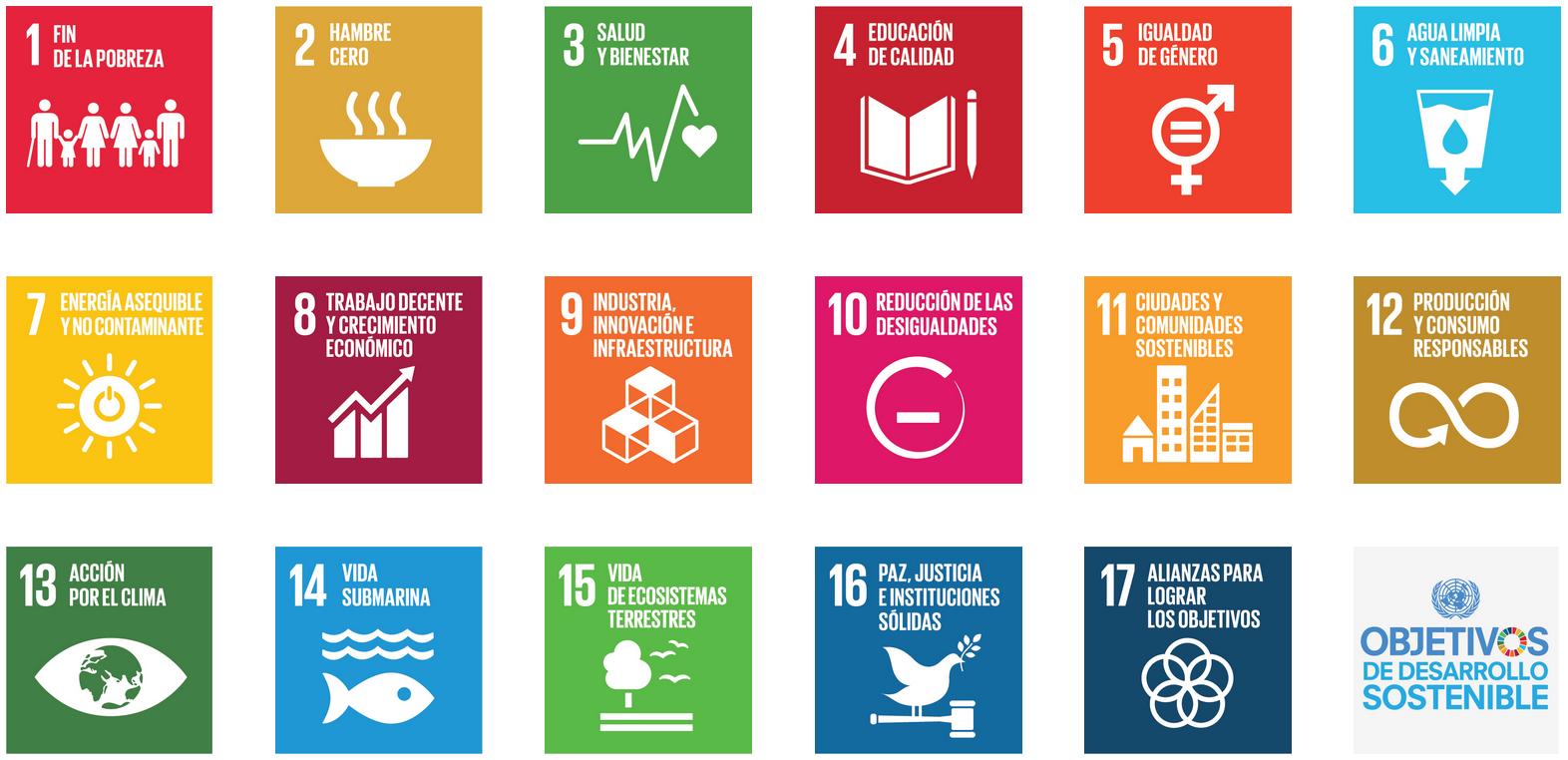
In 2012, the RIO+20 conference set up a working group to draft a set of sustainable development goals. In 2015 the UN Sustainable Development Goals (SDGs) were finally adopted, to be met by 2030. This time there were 17 goals aimed at three major changes: eradicating extreme poverty, tackling inequality and injustice, and fixing climate change.
More:
The UN SDGs
Sustainable consumption
Further reading:
Problems with the Sustainable Development Goals
Last updated: August 19, 2026
Leave a Reply