The Sustainable Development Goals (SDGs) replaced the Millennium Development Goals, expanding from 8 goals and 21 targets to 17 goals and 169 targets. Their sheer breadth spreads efforts thin, and they include no binding mechanisms to hold governments accountable, which makes them hard to achieve, especially in countries with weak institutions. What are the main problems with the SDGs?
In 15 years (2000–2015), the Millennium Development Goals (MDGs) brought major improvements in the quality of life of millions of people around the world: extreme poverty, undernourishment and child mortality fell significantly, and there were improvements in gender equality, primary education and access to sanitation and drinking water. In Latin America, this progress was outstanding (see).
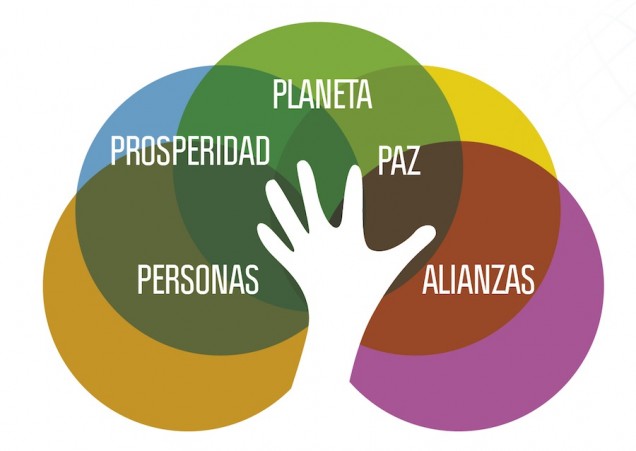
The MDGs were followed by the Sustainable Development Goals (SDGs), which went from 8 goals and 21 targets to 17 goals and 169 targets. The SDGs are thus the most ambitious, diverse and global development plan in world history (more).Unlike the MDGs, the SDGs were created in an open and transparent way, with the participation of national governments, various international organizations and civil society. Moreover, while the MDGs were designed by developed nations for developing countries, the SDGs apply to rich and poor nations alike.This gives reason for optimism about these new goals. The SDGs aim to build on the success of the MDGs, correcting their mistakes in order to achieve much more. However, there are some difficulties that raise several doubts and threaten to undermine this effort.
The sheer scope of the Sustainable Development Goals
To begin with, one of the difficulties of the SDGs is the sheer number of goals and targets. When we are talking about 169 targets framed within 17 goals, it is hard to imagine that every challenge will receive the same attention. For many, this is already nothing more than a wish list. There are many goals and few years. When they were adopted in 2015, there were more SDGs (17) than years to achieve them (15), and by 2026 fewer than five years remain. Is there really time for so many targets? The goals also cover very diverse topics that spread efforts thin: the SDGs range from ending extreme poverty to sustainably protecting marine and coastal ecosystems.
Responsibility for meeting the goals
Another difficulty is that the SDGs include no binding mechanisms to hold governments accountable for meeting the targets: follow-up relies on voluntary, country-led reviews presented at the UN High-level Political Forum. Governments are not obliged to answer for their progress. In addition, because of the sheer breadth of the SDGs, governments can get lost among so many targets and goals. This is especially worrying in poor countries, where institutions are very weak.
Likewise, achieving the SDGs requires agreements among the different actors in society. Unprecedented joint work by governments, private institutions and citizens at large will be needed. More than ever, large investments from both the private and the public sector will be needed, in line with the global public interest.
Although the commitment of national governments is essential to reach these targets, they pay little attention to the SDGs. In Colombia, for example, other issues dominated the government’s agenda and public interest at the time. In 2016, when this article was written, attention there was focused on the peace process between the government and the FARC guerrillas, which sought to end an internal armed conflict that had lasted more than 50 years (the final agreement was signed in November 2016). In this sense, the peace agreement was the next agenda to follow, not the SDGs. The SDGs take a back seat. Within countries, domestic issues take priority over global ones.
In addition, as a result of the economic situation in Latin America in the mid-2010s, when the commodity boom had ended and growth was slowing down, governments had other priorities that partly reflected what their citizens demanded of them. People want jobs and income far more than they want to protect the environment.Despite the problems facing the SDGs, it is safe to say that an imperfect plan is better than no plan at all. Whatever their difficulties, the SDGs help focus the attention of the international community and advance the development agenda. Organizations such as the UN, the World Bank, the International Monetary Fund and various NGOs will act under the guidance of these goals.The SDGs are a great opportunity to put into practice the actions needed to build a better world. Together with the Millennium Development Goals, they should be seen as the starting point for global development plans.Several of the targets set out in the SDGs will most likely not be met, but they are still worth pursuing. As the saying goes, a bird in the hand is worth two in the bush.
The UN’s Sustainable Development Goals Report 2023 warned that half of the roughly 140 targets that could be evaluated were moderately or severely off track. Three years later, the 2026 edition found that only 36% of the 139 targets with trend data were on track or making moderate progress, while 15% had slipped below their 2015 baselines.
Economist from the Universidad de Antioquia (Medellín, Colombia), covering the environment and sustainable development since 2013. The work here begins with hands-on research in the databases of the major international research institutions — the World Bank, FAO, the United States Geological Survey (USGS), the United Nations and the OECD — the source of every indicator published on this site, each one cross-checked. The aim is to turn that data into a simple, visual format: tables, maps and visualizations that make each country's environmental situation clear at a glance.




Leave a Reply