

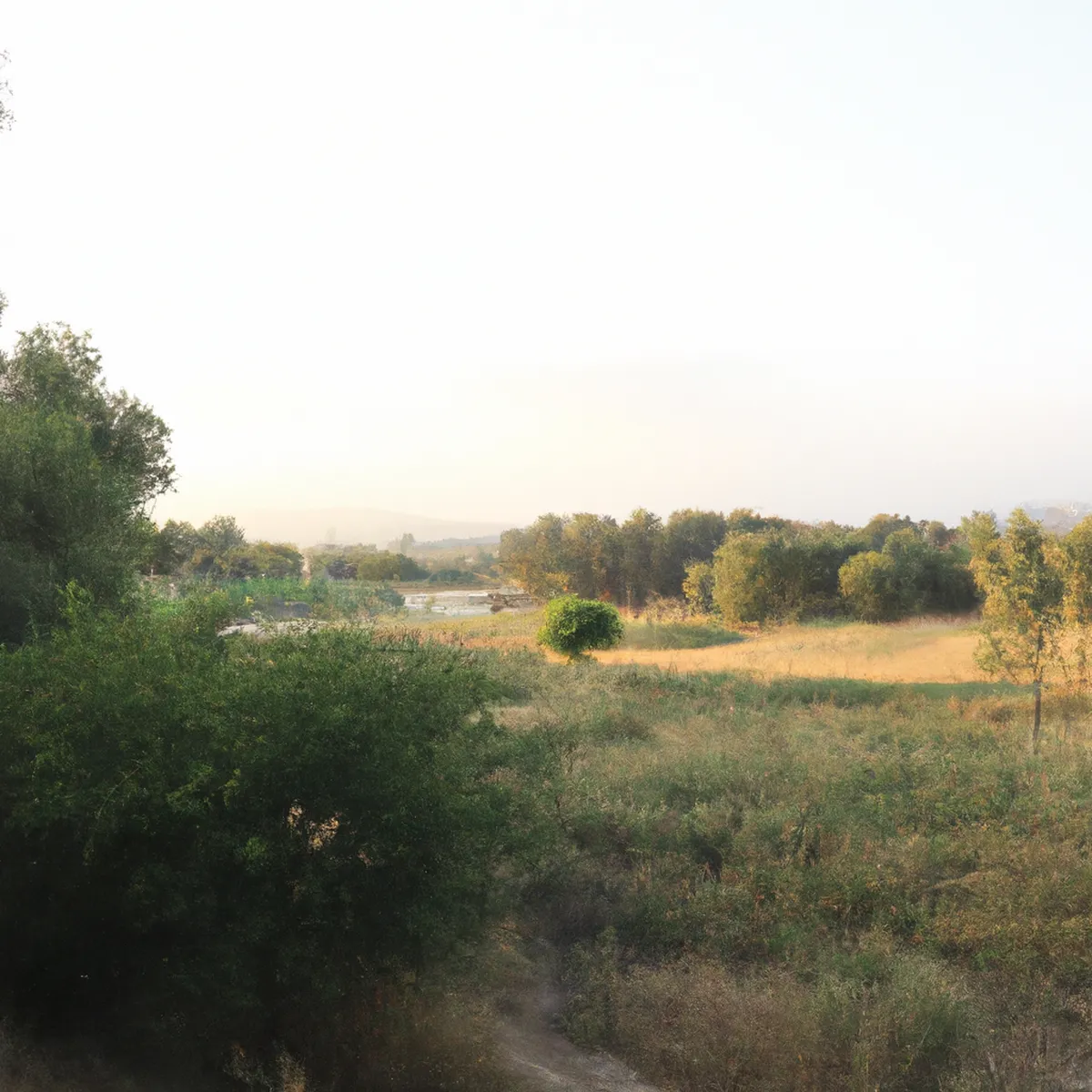
Israel’s natural resources center on major offshore natural gas discoveries in the Levant Basin, valuable evaporite minerals from the Dead Sea, and cutting-edge water reclamation technology. Commercial gas fields Tamar (online 2013) and Leviathan (~620 billion m³ recoverable, online 2019) produce over 21 billion m³ annually, powering ~70% of domestic electricity and supplying exports to Jordan and Egypt ($35 billion contract signed in 2025). Industrial mineral extraction yields about 2.4 million tonnes of potash (K₂O equivalent, 2024; 6th globally) and roughly a third of global elemental bromine. To counter extreme water scarcity (1.78 km³ renewable freshwater), Israel desalinates 70–80% of its potable water and recycles 80% of wastewater. What natural resources sustain Israel?
Israel is situated at the biological and geographical crossroads of Europe, Asia, and Africa in the eastern Mediterranean basin. Despite its compact territorial footprint, the country’s natural resource profile has undergone a dramatic transformation over the past two decades, pivoting from resource scarcity to energy and hydrological resilience.
Table de contenidos
Historically limited in conventional minerals and surface water, Israel has unlocked massive deep-water offshore natural gas reservoirs, industrial mineral extraction from the hyper-saline Dead Sea, and global leadership in seawater reverse osmosis desalination. To understand where these assets fit into broader regional dynamics, consult our guide to Asia natural resources.
What are Israel’s primary natural resources? What mineral reserves exist in its territory, how does offshore gas reshape its geopolitical role, and how has advanced engineering overcome severe hydrological limits?
Natural Resources
Natural resources are materials or energy sources provided by Earth that are utilized by humans. Every manufactured product originated from natural resources.
- Renewable resources: resources that regenerate through natural cycles faster than human consumption. Examples include solar radiation, wind currents, sustainably managed water, and plant and animal biodiversity.
- Non-renewable resources: finite geological assets that do not replenish on human timescales once extracted. Examples include hydrocarbons (natural gas, crude oil) and evaporite minerals.
Key Natural Resources of Israel
Israel: Key Environmental Indicators
A numerical overview of territorial status and biological assets.
| Forest cover | 6.5 % of land area2023 |
|---|---|
| Forest area | 1,400 km²2023 |
| Annual forest area change | stable (2018–2023) |
| Protected land area | 27.6 % of territory2025 |
| Threatened species | 158 mammals, birds, fish and plants2022 |
| Renewable freshwater per capita | 80 m³ per year2021 |
Petroleum and Natural Gas Resources in Israel
While domestic crude oil extraction remains modest at approximately 13,000 barrels per day (2023 data from The Global Economy) with proven crude reserves of 13.95 million barrels (ranking 122nd globally), the maritime boundary of Israel contains world-scale natural gas reservoirs.
The transformation of Israel’s energy landscape began with the commercial startup of the Tamar gas field in 2013, located roughly 80 kilometers offshore in waters 1,700 meters deep, holding approximately 390 billion cubic meters (bcm) of natural gas. This was followed in December 2019 by the commencement of production at the massive Leviathan gas field, situated 130 km west of Haifa, containing an estimated 620 billion cubic meters of recoverable natural gas (Noble Energy / NewMed Energy, 2024).
Natural gas currently fuels approximately 70% of Israel’s electricity generation, having largely displaced coal. In addition to securing domestic energy independence, Israel has emerged as a key regional gas exporter. Leviathan’s exports go to Jordan and Egypt. In August 2025, the Leviathan consortium signed the largest commercial energy export agreement in Israel’s history—valued at roughly $35 billion—to deliver natural gas to Egypt through 2040 (Reuters, 2025).
Dead Sea Minerals: Potash, Bromine and Magnesium
The hyper-saline waters and sediment brines of the Dead Sea represent Israel’s most commercially significant mineral resources. Through massive solar evaporation ponds located in the southern basin, Dead Sea Works (a core subsidiary of ICL Group, formerly Israel Chemicals Ltd.) extracts high-grade industrial minerals:
- Potash (Potassium Chloride): Israel produced about 2.4 million tonnes of potash (K₂O equivalent) in 2024, making it the world’s 6th largest potash producer (USGS Mineral Commodity Summaries). This agricultural fertilizer is exported worldwide, notably to India, China, and Brazil.
- Elemental Bromine: Israel produced about 140,000 tonnes of elemental bromine in 2024 (USGS), and ICL supplies roughly one-third (33%) of total global bromine consumption for flame retardants, water treatment chemicals, and pharmaceuticals.
- Magnesium Metal and Salts: Dead Sea brines yield high-purity magnesium metal and magnesium chloride, widely utilized in lightweight automotive alloys and industrial de-icing agents.
- Phosphate Rock: In the Negev Desert (Rotem and Oron deposits), Rotem Amfert Negev extracts phosphate rock for domestic phosphoric acid and granular fertilizer production.
Water Resources: From Scarcity to Technological Abundance
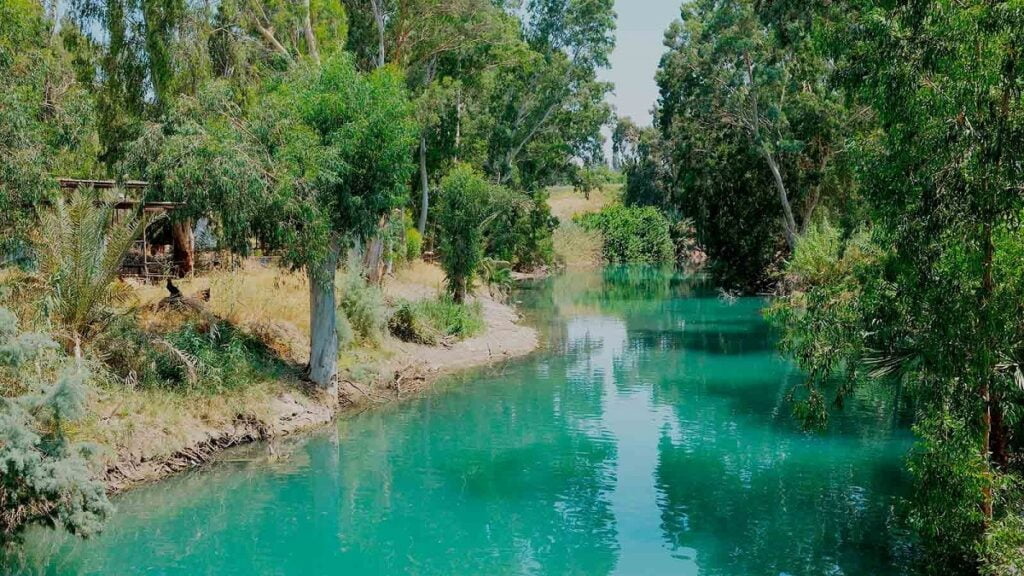
Israel’s natural renewable freshwater endowment is severely limited, totaling only 1.78 km³ annually (ranking 139th globally according to FAO AQUASTAT, 2020 data). With per capita renewable freshwater of only 80 m³ per year, Israel sits far below the UN threshold for absolute water scarcity (500 m³). Its primary natural surface bodies are the Jordan River, the Yarmouk River, and Lake Kinneret (the Sea of Galilee), alongside coastal and mountain limestone aquifers.
Desalination and Advanced Wastewater Reclamation
To overcome acute natural deficits, Israel pioneered the world’s most advanced municipal and agricultural water resources infrastructure:
- Seawater Desalination: Five major Seawater Reverse Osmosis (SWRO) mega-plants along the Mediterranean coast—Ashkelon (operational 2005), Palmachim (2007), Hadera (2009), Sorek 1 (2013), and Ashdod (2015), complemented by Sorek 2 (operational 2025)—produce over 650 million cubic meters of potable water annually. Desalination now supplies 70% to 80% of Israel’s domestic municipal tap water.
- Wastewater Recycling (Reclaimed Water): Israel treats and reclaims approximately 80% to 87% of its municipal wastewater—amounting to roughly 480 billion liters per year—representing the highest wastewater reuse rate in the world (by comparison, Spain reuses ~20% and the U.S. under 10%).
- Agricultural Recycling: 100% of municipal wastewater from the Tel Aviv metropolitan area is treated at the Shafdan reclamation complex and piped directly to the arid Negev Desert for crop irrigation; nationally, reclaimed wastewater covers nearly 40% of agricultural water use.
- Precision Drip Irrigation: Pioneered by Netafim in Kibbutz Hatzerim in the 1960s, micro-irrigation delivers water and nutrients directly to plant roots, achieving 90% water application efficiency compared to 50% for conventional flood irrigation.
Precipitation and Arid Soils in Israel
Average national precipitation is 435 mm per year (ranking 130th worldwide), but is characterized by extreme spatial gradient. While the Upper Galilee in the north receives up to 1,000 mm annually, the southern Negev Desert (encompassing over 55% of the land area) receives less than 50 mm. Soils are predominantly arid Calcisols and lithosols in the south and fertile Terra Rossa in northern highlands.
Renewable Electricity Generation
Israel generated about 82.1 TWh of electricity in 2025 (Ember). Hydroelectric power is virtually negligible (about 0.02 TWh, historically generated near Degania on the Jordan River). However, solar photovoltaic capacity has expanded rapidly. Solar power accounts for over 10% of total electricity generation, anchored by large-scale solar thermal and PV complexes such as the 121 MW Ashalim Solar Thermal Tower in the Negev, with a national target of 30% renewable electricity by 2030.
Forest Resources of Israel
Israel possesses a forest area of roughly 1,400 km² (covering 6.5% of its land area according to World Bank and FAO 2023 data). Israel is one of the few nations on Earth that ended the 20th century with a larger forested surface than it began with, primarily driven by massive afforestation campaigns managed by Keren Kayemeth LeIsrael (KKL-JNF), which has planted more than 240 million trees since 1901.
Major forested regions include the Mount Carmel Mediterranean oak and pine woodlands, the Jerusalem pine forests, and the Yatir Forest—the largest planted forest in Israel, situated on the arid desert fringe of the Negev.
Environmental Performance and Protected Areas
Israel achieved a score of 48.0 in the 2024 Environmental Performance Index (Yale EPI), ranking 70th out of 180 countries. A notable 27.6% of its terrestrial territory is designated within protected natural reserves and national parks (World Bank, 2025). The preservation of sensitive desert ecosystems and coastal marine habitats remains under the regulatory stewardship of the Israel Nature and Parks Authority.
National Parks of Israel: Preserved Natural Landscapes
Biodiversity: Animal and Plant Life of Israel
Avian Diversity and Migration Corridors
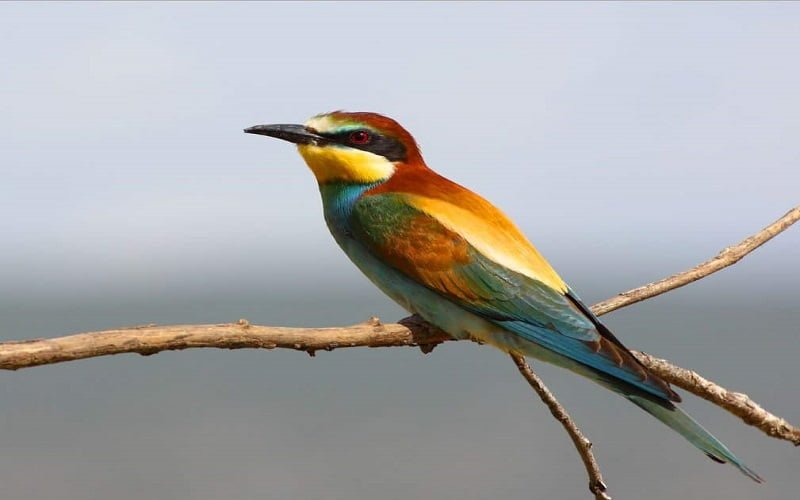
Israel is world-renowned as one of the planet’s busiest avian migration bottlenecks. Over 500 million birds traverse the Great Rift Valley corridor twice a year between breeding grounds in Europe and overwintering habitats in Africa. The national bird list encompasses 591 species, with 18 globally threatened. Prominent species include the European bee-eater (Merops apiaster), the Eurasian hoopoe (Upupa epops, Israel’s national bird), the griffon vulture, and tens of thousands of common cranes that winter in the Hula Valley wetlands.
Fish and Amphibians
Israel hosts 11 amphibian species and 695 fish species (ranking 86th and 81st worldwide). Mediterranean coastal waters and the Gulf of Aqaba (Red Sea) harbor distinct marine biotas, including Red Sea coral reefs in Eilat. Native freshwater species include the African sharptooth catfish (Clarias gariepinus) and the endemic Kinneret bleak (Mirogrex terraesanctae), alongside amphibians like the European green toad and the endangered Hula painted frog (Latonia nigriventer), a living fossil rediscovered in 2011.
Mammals of Israel
Israel is home to diverse mammalian fauna, with 15 species listed as threatened under IUCN criteria. Flagship species include the Nubian ibex (Capra nubiana), whose agile herds navigate the precipitous cliffs of Ein Gedi and the Ramon Crater, the mountain gazelle (Gazella gazella), the striped hyena, and reintroduced populations of the Persian fallow deer and Arabian oryx.
Reptiles
With 106 recognized reptile species (73rd globally), Israel exhibits rich desert herpetology. Prominent reptiles include the desert monitor lizard, the Sinai fan-fingered gecko, the desert agamid (Trapelus savignii), and the Palestine viper (Daboia palaestinae), the country’s primary venomous snake.

Flora and Cultivated Botanical Resources
Israel hosts approximately 2,380 species of vascular plants (ranking 83rd globally), reflecting its position between Mediterranean, Irano-Turanian, and Saharo-Arabian floral zones. The emblematic olive tree (Olea europaea) has been cultivated in the Galilee and Judean hills for millennia, alongside date palms, carob, Aleppo pine, and wild emmer wheat (Triticum dicoccoides, discovered by Aaron Aaronsohn in 1906).
Organizations Protecting Natural Resources in Israel
- Ministry of Environmental Protection: National government ministry regulating emissions, environmental policy, and industrial pollution.
- Israel Nature and Parks Authority (INPA): State agency that manages nature reserves, national parks, wildlife protection, and reintroduction programs.
- Society for the Protection of Nature in Israel (SPNI): Israel’s oldest and largest environmental NGO, leading bird conservation, eco-education, and wilderness defense.
- KKL-JNF (Keren Kayemeth LeIsrael): Historic agency leading forestation, watershed rehabilitation, and open-space management.
- Israel Water Authority: Government regulatory body directing national water allocation, desalination tariffs, and aquifer recharge.
- EcoPeace Middle East: Cross-border environmental organization promoting shared conservation of the Jordan River and Dead Sea across Israel, Palestine, and Jordan.
Frequently Asked Questions
What are Israel’s primary offshore gas fields? The Leviathan field (holding ~620 billion m³ recoverable, online 2019) and the Tamar field (~390 billion m³, online 2013) represent the primary offshore reservoirs, powering 70% of electricity and generating substantial regional exports (Ministry of Energy / Reuters).
How much of Israel’s water comes from desalination and recycling? Some 70% to 80% of Israel’s domestic municipal tap water is produced by six Mediterranean seawater reverse osmosis desalination plants, and approximately 80% to 87% of all wastewater is reclaimed for agricultural irrigation.
Authoritative Information Sources
- Israel Oil Production and Mineral Output – The Global Economy
- Potash and Mineral Statistics: World Production – United States Geological Survey (USGS)
- AQUASTAT Global Water Database: Israel Profile – Food and Agriculture Organization (FAO)
- World Development Indicators: Forest Area and Terrestrial Protected Zones – World Bank
- Environmental Performance Index 2024: Israel – Yale Center for Environmental Law & Policy
- Avian Checklist and Conservation Status: Israel – BirdLife International
To explore more about regional resources, consult our comprehensive guide to Asia natural resources or view our full international guide in the natural resources by country directory.
Last updated: September 26, 2026
Leave a Reply