


Libya’s natural resources are based on oil and natural gas, along with iron, uranium, phosphates and salt. The Sirte Basin holds about 80% of the country’s proven oil reserves. What wildlife does Libya have? The country has 331 bird species, 292 fish species and 68 reptile species, and forests cover only 0.12% of its territory.
Libya is a North African country with an area of 1,759,540 km². Its geography is defined by a vast desert and a Mediterranean coastline with major urban centers.
Table de contenidos
Libya’s natural resources are diverse and include oil, natural gas, iron, uranium, phosphates and salt. These resources have been the foundation of the country’s economy, but their exploitation has led to conflict and political tension.
Biodiversity and ecological systems are also important in Libya, with a wide variety of plant and animal species adapted to the desert climate. The conservation and sustainable development of the country’s natural resources are crucial to its future.
What are Libya’s most important natural resources, and what is its natural wealth? What water resources are available, and how is energy generated? What variety of animals and plants lives in Libya?
Natural resources
Natural resources are materials or energy sources provided by or found on Earth that are useful to humans. Every product we manufacture is made up of natural resources.
- Renewable resources: these can be restored by natural processes faster than the rate at which they are consumed. Examples include solar radiation, wind, hydroelectric power, water when used properly, and plant and animal life.
- Non-renewable resources: once extracted, these are depleted and cannot regenerate. Examples include hydrocarbons, metals and minerals.
Examples of Libya’s main natural resources
Libya’s natural economy
How much natural resource rents weigh in the economy, and the state of the land that produces them.
| Natural resource rents | 61.0% of GDP2021 |
|---|---|
| Oil rents | 56.4% of GDP2021 |
| Capture fisheries | 33,099 t per year2024 |
| Forest cover | 0.1% of land area2023 |
| Agricultural land | 8.7% of land area2023 |
Oil and gas resources in Libya
Libya’s oil production has recovered to about 1.4 million barrels per day: approximately 1,397,000 barrels per day in August 2026, according to OPEC data. (Source: Trading Economics)
Most of the oil fields are in and around the Sirte Basin, which contains about 80 percent of the country’s proven reserves. (Source: U.S. Energy Information Administration (EIA))
Libya is also a mid-sized gas producer, with annual output of 11.7 billion cubic meters in 2025 (Energy Institute, 2026). The country ranks among the world’s 40 largest natural gas producers.
Water resources of Libya
Average rainfall and soils of Libya
Libya has an average annual rainfall of 56 mm, which places it 158th in the world ranking of average annual rainfall.
Forest resources of Libya
Libya’s forest resources are limited: its forest area represents only 0.12% of its land area, equivalent to 2,170 km². Globally, it ranks 144th for forest area.
The Jabal al Akhdar region is considered Libya’s main forest region, but deforestation and desertification have significantly reduced its capacity for forest production.
Environmental performance and protection of Libya’s natural resources
Natural parks of Libya: the hidden wealth of natural resources
Biodiversity: animal and plant resources of Libya
Birds of Libya
Libya has a total of 331 recorded bird species. The country ranks 138th in the world. (Source: worldrainforests.com)
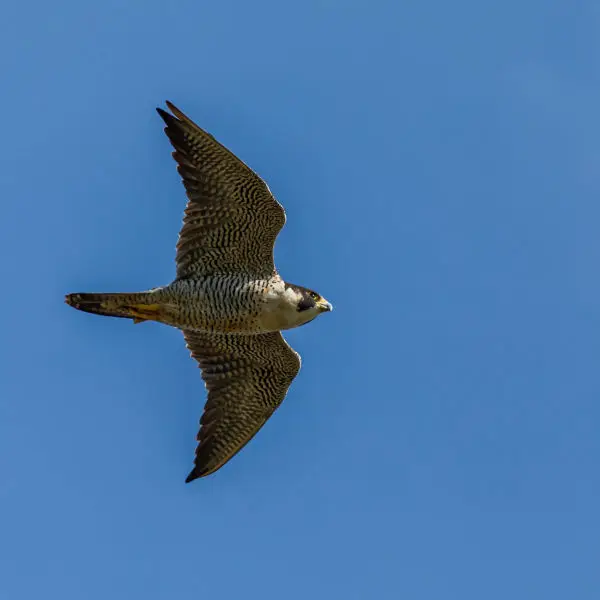
However, 8 of these species are endangered. Among the most notable species is the peregrine falcon, one of the fastest birds of prey in the world.
Fish of Libya
Libya has 292 fish species, the swordfish being the most notable. It ranks 159th in the world for number of fish species; however, the country faces the threat of extinction of 32 fish species. (Source: worldrainforests.com)
Reptiles of Libya
Libya has 68 reptile species, ranking 91st in the world. This natural resource is very important for the country; a standout species is the common chameleon (Chamaeleo chamaeleon), listed as Least Concern by the IUCN but threatened locally by habitat loss. (Source: worldrainforests.com)

Libya has Africa’s largest proven oil reserves: about 48,000 million barrels at the start of 2024, 41% of the continent’s total, according to the EIA (2024). It is the resource that defines its economy.
Oil and gas: Africa’s largest crude reserves
Alongside those 48,000 million barrels of crude oil, Libya has 53 trillion cubic feet of proven natural gas, the fifth-largest reserves in Africa (EIA, 2024). Hydrocarbons provide about 97% of government revenue and 93% of exports, but production is volatile: it was around 1.7 million barrels a day before 2011, fell to about 1 million in 2023 and dropped below 600,000 during the 2024 shutdowns caused by the conflict.
The Great Man-Made River: fossil water beneath the Sahara
With no permanent rivers, Libya supplies its cities through the Great Man-Made River, considered the largest irrigation project in the world (Guinness World Records 2008). It consists of 2,820 kilometers of underground pipelines and more than 1,300 wells over 500 meters deep, which supply 6.5 million cubic meters a day (Great Man-Made River, Wikipedia). The system provides about 70% of the freshwater the country consumes (D+C, Development and Cooperation).
More than 90% desert: scarce farmland and water
More than 90% of Libya’s territory is desert: only 0.99% is arable, and renewable water resources barely reach 0.7 cubic kilometers a year, with no permanent rivers (Geography of Libya, Wikipedia, with data from the CIA World Factbook). The water of the Great Man-Made River also comes from a non-renewable resource: the Nubian Sandstone Aquifer System, the largest known fossil water deposit on the planet, with some 150,000 cubic kilometers beneath Libya, Egypt, Sudan and Chad (Nubian Sandstone Aquifer System, Wikipedia).
Sources used
- Economic data by country – The Global Economy
- Forest area (km²) – World Bank
- Forest area (% of land area) – World Bank
- Water and agriculture statistics – FAO
- Precipitation (mm) – World Bank
- Environmental Performance Index – Environmental Performance Index
- Bird species – Mongabay
- Plant species – Mongabay
- Reptile species by country – Mongabay
- Endemic bird species by country – Our World in Data
According to the U.S. Energy Information Administration (EIA, 2024), Libya has Africa’s largest proven oil reserves, at approximately 48,000 million barrels.
Organizations that protect or study Libya’s natural resources
- Environment General Authority of Libya (EGA): National agency that protects the environment and conserves natural resources.
- Edama for Nature Conservation (Libyan Nature Platform): Libyan NGO that documents biodiversity and manages the country’s nature reserves.
- IUCN Centre for Mediterranean Cooperation: IUCN center that conserves species and marine protected areas in Libya.
- SPA/RAC – Specially Protected Areas (Barcelona Convention): Center for protected areas and marine biodiversity in Libya’s Mediterranean waters.
- FAO in Libya: UN agency that supports agriculture, fisheries and natural resources in Libya.
- REMPEC – Mediterranean Marine Pollution: Mediterranean center that prevents and combats marine pollution and assists Libya.
Last updated: September 26, 2026
Leave a Reply