


Greece’s natural resources stand out for their minerals: silver, lead, iron and bauxite. In 2019 the country produced 2,284 thousand tonnes of iron and 184 thousand tonnes of aluminum, as well as coal. It has 74.25 km³ of renewable freshwater resources and rivers such as the Evros and the Aliakmonas. What minerals and natural resources does Greece have?
Greece, a country in southeastern Europe, has a wide variety of natural resources. Its territory is rich in minerals such as silver, lead, iron and bauxite.
Table de contenidos
In addition, its many rivers and lakes have allowed significant farming and livestock activity to develop. The country’s geography also stands out for its coasts and seas, which offer valuable fishery resources.
What are Greece’s most notable natural resources? What natural wealth does the country have? Which minerals does it have, and how does it rank globally? How much water is there, and how is energy generated? How diverse are Greece’s animals and plants?
Natural resources
Natural resources are materials or energy sources provided by or found on Earth that are useful to humans. Every product we manufacture is made up of natural resources.
- Renewable resources: these can be restored by natural processes faster than the rate at which they are consumed. Examples include solar radiation, wind, hydroelectric power, water when used properly, and plant and animal life.
- Non-renewable resources: once extracted, these are depleted and cannot regenerate. Examples include hydrocarbons, metals and minerals.
Examples of Greece’s main natural resources
Greece in figures: threatened biodiversity
Species at risk and protected areas, with the latest available data.
| Threatened species | 215 mammals, birds, fish and plants2022 |
|---|---|
| Protected land area | 35.0% of land area2025 |
| Marine protected areas | 4.7% of its waters2025 |
| Forest cover | 30.3% of land area2023 |
| Annual change in forest area | stable (2018–2023) |
| Land area | 128,900 km²2023 |
| Resource | Reserves / production | Source |
|---|---|---|
| Coal (lignite) | 14.3 million t (2022) | Euracoal |
| Iron | 2,284 thousand t (2019); 26th | USGS |
| Aluminum | 184 thousand t (2019); 28th | USGS |
| Renewable freshwater | 74.25 km³ (2020); 71st | FAO |
| Average rainfall | 652 mm/year; 104th | World Bank |
Oil and gas resources in Greece
Greece produced around 1,500 barrels of oil per day in 2023, which places it among the smallest producers in the world ranking, according to data from The Global Economy. Its oil reserves in 2022 were estimated at 10,000,000 barrels, placing it 111th in the world ranking.
In 2024, the country produced 2.1 million cubic meters of natural gas, according to Eurostat.
Examples of Greece’s mineral resources
The country produced 14.3 million tonnes of coal in 2022, placing it among Europe’s leading lignite producers, according to Euracoal. It also had coal reserves of 3,170,243,560 tonnes in 2016, or 0.30% of the world’s coal reserves. The main producing region is Western Macedonia, around Ptolemaida and Amyntaio.
In 2019, Greece’s aluminum production reached 184 thousand tonnes, placing it 28th in the world ranking. The main producing region is Central Greece, where the Aluminium of Greece smelter operates at Agios Nikolaos, in Boeotia.
In 2019, Greece’s iron production reached 2,284 thousand tonnes, placing it 26th in the world ranking. The main iron-producing region in Greece is Central Macedonia.
Water resources of Greece
Greece has 74.25 km³ of renewable freshwater resources, which places it 71st in the world ranking.
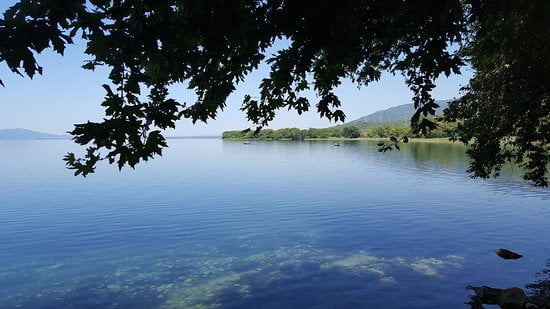
The country’s most important bodies of water include the Evros and Aliakmonas rivers, as well as Lake Trichonida. These natural resources are essential for life and for Greece’s sustainable development.
Average rainfall and soils of Greece
Greece has an average annual rainfall of 652 mm, which places it 104th in the world for precipitation. This rainfall shapes the moisture of Greek land and, with it, the composition of its soils.
In general, Greece’s soils are fairly dry because of the country’s low actual moisture levels.
Renewable electricity and hydropower production in Greece
In 2025, Greece generated 27.7 TWh of electricity from renewable sources — 48% of its total generation of 57.9 TWh — and hydropower alone supplied 3.4 TWh (Ember, 2025).
One of the country’s main hydroelectric plants is the Kastraki plant, on the Achelous River in Aetolia-Acarnania (Western Greece), with an installed capacity of 320 MW.
Forest resources of Greece
Greece has a major forest region known as the Pindus forest, which covers much of Greek territory. With forest covering 30.27% of its land area, a total of 39,018 km², Greece ranks 71st in the world for forest resources.

Environmental performance and protection of Greece’s natural resources
Greece is a country with a rich diversity of natural resources. On the Environmental Performance Index (2024), Greece scored 67.3 and ranked 11th. One reason for its position on the index is its network of protected areas, which cover 35.0% of its land area.
Natural parks of Greece: the hidden wealth of natural resources
Biodiversity: animal and plant resources of Greece
Birds of Greece
Greece has a total of 346 bird species recorded in 2018. Although it had no endemic bird species in 2020, the country ranks 103rd in the world for number of bird species.
However, 17 of these species are endangered, so it is essential to protect and conserve this natural resource.

Fish and amphibians of Greece
Greece has rich biodiversity, with a total of 26 amphibian species and 641 fish species; its flagship amphibian is the salamander and its flagship fish is the goby. The country ranks 72nd in the world for number of amphibian species and 89th for fish species.
Unfortunately, 80 of these fish species are threatened.
Mammals of Greece
Greece has a total of 101 mammal species recorded in 2016.
Globally, Greece ranks 73rd for number of mammal species. The country also has 2 endemic mammal species.
A notable species is the Greek wolf, which is endangered.
Reptiles of Greece
Greece has a diversity of 75 reptile species, ranking 86th in the world. This natural resource is very important for the country.
Plants of Greece
Greece has a great diversity of vascular plants, with a total of 5,500 species recorded in 2020, placing it 41st in the world. Among these species, the olive tree stands out as the country’s signature plant and a symbol of its culture and cuisine.
Organizations that protect or study Greece’s natural resources
- WWF Greece – Protects biodiversity and promotes sustainability in Greece.
- MedAsset – Protects sea turtles and their habitats in Greece and the Mediterranean.
- EKBY – Studies and protects biodiversity and ecosystems in Greece.
- Greenpeace Greece – Promotes environmental justice and environmental protection in Greece.
Greece’s most distinctive resource is not underground but at sea: its shipowners control the largest merchant fleet on the planet, with more than 20% of the world’s deadweight tonnage, according to the Union of Greek Shipowners, 2024. This maritime primacy turns a small country into a global logistics power.
Merchant fleet: the number one strategic asset
Greek shipowners operate a fleet of some 5,543 vessels that has grown 53.5% over the last decade. More than 98% of its capacity is employed in trade between third countries, which projects influence far beyond the size of the national economy, according to the Union of Greek Shipowners, 2024.
Minerals: European leader in bauxite and a key exporter of perlite
Greece is the European Union’s largest producer of bauxite, the raw material for aluminum, with output reaching 1.2 million tonnes a year, according to Metlen (MYTILINEOS), 2021. In perlite, a volcanic glass, the country accounted for about 22% of world production and is among the largest exporters, according to the USGS Mineral Commodity Summaries, 2024.
Electricity: half the grid is already renewable
In 2024, renewable sources, counting solar, wind and hydro, covered 50.5% of Greece’s electricity demand. Installed solar capacity reached about 9.6 GW after 2.6 GW was added in a single year, according to pv magazine, 2025.
Frequently asked questions
What is Greece’s most important resource? Its merchant fleet: Greek shipowners control more than 20% of world tonnage, the largest share of any country, according to the Union of Greek Shipowners, 2024.
How does Greece rank for environmental performance? The country ranked 11th out of 180 with a score of 67.3 on the Yale Environmental Performance Index, 2024, among the best in the world.
Sources used
- List of countries by mineral production – Wikipedia
- Economic data by country – The Global Economy
- Forest area (km²) – World Bank
- Forest area (% of land area) – World Bank
- Oil reserves – The Global Economy
- Coal reserves – Worldometers
- Water and agriculture statistics – FAO
- Precipitation (mm) – World Bank
- Environmental Performance Index – Environmental Performance Index
- Bird species – Mongabay
- Amphibian species by country – Mongabay
- Mammal species – Mongabay
- Endemic mammal species – Our World in Data
- Plant species – Mongabay
- Reptile species by country – Mongabay
- Endemic bird species by country – Our World in Data
The Independent Power Transmission Operator (ADMIE/IPTO) reported that in 2023 renewable energy covered more than 35% of the country’s electricity demand.
Last updated: September 26, 2026
Leave a Reply