


Japan’s natural resources stand out for its forests and water rather than its minerals. Forests cover 68.41% of the territory and the country holds the world’s 23rd-largest freshwater reserve, at 430 km³. It is also the fourth country by number of fish species, with 4,054. What natural resources does Japan have?
Japan is an island nation in the North Pacific known for its technological advances and its distinctive culture. Despite its small size, it holds a wide diversity of natural resources including forests, fertile land, hot springs and minerals.
Table de contenidos
Japan’s mountainous geography has strongly shaped its economy, allowing the extraction of resources such as coal, iron ore and other minerals. Japan’s biodiversity is notable, with a great many endemic plant and animal species.
What is Japan’s natural wealth? Which mineral resources does Japan have, and where does it rank worldwide? How is energy generated and water used in the country? What is the range of plant and animal life in Japan? How is the land used, and how much attention is paid to biodiversity?
Natural Resources
Natural resources are materials or energy sources provided by or found on Earth that are useful to humans. Every product we manufacture is made up of natural resources.
- Renewable resources: these can be restored by natural processes faster than the rate at which they are consumed. Examples include solar radiation, wind, hydroelectric power, water when used properly, and plant and animal life.
- Non-renewable resources: once extracted, these are depleted and cannot regenerate. Examples include hydrocarbons, metals and minerals.
Examples of Japan’s main natural resources
Japan: key environmental figures
A numerical summary of the state of the territory and its biological wealth.
| Forest cover | 68.4% of the territory2023 |
|---|---|
| Forest area | 249,350 km²2023 |
| Annual change in forest area | stable (2018–2023) |
| Protected land area | 29.7% of the territory2025 |
| Threatened species | 320 mammals, birds, fish and plants2022 |
| Renewable fresh water per capita | 3,437 m³ per year2022 |
| Resource | Reserves / Production | Source |
|---|---|---|
| Forest area | 68.41% of the territory | World Bank |
| Fresh water | 430 km³ (2020); 23rd worldwide | FAO |
| Fish | 4,054 species; 4th worldwide | Mongabay |
| Oil | 4,040 barrels/day (2021); 62nd worldwide | EIA 2021 |
| Platinum | 1,747 kg (2017, from imported ores); 7th worldwide | USGS 2017 |
| Natural gas | 1,903 million m³ (2024); 60th worldwide | EIA |
Oil and gas resources in Japan
In 2021, Japan produced a total of 4,040 barrels of oil per day, placing it sixty-second (62nd) worldwide for oil production. As of 2022, Japan is estimated to hold oil reserves of approximately 44,115,000 barrels, placing it one hundred and twenty-fourth (124th) in the world ranking.
Despite these figures, Japan is not known as an oil-producing region; its main natural resources lie elsewhere, in fisheries and agriculture.
With dry natural gas output of 1,903 million cubic meters in 2024 (EIA), the country sits sixtieth (60th) in the world ranking of producers.
Examples of Japan’s mineral resources
In Japan, reserves of coal in tonnes stood at about 350 million as of 2023. Although Japan’s coal reserves are relatively small compared with other countries, the nation has maintained a stable, prosperous economy thanks to its focus on innovation and technology. Kyushu was historically the heart of Japan’s coal mining, but its flagship Miike mine closed in 1997; the country’s last underground coal mine is the Kushiro mine in Hokkaido.
Japan produced 1,747 kilograms of platinum in 2017, refined entirely from imported ores, placing it seventh in the global production ranking for this precious metal.
Water resources of Japan
Japan held a freshwater reserve of 430 km³ as of 2020, placing it twenty-third in the global ranking of water reserves.
Among its main rivers are the Shinano and the Tone, while its most important lake is Lake Biwa, in the Kansai region.

Average rainfall and soils of Japan
Japan has average annual rainfall of 1,668 mm, placing it forty-second worldwide. Because of that high humidity, Japanese soils are mostly clay-rich and very fertile, which supports substantial agricultural production.
That moisture also favors the presence of forests and, in some parts of the country, subtropical woodland.
Renewable electricity and hydropower production in Japan
Japan has committed to renewable energy, and the figures show it. In 2025, Japan generated 242.7 TWh of electricity from renewable sources — 24% of its total generation of 1,030.0 TWh — and hydropower, one of the main sources, supplied 73.9 TWh (Ember, 2025).
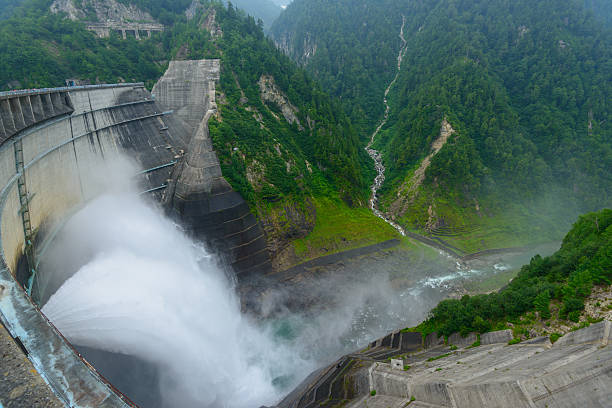
One of Japan’s best-known hydroelectric plants is Kurobe No. 4, in Toyama Prefecture, with generating capacity of 335 MW.
Forest resources of Japan
Japan is known as a nation that values and protects its natural resources, especially its forests, which cover 68.41% of its land area, equivalent to 249,350 km². That places Japan 21st worldwide for forest area.
Conserving this resource is fundamental to the Japanese economy and to people’s wellbeing, since it supplies timber, paper and other forest products, as well as providing important habitat for the country’s wildlife and plant life.
Environmental performance and protection of Japan’s natural resources
Japan’s Environmental Performance Index (2024) score is 61.4, ranking twenty-seventh (27th), according to the Environmental Performance Index 2024 results (Yale University). The country also has 15.24% of protected land and marine areas relative to its total territorial area. Protecting natural resources this way is fundamental to maintaining biodiversity and preserving ecosystems.
Natural parks of Japan: the hidden wealth of natural resources
Biodiversity: animal and plant resources of Japan
Birds of Japan
Japan is a country of great bird diversity, with a total of 593 species as of 2023. It ranks 64th in the world for bird species diversity.
Of those species, 24 are endemic. However, 49 bird species are endangered, so protecting this valuable natural resource matters.
Among Japan’s most emblematic species is the copper pheasant, one of the country’s most representative birds.

Fish and amphibians of Japan
In 2023, 107 amphibian species were recorded in the country, representing 1.23% of global amphibian diversity.
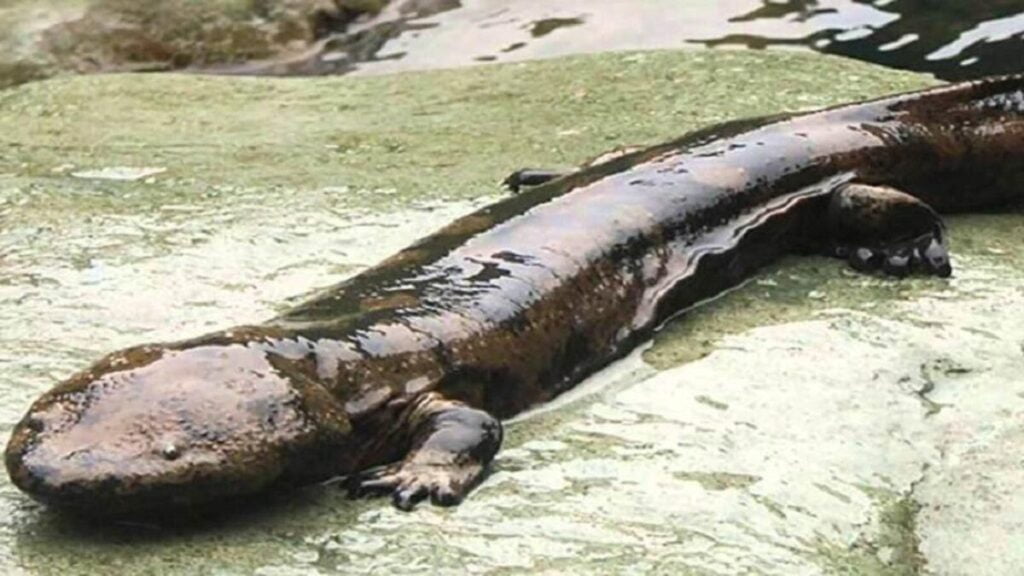
Japan has a total of 4,054 fish species, making it the fourth country by number of fish species in the world. Of those, however, 77 are threatened.
Among the most notable species are the Japanese giant salamander and the Pacific bluefin tuna.
Mammals of Japan
Japan is a country of great mammal diversity, with a total of 144 species as of 2016. However, 29 are threatened.
Worldwide, Japan ranks fifty-ninth for number of mammal species. It also had 46 endemic mammal species as of 2020.
The Japanese macaque stands out, a monkey found on Honshu, Shikoku and Kyushu and some smaller islands.

Reptiles of Japan
Japan has a total of 98 reptile species, placing it 79th worldwide. Among the most notable is the Japanese grass lizard (Takydromus tachydromoides), a species endemic to the country.
Plants of Japan
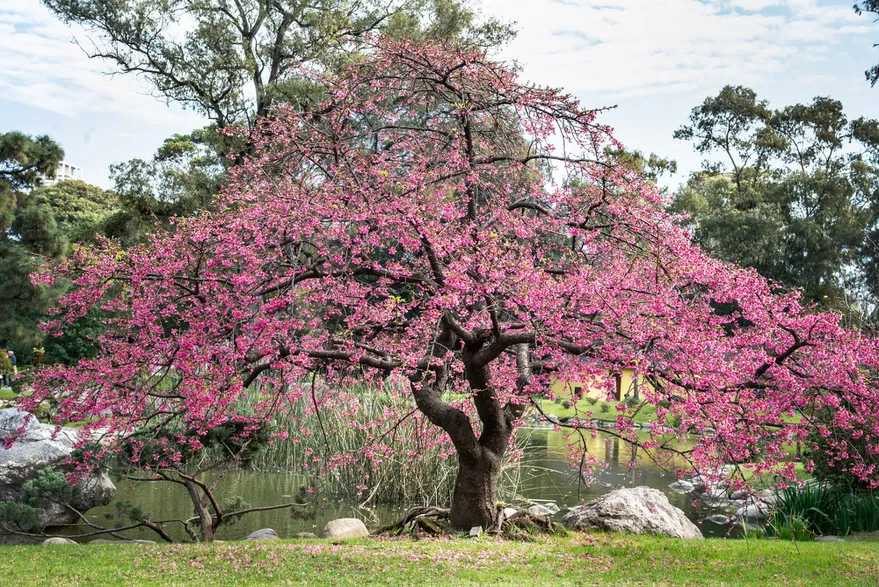
Japan has great vascular plant diversity, with a total of 5,600 species recorded in 2020, placing it 38th worldwide. The country’s flagship plant is the Japanese cherry, known for the beautiful pink blossom that draws tourists from around the world during sakura season.
Organizations that protect or study Japan’s natural resources
- WWF Japan – Protects biodiversity and promotes the conservation of natural resources in Japan.
- Greenpeace Japan – Campaigns against pollution and promotes renewable energy in Japan.
- Japan Environmental Action Network – Promotes environmental education and the protection of nature in Japan.
- National Institute for Environmental Studies – Carries out research and studies on the environment in Japan.
- Ministry of the Environment – The Japanese government body responsible for environmental protection and promoting sustainability.
- Japan Wildlife Conservation Society – Protects wild animals and plants in Japan through research and education.
Japan’s real natural endowment lies not in mineral or energy deposits but in three assets: forests covering 68.4% of the territory (World Bank, 2023), an exclusive economic zone of some 4.47 million km² (EEZ of Japan (Japan Coast Guard), 2024) and fisheries. For energy and minerals, the country depends on imports: Japan imports 97% of its oil (EIA, via Energy in Japan, 2022-2023).
Dependence on energy imports
Japan lacks significant fossil reserves and meets its demand through imports. Fossil fuels generated 69% of electricity in 2022, according to official projections that aim to cut that figure to 41% by 2030 (EIA, 2024).
- The country imports 97% of the oil it consumes, a 2022 figure (EIA, via Energy in Japan, 2022).
- For decades Japan was the world’s largest importer of liquefied natural gas (LNG), and it remained the leading importer in 2022 (EIA, via Energy in Japan, 2022).
Exclusive economic zone and fisheries
Japan’s EEZ covers 4,479,674 km², close to 11.8 times the national land area (EEZ of Japan, 2024). Measured by water volume, this zone ranks fourth in the world, and Japan leads the ranking for waters deeper than 5,000 meters (Ocean Policy Research Institute, 2018).
- Total fisheries and aquaculture production reached 3.8 million tonnes in 2023 (MAFF, via Nippon.com, 2024).
- Aquaculture accounted for 880,000 tonnes, 23% of the total (MAFF, via Nippon.com, 2024).
- Marine capture fisheries contributed close to 2.9 million tonnes that year (MAFF, via Nippon.com, 2024).
The electricity mix after Fukushima
The Fukushima accident in 2011 cut nuclear generation and increased the weight of imported fuels. In 2024, nuclear power supplied 8.2% of electricity and fossil fuels 65.1% (ISEP, 2025).
- Renewables reached 26.7% of electricity in 2024, up from 25.7% in 2023 (ISEP, 2025).
- By source: solar 11.4%, hydro 7.9%, biomass 5.9%, wind 1.13% and geothermal 0.33% (ISEP, 2025).
- LNG generated 29.1% and coal 28.2% of electricity in 2024 (ISEP, 2025).
Forest cover of 68%
Forests occupy 68.4% of Japanese territory, a share that has been stable since 2021 (World Bank, 2023). On the metric for loss of intact forest landscapes, Japan scored 98.0 points and took first place worldwide (Yale EPI, 2024).
Environmental performance (EPI)
Japan scored 61.4 points and ranked 27th of 180 countries on the 2024 Environmental Performance Index (Yale EPI, 2024).
- Climate change: 59.7 points, 13th (Yale EPI, 2024).
- Environmental health: 67.3 points, 28th (Yale EPI, 2024).
- Ecosystem vitality: 59.2 points, 48th; on biodiversity and habitat the country fell to 97th with 47.4 points (Yale EPI, 2024).
Frequently asked questions
What are Japan’s main natural resources?
Its natural assets are forests, which cover 68.4% of the territory (World Bank, 2023), an EEZ of 4.47 million km² (EEZ of Japan, 2024) and fisheries. Mineral and energy resources are scarce.
Why does Japan import so much energy?
It lacks sufficient fossil reserves: the country imports 97% of its oil (EIA, via Energy in Japan, 2022-2023).
What share of Japanese electricity is renewable?
Renewable sources generated 26.7% of electricity in 2024, with solar the largest contributor (11.4%) (ISEP, 2025).
Sources used
- Annex: Countries by mineral production – Wikipedia
- Economic data by country – The Global Economy
- Forest area (km²) – World Bank
- Forest area as a percentage – World Bank
- Oil reserves – The Global Economy
- Coal reserves – Worldometers
- Water and agriculture statistics – FAO
- Precipitation (mm) – World Bank
- Yale Center for Environmental Law & Policy — Environmental Performance Index 2024 (accessed June 13, 2026)
- Bird species – Mongabay
- Amphibian species by country – Mongabay
- Mammal species – Mongabay
- Endemic mammal species – Our World in Data
- Plant species – Mongabay
- Reptile species by country – Mongabay
- Endemic bird species by country – Our World in Data
The Agency for Natural Resources and Energy of Japan (ANRE) reported in 2023 that the country has expanded its solar capacity past 80 GW installed, putting it among the world leaders.
Last updated: September 26, 2026
Leave a Reply