

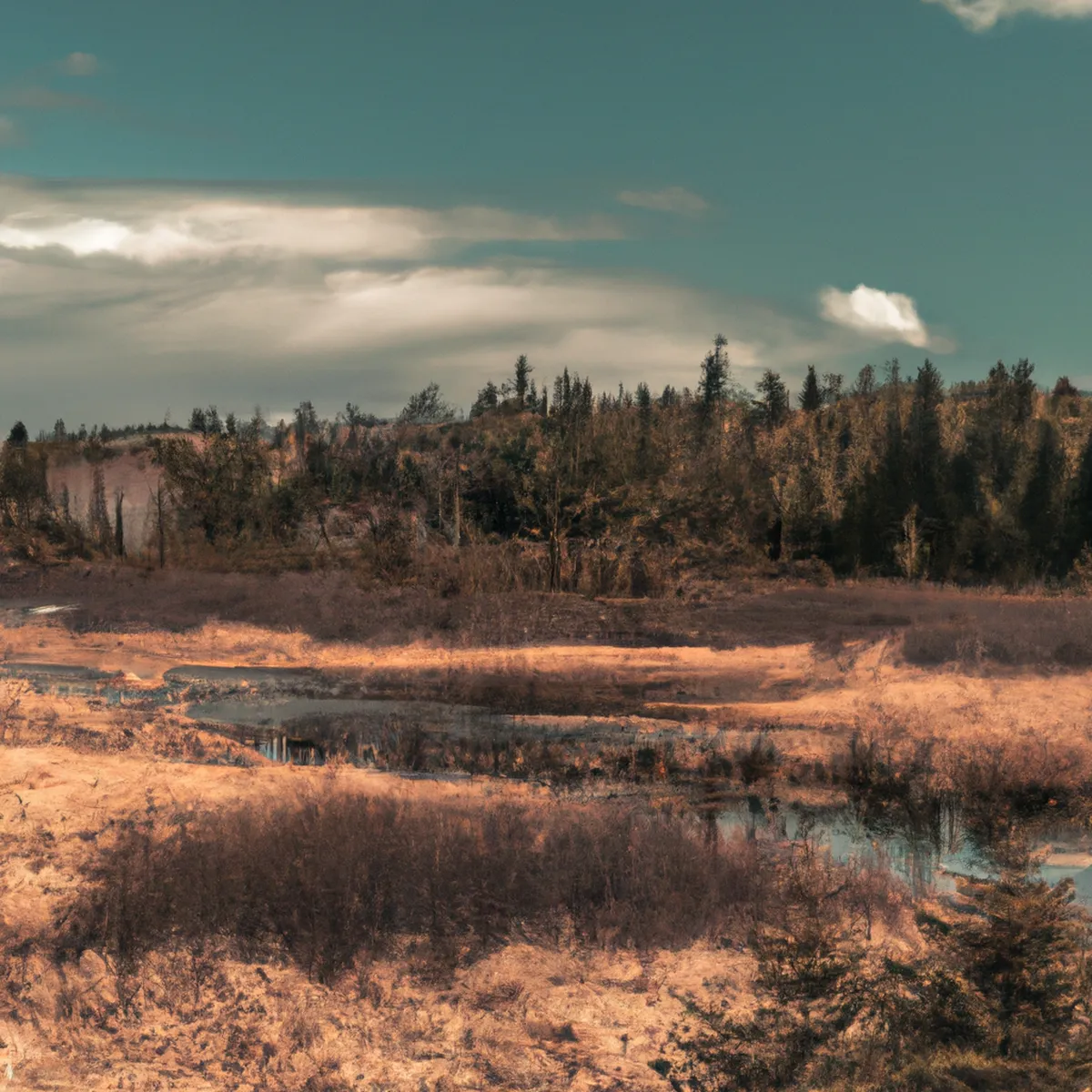
Canada’s natural resources make it the world’s fourth-largest oil producer, at some 5.1 million barrels a day in 2024, and the holder of the planet’s fourth-largest freshwater reserve, at 2,902 km³. Its forests cover 39.46% of the territory, and it produces gold, copper, iron ore and aluminum. What are the natural resources of Canada?
Canada is a country rich in natural resources, with vast stretches of forest, rivers and lakes, abundant biodiversity and large mineral and energy reserves. Its favorable geographic position gives it access to important trade routes and to a wide variety of climates and ecosystems.
Table de contenidos
Managing Canada’s natural resources sustainably is crucial to the country’s environmental and economic balance, and extracting them responsibly is a constant challenge for its economy.
Which are the most notable natural resources in Canada? What mineral wealth does Canada hold, and where does it sit in the global rankings? How diverse are the plants, animals and fish in Canada? How is the land used, and how much does Canada protect its biodiversity?
Natural Resources
Natural resources are materials or energy sources provided by or found on Earth that are useful to humans. Every product we manufacture is made up of natural resources.
- Renewable resources: these can be restored by natural processes faster than the rate at which they are consumed. Examples include solar radiation, wind, hydroelectric power, water when used properly, and plant and animal life.
- Non-renewable resources: once extracted, these are depleted and cannot regenerate. Examples include hydrocarbons, metals and minerals.
Examples of Canada’s main natural resources
What Canada’s subsoil is worth
Economic weight of the country’s natural wealth and the conservation status of its territory.
| Total natural resource rents | 4.9% of GDP2021 |
|---|---|
| Oil rents | 2.8% of GDP2021 |
| Mineral rents | 1.2% of GDP2021 |
| Forest cover | 39.5% of the territory2023 |
| Protected land area | 12.9% of the territory2025 |
| Land area | 8,788,700 km²2023 |
| Resource | Reserves / Production | Source |
|---|---|---|
| Oil | 5.13 million barrels/day (2024); 4th in the world | Canada Energy Regulator 2024 |
| Natural gas | 199.0 billion m³ (2024); 5th in the world | EIA |
| Fresh water | 2,902 km³; 4th-largest reserve worldwide | FAO |
| Forests | 39.46% of the territory; 3rd in the world | World Bank |
| Coal | 39.6 million t (2020); 16th in the world | USGS |
| Aluminum | 2,900 thousand t (2019); 4th in the world | USGS |
Oil and gas resources in Canada
Canada is one of the world’s leading oil producers. In 2024 its daily oil output reached around 5.13 million barrels (Canada Energy Regulator, 2024), keeping it among the largest producers in the world.
It also holds a great volume of oil reserves, estimated at some 163 billion barrels, placing it fourth in the world ranking. Canada is known as a region rich in natural resources, with oil among its main exports.
Canada also has abundant natural gas resources, giving it dry natural gas output of 199.0 billion cubic meters in 2024 (EIA). The country sits fifth (5th) in the world ranking of natural gas producers.
Examples of Canada’s mineral resources
Canada is a significant producer of coal, with output of 39.6 million tonnes in 2020, placing it sixteenth (16th) in the world ranking. It also holds coal reserves of 7,255,404,420 short tons (about 6.58 billion tonnes) as of 2016, or 0.60% of the world’s coal reserves. The main producing region is the province of British Columbia.
In 2019, production of aluminum in Canada reached 2,900 thousand tonnes, placing it fourth in the world ranking. The main aluminum-producing region in Canada is Quebec, one of the most competitive areas in the world for producing this metal.
In 2020, production of copper in Canada reached 570 thousand tonnes, placing it eleventh in the world ranking. The main copper-producing region in Canada is British Columbia, which holds major deposits of this metal.
In 2019, production of iron ore in Canada reached 54,000 thousand tonnes, placing it eighth in the world ranking for iron ore production. That figure represents an important contribution to the global market for this resource, making Canada one of the main iron ore producers in North America.
Canada is the world’s fourth-largest producer of platinum with output of 7,400 kilograms in 2019.
Canada is one of the world’s leading producers of gold worldwide, with output of 170 tonnes in 2020 and reserves of 2,000 tonnes. It ranks fifth in the world. The main gold-producing province is Ontario.
Water resources of Canada
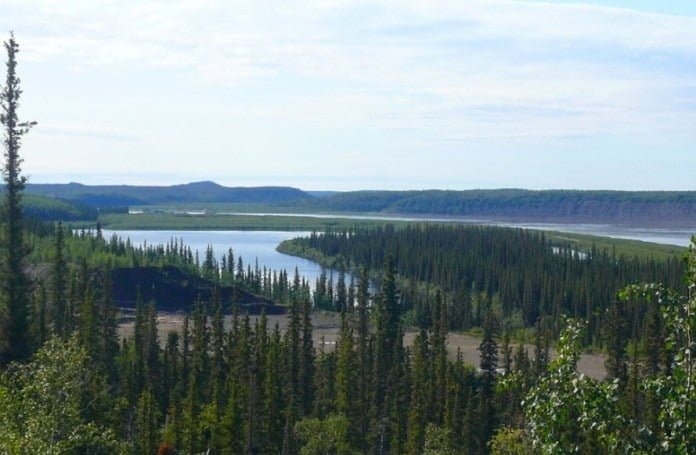
Canada holds an impressive freshwater reserve of 2,902 km³, placing it fourth in the global ranking of water reserves as of 2020. Among the country’s main bodies of water are the St. Lawrence and Mackenzie rivers, along with Lake Superior, the largest of the Great Lakes.
Average rainfall and soils of Canada
Canada has average annual rainfall of 537 mm, ranking one hundred and twentieth (120th) worldwide. The country’s actual humidity shapes its soils, which range from damp, boggy ground in the rainiest regions to dry, arid soils elsewhere.
Renewable electricity and hydropower production in Canada
Canada is one of the world leaders in renewable energy production, generating 416.8 TWh of electricity from renewable sources in 2025 — 64% of its total generation of 652.4 TWh (Ember, 2025). The country’s largest hydroelectric plant is Robert-Bourassa, in Quebec, with installed capacity of 5,616 MW, followed by Churchill Falls, in Labrador (5,428 MW); both are among the largest in the world.
Canada’s hydropower output is striking at 344.7 TWh in 2025: 83% of the country’s renewable electricity and 53% of its total generation (Ember, 2025).
Forest resources of Canada
Canada is known as one of the world’s principal forest regions. It has a forest area of 3,468,171 km², representing 39.46% of its land area. This natural resource is central to the country’s economy, since it is used to produce paper, timber and other products.
Canada ranks third in the world for forest area.
Environmental performance and protection of Canada’s natural resources
Canada is a country that values the protection of its natural resources. On the Environmental Performance Index (EPI) 2024, Yale University, Canada scored 61.1 and ranked twenty-eighth (28th). One of the measures the country has taken to protect its environment is the creation of protected land and marine areas, which account for 10.80% of its total territorial area.
Natural parks of Canada: the hidden wealth of natural resources
Biodiversity: animal and plant resources of Canada
Birds of Canada
Canada has rich bird diversity, with a total of 518 species recorded in 2018, placing it 69th worldwide. Although it had no endemic bird species as of 2020, 24 of its species are endangered.
Canada has no official national bird; among its most emblematic species is the common loon, which appears on the one-dollar coin.

Fish and amphibians of Canada
In 2019, 46 amphibian species were recorded in the country, placing it 58th worldwide.
Canada has a total of 1,140 fish species, ranking 31st worldwide. However, 44 of those fish species are threatened. The country’s flagship amphibian and fish species are the wood frog and salmon.
Mammals of Canada
Canada is a country of great mammal diversity, with a total of 202 species as of 2016. Of those, however, 18 are threatened.
Worldwide, Canada ranks 37th for number of mammal species. It also has 5 endemic mammal species.
Although its world ranking for endemic mammals is 38th, protecting and preserving these unique species matters. Canada’s official national animal is the beaver.

Reptiles of Canada
Canada has a total of 54 reptile species, placing it 98th worldwide for diversity of these animals. Its flagship species is the horned lizard, endangered by the loss of its natural habitat.
Plants of Canada
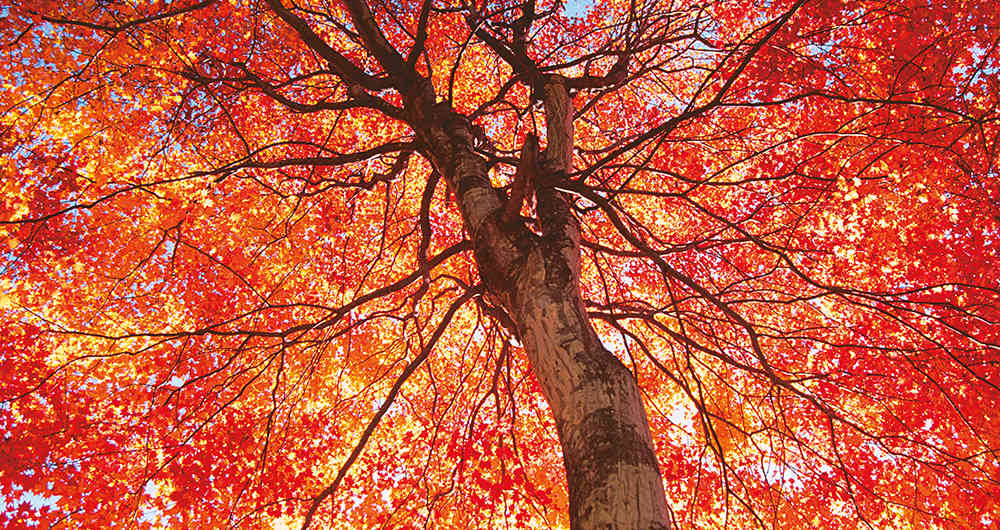
Canada has great vascular plant diversity, with a total of 3,893 species recorded in 2020, placing it 57th worldwide. The country’s flagship plant is the maple, whose star-shaped leaves and characteristic red fall color are a national symbol.
Organizations that protect or study Canada’s natural resources
- Nature Conservancy of Canada – Conservation of land and natural habitats in Canada.
- Environment and Climate Change Canada – Federal government body focused on environmental protection and climate change.
- David Suzuki Foundation – Promotes environmental and sustainable solutions in Canada.
- World Wildlife Fund Canada – Protection of wildlife and its habitats in Canada.
- Sierra Club Canada – Organization focused on the conservation and protection of the Canadian environment.
- Canadian Parks and Wilderness Society – Protection of wilderness areas and national parks in Canada.
- Ecojustice – Legal advocacy on environmental issues and the protection of natural resources in Canada.
Canada holds the largest potash reserves on the planet: 1.1 billion tonnes of potassium oxide (K₂O), first in the world according to Natural Resources Canada, 2024. The country supplied 32.8% of global output of this fertilizer in 2024. Its resource base combines mining, boreal forest, fresh water and oil sands, with sharp contrasts between world leadership and environmental pressure.
Potash, uranium and nickel: Canada’s mining weight
Canada is the world’s largest producer and exporter of potash. In 2024 it produced close to 25 million tonnes of potassium chloride and exported 22.9 million, more than 39% of world trade, according to Natural Resources Canada, 2024.
That leadership extends to other strategic minerals, measured by production and reserves:
- Uranium: 14.3 kilotonnes extracted in 2024, second-largest producer worldwide with 24% of supply and the third-largest global reserve (more than 588,000 tonnes of elemental uranium), according to Natural Resources Canada, 2024.
- Nickel: 125,364 tonnes in 2024, fourth-largest producer worldwide with close to 4% of the total; its reserves of 2.2 million tonnes rank eighth, according to Natural Resources Canada, 2024.
Fresh water: water yield and the Great Lakes
Canada records the third-largest supply of renewable fresh water in the world. Average annual water yield was 3,478 km³ between 1971 and 2013, equivalent to 103,899 m³ per capita, according to Statistics Canada, 2017.
The Great Lakes, shared with the United States, hold around 18% of the world’s surface freshwater stock, according to Statistics Canada, 2010.
Boreal forest: 307 million forested hectares
Canada has 369 million hectares of forest, close to 9% of the world total, according to Natural Resources Canada, 2023.
The boreal zone accounts for most of that area:
- Canada’s boreal zone covers 552 million hectares, 28% of the world’s boreal zone, according to Natural Resources Canada, 2024.
- Of that zone, 307 million hectares are forested land, equivalent to 75% of all the country’s forests, according to Natural Resources Canada, 2024.
Oil sands: 98% of oil reserves
Canada holds 163 billion barrels of proven oil reserves. The oil sands account for 159 billion, 98% of the total, and constitute the world’s fourth-largest proven oil reserve, according to Natural Resources Canada, 2024.
Oil sands production reached 3.5 million barrels a day in 2024, according to the same source. Total natural resource rents represented 4.95% of Canadian GDP in 2021, according to World Bank, 2021.
Protected areas: 12.9% of the land territory
Canada’s protected land area is equivalent to 12.9% of the country’s area, according to World Bank, 2024.
The international register counts 15,846 protected areas and 490 other effective area-based conservation measures (OECMs), according to Protected Planet, 2025.
Frequently asked questions
What is Canada’s main mineral resource?
Potash. Canada leads the world with reserves of 1.1 billion tonnes of K₂O and 32.8% of global supply in 2024, according to Natural Resources Canada, 2024.
What share of Canada’s oil reserves is in the oil sands?
98%. The oil sands account for 159 billion of the 163 billion proven barrels and form the world’s fourth-largest reserve, according to Natural Resources Canada, 2024.
Where does Canada rank in uranium production?
Second in the world, with 24% of supply and 14.3 kilotonnes extracted in 2024; its reserves rank third globally, according to Natural Resources Canada, 2024.
Sources used
- Lists of countries by mineral production
- Economic data by country
- Forest area (km²)
- Forest area as a percentage
- Arable land area (km²)
- Canada’s oil reserves
- Coal reserves
- Water and agriculture statistics
- Precipitation (mm)
- Environmental performance index
- CO2 emissions (metric tonnes per capita)
- Bird species
- Amphibian species by country
- Mammal species
- Plant species
- Reptile species by country
Last updated: September 26, 2026
Leave a Reply