

Non-renewable natural resources are materials that exist in fixed quantities and, once used up, do not come back on a human timescale. What are the best-known non-renewable natural resources? Oil, coal, natural gas, metallic minerals such as lithium, and nuclear uranium. They took millions of years to form, they pollute when burned, and oil and gas reserves are estimated in decades.
Non-renewable natural resources are those that exist in limited quantities and, once used up, do not come back on a human timescale. Understanding where they fit alongside renewable flows is detailed in our guides to types of natural resources and renewable vs. non-renewable resources. Oil, coal, natural gas and minerals are the best-known examples. They took millions of years to form, so once they run out there is no way to replace them any time soon.
Contents
What exactly are they?
A non-renewable resource is a material that nature produced in the past through very slow geological processes, and that we now extract far faster than it takes to form. Oil, for example, came from organic remains buried for millions of years. However carefully we use it, reserves are finite, and every barrel burned is one fewer for the future.
Main characteristics
These resources share several traits:
- They are limited: there is a fixed quantity on the planet.
- They regenerate very slowly, on timescales of millions of years.
- They are concentrated in specific areas, which creates dependence and trade between countries.
- They tend to pollute when extracted or burned, fossil fuels above all.
- Their price rises as they grow scarcer and harder to extract.

Types and examples
They fall into four broad families:
- Fossil fuels: oil, coal and natural gas, used to generate energy and power transport.
- Metallic minerals: iron, copper, gold, aluminum and lithium, essential to industry and technology.
- Non-metallic minerals: salts, gypsum, phosphates and construction stone.
- Nuclear fuels: such as uranium, which powers nuclear plants.

How long will reserves last?
Nobody knows the exact date, but estimates point to decades for oil and gas, and somewhat longer for coal. The calculation shifts when new deposits are found or extraction technology improves. What is certain is that these resources have their days numbered, which is why the debate about replacing them grows more urgent.
Calculator: how many years will reserves last?
Why they run out, and why their reserves still grow
What makes them non-renewable is the timescale. Coal is classified that way “because it takes millions of years to form,” and oil comes from the remains of plants and animals that lived millions of years ago and were transformed by the heat and pressure of overlying sediment (EIA, coal; EIA, oil). On the scale of a human life, or of a civilization, what is extracted does not come back.
The paradox is that reserve figures tend to rise. The explanation lies in two U.S. Geological Survey definitions (USGS, Appendix C): a resource is a natural concentration whose economic extraction is “currently or potentially feasible”; reserves are only the part that could be economically extracted “at the time of determination.” So-called marginal reserves would become producible given changes in economic or technological factors. That is why, when prices rise or techniques improve, part of the resource starts counting as reserves without a single new gram appearing in the Earth’s crust.
Lithium shows this well: the USGS put world reserves at 14 million tonnes (USGS, 2016) and at 37 million ten years later, while measured and indicated resources total about 150 million (USGS, 2026). That is, 37 ÷ 14 ≈ 2.6 times more reserves, and still only a quarter of what is known.
Worked example: world oil reserves between 2010 and 2020
- Data: the Statistical Review of World Energy (bp’s 2021 edition, a series now published by the Energy Institute) gives world proved reserves of 1,636.9 billion barrels at the end of 2010 and 1,732.4 billion at the end of 2020 (Statistical Review 2021, archived copy).
- Change: 1,732.4 − 1,636.9 = +95.5 billion barrels, an increase of 5.8%.
- What was pumped in the meantime: the same source records world output of between 84 and 95 million barrels a day from 2011 to 2020; adding up each year × 365 days gives about 329 billion barrels.
- Deduction: to end the decade with more reserves after extracting 329, about 95.5 + 329 ≈ 424 billion barrels had to be added through discoveries and revisions. Of the net increase, 33.8 came from the United States, whose reserves went from 35.0 to 68.8 (nearly double); the EIA notes that more cost-effective drilling technology helped boost U.S. production from 2009 through 2019.
- Conclusion: oil did not regenerate; what moved was the line between resource and reserve. The physical total underground can only go down.
A caveat from the source itself: the series includes gas condensate and natural gas liquids, and it does not necessarily follow the definitions companies use to report their reserves.
| Resource | How it formed | Main uses | Recyclable? |
|---|---|---|---|
| Oil | Remains of plants and animals (diatoms) buried millions of years ago; heat and pressure | Fuels such as gasoline, diesel and heating oil | Not as a fuel: it is used up when burned |
| Natural gas | Organic matter buried millions to hundreds of millions of years ago, transformed by heat and pressure | Fuel and feedstock for materials and chemicals | No |
| Coal | Plants from swampy forests of hundreds of millions of years ago, covered by layers of dirt and rock | Electricity; coke for the iron and steel industry | No |
| Uranium | A common metal in rocks worldwide, in concentrated ore deposits | Fuel for nuclear power plants (fission of U-235) | Partly: spent fuel can be reprocessed to recover uranium, although this is not permitted in the United States |
| Copper | Mainly porphyry deposits associated with igneous intrusions, which yield about two-thirds of the world’s copper | In the U.S.: building construction 42%, electrical and electronic products 23%, transportation 18% | Yes: scrap supplied about 30% of U.S. copper in 2025 |
| Lithium | Continental brines (salt flats) and minerals such as pegmatites | Batteries, 88% of global use | Emerging: battery recycling plants were still under construction in 2025 |
Their weight in daily life
We may not see them, but they are everywhere. Plastic comes from oil, the steel in buildings contains iron, and the phone in your pocket uses lithium, cobalt and other minerals. That dependence explains why their price weighs so heavily on the economy and why their scarcity worries so many sectors.
Why their use is a concern
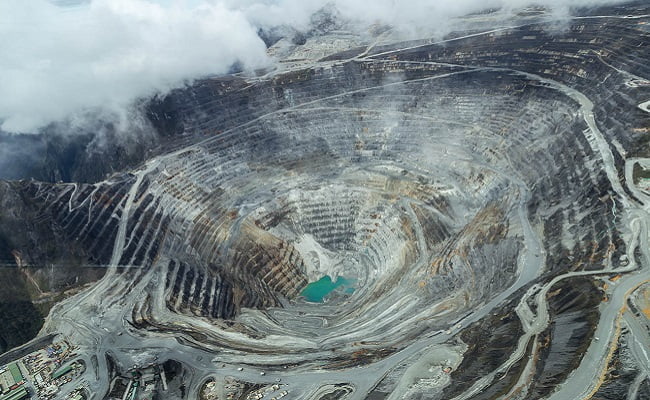
The problem is not only that they run out. Burning fossil fuels releases carbon dioxide, the main gas behind climate change. Mining and oil wells also leave their mark on the landscape and on water. That is why it is worth using them thoughtfully and supporting responsible consumption that reduces demand.
Toward a different model
The way out lies in using these resources less and better, and making room for other sources. Set against them are renewable natural resources, such as sun and wind, which do not run out and pollute far less. The transition is not immediate, but every step toward clean energy extends the life of what we still have.
Understanding what non-renewable resources are helps in making better decisions, from a country’s energy policy to what each household consumes.
The International Energy Agency (IEA) noted in 2023 that the use of oil and gas, the main non-renewable natural resources, must fall by 75% by 2050 in order to limit global warming to 1.5 °C.
Organizations that protect or study non-renewable natural resources
- International Energy Agency (IEA): analyzes world markets for oil, gas, coal and energy minerals.
- Natural Resource Governance Institute (NRGI): promotes responsible governance of oil, gas and minerals.
- EITI – Extractive Industries Transparency Initiative: the global transparency standard for non-renewable resource extraction.
- USGS – Mineral Resources: studies and quantifies the world’s mineral and energy resources.
- International Resource Panel (UNEP): assesses the sustainable use of natural resources, including non-renewables.
- IRENA – International Renewable Energy Agency: drives the transition from fossil fuels to clean energy.
Last updated: September 26, 2026




Leave a Reply