

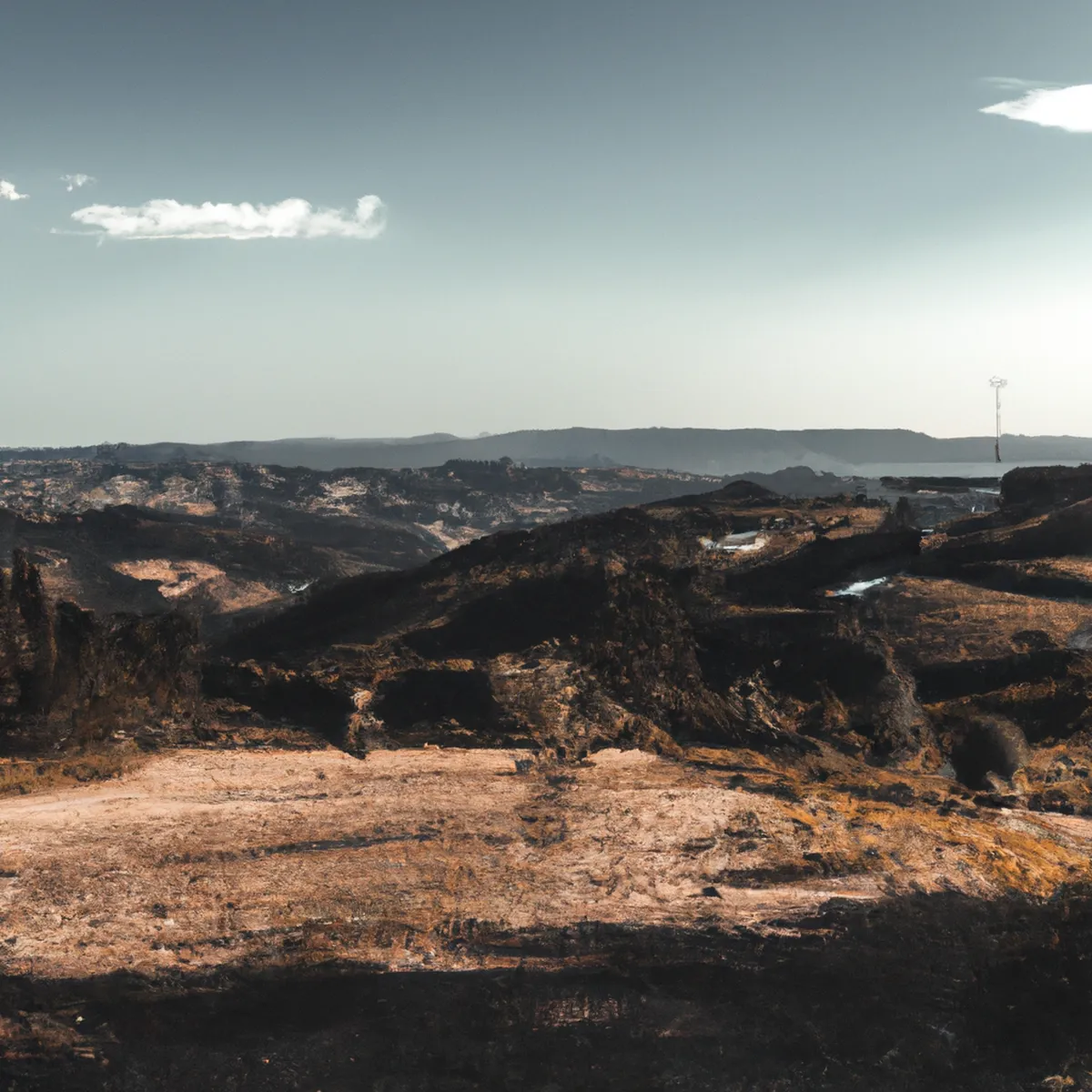
Portugal’s natural resources combine world-leading non-timber forest products like cork with strategic minerals, including the European Union’s largest lithium deposits and rich copper-zinc volcanogenic massive sulfides. The country possesses 69.7 km³ of renewable freshwater, major rivers like the Douro and Tagus, and an advanced renewable grid where hydro supplied 15.2 TWh in 2025 (Ember), supported by the 520 MW Alqueva reservoir complex. What natural resources drive Portugal’s green transition?
Portugal is an Atlantic nation located on the southwestern edge of the Iberian Peninsula, endowed with a diverse range of natural resources shaped by Mediterranean and Atlantic oceanic climates. Flanked to the east and north by Spain and bordered to the south and west by the Atlantic Ocean, Portugal serves as a pivotal gateway within Europe’s natural resources network.
Table de contenidos
The country’s wealth includes metallic mineral resources such as copper, tin, tungsten, and the largest commercial lithium reserves in the European Union, alongside globally dominant cork oak agroforestry landscapes (montados) and expansive marine exclusive economic zones (EEZ). Furthermore, Portugal has emerged as a continental leader in renewable energy deployment, integrating hydro, wind, and solar into its power system. To explore how Portugal’s resource profile benchmarks globally, see our international overview on natural resources by country.
What is Portugal’s global ranking in mineral production, freshwater availability, and clean energy generation? How is its rich wildlife—from the Iberian wolf to marine pelagic fisheries—conserved? The following guide provides a thorough, data-driven examination of Portugal’s natural resources based on official 2026 reporting.
Natural Resources
Natural resources are matter or energy flows provided by the Earth that humans harness for socioeconomic sustenance, industrial manufacturing, and overall well-being, as detailed in our guide to the types of natural resources.
- Renewable resources: naturally replenished through biogeochemical cycles or biological growth faster than they are consumed. Examples include solar radiation, wind flows, hydroelectric generation, sustainable timber, cork bark, and fisheries (see renewable vs non-renewable resources).
- Non-renewable resources: finite geological formations that took millions of years to accumulate and cannot regenerate within human timeframes. Examples include metallic ores, lithium salts, and industrial minerals.
Examples of the Main Natural Resources of Portugal
Resource Production and Land Use in Portugal
Natural resource rents, marine capture fisheries, and agricultural land use patterns.
| Natural resource rents | 0.3% of GDP2021 |
|---|---|
| Capture fisheries | 237,008 t annually2024 |
| Agricultural land | 43.3% of land area2023 |
| Arable land | 10.1% of land area2023 |
| Forest cover | 36.2% of land area2023 |
| Protected terrestrial area | 23.0% of land area2025 |
Map of Natural Resources in Portugal by Region
Portugal is organized into the North, Center, Lisbon, Alentejo, Algarve, and Atlantic archipelagos, each with distinct natural resources.
Madeira and the Azores are Atlantic archipelagos and are not shown on the mainland map.
| Resource | Reserves / Production | Source |
|---|---|---|
| Freshwater | 69.7 km³ (2020); 72nd worldwide | FAO |
| Precipitation | 854 mm/year; 85th worldwide | World Bank |
| Renewable electricity | 41.4 TWh renewable (2025); 15.2 TWh hydro | Ember |
| Forests | 36.16% of land area (33,120 km², 2023) | World Bank 2023 |
| Environmental performance | EPI 61.9; rank 26/180 | Yale EPI 2024 |
| Birds | 310 species | Mongabay |
Water Resources of Portugal
Portugal possessed renewable freshwater reserves of 69.7 km³ in 2020, positioning it 72nd globally according to FAO AQUASTAT. This water resource framework is heavily influenced by major transboundary rivers originating in Spain—the Douro, Tagus (Tejo), Guadiana, and Minho—which together drain more than 60% of mainland Portuguese territory.
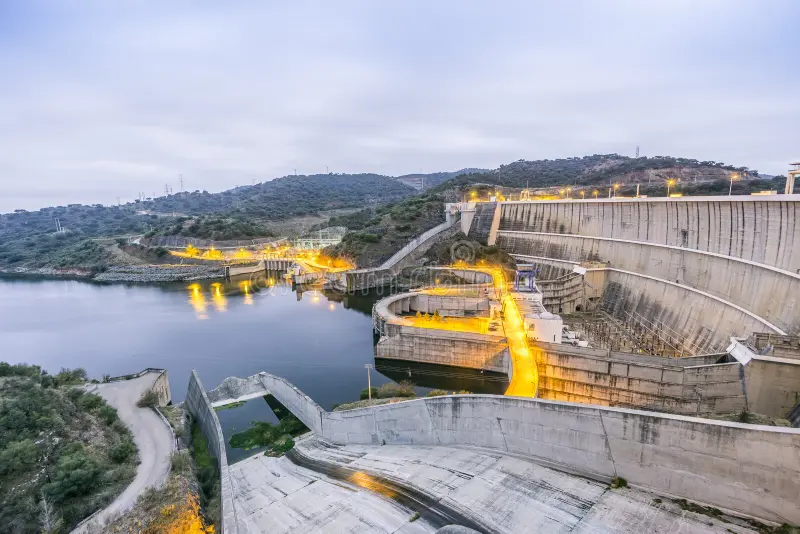
Among domestic river systems, the Mondego River is the longest river flowing entirely within Portuguese borders. In the southern interior, the Alqueva reservoir on the Guadiana River constitutes the largest artificial lake in Western Europe, spanning 250 km² and storing 4.15 billion m³ of water to support strategic irrigation and grid stabilization.

Average Precipitation and Soils of Portugal
Portugal records an average annual precipitation of 854 mm, ranking 85th globally. Rainfall patterns exhibit a stark climatic divide: the mountainous northwest (Minho and Douro Litoral) receives upwards of 1,500 mm to 2,500 mm annually, nourishing verdant landscapes, while the southern plains of the Alentejo and Algarve receive under 500 mm, requiring advanced irrigation for intensive olive and almond orchards.
Renewable Electricity Generation and Hydropower in Portugal
Portugal is a pioneer in clean energy resources, having completely eliminated coal power generation in 2021. In 2025, Portugal generated 41.4 TWh of renewable electricity — 81% of its total generation of 51.1 TWh — and hydropower supplied 15.2 TWh (Ember). Hydro installations, notably the 520 MW Alqueva pumped-storage station and run-of-river dams along the Douro, operate in tandem with onshore wind farms and solar arrays to push renewable power share past 60% of domestic consumption.
Forest Resources of Portugal
Portugal’s forest resources represent 36.16% of total land area, encompassing 33,120 km² according to World Bank data. The northern and central mountains are dominated by maritime pine (Pinus pinaster) and eucalyptus plantations supplying the pulp and paper industry.
In the southern plains, the agro-silvo-pastoral system known as the montado features extensive stands of cork oak (Quercus suber) and holm oak (Quercus ilex), forming an internationally celebrated biodiversity sanctuary and the bedrock of Portugal’s cork economy.

Environmental Performance and Natural Resource Protection in Portugal
Portugal demonstrates strong environmental stewardship, earning an overall score of 61.9 in the Environmental Performance Index (EPI 2024, Yale University) and ranking 26th worldwide. Officially protected terrestrial areas cover 23.0% of the land surface, while marine protected designations are being expanded rapidly across Atlantic coastal waters and the archipelagos of Madeira and the Azores.
National Parks of Portugal: The Protected Wealth of Natural Resources
Biodiversity: Animal and Plant Resources of Portugal
Birds of Portugal
Portugal documents 310 bird species recorded as of 2018, ranking 117th globally. Located along the East Atlantic flyway, the country serves as an indispensable stopover for migratory waterfowl and raptors.
Iconic species include the Iberian imperial eagle (Aquila adalberti), the great bustard inhabiting Alentejo pseudosteppes, and the white stork nesting across rural cliffs and urban structures.
Fish and Amphibians of Portugal
Portugal supports 22 amphibian species, including Iberian endemic salamanders and the Iberian ribbed newt (Pleurodeles waltl). In marine and freshwater environments, the country registers 558 fish species, with commercial marine fisheries harvesting European sardine (Sardina pilchardus), Atlantic horse mackerel, tuna, and cod.
Mammals of Portugal
Portugal records 90 mammal species, of which 15 are globally threatened. Outstanding conservation successes include the recovery of the Iberian lynx (Lynx pardinus) in the Guadiana Valley and the survival of the Iberian wolf (Canis lupus signatus) in northern mountainous river valleys.

Reptiles of Portugal
Portugal is home to 44 reptile species, placing it 104th in the world. Prominent species include the ocellated lizard (Timon lepidus)—one of the largest lizards in Europe—alongside the Lataste’s viper and Mediterranean pond turtle.
Plants of Portugal
Portugal possesses a rich botanical heritage comprising 2,800 vascular plant species documented in 2020. The cork oak (Quercus suber) was unanimously declared Portugal’s national tree in 2011, reflecting its unparalleled economic, cultural, and ecological significance.

Organizations Protecting or Researching Natural Resources in Portugal
- Quercus – Premier national environmental organization defending nature conservation, forest protection, and sustainable development.
- LPN (Liga para a Protecção da Natureza) – The oldest non-governmental conservation organization on the Iberian Peninsula, leading Iberian lynx and steppe bird recovery.
- FAPAS – Conservation association advancing wild bird protection, forest restoration, and environmental education.
- ICNF – State institute responsible for managing Portugal’s nature reserves, national forests, and wildlife conservation programs.
Cork Oak Forests: Global Production Leadership
Cork fundamentally defines Portugal’s natural resource identity. Portuguese cork exports exceeded €1.2 billion in 2022, reaching an all-time historical high (APCOR, 2023). Portugal commands a 58.5% share of global cork exports, supplying technical stoppers, aerospace insulation, acoustic architectural panels, and sustainable design materials worldwide.
Lithium: Strategic Benchmark for the European Union
Portugal stands as the sole country in the European Union with active commercial lithium mining production, extracting approximately 380 metric tonnes of lithium content in 2024 (USGS Mineral Commodity Summaries, 2025). Historically directed toward technical ceramics and specialized glass manufacturing, Portugal’s substantial hard-rock spodumene and petalite reserves in Barroso and Montalegre make it central to European electric vehicle supply chain strategies.
Renewable Electricity: Wind, Solar, and Hydro Surpassing 60%
Renewable energy sources supplied approximately 61% of Portugal’s total electricity consumption in 2023—a national record confirmed by grid operator REN (REN, 2023). Driven by balanced complementary contributions from run-of-river and pumped hydro, onshore wind, and rapid solar deployment, Portugal frequently runs for consecutive days entirely on clean energy.
Environmental Performance and Decarbonization Policy
Portugal achieved 26th place in the 2024 Environmental Performance Index with an aggregate score of 61.9 points (Yale EPI, 2024), gaining 2.5 points over the previous decade. The index highlights Portugal’s rapid coal phase-out, water sanitation infrastructure, and progressive marine protected area frameworks.
Frequently Asked Questions
What is Portugal’s primary natural resource?
Cork. Portugal is the undisputed global leader in cork production and processing, accounting for 58.5% of total international cork exports in 2022 (APCOR, 2023).
Does Portugal produce lithium?
Yes. Portugal is currently the only active lithium-mining member state in the European Union, extracting approximately 380 tonnes of lithium content in 2024 (USGS Mineral Commodity Summaries, 2025).
Sources and References Used
- List of Countries by Mineral Production – Wikipedia
- Economic Data by Country – The Global Economy
- Forest Area (km²) – World Bank
- Forest Area (% of Land Area) – World Bank
- AQUASTAT Water and Agriculture Statistics – FAO
- Average Precipitation in Depth (mm) – World Bank
- Environmental Performance Index (EPI 2024) – Yale University
- Bird Species by Country – Mongabay
- Amphibian Species by Country – Mongabay
- Mammal Species by Country – Mongabay
- Endemic Mammal Species by Country – Our World in Data
- Plant Species by Country – Mongabay
- Reptile Species by Country – Mongabay
- Endemic Bird Species by Country – Our World in Data
The Directorate-General for Energy and Geology of Portugal (DGEG) reported in 2023 that renewable sources generated over 61% of national electricity, establishing Portugal as one of the leading European champions in power sector decarbonization.
Last updated: September 26, 2026
Leave a Reply