


France’s natural resources include water, forests, minerals and energy. The country holds water reserves of 211 km³, produces 380 thousand tonnes of aluminum a year and generated 148.7 TWh of renewable electricity in 2025 (Ember). Its forest area covers 32.5% of the territory, watered by rivers such as the Seine and the Loire. What are the natural resources of France?
France, in Western Europe, is known for its rich history, culture and cuisine. Its natural resources, however, matter just as much.
Table de contenidos
The country has wide geographic diversity, which translates into a great variety of natural resources: forests, rivers, seas, mountains and fertile land. These resources are used across different industries, including agriculture, fishing, energy and manufacturing.
What are the natural resources of France? What wealth does the country hold? Which minerals does it have, and where does it stand globally? How much water does it have, and what does it use to produce energy? What diversity of wildlife and plant life does France host?
Natural Resources
Natural resources are materials or energy sources provided by or found on Earth that are useful to humans. Every product we manufacture is made up of natural resources.
- Renewable resources: these can be restored by natural processes faster than the rate at which they are consumed. Examples include solar radiation, wind, hydroelectric power, water when used properly, and plant and animal life.
- Non-renewable resources: once extracted, these are depleted and cannot regenerate. Examples include hydrocarbons, metals and minerals.
Examples of France’s main natural resources
France in figures: biodiversity under threat
Species at risk and protected area, with the latest available data.
| Threatened species | 172 mammals, birds, fish and plants2022 |
|---|---|
| Protected land area | 28.8% of the territory2025 |
| Protected marine areas | 49.2% of its waters2025 |
| Forest cover | 32.5% of the territory2023 |
| Annual change in forest area | +834 km² per year (2018–2023) |
| Land area | 538,950 km²2023 |
| Resource | Reserves / Production | Source |
|---|---|---|
| Oil | 11,770 barrels/day (2023) | The Global Economy 2023 |
| Aluminum | 380 thousand t (2019); 19th worldwide | USGS 2019 |
| Fresh water | 211 km³ (2020); 37th worldwide | FAO |
| Average rainfall | 867 mm/year | World Bank |
| Oil reserves | 78,431,000 barrels (2022); 107th worldwide | EIA |
Oil and gas resources in France
In 2023 France produced around 11,770 barrels of oil a day (The Global Economy, 2023), a lower figure than in previous years. It also held oil reserves of 78,431,000 barrels as of 2022, placing it one hundred and seventh in the world ranking. Its production comes mainly from the Paris and Aquitaine basins and represents a small part of its economy.
France is not known as one of the world’s leading oil producers.
With dry natural gas output of about 13 million cubic meters in 2024 (EIA), the country sits eighty-ninth (89th) in the world ranking.
Examples of France’s mineral resources
In 2019, production of aluminum in France reached 380 thousand tonnes, placing it nineteenth in the world ranking.
The main aluminum-producing region in France is Hauts-de-France, home to the country’s largest aluminum smelter, Aluminium Dunkerque.
Water resources of France
France held a freshwater reserve of 211 km³ as of 2020, placing it thirty-seventh in the global ranking of water reserves. This European country is home to two main rivers, the Seine and the Loire, and its most important lake is Lake Bourget.

Average rainfall and soils of France
France has average annual rainfall of 867 mm, placing it eighty-fourth worldwide. Because of that moisture, French soils are mostly fertile and well suited to agriculture, especially in the north and west of the country.
That moisture can also cause erosion and landslides in mountainous and coastal areas.
Renewable electricity and hydropower production in France
France is one of Europe’s leaders in renewable energy production: in 2025 it generated 148.7 TWh of electricity from renewable sources, about 26% of total generation, and hydropower (excluding pumped storage) supplied 59.4 TWh (Ember, 2025). Grand’Maison is the country’s most powerful hydroelectric plant.

That plant has installed capacity of 1,800 MW and generates about 1,420 GWh a year; as a pumped-storage station, it also uses about 1,720 GWh a year for pumping.
Forest resources of France
France holds considerable forest wealth, its main forest region being the Landes de Gascogne. In 2023 the country’s forest area reached 32.48% of its land area, equivalent to 175,032 km².
France ranks 35th in the world for forest area.
Environmental performance and protection of France’s natural resources
France has an Environmental Performance Index (EPI) 2024, Yale University score of 67.0 and ranks twelfth worldwide. It also has 36.39% of protected land and marine areas relative to its total territorial area. Protecting natural resources this way is fundamental to preserving the country’s biodiversity and ecological balance.
Natural parks of France: the hidden wealth of natural resources
Biodiversity: animal and plant resources of France
Birds of France
France has rich bird diversity, with a total of 357 species recorded in 2018, placing it 98th in the world ranking. The country hosts a considerable number of threatened species, 19 in total.
Among the most notable is the emblematic Gallic rooster, symbol of the nation.

Fish and amphibians of France
France has great diversity of amphibian and fish species, notably the salamander and the trout. In 2019, 42 amphibian species and 803 fish species were recorded in the country, ranking 61st and 67th respectively in the world for number of species.
Mammals of France
France has a total of 123 mammal species, of which 13 are threatened.
Reptiles of France
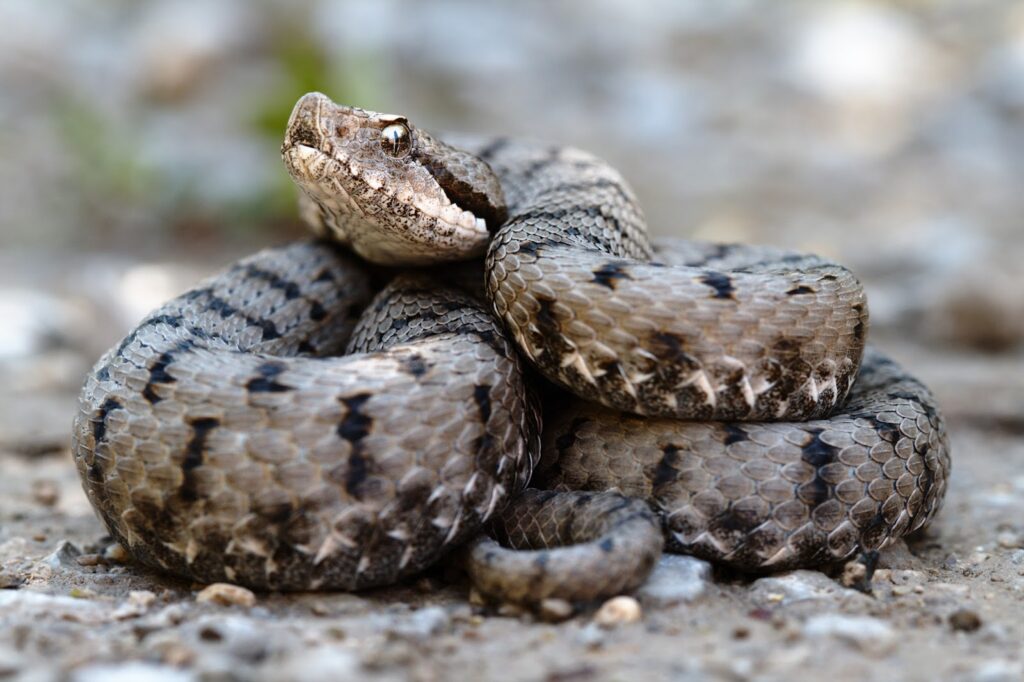
France has rich reptile diversity, with a total of 189 species recorded in 2019, placing it 43rd worldwide. Among the most notable is the asp viper, the flagship species of the country’s reptile fauna.
Plants of France
France has great vascular plant diversity, with a total of 4,700 species recorded in 2020, placing it 49th worldwide. The country’s flagship plant is the oak, found across much of French territory and an important element of its natural landscape.

Organizations that protect or study France’s natural resources
- WWF France: Works on biodiversity conservation and the fight against climate change in France.
- Greenpeace France: Defends the environment and promotes sustainable solutions in the country.
- League for the Protection of Birds (LPO): Protects birds and their habitats in France.
- Surfrider Foundation Europe: Protects and preserves coastlines and oceans in France and Europe.
- France Nature Environnement (FNE): Federation of environmental protection associations in France.
- Mountain Riders: Promotes sustainable tourism and the protection of mountains in France.
- Ministry of Ecological Transition: The French government body responsible for environmental and energy policy.
France administers the second-largest maritime space in the world. Its exclusive economic zone (EEZ) reaches some 10.9 million km², behind only the United States Ministère des Armées (CESM), 2021. 97% of that area surrounds its overseas territories. That feature defines its natural resources: modest in mining, but decisive in energy, agriculture and ocean reach.
The world’s second-largest exclusive economic zone
The French EEZ is spread across the Atlantic, the Pacific, the Indian Ocean and the southern seas. Its scale comes almost entirely from the overseas territories, not from mainland France. The distribution by territory, according to the French Ministry of the Interior French Ministry of the Interior, 2023, is as follows:
- French Polynesia: 47% of the EEZ.
- French Southern and Antarctic Lands (TAAF): 17%.
- New Caledonia: 13%.
- Metropolitan France: 3%.
This maritime jurisdiction covers fishing grounds, seabed mineral nodules and strategic routes across every ocean. The area comes from a dozen scattered territories, from the Caribbean to the South Pacific Ministère des Armées (CESM), 2021.
Electricity mostly nuclear and decarbonized
In 2025, France generated 547.5 TWh of electricity. Nuclear power supplied 68.1% (373.0 TWh), and low-carbon sources together reached 95.2% (521.1 TWh) RTE, 2025. Renewables made up 27% of the mix:
- Hydro: 62.4 TWh.
- Wind (onshore and offshore): 49.6 TWh.
- Solar photovoltaic: 32.9 TWh.
The rest of the mix, 4.8%, came from fossil sources such as gas, coal and oil RTE, 2025. French energy strength lies in the atom and in renewables, not in hydrocarbon deposits.
Forest area in sustained expansion
Forests covered 32.3% of French territory in 2022, some 174,198 km² (17.4 million hectares) World Bank, 2022. Forest area grew continuously between 2018 and 2022, with an increase of roughly 830 km² per year World Bank, 2022. Cover rose from 31.7% in 2018 to 32.3% in 2022.
Temperate and overseas biodiversity under pressure
French territory, mainland and overseas, hosts 2,501 threatened species according to the IUCN global Red List. That figure places France among the ten countries with the most species in that category IUCN French Committee, 2025. The biodiversity of the overseas territories accounts for much of that record.
In the national assessment carried out over 16 years, of 17,367 species studied, 2,903 are listed as threatened and 189 have disappeared from France IUCN French Committee, 2024.
Environmental performance: 12th on the EPI
France scored 67.0 points on the 2024 Environmental Performance Index (EPI) from Yale University. That result places it 12th of the 180 countries assessed Yale EPI, 2024. First place went to Estonia, with 75.7 points Yale EPI, 2024.
Frequently asked questions
Why does France have the world’s second-largest exclusive economic zone?
Because its overseas territories are spread across every ocean. They account for 97% of an EEZ of some 10.9 million km²; French Polynesia alone represents 47% Ministère des Armées (CESM), 2021.
How much of French electricity is nuclear?
In 2025, nuclear power generated 68.1% of the country’s electricity (373.0 TWh). Together with renewables, 95.2% of the mix was low-carbon RTE, 2025.
Is France’s forest area growing or shrinking?
Growing. Forests rose from 31.7% of the territory in 2018 to 32.3% in 2022, some 174,198 km² World Bank, 2022.
Sources used
- Annex: Countries by mineral production – Wikipedia
- Forest area (km²) – World Bank
- Forest area as a percentage – World Bank
- France’s oil reserves – The Global Economy
- Water and agriculture statistics – FAO
- Precipitation (mm) – World Bank
- Environmental Performance Index (EPI) 2024 – Yale University
- Bird species – Mongabay
- Amphibian species by country – Mongabay
- Mammal species – Mongabay
- Plant species – Mongabay
- Reptile species by country – Mongabay
According to RTE’s 2024 Annual Electricity Report, 95% of France’s electricity came from low-carbon sources (nuclear and renewables) in 2024, reaching that threshold for the first time in history.
Last updated: September 26, 2026
Leave a Reply