


Spain’s natural resources stand out for its minerals, with refined copper output of about 386,000 tonnes in 2019, alongside notable forest and water wealth. Which natural resources in Spain matter most? Forests cover 37.19% of the territory, and emblematic species such as the Iberian lynx are part of its biodiversity.
Spain is a country of great wealth in natural resources. From the Iberian peninsula to the Canary and Balearic islands, it offers a wide diversity of ecosystems, which in turn host a broad variety of plant and animal life.
Table de contenidos
Among Spain’s natural resources, the diversity of its forests stands out, along with a great many endemic animal and plant species and its important water and mineral reserves.
Which natural resources sustain Spain, and how do they compare with other countries? What natural wealth does the country hold? Which minerals are available, and where does it sit in the world ranking? How much water does Spain have, and which resources are used to generate energy? How diverse are Spanish wildlife and plant life?
Natural Resources
Natural resources are materials or energy sources provided by or found on Earth that are useful to humans. Every product we manufacture is made up of natural resources.
- Renewable resources: these can be restored by natural processes faster than the rate at which they are consumed. Examples include solar radiation, wind, hydroelectric power, water when used properly, and plant and animal life.
- Non-renewable resources: once extracted, these are depleted and cannot regenerate. Examples include hydrocarbons, metals and minerals.
Examples of Spain’s main natural resources
Spain’s environmental balance sheet
What the international indicators say about the country’s conservation record.
| Protected land area | 28.1% of the territory2025 |
|---|---|
| Protected marine areas | 19.0% of its waters2025 |
| Forest cover | 37.2% of the territory2023 |
| Threatened species | 427 mammals, birds, fish and plants2022 |
| Electricity from renewable sources | 47.0% of total generation2021 |
| Land area | 499,697 km²2023 |
Map of Spain’s natural resources by region
Spain combines Green Spain in the north, the interior Meseta, the Mediterranean, the South and the archipelagos, each with distinct natural resources.
The Canary Islands, Ceuta and Melilla are not shown on the peninsular map.
| Resource | Reserves / Production | Source |
|---|---|---|
| Oil | 131 barrels/day (2021, 75th) | EIA |
| Natural gas | 29 million m³ (2024); 85th | EIA |
| Copper | 386,000 t refined (2019) | USGS |
| Aluminum | 240 thousand t (2019) | USGS |
| Fresh water | 111.5 km³ (57th) | FAO |
| Forests | 37.19% of the territory | World Bank |
Oil and gas resources in Spain
In 2021, Spain produced 131 barrels of oil per day, placing it seventy-fifth (75th) in the world ranking for oil production. As of 2022, the country is estimated to hold oil reserves of 150,000,000 barrels, placing it seventieth (70th) in the global ranking of oil reserves.
With output of 29 million cubic meters of natural gas in 2024, the country sits eighty-fifth (85th) in the world ranking of producers (EIA, 2024).
Examples of Spain’s mineral resources
In Spain, reserves of coal stood at about 1,187 million tonnes as of 2016. Coal mining in Spain ended in 2018; Asturias was historically one of the country’s main coal-mining regions.
In 2019, Spain produced an estimated 240 thousand tonnes of primary aluminum. The main aluminum-producing region in Spain is Galicia, home to the San Ciprián smelter in Lugo province.
In 2019, refined copper production in Spain reached about 386 thousand tonnes, while its mines supplied about 170 thousand tonnes of contained copper. The main copper-producing region in Spain is Andalusia, home to important deposits of this resource.
Water resources of Spain
Spain holds a freshwater reserve of 111.5 km³, placing it fifty-seventh (57th) in the world ranking. This resource is fundamental to the development of agriculture, industry and human consumption.
Spain’s two most important rivers are the Tagus and the Ebro, while its main lake is Sanabria, in the province of Zamora. Managing these resources properly is essential to guaranteeing their long-term availability and to protecting the environment.

Average rainfall and soils of Spain
In Spain, average annual rainfall in 2019 was 636 mm, placing it one hundred and seventh (107th) in the world ranking for average annual precipitation as of 2020. The country’s actual humidity shapes the formation of different soil types, from the driest in arid zones to the dampest in coastal and mountainous areas.
Renewable electricity and hydropower production in Spain
In 2025, Spain generated 160.9 TWh of electricity from renewable sources — 56% of its total generation of 288.0 TWh — and hydropower supplied 32.8 TWh (Ember, 2025). The main hydroelectric plant is Aldeadávila, in the province of Salamanca.

Forest resources of Spain
Spain holds considerable forest wealth, its main forest region being the Mediterranean. In 2023 the country’s forest area reached 37.19% of its land area, equivalent to 185,850 km² (World Bank).
That places Spain 30th in the world ranking for forest area.
Environmental performance and protection of Spain’s natural resources
The country’s Environmental Performance Index (EPI 2024, Yale University) score is 64.0, placing it 22nd of 180 countries. Protected land and marine areas account for 22.1% of total territorial area (World Bank, 2025), showing the country’s commitment to environmental conservation.
Natural parks of Spain: the hidden wealth of natural resources
Biodiversity: animal and plant resources of Spain
Birds of Spain
Spain has great bird diversity, with a total of 382 species recorded in 2018, placing it 89th in the world ranking. It also has 8 endemic species.
However, 19 bird species are endangered, so protective measures for this valuable natural resource matter. Among the country’s most emblematic species is the Spanish imperial eagle, one of the largest and most majestic birds in Europe.

Fish and amphibians of Spain
Spain has great diversity of amphibian and fish species, notably the salamander and, among fish, the bluefin tuna. In 2019, 38 amphibian species and 803 fish species were recorded in the country, ranking 64th and 67th respectively in the world for number of species.
Mammals of Spain
Spain has rich mammal diversity, with a total of 115 species recorded in 2016. However, 17 are threatened, which points to the need to protect and conserve this natural resource.
Worldwide, Spain ranks 67th for number of mammal species. The country also has three endemic mammal species.
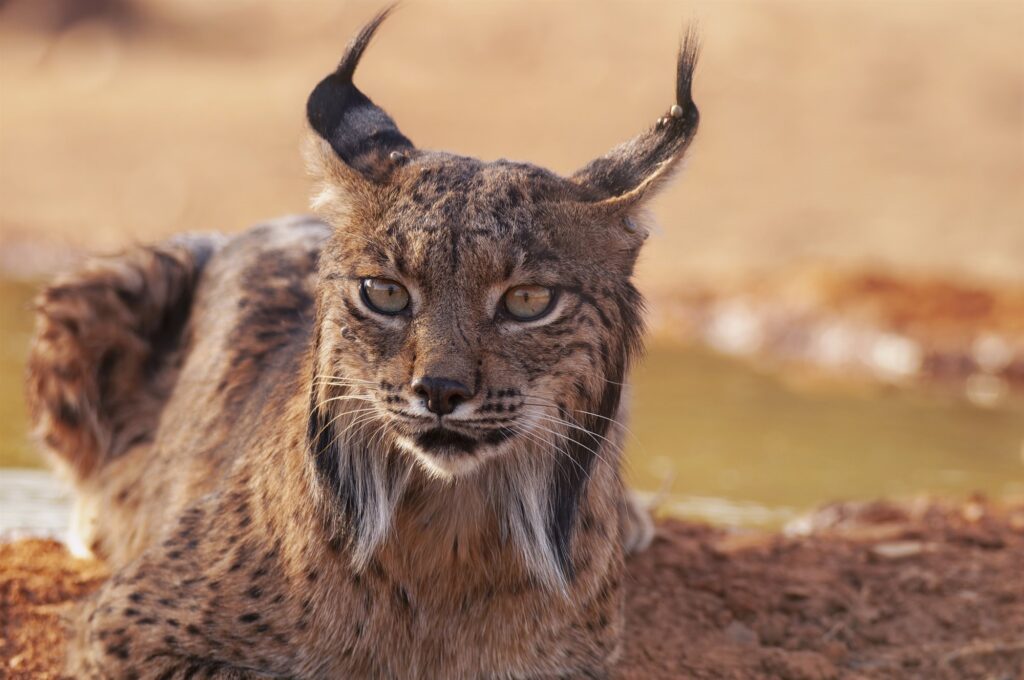
These species are of great importance to the country’s biodiversity and place it 50th in the world ranking for endemic mammals. Among the most notable mammals is the Iberian lynx, which is endemic to the Iberian Peninsula (Spain and Portugal).
Reptiles of Spain
Spain has a diversity of 75 reptile species, ranking 86th in the world. The ocellated lizard stands out, present across various regions and considered an indicator of ecosystem health.
Plants of Spain
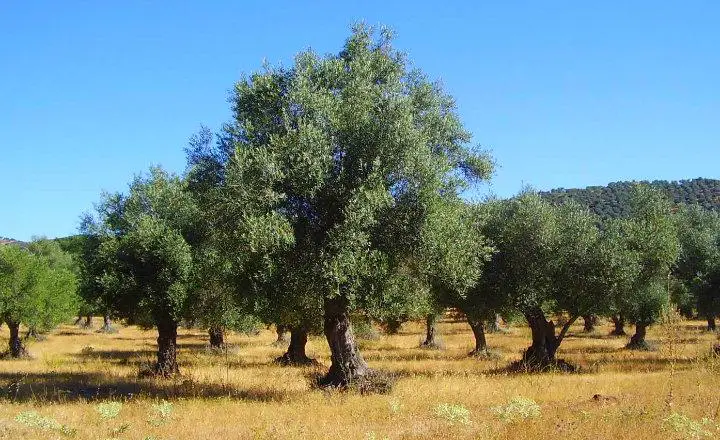
Spain has great vascular plant diversity, with a total of 5,800 species recorded in 2020, placing it 35th worldwide for number of species. Among the most notable is the olive tree, an emblematic plant cultivated since antiquity and still one of the world’s main sources of olive oil.
Organizations that protect or study Spain’s natural resources
- Ecologistas en Acción: environmental organization promoting conservation of the environment in Spain.
- WWF Spain: international NGO dedicated to conserving nature and biodiversity in Spain.
- SEO/BirdLife: organization dedicated to conserving birds and their habitats in Spain.
- Ministry for the Ecological Transition and the Demographic Challenge: the Spanish government body responsible for protecting the environment and natural resources.
- Fundación Global Nature: organization working on the conservation of biodiversity and ecosystems in Spain.
In 2024, renewables generated 56% of Spain’s electricity, close to 149 TWh, 11% more than in 2023, according to Red Eléctrica, 2025. That solar and wind expansion coexists with a Mediterranean strain: high water stress and dry lagoons in Doñana for three consecutive summers, documented by the CSIC, 2024.
Electricity mix: the weight of solar and wind
The 2024 generation structure combined four main sources, according to Red Eléctrica, 2025. Renewable capacity already represents 64% of installed generating capacity.
- Wind: 23% of the national electricity mix.
- Nuclear: 19%.
- Solar photovoltaic: 17%, with a record of approximately 45 TWh.
- Hydro: 13%.
Photovoltaics pushed combined-cycle gas into fourth place. Emission-free sources together reached close to 77% of total generation in 2024 (Red Eléctrica, 2025).
Mediterranean water stress and the Doñana drought
WRI Aqueduct classifies Spain’s baseline water stress as “high”, with a withdrawal-to-resources ratio of between 40% and 80% (World Resources Institute, 2023). Agriculture accounts for most of that withdrawal.
The Doñana case illustrates the pressure. The Santa Olalla lagoon dried out completely for three consecutive summers, in 2022, 2023 and 2024, unprecedented in the 50 years of records held by the CSIC’s Doñana Biological Station (CSIC, 2024).
- Cumulative rainfall for the 2021-2022 cycle: 282.5 mm, against an average of around 500 mm (CSIC, 2024).
- Cumulative rainfall for the 2022-2023 cycle: 330.4 mm (CSIC, 2024).
- Water table at the El Corte monitoring point: 7.5 m deep in 2020 and 9 m in 2024 (CSIC, 2024).
The CSIC attributes the deterioration to prolonged drought and to over-extraction from the aquifer by intensive irrigation in the surrounding area.
Biodiversity: 54% of Europe’s species
Spain hosts around 85,000 species of animals, fungi and plants, 54% of those found in Europe and close to 5% of those known worldwide, according to the Spanish Committee of the IUCN / MITECO, 2019.
The first National Red List, presented on May 22, 2026, assessed 1,580 species with the participation of more than 190 specialists. Of those, 471 were classified as threatened under IUCN criteria (IUCN, 2026).
Conservation coverage matches that diversity. Spain’s Natura 2000 Network comprises 1,479 Sites of Community Importance and 659 Special Protection Areas for Birds, more than 336,000 km² in total, of which 138,000 km² are terrestrial — 27.39% of the territory (MITECO, 2024).
Protected areas: Doñana as the benchmark
Doñana National Park covers 54,252 hectares and was declared a national park in 1969 (UNESCO, 2024). It has been on UNESCO’s World Heritage List since 1994.
The site combines the categories of Biosphere Reserve, Ramsar site and Special Protection Area for Birds, and forms part of the Natura 2000 Network (UNESCO, 2024). It is key habitat for the Iberian lynx and for European migratory birds.
Environmental performance: where Spain stands
Spain scored 64.0 points on the 2024 Environmental Performance Index, placing it 22nd among more than 180 countries assessed, an improvement of 1.5 points over ten years, according to Yale EPI, 2024.
The index aggregates 58 indicators across 11 categories, including climate change, air quality, water and biodiversity protection (Yale EPI, 2024).
Frequently asked questions
What share of Spain’s electricity is renewable?
In 2024, renewables generated 56% of national electricity, with wind at 23% and solar photovoltaic at 17% of the mix (Red Eléctrica, 2025).
How much area does the Natura 2000 Network protect in Spain?
The terrestrial network covers more than 138,000 km², 27.39% of the territory, within a total of more than 336,000 km² including the marine portion (MITECO, 2024).
Why is the Santa Olalla lagoon in Doñana drying up?
The CSIC links its drying in 2022, 2023 and 2024 to prolonged drought and over-extraction from the aquifer for irrigation, with water tables at 9 m in 2024 (CSIC, 2024).
Sources used
- Annex: Countries by mineral production – Wikipedia
- Economic data by country – The Global Economy
- Forest area (km²) – World Bank
- Forest area as a percentage – World Bank
- Oil reserves – The Global Economy
- Coal reserves – Worldometers
- Water and agriculture statistics – FAO
- Precipitation (mm) – World Bank
- Environmental performance index – Environmental Performance Index
- Bird species – Mongabay
- Amphibian species by country – Mongabay
- Mammal species – Mongabay
- Endemic mammal species – Our World in Data
- Plant species – Mongabay
- Reptile species by country – Mongabay
- Endemic bird species by country – Our World in Data
Red Eléctrica de España (REE) reported in 2023 that renewables covered 50% of the country’s electricity generation, consolidating Spain as one of Europe’s leaders in the energy transition.
Last updated: September 26, 2026
Leave a Reply