

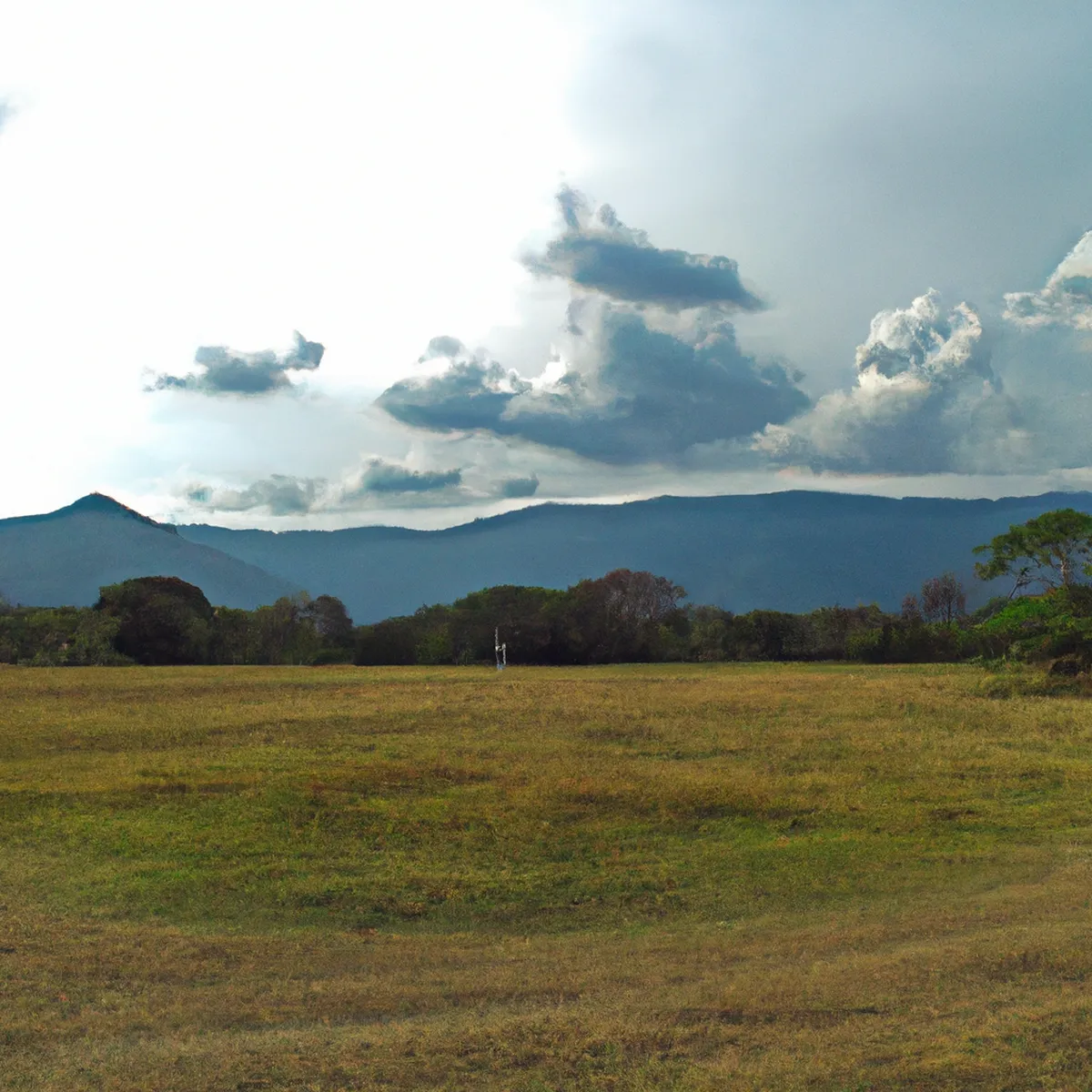
Venezuela’s natural resources include oil, gas, iron ore, gold, bauxite and diamonds, with crude oil as the base of its economy. What are the most important natural resources in Venezuela? Oil output runs at around 800,000 barrels a day in 2026, the country holds 1,325 km³ of fresh water (10th worldwide) and produced 12,000 thousand tonnes of iron ore in 2019.
Venezuela is a nation defined by its wealth of natural resources. Its geographic and climatic diversity gives it a wide range of ecosystems, which in turn host broad biodiversity.
Table de contenidos
Oil, the base of its economy, is one of the country’s most important non-renewable natural resources.
From the Amazon rainforest to the Andes, by way of the Caribbean coast and the plains of the Orinoco, Venezuela holds a great many natural resources: oil, gas, iron ore, gold, bauxite, diamonds, timber, fisheries and agriculture, among others. These resources are fundamental to the country’s economy, but they also matter for preserving the environment and the quality of life of its people.
Venezuela’s natural resources are a treasure that must be looked after and managed sustainably to guarantee their conservation and responsible use.
Which natural resources hold Venezuela’s wealth, and where does the country rank globally? What is the country’s natural wealth? Which minerals are found in Venezuela, and how does it rank worldwide?
Natural Resources
Natural resources are materials or energy sources provided by or found on Earth that are useful to humans. Every product we manufacture is made up of natural resources.
- Renewable resources: these can be restored by natural processes faster than the rate at which they are consumed. Examples include solar radiation, wind, hydroelectric power, water when used properly, and plant and animal life.
- Non-renewable resources: once extracted, these are depleted and cannot regenerate. Examples include hydrocarbons, metals and minerals.
Examples of Venezuela’s main natural resources
Venezuela: an environmental snapshot in six figures
The most widely cited indicators on the country’s natural assets.
| Forest cover | 52.2% of the territory2023 |
|---|---|
| Protected land area | 56.8% of the territory2025 |
| Renewable fresh water per capita | 28,533 m³ per year2022 |
| Total natural resource rents | 11.8% of GDP2014 |
| Electricity from renewable sources | 81.7% of total generation2021 |
| Threatened species | 648 mammals, birds, fish and plants2022 |
Map of Venezuela’s natural resources by region
Venezuela is divided into large natural regions, each with distinct natural resources.
| Resource | Reserves / Production | Source |
|---|---|---|
| Oil | ~800,000 barrels/day (2026) | Council on Foreign Relations 2026 |
| Natural gas | 25.4 billion m³ (2024); 27th in the world | EIA |
| Iron ore | 12,000 thousand t (2019); 17th in the world | USGS |
| Aluminum | 108 thousand t (2019); 30th in the world | USGS |
| Coal | about 731 million t (reserves, 2023) | USGS |
| Fresh water | 1,325 km³ (2020); 10th in the world | FAO |
Gas resources in Venezuela
Despite holding significant natural gas resources, Venezuela is a mid-sized producer, with dry natural gas output of 25.4 billion cubic meters in 2024 (EIA). The country sits twenty-seventh (27th) in the global ranking of natural gas producers.
It is also a significant oil producer, though output has fallen considerably in recent years. In 2026 daily production stands at around 800,000 barrels, after running close to a million barrels a day in recent years (Council on Foreign Relations, 2026).
Examples of Venezuela’s mineral resources
Venezuela holds a major reserve of coal, with a total of about 731 million tonnes recorded in 2023. The main coal-producing region in Venezuela is the state of Zulia, home to the Paso Diablo mine, one of the country’s most important.
In 2019, production of aluminum in Venezuela reached 108 thousand tonnes, placing it thirtieth in the global production ranking for this resource. The main aluminum-producing region in Venezuela is Guayana.
In 2019, production of iron ore in Venezuela reached 12,000 thousand tonnes, placing it seventeenth in the global iron ore production ranking. The main producing region for this resource is the state of Bolívar.
Water resources of Venezuela
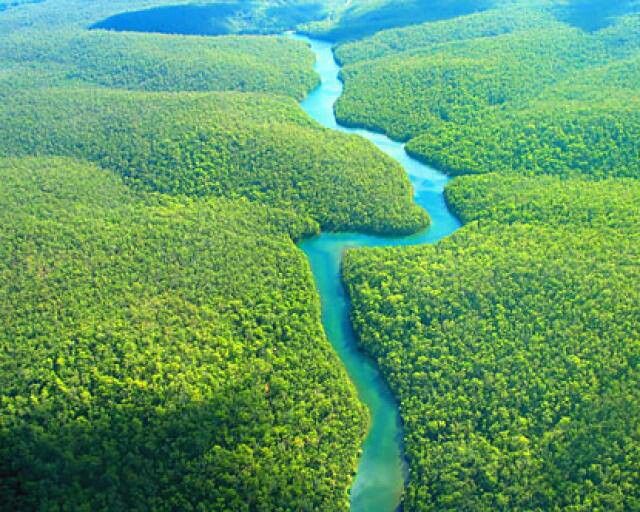
Venezuela holds an impressive freshwater reserve of 1,325 km³, placing it tenth in the global ranking of water reserves as of 2020.
Venezuela also has a great many rivers and lakes, the most important being the Orinoco River, the Caroní River and Lake Maracaibo. These bodies of water are essential to the communities living around them and to the country’s biodiversity.
Average rainfall and soils of Venezuela
Venezuela has average annual rainfall of 2,044 mm, placing it twenty-sixth in the global ranking for average annual precipitation. Because of that moisture, the country’s soils are mostly damp and fertile, especially in regions near the coast and in mountainous areas.
Renewable electricity and hydropower production in Venezuela
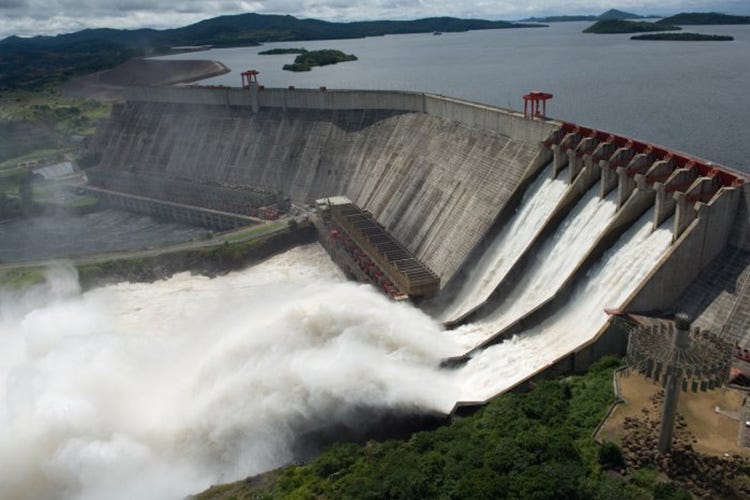
In 2024, Venezuela generated 73.0 TWh of electricity from renewable sources — 91% of its total generation of 80.1 TWh — and hydropower supplied virtually all of it, 73.0 TWh (Ember, 2024). The country’s main hydroelectric plant is the Guri Dam, in the state of Bolívar, with installed capacity of 10,235 MW — considered one of the largest in Latin America.
Forest resources of Venezuela
Venezuela holds considerable natural wealth in forest resources. According to 2023 data, the country’s forest area accounts for a significant share of its land area, totaling 460,729 km² (World Bank).
That places it 14th in the global ranking for forest area. Venezuela’s main forest region is the Amazon rainforest, which covers much of the territory and is home to a wide variety of animal and plant species.
Environmental performance and protection of Venezuela’s natural resources
The Environmental Performance Index (EPI 2024, Yale University) score is 53.3 and the country ranks forty-fourth (44th of 180 countries), which indicates there is still much to do on environmental protection. Protected land and marine areas account for 39.00% of total territorial area, showing the importance given to conserving biodiversity.
Natural parks of Venezuela: the hidden wealth of natural resources
Biodiversity: animal and plant resources of Venezuela
Birds of Venezuela
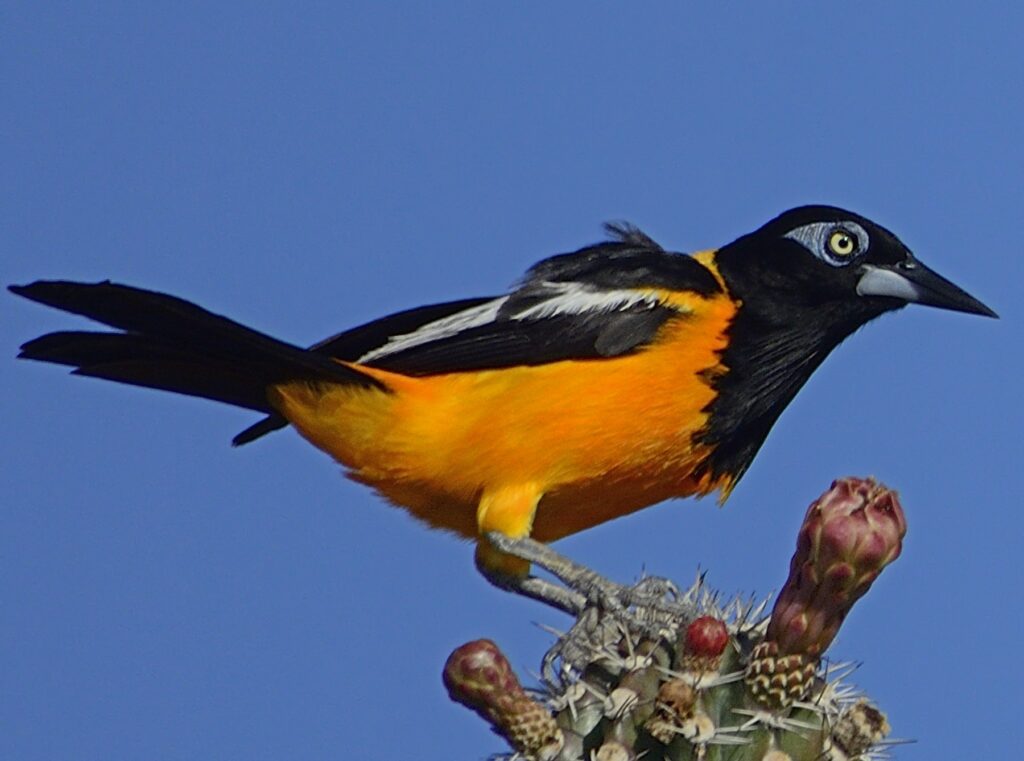
Venezuela is a country of great bird diversity, with 1,394 species in total, placing it seventh worldwide for number of bird species. It also has 52 endemic bird species.
However, 52 bird species are endangered, so protecting this valuable natural resource matters. Among Venezuela’s most emblematic birds is the troupial, considered the national bird.
Fish and amphibians of Venezuela
For amphibians, Venezuela has 363 species, placing it tenth worldwide for number of species.
For fish, Venezuela has 1,723 species, placing it twentieth worldwide for number of species. However, 45 of those fish species are threatened.
Among Venezuela’s most notable species are the cane toad and the coporo, a fish much prized in the country’s cuisine.
Mammals of Venezuela
Venezuela is a country of great mammal diversity, with a total of 363 species as of 2016. Of those, however, 35 are threatened.
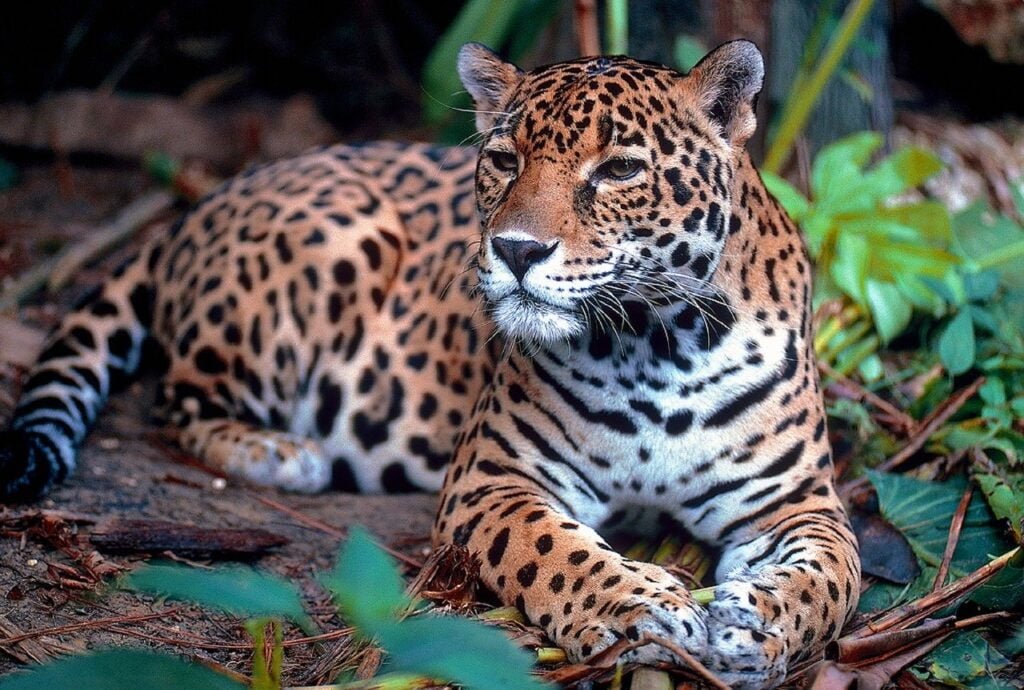
Venezuela ranks eleventh worldwide for number of mammal species. It also had 28 endemic mammal species as of 2020, placing it nineteenth worldwide for endemic mammals. Among its mammals, the jaguar stands out.
Reptiles of Venezuela
Venezuela has great reptile diversity, an important natural resource for the country. In 2019 a total of 409 reptile species were recorded, placing it 17th worldwide for number of species.
Notable among them is the green iguana, one of the most emblematic and representative reptile species in Venezuela.
Plants of Venezuela
Venezuela has great vascular plant diversity, with a total of 15,381 species recorded in 2020, placing it tenth worldwide for number of species. Among the most notable is the orchid, considered the national flower and one of the most representative of the country’s biodiversity.
Organizations that protect or study Venezuela’s natural resources
- Ministry of Popular Power for Ecosocialism (MINEC): the Venezuelan ministry responsible for environmental policy, conservation and ecosystem protection.
- National Parks Institute (INPARQUES): the national institute that manages and protects national parks and natural monuments.
- Provita: Venezuelan NGO conserving species and ecosystems through research, education and action.
- Foundation for the Defense of Nature (FUDENA): Venezuelan foundation dedicated to conserving natural resources and promoting sustainable development.
- VITALIS: environmental organization founded in Venezuela that promotes education and conservation for sustainability.
Oil reserves: first in the world, production lagging
Oil defines Venezuela’s resource base, with 303 billion barrels of proven reserves, the largest holding recorded for any country Al Jazeera, 2025. Actual production does not match that size. Oil exports passed 900,000 barrels per day on September 3, 2025, the highest level since November 2024 Al Jazeera, 2025. The gap between reserves and extraction defines the country’s petro-state profile.
Export concentration in crude oil
The external economy depends on a single product. In 2024, crude oil accounted for some $9.81 billion of total exports of $13.9 billion, close to 70.5% OEC, 2024.
- Main destination for the crude: the United States, $5.88 billion OEC, 2024.
- Second and third destinations: India, $1.76 billion, and Spain, $1.27 billion OEC, 2024.
A hydropower electricity mix and the Guri complex
Electricity generation rests on water. In 2023, 90% of electricity came from low-carbon sources, almost entirely hydropower Low-Carbon Power, 2023. At the heart of the system is the Guri plant, with 10,200 MW of installed capacity, one of the largest hydroelectric plants in the world Guri Dam, 2024. That structure ties the electricity supply to the flow of the Caroní River.
The Orinoco Mining Arc: gold and forest loss
The south of the country concentrates mining activity and its impact on forests. In 2016, 112,000 square kilometers south of the Orinoco River were designated for gold and coltan extraction Global Forest Watch, 2022. Since 2016, the state of Bolívar has lost 74,600 hectares of primary forest and Amazonas 76,850 hectares Global Forest Watch, 2022. 74% of the national loss since 2016 was concentrated in those two states Global Forest Watch, 2022.
Measured environmental performance
Resource use coexists with mid-to-low environmental performance. Venezuela scored 53.3 out of 100 on the 2024 Environmental Performance Index, which ranks 180 countries Yale EPI, 2024. The indicator aggregates 58 metrics on climate, environmental health and ecosystem vitality.
Frequently asked questions
What is Venezuela’s main natural resource? Oil, with 303 billion barrels of proven reserves, the largest in the world Al Jazeera, 2025.
What is the Orinoco Mining Arc? A 112,000-square-kilometer zone south of the Orinoco, designated in 2016 for gold and coltan extraction, with heavy loss of primary forest Global Forest Watch, 2022.
Where does Venezuela’s electricity come from? In 2023, 90% came from low-carbon sources, almost all of it hydropower, centered on the Guri plant (10,200 MW) Low-Carbon Power, 2023.
Leave a Reply