

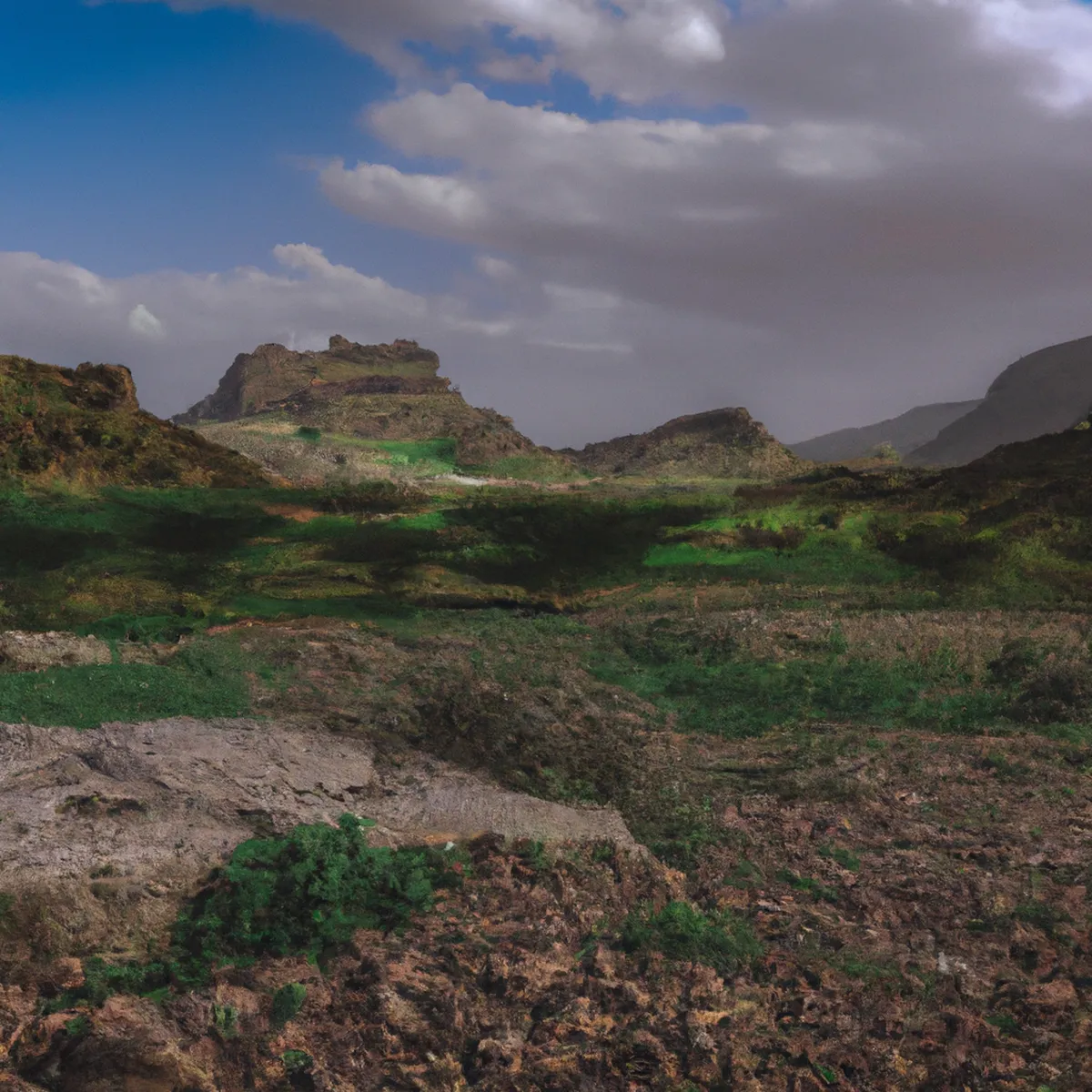
Yemen’s natural resources are limited, but they include oil, gas and endemic biodiversity. What natural resources does Yemen have? After the conflict, its oil production fell to about 15,000 barrels a day in 2024, although it still has reserves of 3 billion barrels, 30th in the world.
Yemen is a country at the southern tip of the Arabian Peninsula. Its territory has a wide variety of landscapes, from deserts and plains to mountains and coasts.
Contents
Despite its rich geographic diversity, Yemen is one of the poorest countries in the world. Its natural resources, such as oil, gas and minerals, are limited.
In addition, its location in an area of high seismic activity and water scarcity makes water resource management and agriculture major challenges for the country. Even so, Yemen has great biodiversity, with a large number of endemic species, and is home to important bird migration corridors.
What are Yemen’s most notable natural resources? What natural wealth does the country have? What are its mineral resources, and where does it stand globally? How much water does it have, and what resources does it use to produce energy? How diverse are Yemen’s animals and plants?
Natural resources
Natural resources are materials or energy sources provided by or found on Earth that are useful to humans. Every product we manufacture is made up of natural resources.
- Renewable resources: these can be restored by natural processes faster than the rate at which they are consumed. Examples include solar radiation, wind, hydroelectric power, water when used properly, and plant and animal life.
- Non-renewable resources: once extracted, these are depleted and cannot regenerate. Examples include hydrocarbons, metals and minerals.
Examples of Yemen’s main natural resources
Yemen: an environmental summary in six figures
The most frequently cited indicators on the country’s natural heritage.
| Forest cover | 1.0% of land area2023 |
|---|---|
| Protected land area | 1.1% of land area2025 |
| Renewable freshwater per capita | 55 m³ per year2022 |
| Natural resource rents | 4.9% of GDP2018 |
| Renewable electricity | 10.5% of total generation2021 |
| Threatened species | 261 mammals, birds, fish and plants2022 |
Oil and gas resources in Yemen
Yemen has important natural resources, and its oil production stands out among them. After the collapse caused by the conflict, Yemen’s oil production fell to around 15,000 barrels per day (2024), far below previous levels.
Yemen’s oil reserves were also estimated at 3,000,000,000 barrels in 2022, which places it 30th in the world ranking of oil reserves.
Yemen also has natural gas resources, but the Yemen LNG plant halted production and exports in April 2015 because of the war.
Water resources of Yemen
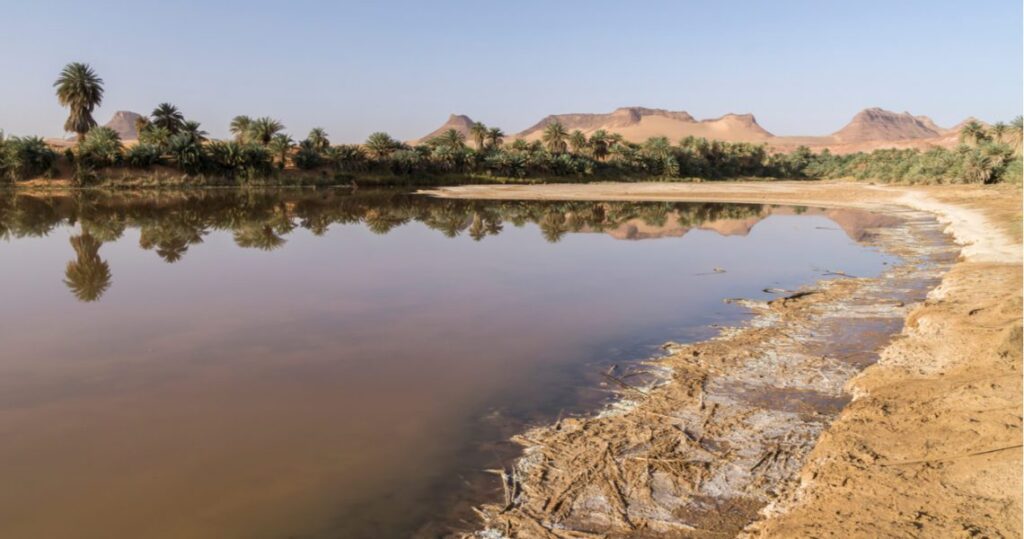
Yemen has 2.1 km³ of renewable freshwater resources, which placed it 138th in the world ranking of water reserves in 2020. The country has no permanent rivers; seasonal valleys (wadis) such as Wadi Hadhramaut are vital for agriculture.
Despite the importance of these water resources, Yemen faces a severe water crisis because of a lack of infrastructure and political instability.
Forest resources of Yemen
Yemen’s forest area covers 1.0% of its land area, equivalent to 5,490 km² (2023). Although this is a modest figure, the resource is very important for the country’s economy and environment.
Yemen’s main forest region is in the western mountains, where acacia and tamarind woodlands are concentrated. Yemen ranks 130th in the world for forest area.
Natural parks of Yemen: the hidden wealth of natural resources
Biodiversity: animal and plant resources of Yemen
Birds of Yemen
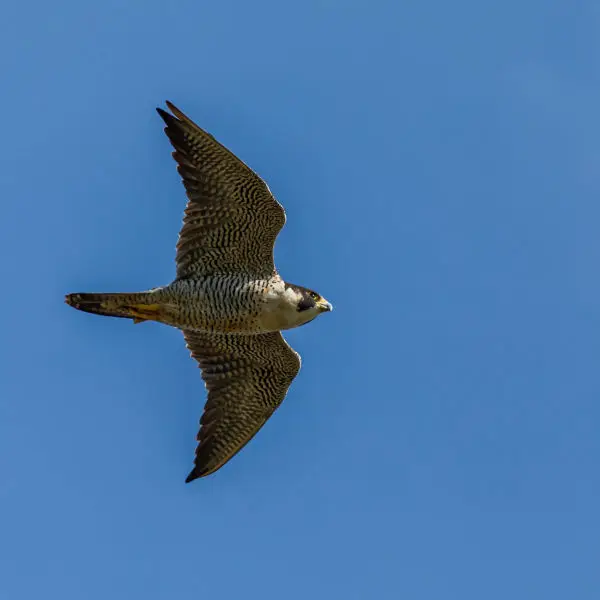
Yemen has a rich diversity of birds, with a total of 421 species, which places it 99th in the world for number of bird species. It also had 10 endemic bird species in 2020.
However, it should also be noted that 16 bird species are endangered, so it is important to take measures to protect this valuable natural resource. Among the most notable species is the peregrine falcon, while Yemen’s national bird is the Arabian grosbeak.
Fish and amphibians of Yemen
Yemen has rich biodiversity, with a total of 6 amphibian species and 752 fish species, notably the Arabian toad. The country faces a constant threat to its natural resources, with 40 fish species endangered.
Yemen ranks 91st in the world for number of amphibian species and 73rd for number of fish species.
Mammals of Yemen
Yemen has a great diversity of mammal species; unfortunately, however, 11 of them are threatened. The camel stands out. The country also has 4 endemic mammal species and currently ranks 44th in the world for endemic mammals.
Reptiles of Yemen
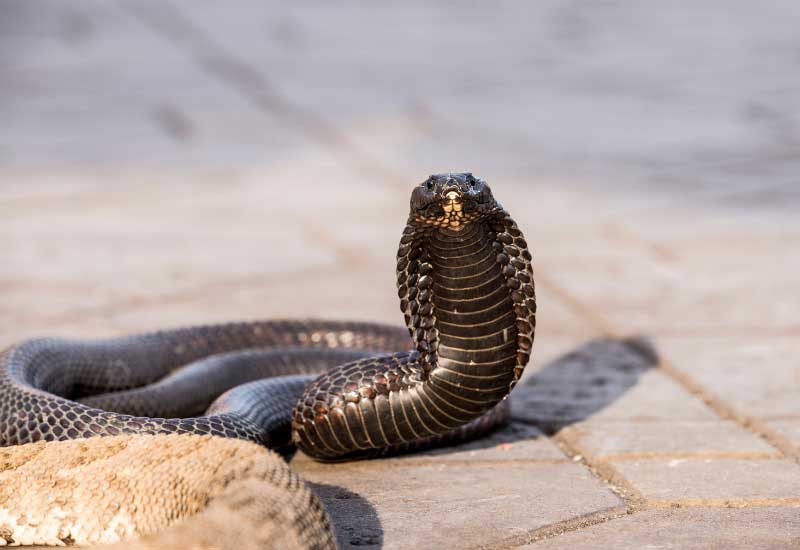
Yemen has a rich diversity of reptiles, with a total of 117 reptile species, which places it 85th in the world. This natural resource is very important for the conservation of the country’s wildlife and plants; its flagship reptile is the Arabian cobra, which lives in various regions of Yemen.
Yemen is the birthplace of cultivated coffee: it was there that Coffea arabica went from being gathered in the wild to being grown as a large-scale crop, and the port of Mocha (Mokha) was, until the late 17th century, the only gateway for coffee to the rest of the world, to the point of giving its name to the drink (Wikipedia, History of coffee, 2024, citing the genetic study by Scalabrin et al., 2020).
Coffee and honey: two emblematic export products
Coffee retains its value as an economic identity: it is grown on some 34,981 hectares and produced 20,812 tonnes in 2019, contributing about 6% of the country’s agricultural export revenue in 2020, some $20.2 million (FAO / UN Yemen, 2021). Honey is the other emblem: Yemen has more than 100,000 beekeepers, and its Sidr honey, made from the nectar of the Ziziphus spina-christi tree, is among the most expensive in the world (The Washington Institute, 2023).
Hydrocarbons: large reserves, collapsed production
Yemen has proven oil reserves estimated at 3 billion barrels according to the EIA, a considerable resource base for its size. However, production has plummeted to around 15,000 barrels a day in 2025, a fraction of pre-conflict levels (Wikipedia, with EIA and OPEC data, 2025). The collapse reflects the direct impact of the war on extraction infrastructure.
Fishing in the Red Sea and the Gulf of Aden
Fishing is Yemen’s second-largest export sector and contributes about 3% of GDP, with some 1.7 million people depending on it before the 2014 conflict (World Bank, 2025). In the Gulf of Aden, the fishing fleet grew from 8,000 to 13,000 boats in two decades, although exports fell by 25% during the war.
Frequently asked questions
Why is coffee called “mocha”? Because of the Yemeni port of Mocha (Mokha), which until the late 17th century was the world’s only outlet for coffee and ended up giving its name to the drink (Wikipedia, History of coffee, 2024).
How much does fishing matter to Yemen’s economy? It is the country’s second-largest export sector and contributes about 3% of GDP, with some 1.7 million people depending on it before 2014 (World Bank, 2025).
Sources used
- Economic data by country – The Global Economy
- Forest area (km²) – World Bank
- Forest area (% of land area) – World Bank
- Oil reserves – The Global Economy
- Coal reserves – Worldometers
- Bird species – Mongabay
- Amphibian species by country – Mongabay
- Mammal species – Mongabay
- Endemic mammal species – Our World in Data
- Plant species – Mongabay
- Reptile species by country – Mongabay
- Endemic bird species by country – Our World in Data
Yemen, which is not a member of OPEC, has oil and natural gas reserves, although the prolonged armed conflict has brought virtually all activity in the hydrocarbon sector to a standstill.
Organizations that protect or study Yemen’s natural resources
- Environment Protection Authority (EPA) of Yemen: National authority responsible for protecting the environment and natural resources.
- Yemen Biodiversity Clearing-House Mechanism (CBD): Yemen’s national biodiversity portal under the Convention on Biological Diversity.
- Friends of Soqotra: NGO that conserves the unique biodiversity of Yemen’s Socotra archipelago.
- FAO Yemen: FAO program for agriculture, natural resources and food security.
- IUCN – International Union for Conservation of Nature: Global union dedicated to the conservation of nature and biodiversity.
- UNEP – UN Environment Programme: The United Nations environmental program, active in conservation in Yemen.
Last updated: September 26, 2026

Leave a Reply