

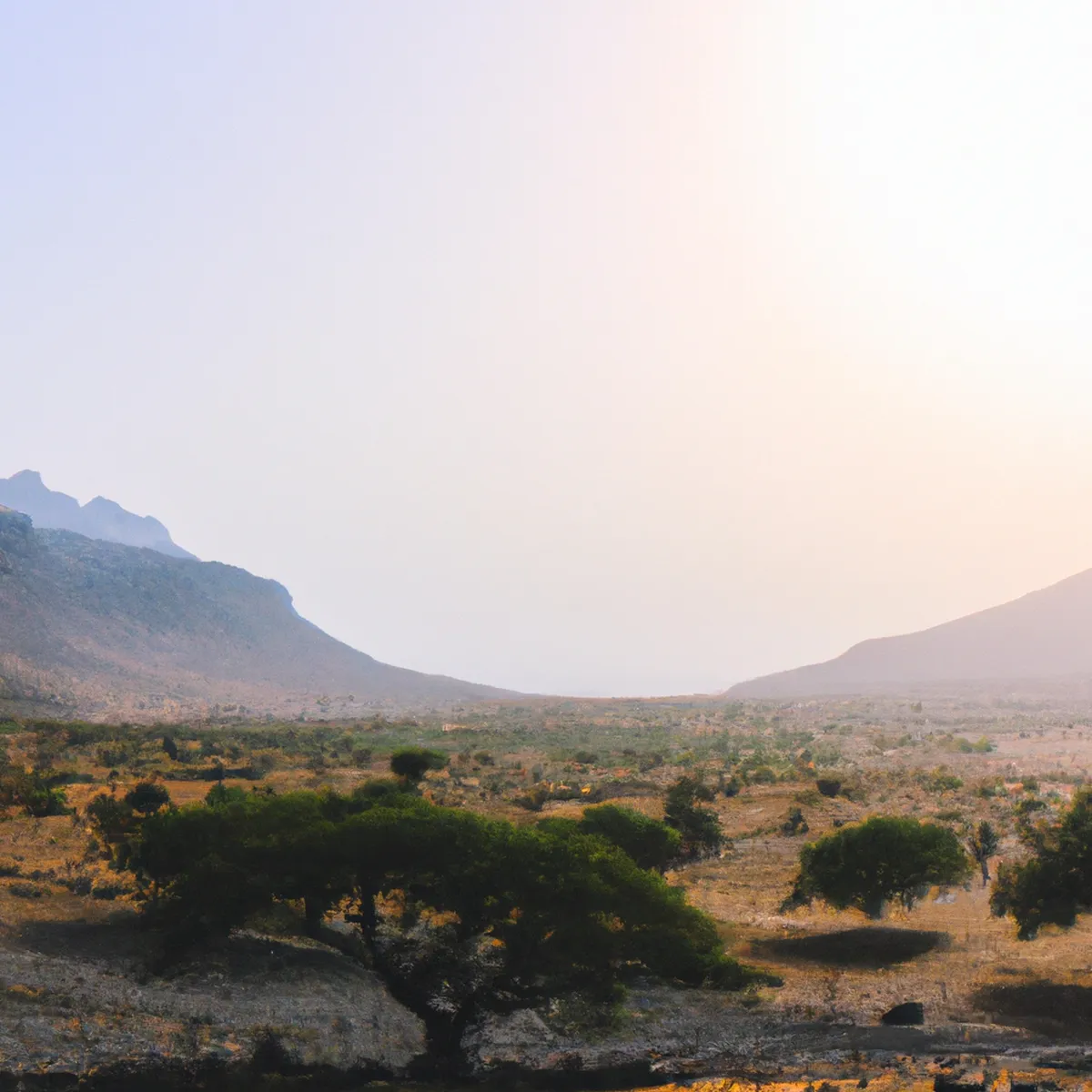
Oman’s natural resources are concentrated in oil, natural gas and minerals such as aluminum. In 2023 it produced about 1.06 million barrels of oil and other petroleum liquids a day, 19th in the world, and in 2019 it produced 380 thousand tonnes of aluminum. It is home to unique species such as the Arabian oryx and the green turtle. What are Oman’s most important natural resources?
Oman is a country on the Arabian Peninsula with a wide variety of natural resources. From its coasts to its mountains, Oman is rich in minerals, oil and natural gas.
Table de contenidos
Its biodiversity also includes unique species such as the Arabian oryx and the green turtle. Its ecosystems include deserts, oases and mangroves, which are home to a variety of animal and plant species.
Oman’s natural resources are an important source of income for its economy and a key element in its sustainable development.
What are Oman’s most important natural resources? What natural wealth does the country have? What are its mineral resources, and how does it rank globally? How much water does it have, and how does it generate energy? What animals and plants can be found in Oman?
Natural resources
Natural resources are materials or energy sources provided by or found on Earth that are useful to humans. Every product we manufacture is made up of natural resources.
- Renewable resources: these can be restored by natural processes faster than the rate at which they are consumed. Examples include solar radiation, wind, hydroelectric power, water when used properly, and plant and animal life.
- Non-renewable resources: once extracted, these are depleted and cannot regenerate. Examples include hydrocarbons, metals and minerals.
Examples of Oman’s main natural resources
Oman: the state of its forests
Change in forest area and the country’s environmental context.
| Forest cover | 0.0% of land area2023 |
|---|---|
| Forest area | 24 km²2023 |
| Annual change in forest area | stable (2018–2023) |
| Agricultural land | 4.8% of land area2023 |
| Protected land area | 28.9% of land area2025 |
| Threatened species | 103 mammals, birds, fish and plants2022 |
Oil and gas resources in Oman
Oman is a significant oil producer, with total petroleum production, including condensates and other liquids, of about 1.06 million barrels per day in 2023, which places it 19th in the world for production of this natural resource (CIA World Factbook). It also has large oil reserves, which reached 5,306,000,000 barrels in 2022, placing it 22nd in the world ranking of oil reserves.
Oman is also a mid-sized natural gas producer, with production of about 41.7 billion cubic meters in 2023. The country ranks 18th among the world’s natural gas producers (CIA World Factbook).
Examples of Oman’s mineral resources
In 2019, Oman’s aluminum production reached 380 thousand tonnes, a significant contribution to the world market for this resource. Oman ranks 19th in the world.
Water resources of Oman
Oman has 1.4 km³ of renewable freshwater resources, which placed it 140th in the world ranking of water reserves in 2020. Although it is not near the top of the list, this reserve is important for the country, which lies in an arid, water-scarce region.
Oman’s best-known watercourses are wadis, such as Wadi Dayqah and Wadi Bani Khalid, and the country has no natural lakes of note; the Wadi Dayqah Dam can store up to 100 million cubic meters of rainwater.
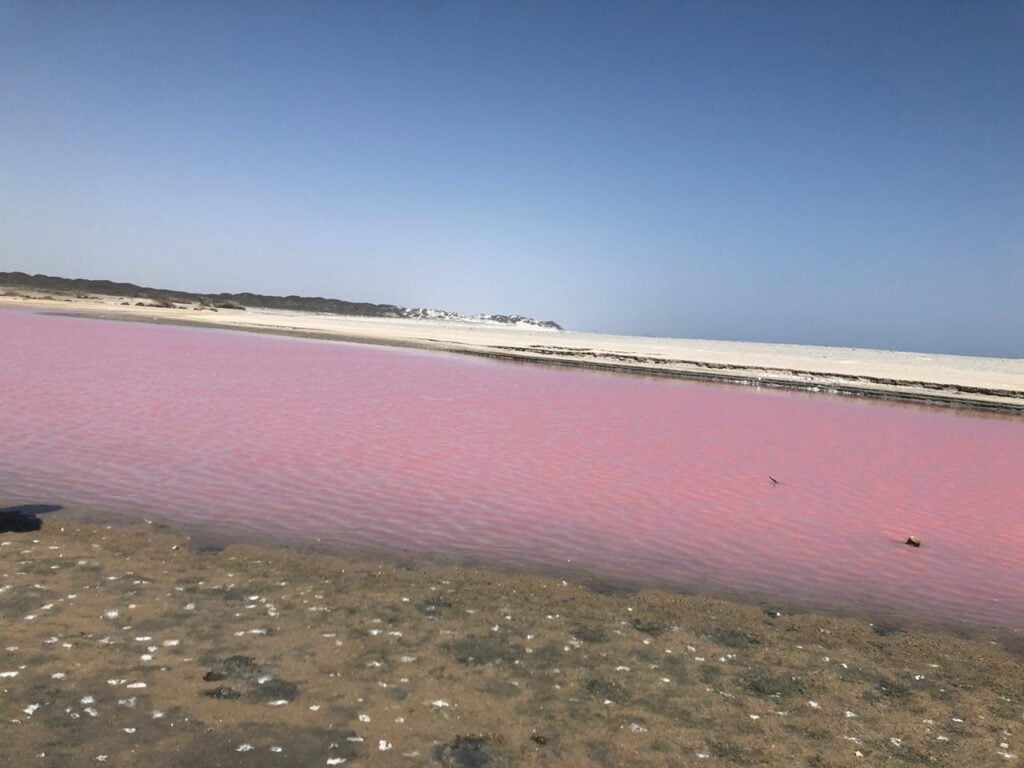
Average rainfall and soils of Oman
Oman has an average annual rainfall of 125 mm, which places it 149th in the world ranking for average annual rainfall. Because of this low humidity, Oman’s soils are mostly arid and desert-like, with sparse vegetation adapted to the extreme climate.
Forest resources of Oman
Oman has a very small forest area, accounting for 0.01% of its territory (about 23.6 km², according to 2023 data from the World Bank). Even so, the Dhofar forest region is an important natural resource for the country.
Globally, Oman ranks 163rd in forest area.
Environmental performance and protection of Oman’s natural resources
Oman has an Environmental Performance Index (EPI 2024, Yale University) score of 51.3 and ranks 55th out of 180 countries on the index. In addition, terrestrial and marine protected areas make up 20.8% of its total territorial area (World Bank, 2025).
Natural parks of Oman: the hidden wealth of natural resources
Biodiversity: animal and plant resources of Oman
Birds of Oman
Oman has a great diversity of birds, with a total of 323 species in 2018, which places it 111th in the world for number of bird species. However, 13 of its bird species are endangered.
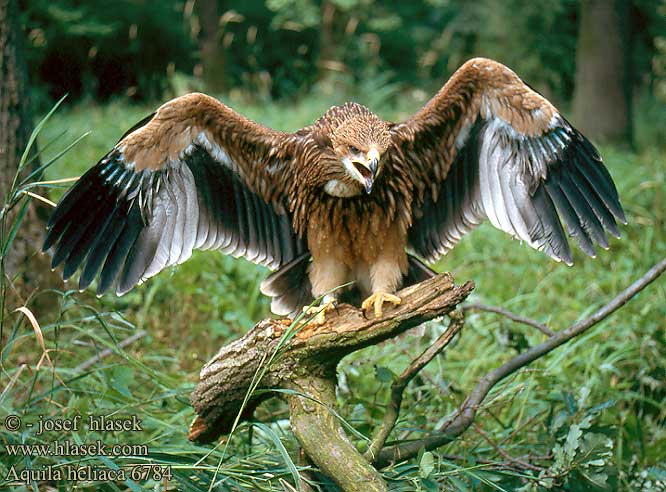
Among Oman’s most notable bird species is the imperial eagle, one of the country’s most emblematic birds.
Fish and amphibians of Oman
Oman has rich biodiversity, with 2 amphibian species and a total of 1,043 fish species, notably the Arabian toad (Sclerophrys arabica) and the dorado, respectively. Despite its large number of fish species, 36 of them are threatened, which makes responsible use of this resource necessary.
In the world rankings, Oman is 95th for number of amphibian species and 44th for number of fish species.
Reptiles of Oman
Oman is a country with great wildlife diversity, especially when it comes to reptiles. With a total of 108 reptile species, Oman ranks 71st in the world for number of reptile species.
Among the most notable species is the Arabian chameleon (Chamaeleo arabicus), an important natural resource for the region.

Oman, a Gulf petrostate, is on track to become the world’s sixth-largest hydrogen exporter, and the largest in the Middle East, by 2030, according to the International Energy Agency (IEA, 2023). It plans to use the sun and wind of its deserts to transform an economy that lives off oil.
Oil and gas: the foundation of the economy
The government obtains about 70% of its annual budget from oil and gas revenues, and the sector accounts for about 30% of GDP (U.S. Department of Commerce, 2025). In mid-2025, production stood at around 775,000 barrels a day. At the end of 2024, proven reserves of crude oil and condensate totaled some 4,825 million barrels, plus 23 trillion cubic feet of natural gas.
The bet on green hydrogen
Oman aims to produce at least 1 million tonnes of renewable hydrogen a year by 2030, rising to as much as 3.75 million in 2040 and 8.5 million in 2050 (IEA, 2023). The 2040 target is equivalent in energy terms to 80% of its current liquefied natural gas exports. Gigawatt-scale projects such as HYPORT Duqm anchor that transition.
Dhofar frankincense, an age-old resource
The Dhofar region in the south is one of the few places on the planet where the frankincense tree (Boswellia sacra) grows naturally, thanks to the summer monsoon; each tree yields about 3 to 4 kilograms of resin per season (Encens Naturel / Environment Society of Oman, 2023). UNESCO inscribed the “Land of Frankincense” as a World Heritage Site in 2000. Exports reached 239,100 Omani rials (about $622,000) in 2021, up 148% from 2020, and the global market for frankincense essential oils could exceed $456 million by 2030 (WIPO, 2023).
Frequently asked questions
How important are hydrocarbons to Oman’s economy? They account for about 70% of the state budget and about 30% of GDP, according to the U.S. Department of Commerce (2025).
Why is Dhofar frankincense unique? Because the Boswellia sacra tree thrives naturally in only a few areas of the world, and those in Dhofar gave rise to the trade route that UNESCO declared a World Heritage Site in 2000 (Encens Naturel, 2023).
Sources used
- List of countries by mineral production – Wikipedia
- Economic data by country – The Global Economy
- Forest area (km²) – World Bank
- Forest area (% of land area) – World Bank
- Oil reserves – The Global Economy
- Water and agriculture statistics – FAO
- Precipitation (mm) – World Bank
- Environmental Performance Index – Environmental Performance Index
- Bird species – Mongabay
- Amphibian species by country – Mongabay
- Plant species – Mongabay
- Reptile species by country – Mongabay
- Endemic bird species by country – Our World in Data
OPEC noted in 2023 that Oman has oil reserves of approximately 5,400 million barrels and continues to diversify its economy to reduce its dependence on crude oil.
Organizations that protect or study Oman’s natural resources
- Environment Authority (Oman): Government authority that protects Oman’s environment and natural resources.
- Ministry of Agriculture, Fisheries Wealth and Water Resources: Ministry that manages the country’s agricultural, fishery and water resources.
- Oman Botanic Garden: Botanical garden that conserves and researches Oman’s native flora.
- Environment Society of Oman (ESO): The only Omani NGO dedicated to conserving nature and biodiversity.
- IUCN – International Union for Conservation of Nature: International union and the global authority on the conservation of nature and biodiversity.
Last updated: September 26, 2026
Leave a Reply