

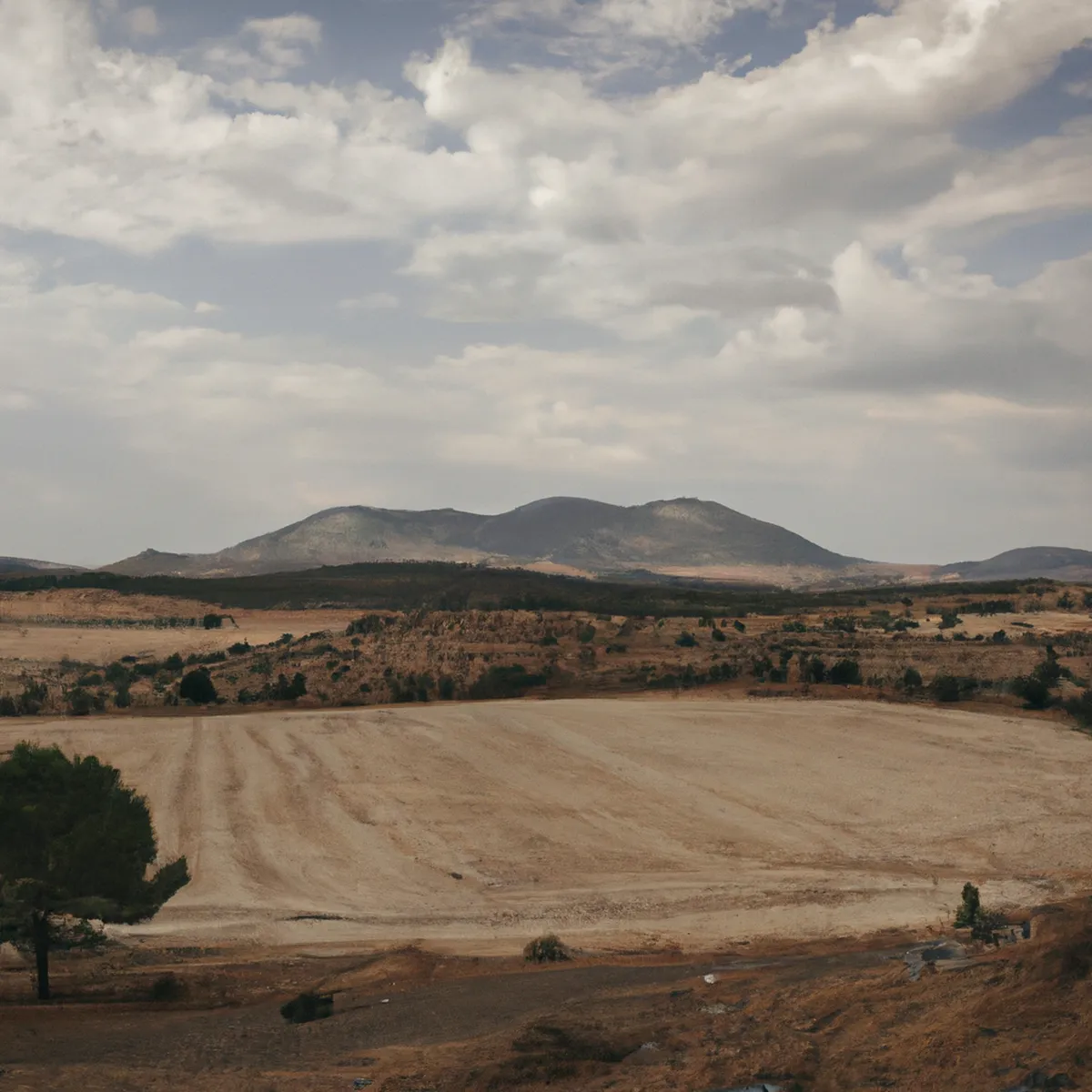
Turkey’s natural resources include minerals such as iron and copper, fertile land and forests covering more than 25% of its territory. What are Turkey’s natural resources? Coal stands out, with 70.8 million tonnes in 2020 (11th in the world), along with iron production of 6,700 thousand tonnes.
Turkey is a country located where Europe and Asia meet, with rich geographic and ecological diversity. Its natural resources include a variety of minerals, such as iron and copper, as well as fertile farmland and forests covering more than 25% of its territory.
Contents
Turkey’s biodiversity is also unique, with a wide variety of endemic animal and plant species. These natural resources are vital to Turkey’s economy and quality of life, and they must be protected and managed sustainably to ensure their long-term preservation.
What are Turkey’s natural resources? What natural wealth does the country have? Where does it rank globally for mineral resources? How much water does it have, and how is energy generated? Which animal and plant species live in Turkey?
Natural resources
Natural resources are materials or energy sources provided by or found on Earth that are useful to humans. Every product we manufacture is made up of natural resources.
- Renewable resources: these can be restored by natural processes faster than the rate at which they are consumed. Examples include solar radiation, wind, hydroelectric power, water when used properly, and plant and animal life.
- Non-renewable resources: once extracted, these are depleted and cannot regenerate. Examples include hydrocarbons, metals and minerals.
Examples of Turkey’s main natural resources
Conservation profile of Turkey
How much of the territory is protected and which species are at risk.
| Protected land area | 7.0% of land area2025 |
|---|---|
| Marine protected areas | 1.7% of its waters2025 |
| Threatened species | 323 mammals, birds, fish and plants2022 |
| Forest cover | 29.5% of land area2023 |
| Annual change in forest area | +1,560 km² per year (2018–2023) |
| Agricultural land | 50.1% of land area2023 |
| Resource | Reserves / production | Source |
|---|---|---|
| Coal | 70.8 million t (2020); ranked 11th | USGS |
| Iron | 6,700 thousand t (2019); ranked 20th | USGS |
| Oil | 66,287 barrels/day (2021); ranked 32nd | EIA |
| Natural gas | 381 million m³; ranked 74th | EIA |
| Renewable freshwater | 211.6 km³ (2020); ranked 36th | FAO |
Oil and gas resources in Turkey
In 2021 Turkey produced a total of 66,287 barrels of oil per day, which places it 32nd in the world for production of this resource. Its oil reserves were also estimated at 312,000,000 barrels in 2022, placing it 51st in the world ranking of oil reserves.
In 2024, the country produced about 2.3 billion cubic meters of natural gas (U.S. EIA), boosted by the Black Sea’s Sakarya field, which began production in 2023.
Examples of Turkey’s mineral resources
Turkey is a major producer of coal, with output of 70.8 million tonnes in 2020, which places it 11th in the world ranking of coal production. It also has large coal reserves, totaling 12,514,525,430 tonnes in 2016, or 1.10% of the world’s coal reserves. Turkey’s main coal-producing region is the Black Sea region.
In 2019, Turkey produced a total of 6,700 thousand tonnes of iron, placing it 20th in the world ranking for production of this resource. Iron ore is mined inland, for example at the large mines near Divriği, in Sivas Province. Zonguldak Province, on the Black Sea coast, holds the country’s main hard-coal basin and the Erdemir iron and steel works at Karadeniz Ereğli, which make it one of the most important areas for steel production in the country.
Water resources of Turkey
Turkey has an impressive 211.6 km³ of renewable freshwater resources, which placed it 36th in the world ranking of water reserves in 2020. This water is fundamental to the country’s economic and social development, as it is used for agriculture, industry and human consumption.
Turkey’s main rivers include the Euphrates and the Tigris, which rise in the mountains of Anatolia and flow into the Persian Gulf. Lake Van is the largest lake in Turkey and one of the largest in the world.

Renewable electricity and hydropower production in Turkey
Turkey has made a firm commitment to renewable energy, and the data prove it. In 2025, Turkey generated 153.1 TWh of electricity from renewable sources — 43% of its total generation of 353.9 TWh — and hydropower, the main renewable source, supplied 57.3 TWh (Ember, 2025).
The country’s most important hydroelectric plant is the Atatürk Dam on the Euphrates River, with a generating capacity of 2,400 MW.

Forest resources of Turkey
Turkey has a significant forest area, covering 29.4% of its land area, equivalent to 222,203 km². This natural resource is very important for the country, as it not only provides timber and other forest products but also helps conserve biodiversity and maintain ecosystems.
Turkey’s main forest region is the Black Sea region, which covers a large part of the north of the country. Globally, Turkey ranks 25th for forest area.
Environmental performance and protection of Turkey’s natural resources
In Turkey, natural resources are protected through terrestrial and marine protected areas, which make up 5.67% of the total territorial area. The link between these protected areas and the country’s position in the Environmental Performance Index matters, since Turkey ranks 143rd with a score of 37.2 in the Environmental Performance Index (EPI 2024, Yale University).
Natural parks of Turkey: the hidden wealth of natural resources
Biodiversity: animal and plant resources of Turkey
Birds of Turkey
Turkey has a great diversity of birds, with 392 species in total. Although it has no endemic bird species, it ranks 85th in the world for number of bird species.
However, 20 of these species are endangered, so it is important to take measures to protect this natural resource. Among Turkey’s most notable bird species is the imperial eagle, one of the largest birds of prey in the world.

Fish and amphibians of Turkey
Turkey’s diversity of amphibians and fish stands out among its natural resources. In 2019, 37 amphibian species were recorded in the country, placing it 65th in the world for number of species of this kind.
Turkey also has a total of 832 fish species, most notably the brown trout. By number of fish species, the country ranks 66th in the world.
Mammals of Turkey
Turkey has a great diversity of mammals, with a total of 149 species in 2016. However, 19 of these species are threatened.
Turkey ranks 58th in the world for number of mammal species. It also has 8 endemic mammal species, which places it 33rd in the world for number of endemic mammals.
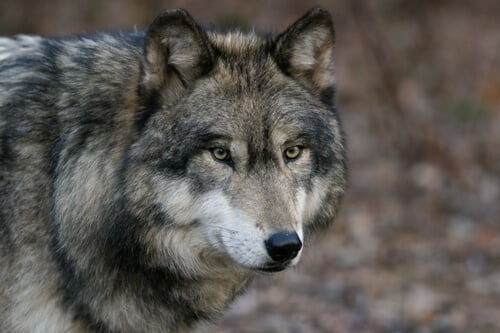
It is worth stressing that conserving these species is a valuable resource for the country; the gray wolf stands out among them.
Reptiles of Turkey
Turkey has a total of 150 reptile species within its territory. In the world ranking by number of reptile species, it is 54th.
This natural resource is very important for the country’s biodiversity.
Plants of Turkey
Turkey has a great diversity of vascular plants, with a total of 10,001 species recorded in 2020, placing it 21st in the world. Among the most notable species is the Turkish tulip, a bulbous plant considered the country’s national flower.

Organizations that protect or study Turkey’s natural resources
- WWF-Türkiye: Works to conserve biodiversity and fight climate change in Turkey.
- Doğa Derneği (Nature Association): Protects biodiversity and promotes sustainability in Turkey.
- Ministry of Environment, Urbanization and Climate Change of Turkey: Regulates and protects the environment in Turkey.
- TEMA Foundation: Fights soil erosion and desertification in Turkey.
- Greenpeace Turkey: Advocates for environmental protection and climate justice in Turkey.
Turkey holds the largest boron reserves on the planet, close to 950 million tonnes of borates, and leads world production of this strategic mineral (USGS, 2025). That dominance defines its resource profile, which is spread across mining, water and Anatolian agriculture.
Boron: the world’s largest reserves
The United States Geological Survey places Turkey at the top of the world’s boron reserves, with about 950 million tonnes of borates (USGS, 2025). The state-owned company Eti Maden handles most of the extraction, mainly of colemanite.
Mineral and agricultural exports
Turkey is the world’s largest exporter of hazelnuts. In 2024 it sold $1,500 million worth, 59.2% of global trade in the nut (OEC, 2024). It also leads in marble and travertine, with $616 million and about 40% of export volume (OEC, 2024).
Water: the GAP dams on the Tigris and Euphrates
The Southeastern Anatolia Project (GAP) has built more than twenty dams on the Tigris and Euphrates (FAO AQUASTAT, 2021). The basin is transboundary, shared with Syria and Iraq (FAO AQUASTAT, 2021). The country faces high water stress (WRI Aqueduct, 2023).
Electricity mix: renewables on the rise
In 2024, wind and solar power exceeded 18% of Turkey’s electricity generation (Ember, 2025). Fossil fuels fell to 55%, their lowest level since 1993 (Ember, 2025).
Frequently asked questions
Which country has the largest boron reserves? Turkey has the world’s largest boron reserves, close to 950 million tonnes of borates, and leads global production (USGS, 2025).
Is Turkey the largest exporter of hazelnuts? Yes. In 2024 it exported $1,500 million worth of hazelnuts, 59.2% of world trade (OEC, 2024).
Sources used
- List of countries by mineral production – Wikipedia
- Economic data by country – The Global Economy
- Forest area (km²) – World Bank
- Forest area (% of land area) – World Bank
- Oil reserves – The Global Economy
- Coal reserves – Worldometers
- Water and agriculture statistics – FAO
- Precipitation (mm) – World Bank
- Environmental Performance Index – Environmental Performance Index
- Bird species – Mongabay
- Amphibian species by country – Mongabay
- Mammal species – Mongabay
- Endemic mammal species – Our World in Data
- Plant species – Mongabay
- Reptile species by country – Mongabay
- Endemic bird species by country – Our World in Data
Turkey’s Energy Market Regulatory Authority (EPDK) reported in 2023 that renewable energy accounted for more than 42% of the country’s installed capacity.
Last updated: September 26, 2026

Leave a Reply