

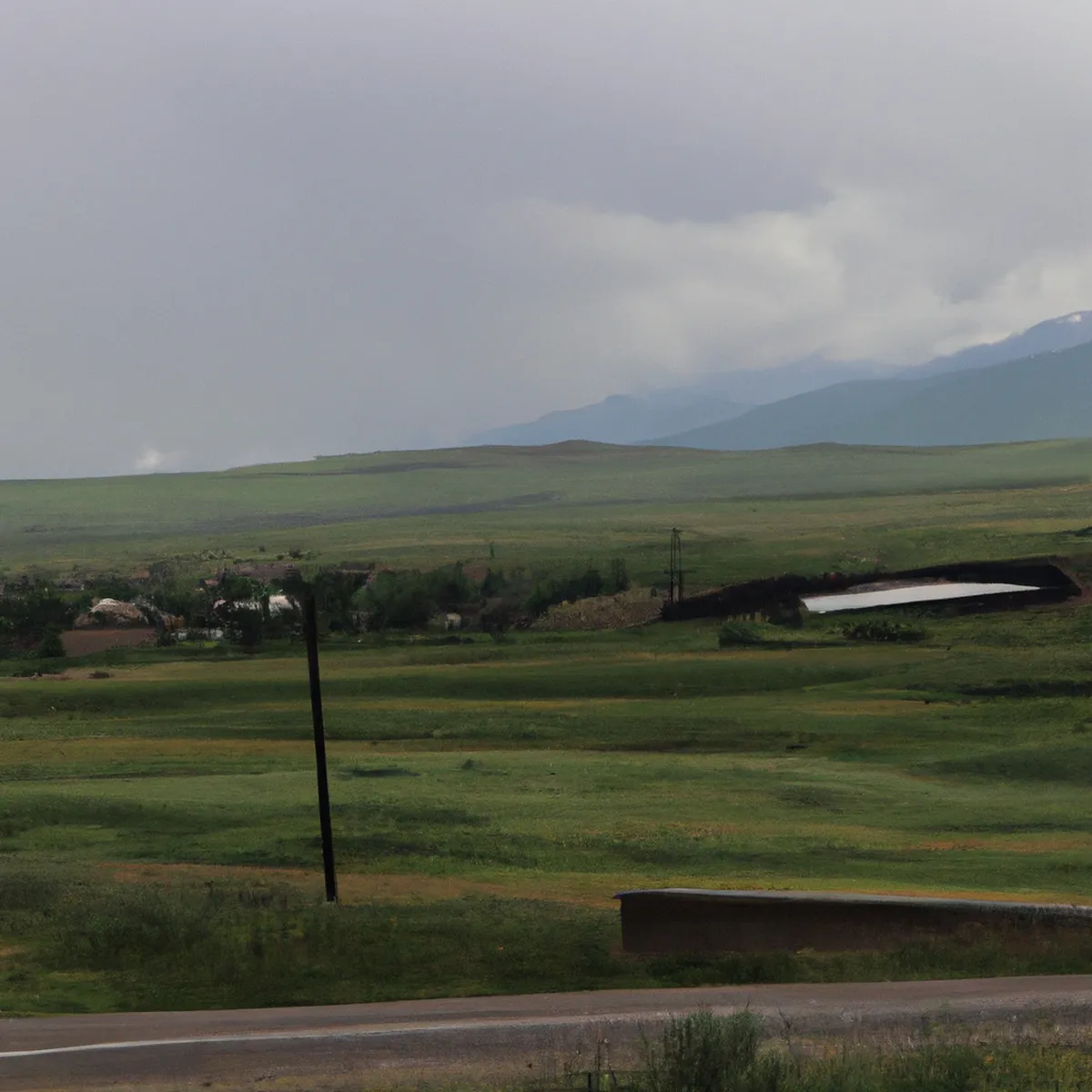
Armenia, in the South Caucasus, has natural resources that include forests, water and minerals such as copper, gold, molybdenum and zinc. How much water does Armenia have? Its renewable freshwater resources amount to 7.77 km³, ranking 127th in the world, and in 2025 it generated 2.6 TWh of renewable electricity (Ember, 2025), supported by Lake Sevan.
Armenia, located in the South Caucasus, is a country of mountains, valleys and a rich history stretching back thousands of years. The nation has a great diversity of natural resources, including forests, water, minerals and unique biodiversity.
Table de contenidos
Armenia’s forests provide timber and other forest products, while its rivers and lakes are an important source of hydroelectric power and fishing. Mineral resources, including copper and gold, are an integral part of the country’s economy.
In addition, Armenia’s biodiversity is an important source of tourism. The country’s natural resources are a vital part of its rich culture and a source of livelihood for its people.
What are Armenia’s natural resources? What natural wealth does it have? How much water does it have, and how does it generate energy? How diverse are its plants and animals?
Natural resources
Natural resources are materials or energy sources provided by or found on Earth that are useful to humans. Every product we manufacture is made up of natural resources.
- Renewable resources: these can be restored by natural processes faster than the rate at which they are consumed. Examples include solar radiation, wind, hydroelectric power, water when used properly, and plant and animal life.
- Non-renewable resources: once extracted, these are depleted and cannot regenerate. Examples include hydrocarbons, metals and minerals.
Examples of Armenia’s main natural resources
Armenia in figures: environmental indicators
The most recent official figures available on the state of Armenia’s environment.
| Forest cover | 11.6% of land area2023 |
|---|---|
| Protected land area | 38.9% of land area2025 |
| Annual change in forest area | −3 km² per year (2018–2023) |
| Renewable freshwater per capita | 2,310 m³ per year2022 |
| Threatened species | 102 mammals, birds, fish and plants2022 |
| Agricultural land | 58.6% of land area2023 |
Examples of Armenia’s mineral resources
Armenia has coal reserves amounting to 179,676,530 tonnes, according to 2016 data. This figure represents a very small share of the world’s coal reserves, specifically 0.00%. Even so, coal remains an important source of energy in many parts of the world, and its extraction and use continue to be debated in terms of sustainability and the environment.
Armenia is also rich in the following metals: iron, copper, molybdenum, lead, zinc, gold, silver, antimony and aluminum. The mining industry plays an important role in Armenia’s economy and contributes significantly to its income and employment.
Water resources of Armenia
Armenia had 7.77 km³ of renewable freshwater resources in 2020, which places it 127th in the world. The country has important water sources, notably the Aras and Hrazdan rivers, as well as Lake Sevan, Armenia’s main lake.

These water resources are essential for the development of agriculture and industry in the country, as well as for human consumption and the preservation of the environment.
Average rainfall and soils of Armenia
Armenia has an average annual rainfall of 562 mm, which places it 118th in the world ranking for average annual precipitation. Armenia’s soils vary with the country’s actual moisture levels, which are influenced by its geographic location and climate.
Renewable electricity and hydropower production in Armenia
In 2025, Armenia generated 2.6 TWh of electricity from renewable sources — 31% of its total generation of 8.6 TWh — and hydropower alone supplied 1.9 TWh (Ember, 2025). The country’s main hydroelectric system is the Sevan–Hrazdan Cascade, a chain of seven plants that begins at the Sevan Hydroelectric Power Plant in Gegharkunik Province and totals about 560 MW of installed capacity.
This plant is vital to the country’s electricity supply and contributes significantly to reducing greenhouse gas emissions.
Forest resources of Armenia
Armenia has significant forest resources, covering 11.54% of its land area, equivalent to 3,284.7 km². Globally, it ranks 138th for forest area.
The country’s most important forest region is Tavush, in northeastern Armenia.

Environmental performance and protection of Armenia’s natural resources
Armenia has an Environmental Performance Index (EPI 2024) score of 44.9 and ranks 94th on the index. In addition, protected areas make up 38.9% of its total territorial area (World Bank, 2025). To learn more about the Environmental Performance Index, visit Environmental Performance Index (EPI 2024).
Natural parks of Armenia: the hidden wealth of natural resources
Biodiversity: animal and plant resources of Armenia
Birds of Armenia
Armenia has a rich diversity of birds, with a total of 307 species. Although it has no endemic bird species, the country ranks around 122nd in the world for number of bird species.
However, 14 of these species are endangered, so it is important to take measures to protect this valuable natural resource. Among the country’s most notable bird species is the golden eagle.
Fish and amphibians of Armenia
Armenia has rich biodiversity, with 7 amphibian species and 54 fish species; its emblematic native fish is the Sevan trout (ishkhan, Salmo ischchan), endemic to Lake Sevan. Despite this diversity, the country ranks 90th in the world for number of amphibian species and 211th for number of fish species.

Unfortunately, 3 fish species are threatened, so it is important to take measures to protect this natural resource.
Mammals of Armenia
Armenia has rich biodiversity, although some mammal species are threatened. In 2016, 9 endangered species were recorded.
However, the country also has 2 endemic mammals, meaning they are found only in this region of the world. Although it ranks 60th for number of endemic mammals, these animals are an invaluable resource for the conservation of local wildlife.
Reptiles of Armenia
Armenia has a rich diversity of reptiles, with a total of 56 reptile species. Globally, it ranks 97th for number of reptile species.
This natural resource is very important for the country; its main species is the Armenian rock lizard, which lives in the mountains and is considered a symbol of local wildlife.
Plants of Armenia
Armenia has a great diversity of vascular plants, with a total of 3,600 species recorded in 2020, placing it 59th in the world. The country’s signature plant is the apricot tree, a fruit species highly valued for its flavor and nutritional properties.
Armenia is also home to other plants such as the pomegranate, the grapevine and the olive, along with various species of trees and shrubs that contribute to the country’s natural wealth.
Organizations that protect or study Armenia’s natural resources
- EcoLur – Monitors and reports on air, water and soil quality in Armenia.
- WWF Armenia – Works on biodiversity conservation and the sustainable management of natural resources in Armenia.
- Foundation for the Preservation of Wildlife and Cultural Assets (FPWC) – Protects wildlife and promotes culture in Armenia’s rural communities.
- Environmental Information Center of Armenia – Provides information and education on environmental issues in Armenia.
- Ministry of Environment of Armenia – Responsible for environmental policy and the protection of Armenia’s natural resources.
Armenia has no oil or gas of its own, but its subsoil puts it on the world map of metals: the country supplies about 1.9% of the world’s molybdenum, and precious stones and metals accounted for 61.7% of its exports in 2024, about $8 billion (Economy of Armenia, Wikipedia).
Copper and molybdenum: the Kajaran mine
The Kajaran deposit, in Syunik Province, is the country’s largest mine and accounts for 87% of the region’s copper and 8% of its molybdenum; its plant produces about 10 million tonnes of concentrate a year (Kajaran, Wikipedia). Mineral products made up 30.1% of exports in 2017, and mining contributes about 3.1% of GDP. Then there is gold: the Amulsar deposit, in Vayots Dzor, is valued at more than $15 billion (Mining industry of Armenia, Wikipedia).
Nuclear power without domestic oil: Metsamor
With no oil or gas reserves, Armenia imports almost all of its fuel from Russia, including the fuel for the Metsamor nuclear power plant (Economy of Armenia, Wikipedia). The plant, whose two VVER-440 reactors came online in 1976 and 1980 (Unit 1 was shut down in 1989, so only Unit 2, of about 408 MW, operates today), generated about 40% of the country’s electricity in 2015 (Armenian Nuclear Power Plant, Wikipedia).
Lake Sevan: the great freshwater reserve of the Caucasus
At 1,900 meters above sea level, Lake Sevan is one of the largest high-altitude freshwater lakes in Eurasia, with a surface area of 1,242 km². Its basin covers one-sixth of Armenia’s territory and provides about 90% of the national fish catch (Lake Sevan, Wikipedia). Intensive use during the Soviet era reduced its volume by more than 40%.
Sources used
- Economic data by country
- Forest area (km²)
- Forest area (% of land area)
- Arable land area (km²)
- Oil reserves
- Coal reserves
- Water and agriculture statistics
- Precipitation (mm)
- Environmental Performance Index
- Bird species
- Amphibian species by country
- Mammal species
- Endemic mammal species
- Plant species
- Reptile species by country
- Endemic bird species by country
Last updated: September 26, 2026
Leave a Reply