


The natural resources of Georgia, the country in the South Caucasus, rest on forests, rivers, mountains and hydropower rather than hydrocarbons. How does Georgia generate energy? In 2025 the country generated 10.6 TWh of hydroelectricity (Ember, 2025), led by the Enguri plant (1,300 MW), and its forests cover 40.62% of its territory, some 28,224 km².
Georgia is a country in the South Caucasus with an area of 69,700 km². Its geographical location gives it a wide variety of natural resources, such as forests, rivers, mountains, lakes and the Black Sea.
Table de contenidos
These resources are the basis of its economy, as they are used for timber production, hydropower, tourism and agriculture.
What are the most important natural resources in Georgia? What natural wealth does the country have, and where does it stand in the world rankings for mineral resources? What water sources does it have, and how is energy generated in the country? How diverse are Georgia’s wildlife and plants?
Natural resources
Natural resources are materials or energy sources provided by or found on Earth that are useful to humans. Every product we manufacture is made up of natural resources.
- Renewable resources: these can be restored by natural processes faster than the rate at which they are consumed. Examples include solar radiation, wind, hydroelectric power, water when used properly, and plant and animal life.
- Non-renewable resources: once extracted, these are depleted and cannot regenerate. Examples include hydrocarbons, metals and minerals.
Examples of Georgia’s main natural resources
Georgia in data: threatened biodiversity
Species at risk and protected area, with the latest available data.
| Threatened species | 106 mammals, birds, fish and plants2022 |
|---|---|
| Protected land area | 22.8% of land area2025 |
| Marine protected areas | 0.8% of its waters2025 |
| Forest cover | 40.6% of land area2023 |
| Annual change in forest area | stable (2018–2023) |
| Land area | 69,490 km²2023 |
Oil and gas resources in Georgia
Georgia produced 257 barrels of oil per day in 2023, which places it 73rd in the world for oil production. It also had oil reserves of 35,000,000 barrels in 2025, placing it 109th in the world.
Georgia is not known as an oil-producing region; its main natural resources are minerals and agriculture.
With natural gas production of about 10 million cubic meters in 2024, the country ranks 91st among the world’s producers (Worldometers, with EIA data).
Examples of Georgia’s mineral resources
In Georgia, coal reserves amounted to about 901 million tonnes in 2023 (Worldometers, with EIA data). The best-known coalfields, Tkibuli in the Imereti region and Tkvarcheli in Abkhazia, lie in the west of the country.
Water resources of Georgia
Georgia has 61.6 km³ of renewable freshwater resources, which places it 77th in the world ranking.
The country’s most important bodies of water include the Kura and Rioni rivers, as well as Lake Paravani, the country’s largest lake.
Average rainfall and soils of Georgia
Georgia has an average annual rainfall of 1,026 mm, which places it 79th in the world. Georgia’s soils vary with the country’s actual moisture levels, being wetter in areas with more rainfall and drier in areas with less.
Renewable electricity and hydropower production in Georgia
In 2025, Georgia generated 10.8 TWh of electricity from renewable sources — 80% of its total generation of 13.5 TWh — and hydropower alone supplied 10.6 TWh (Ember, 2025).
The country’s main hydroelectric plant is Enguri, with an installed capacity of 1,300 MW; its dam stands in the Samegrelo-Zemo Svaneti region, while the power station itself lies in Abkhazia.

Forest resources of Georgia
Georgia is rich in forest resources. The country’s main forest region is Colchis, which covers much of Georgian territory.
In 2023, Georgia’s forest area reached 40.62% of its land area, equivalent to 28,224 km².
Environmental performance and protection of Georgia’s natural resources
Georgia is a country with a rich diversity of natural resources. In the Environmental Performance Index (2024), Georgia scored 47.3 and ranked 77th. Protected areas cover 22.8% of its land area and 0.8% of its waters; together, terrestrial and marine protected areas make up 17.4% of the country’s total territorial area (World Bank, 2025). It is worth noting that there is a direct relationship between the protection of these areas and the country’s position in the Environmental Performance Index.
Biodiversity: animal and plant resources of Georgia
Birds of Georgia
Georgia has a rich diversity of birds, with a total of 308 recorded species (data updated to 2024). The country ranks 132nd in the world for number of bird species.
However, 15 of these species are threatened (World Bank, 2022), so it is essential to protect and conserve this valuable natural resource.

Fish and amphibians of Georgia
Georgia has 12 amphibian species and 142 fish species (data updated to 2024). Globally, it ranks 84th for number of amphibian species and 184th for number of fish species.
However, 13 fish species are threatened (World Bank, 2022), which shows the need to protect and conserve this natural resource. The country’s main amphibian and fish species include the Caucasian salamander and the Colchic sturgeon, respectively; the Rioni River is the main remaining spawning ground of this highly endangered Black Sea sturgeon.
Mammals of Georgia
Georgia has a total of 111 mammal species (data updated to 2024). Of these, however, 8 are threatened (World Bank, 2022).
Georgia ranks 72nd in the world for number of mammal species, although it has no endemic mammals.
Reptiles of Georgia
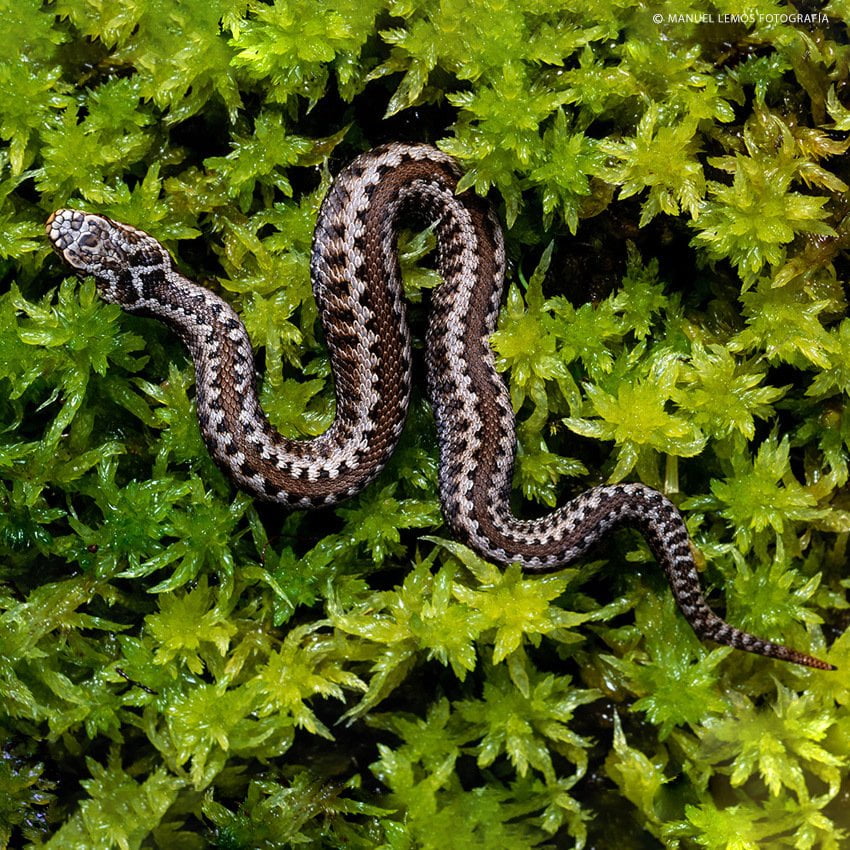
Georgia is home to a variety of reptile species. Its flagship reptile species is the Caucasus viper (Vipera kaznakovi), an endangered snake found in Georgia, northeastern Turkey and Russia’s Black Sea coast.
Plants of Georgia
Georgia has a great diversity of vascular plants, with a total of 4,100 species recorded in 2020, placing it 55th in the world. Among the most notable species is the grapevine, the country’s flagship plant, which is used to produce high-quality wine.
In 1905, about 60% of all the manganese mined on the planet came from a single mining district in Georgia: Chiatura, in the Kvirila River valley. That metal, key to hardening steel, made the small Caucasian country a global supplier (Chiatura, Wikipedia, citing USGS, 1905).
Chiatura manganese
The deposits were identified in 1879, when the poet Akaki Tsereteli was searching the area for iron and manganese. Minable ore reserves are estimated at about 239 million tonnes (Chiatura, Wikipedia). The ore travels by electrified railway to the Zestaponi ferroalloy plant; around 1913, Georgia supplied roughly 50% of the world manganese market (Economy of Georgia, Wikipedia).
The cradle of wine and the qvevri method
Georgia holds the oldest known evidence of winemaking: some 8,000 years of wine production from the grapevine, dating back to the Neolithic. The country catalogs about 500 native grape varieties, although only 38 are grown commercially (Georgian wine, Wikipedia). Its ancient technique, fermenting the grape must with its skins and seeds for five or six months in buried clay jars called qvevri, was inscribed in 2013 on the Representative List of the Intangible Cultural Heritage of Humanity (UNESCO, 2013). In 2019 the country exported 94 million bottles to 53 countries.
Mineral water for export: Borjomi
Mineral water is also exported: Borjomi water rises from artesian springs at depths of 1,200 to 1,500 meters. In the 1980s its production reached 400 million bottles a year, and today it is distributed to about 40 countries (Borjomi, Wikipedia). In 2011, Georgian mineral water exports totaled $48 million, shipped to 35 countries, or 2.1% of the country’s total exports (Economy of Georgia, Wikipedia).
Sources used
- Lists of countries by mineral production – Wikipedia
- Economic data by country – The Global Economy
- Forest area (km²) – World Bank
- Forest area (% of land area) – World Bank
- Oil reserves – The Global Economy
- Coal reserves – Worldometers
- Water and agriculture statistics – FAO
- Precipitation (mm) – World Bank
- Environmental Performance Index – Environmental Performance Index
- Bird species – Mongabay
- Amphibian species by country – Mongabay
- Mammal species – Mongabay
- Endemic mammal species – Our World in Data
- Plant species – Mongabay
- Reptile species by country – Mongabay
- Endemic bird species by country – Our World in Data
Last updated: September 26, 2026
Leave a Reply