


Azerbaijan’s natural resources center on oil and natural gas, which make it a key energy exporter. What are Azerbaijan’s most notable natural resources? The country produced 710,758 barrels of oil per day in 2021 and 50.3 billion cubic meters of gas in 2024, and it has 7 billion barrels of reserves and 77.7 km³ of renewable freshwater resources.
Azerbaijan is a country in the Caucasus region, bordered by the Caspian Sea to the east and Russia to the north. It is rich in natural resources, most notably its oil and natural gas production, which makes it a major energy exporter worldwide.
Table de contenidos
It also has varied biodiversity, with animal and plant species unique to the area, and landscapes ranging from arid and semi-arid zones to forests and mountains. The sustainable use of Azerbaijan’s natural resources is key to its economic development and to the preservation of the environment.
What are Azerbaijan’s most notable natural resources and natural wealth? What is its energy generation capacity, and how does it use its water resources? How diverse are its fauna and flora, including birds, reptiles, mammals, fish and amphibians?
Natural resources
Natural resources are materials or energy sources provided by or found on Earth that are useful to humans. Every product we manufacture is made up of natural resources.
- Renewable resources: these can be restored by natural processes faster than the rate at which they are consumed. Examples include solar radiation, wind, hydroelectric power, water when used properly, and plant and animal life.
- Non-renewable resources: once extracted, these are depleted and cannot regenerate. Examples include hydrocarbons, metals and minerals.
Examples of Azerbaijan’s main natural resources
Azerbaijan in figures: environmental indicators
The most recent official figures available on the state of Azerbaijan’s environment.
| Forest cover | 14.1% of land area2023 |
|---|---|
| Protected land area | 22.1% of land area2025 |
| Annual change in forest area | +115 km² per year (2018–2023) |
| Renewable freshwater per capita | 800 m³ per year2022 |
| Threatened species | 85 mammals, birds, fish and plants2022 |
| Agricultural land | 57.8% of land area2023 |
Oil and gas resources in Azerbaijan
Azerbaijan is a major oil producer: output reached 710,758 barrels per day in 2021, placing it 13th in the world ranking of oil production. By 2024, however, oil production had fallen to about 481,000 barrels per day, according to official data (Ministry of Energy of Azerbaijan). The country also has large oil reserves, estimated at 7,000,000,000 barrels as of 2022, which places it 20th in the world ranking of oil reserves.
The country’s main oil-producing region is the Absheron Peninsula, and it is worth noting that the country has an abundance of natural resources.
Azerbaijan has significant natural gas resources and is a major gas producer. In 2024, its natural gas production reached 50.3 billion cubic meters (50.3 bcm), up from previous years, according to official data (Ministry of Energy of Azerbaijan). Much of this output comes from the Shah Deniz and Azeri-Chirag-Gunashli fields.
Water resources of Azerbaijan
Azerbaijan has 77.7 km³ of renewable freshwater resources, which placed it 70th in the world ranking of water reserves in 2020. The country has significant water resources, the most notable being the Kura and Aras rivers, and its most important lake is the Caspian Sea.
Proper management of these resources is essential to guarantee access to drinking water and the country’s sustainable development.
Average rainfall and soils of Azerbaijan
Azerbaijan has an average annual rainfall of 447 mm, which places it 129th in the world for precipitation. Because of the country’s actual moisture levels, its soils are mainly clay and sandy, which makes them suitable for agriculture and for crops such as cotton and wheat.
Renewable electricity and hydropower production in Azerbaijan
In 2025, Azerbaijan generated 2.7 TWh of electricity from renewable sources — 10% of its total generation of 27.5 TWh — and hydropower alone supplied 2.5 TWh (Ember, 2025). The country’s main hydroelectric plant is the Mingachevir Hydroelectric Power Plant, on the Kura River, with an installed capacity of 424 MW.
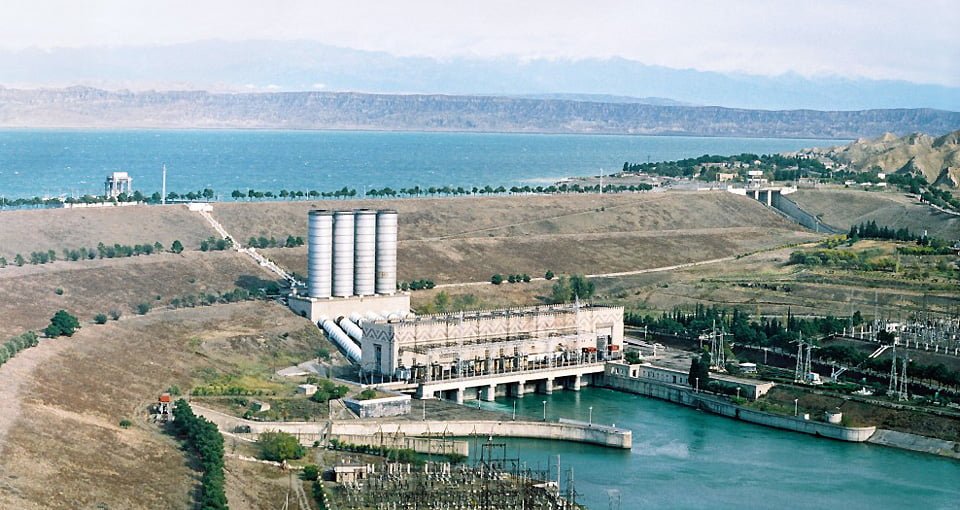
This plant plays a key role in electricity generation in Azerbaijan and makes a significant contribution to reducing greenhouse gas emissions.
Forest resources of Azerbaijan
Azerbaijan has significant forest resources, which cover 13.69% of its land area, an extent of 11,317.7 km². Globally, it ranks 115th for forest area. The country’s main forest region is Guba-Khachmaz, in the north of the country.
Environmental performance and protection of Azerbaijan’s natural resources
Azerbaijan’s Environmental Performance Index (EPI 2024, Yale University) score is 40.5, placing it 121st in the index. In addition, terrestrial protected areas make up 22.1% of the land area (World Bank, 2025). There is a direct relationship between the protection of these areas and the country’s position in the Environmental Performance Index. More: Environmental Performance Index (EPI 2024).
Natural parks of Azerbaijan: the hidden wealth of natural resources
”Biodiversity: animal and plant resources of Azerbaijan
Birds of Azerbaijan
Azerbaijan has a rich diversity of birds, with a total of 349 species recorded in 2018. Although it had no endemic bird species in 2020, the country ranks 101st in the world for number of bird species.
However, 17 of these species are endangered, so it is important to take measures to protect this valuable natural resource. Among the most notable species is the golden eagle, considered the country’s flagship bird.
Fish and amphibians of Azerbaijan
Azerbaijan’s diverse natural resources include a variety of amphibian and fish species. In 2019, 11 amphibian species were recorded in the country, placing it 86th in the world for number of amphibian species.
The country also has 85 fish species, its flagship species being the Caspian trout. However, the number of fish species is not especially high, as the country ranks 199th in the world.
Notably, 14 of these fish species are threatened, which shows the need to protect and conserve these natural resources.
Mammals of Azerbaijan
Azerbaijan has a total of 103 mammal species. However, 8 of these species are threatened.
Globally, Azerbaijan ranks 71st for number of mammal species. It has no endemic mammal species, however, which places it 86th in the world ranking of endemic mammals.
Reptiles of Azerbaijan
Azerbaijan has a rich diversity of reptiles, with a total of 65 species recorded in 2019. Despite this large number, the country ranks 93rd in the world for number of reptile species.
Among the most notable species is the spur-thighed tortoise, an important resource for biodiversity conservation in the region.
Plants of Azerbaijan
Azerbaijan has a great diversity of vascular plants, with a total of 4,500 species recorded in 2020, placing it 52nd in the world.
Organizations that protect or study Azerbaijan’s natural resources
- Ministry of Ecology and Natural Resources – Protects and manages Azerbaijan’s natural resources.
- World Wide Fund for Nature (WWF) – Works on biodiversity conservation and the sustainable management of natural resources.
Baku was the world’s oil capital long before Texas or the Persian Gulf: around 1901 the area produced more than half of the world’s oil—about 11 million tonnes a year, or roughly 212,000 barrels a day—and between 1898 and 1901 it extracted more crude than the entire United States (Petroleum industry in Azerbaijan, Wikipedia).
Modern oil: the ACG field and the BTC pipeline
The backbone of current production is the Azeri-Chirag-Gunashli (ACG) complex in the Caspian, with estimated recoverable reserves of about 6 billion barrels and more than 16 billion barrels in place (Petroleum industry in Azerbaijan, Wikipedia). From the Sangachal terminal, this crude travels 1,768 km to the Mediterranean through the Baku-Tbilisi-Ceyhan pipeline, which opened in 2006 and can carry one million barrels a day (Baku–Tbilisi–Ceyhan pipeline, Wikipedia).
Shah Deniz gas bound for Europe
The country’s energy future lies in natural gas. The Shah Deniz field, in the deep waters of the Caspian, holds estimated reserves of around 1.2 trillion cubic meters (Shah Deniz gas field, Wikipedia). It is the first link in the Southern Gas Corridor, which carries Azerbaijani gas to the European Union through the TANAP and TAP pipelines: about 10 billion cubic meters a year from its phase 2 goes to European buyers, mainly in Italy (Shah Deniz gas field, Wikipedia).
The largest concentration of mud volcanoes on the planet
Azerbaijan has nearly 400 mud volcanoes, more than half of all those found on land; some are more than 200 meters high, and their eruptions can produce flames on a similar scale (Mud volcano, Wikipedia). The same gas that seeps beneath the Absheron Peninsula feeds the perpetual fire of Yanar Dag, with flames up to 3 meters high, the origin of the nickname “Land of Fire” (Yanar Dag, Wikipedia).
Sources used
- Lists of countries by mineral production
- Economic data by country
- Forest area (km²)
- Forest area (% of land area)
- Arable land area (km²)
- Oil reserves
- Coal reserves
- Water and agriculture statistics
- Precipitation (mm)
- Environmental Performance Index
- CO2 emissions (tonnes per capita)
- Bird species
- Amphibian species by country
- Mammal species
- Endemic mammal species
- Plant species
- Reptile species by country
- Endemic bird species by country
Last updated: September 26, 2026
Leave a Reply