Sustainable Development Projects: What They Are and Examples

Published on

Sustainable development projects are ideas that pursue economic prosperity, environmental integrity and social equity at the same time. What examples of sustainable development projects are there? The Shams 1 solar plant in the United Arab Emirates reaches 100 megawatts with 258,048 mirrors, and in 2011 Japan set out to build a 1-gigawatt floating wind farm off the coast of Fukushima by 2020, although only a three-turbine demonstration was installed (2013–2017).

There are many reasons to think that in the future we will live in a more environmentally friendly way. One of them is the many projects that are true examples of sustainable development: ideas that try to solve a human problem in an ingenious way while reducing the environmental damage it causes.

What is a sustainable development project?


They are ideas that address the challenges of sustainable development; that is, their goal is economic prosperity, environmental integrity and social equity. They are also projects that understand the dynamics of the populations involved and the existing economic interconnections in order to reach sustainable solutions with a long-term perspective, while recognizing the limits of environmental systems.

They can be school, university, home, community or industrial projects; it doesn’t matter. Some projects have a greater impact than others, or are bigger or more expensive, but all of them aim to achieve sustainable development. The following are examples of sustainable development projects.

Examples of sustainable development projects

Using the sun to generate power on a large scale


Solar power plant, a sustainable development project


The United Arab Emirates is better known for oil and gas, but the country is also home to major renewable energy developments. In this region, the Shams Power Company inaugurated Shams 1, a concentrated solar power plant, in March 2013. The station, with a capacity of 100 megawatts, was at the time one of the largest concentrated solar power plants in the world.


Shams 1 uses 258,048 parabolic mirrors to collect sunlight and concentrate it onto oil that flows through absorber tubes placed at the focus of the mirrors. This heated oil passes through a heat exchanger and is used to create steam that drives the turbines, generating electricity.


A planned giant offshore wind farm in Japan


Wind farm

 
After the Fukushima nuclear disaster that followed the 2011 earthquake and tsunami, Japan has been looking for other energy sources to replace its nuclear reactors. To that end, in 2011 the country began planning a large floating offshore wind farm about 20 kilometers off the coast of Fukushima.


When this project was announced, the world’s largest offshore wind farm was in the United Kingdom, producing 504 megawatts of power with 140 turbines, while the floating wind farm Japan hoped to build by 2020 was to reach 1 gigawatt (1,000 megawatts). In the end, only three floating demonstration turbines (2, 7 and 5 megawatts) were installed, between 2013 and 2017.

The benefit of wave energy


Wave energy


In 2013, a Mexican company called Marersa was planning to install about 450 floating buoys that would harness the movement of the waves to generate hydraulic pressure, which is then converted into electricity. The plant was to have a capacity of 30 megawatts and to be built in the state of Baja California.

Organic farming


Organic farming

More than a project, organic farming is an idea applied in many parts of the world. It provides healthy food, protects soil, water and the climate, promotes biodiversity, increases soil fertility, reduces greenhouse gas emissions, prohibits or severely limits synthetic pesticides and fertilizers, and excludes genetically engineered organisms.
 
 
In addition, with its biological diversity, organic farming can be an effective strategy for adapting agriculture to future climate conditions, because it is based on a mix of different crops and varieties, a way to increase resilience to climate change.

Reducing pollution from container ships


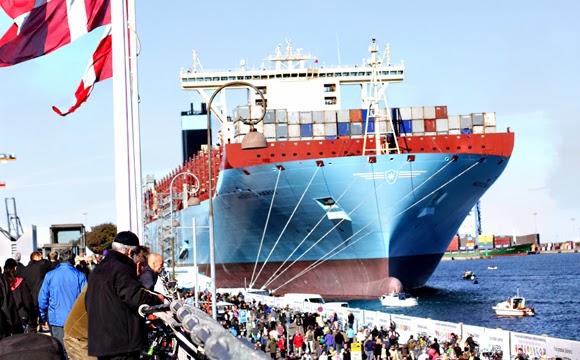
Environmentally friendly Triple-E container ship
 

In 2011, Maersk, then the world’s largest container shipping company, ordered 20 fuel-efficient Triple-E ships from Daewoo, which were delivered between 2013 and 2015. When they entered service, they were the largest container ships in the world, about 400 m long, 59 m wide and 73 m high; larger ships have since been built. Because they are more efficient and take advantage of economies of scale, Maersk expected them to emit 50% less carbon dioxide (CO2) per container than typical ships on the Asia–Europe route.

Cutting the pollution generated by these new container ships matters because maritime shipping is one of the most polluting industries. According to the Fourth IMO Greenhouse Gas Study (2020), shipping’s CO2 emissions reached 1,056 million tonnes in 2018, and its share of global emissions from human activity rose from 2.76% in 2012 to 2.89% in 2018.

Solar energy for Africa’s most remote communities


Solar power in Africa, Nova-Lumos
About 655 million people worldwide still lacked access to electricity in 2024 (UN, SDG Report 2026). In 2013, the Nova-Lumos development project in Africa was working to change this with portable solar power equipment. The company was bringing clean, affordable solar energy to the most remote communities on the continent. It distributed small power stations, a solar panel and units that let users buy electricity on demand with their cell phones, giving residents a steady supply of electricity. In this way, these communities can replace kerosene and candles with electricity that can power lights, cell phones, fans, computers and more.

Dry Bath: how to shower without using water

Dry Bath: how to shower without water
Every day we use large amounts of water; a standard showerhead alone uses about 9.5 liters (2.5 gallons) per minute, according to the US EPA. In regions where water is scarce and sanitation is limited, the problem is even more serious. According to the WHO, diarrhea kills around 443,832 children under 5 every year, and trachoma is responsible for the blindness or visual impairment of about 1.9 million people.
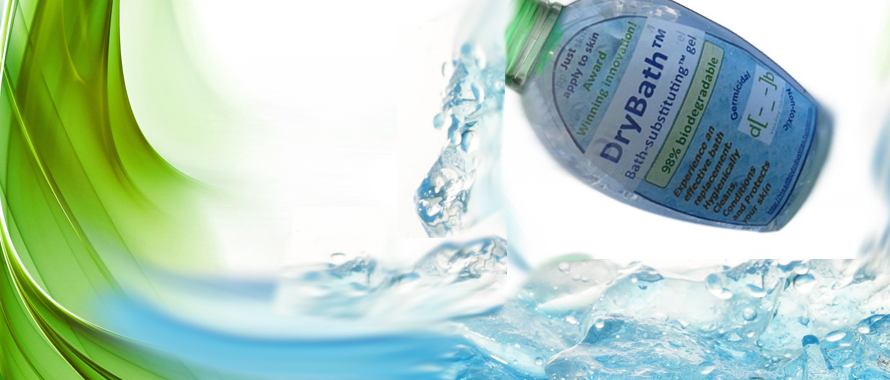
Dry Bath, presented at TED in 2012 by entrepreneur Ludwick Marishane as “the world’s first bath-substituting lotion,” is a shower gel that does not need water to be used properly: a germicidal skin lotion that replaces a bath. At the time, it was expected to be, quite literally, a lifesaver for the millions of people who lack access to clean water or sanitation.
These projects are just a few examples of sustainable development, but new ideas and projects that bring us closer to the development we want keep emerging.
More on sustainable development
Drones and sustainable development

Eco-friendly and sustainable projects for schools, universities and the home

Beyond large industrial megaprojects, sustainability is built on a local, everyday scale. The following are projects and cases that can be applied in schools, at universities and at home:

Eco-friendly projects for schools (elementary and secondary)
Eco-friendly school projects
First, to develop eco-friendly and sustainable projects in schools successfully, a few key steps should be followed.
  1. Form a committee of students, teachers and school administrators that represents the school’s ideas and drives the project forward.
  2. Carry out an environmental review of the school’s situation to identify its main environmental impacts and problems.
  3. Create an action plan based on the results of the environmental review. It should identify the priority problems (no more than 3) and the actions to solve them. The plan must be specific, measurable, achievable, realistic and timely.
  4. Monitor, evaluate and share the plan’s progress based on simple, quantifiable criteria that the students themselves can apply.
  5. Integrate the plan or eco-friendly project into the school curriculum through classes or activities that bring the school community together.
  6. Inform and involve more members of the school through posters, videos, websites, activities, reports and so on, as well as the community outside the school, such as households, businesses that care about sustainability and local government.
  7. Create a statement that shows the school’s commitment to the environment: a written, audio or visual message that resonates with the community and is displayed prominently at the school.
More information: Eco-Schools. Some examples of environmental school projects:

Recycling and waste awareness program

This program aims to change children’s behavior over the long term. To begin with, it sets a good example and raises awareness of the waste problem.


In this project, the school can set up a recycling scheme and reduce the amount of waste it produces. A compost bin can also be built. This environmental initiative can also raise awareness of the impact of waste on the local environment. Children can take field trips to waste collection centers to understand how the local waste system works, or visit places where trash piles up, such as ravines or vacant lots.

Conserving the school’s biodiversity

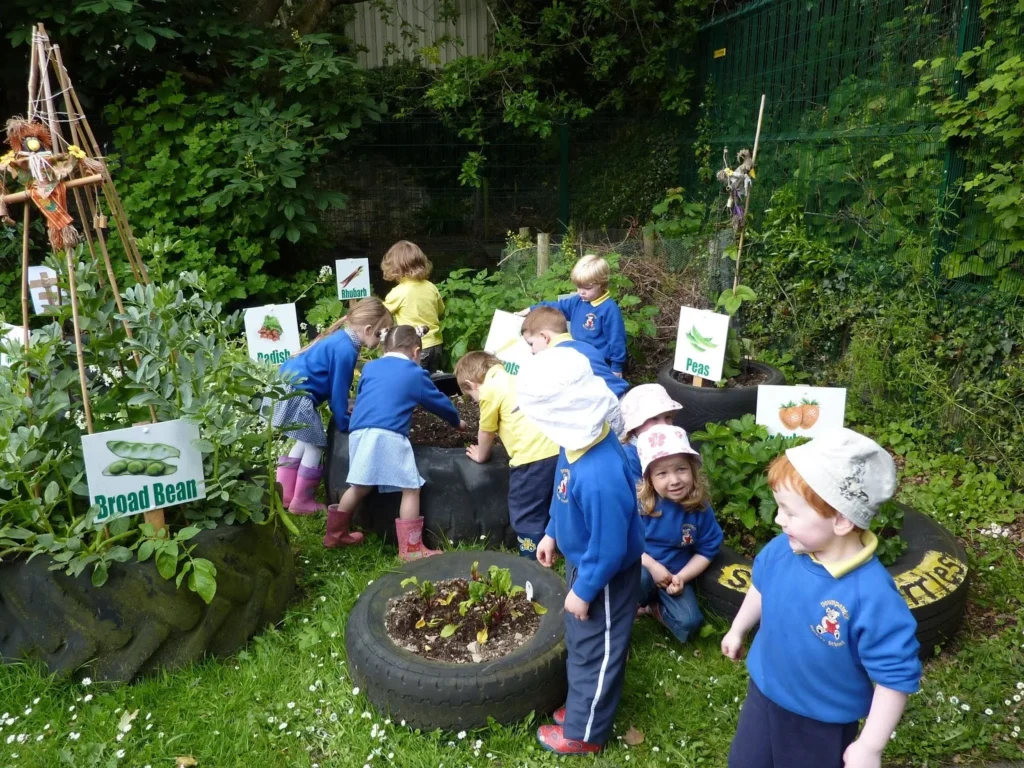
This project aims to spark children’s interest in plants and animals. It studies the flora and fauna at the school or in the surrounding area and develops ways to protect and increase biodiversity. For example, a community garden can be created on or near the school grounds.

Responsible eating

Programs that aim to encourage the school community to improve its eating habits and to take actions that protect the environment and support sustainable development. Videos, posters, exhibitions and so on can be created with the children’s participation, showing the best eating habits and the problems with the most popular foods.


Environmental outreach

Programs that show children the environment and biodiversity in a practical and interesting way. Some projects can be group field trips or outdoor experiments that complement regular class activities.

Eco-friendly university projects

Eco-friendly university projects
 
Universities do more than train students for their careers. They are also key players on environmental issues because of the research and the cultural and social programs they carry out, which often have a wide reach. Many eco-friendly and sustainable university projects eventually grow into disruptive innovations in many communities. Examples of notable projects:


Smart waste collection and recycling systems

Smart waste collection and recycling bin

These are smart trash bins with sensors that measure the level of waste; they also compact the trash, which increases their total capacity 5 times compared with a normal bin. They can also communicate in real time with the maintenance team to report when they are ready to be emptied. This improves efficiency by reducing the use of garbage trucks and fuel consumption. More: Bigbelly

Outdoor gym that generates electricity

Outdoor gym that generates electricity
Gyms for students that also have Ecobikes, eco-friendly bicycles that let users generate electricity by pedaling, enough to charge electronic devices and power nearby lights. In this way, the project supports both sport and sustainable energy. More: UdeA (University of Antioquia)

Other eco-friendly and sustainable actions or projects for universities

  • Use your own washable thermos instead of buying bottled water, and do the same with coffee cups and single-use plastics such as spoons and forks. Campaigns can also be run to spread these ideas widely; one example is UC Berkeley’s “I Heart Tap Water” campaign.
  • Don’t waste paper. Whenever possible, use technology to take notes and study.

Eco-friendly home projects

There are many ways to make our homes more eco-friendly. Some are cheap and simple, while others take time and cost quite a lot of money.

The most striking projects are those that benefit low-income families. They are a way to provide new services and amenities while also being eco-friendly. Examples of eco-friendly home projects:

Hippo Water Roller project

Hippo Water Roller for carrying water

This highly innovative project consists of plastic drums that make it easier to transport water. They were invented in South Africa in 1991 for rural communities where fetching water in buckets, a task that often falls to women and girls, can be very time-consuming.

Home vegetable gardens

Home vegetable garden
 
Vegetable gardens are an easy, sustainable way to grow food. In homes with space, preferably outdoors, you can use pots, planters or even bottles cut in half to grow fruits and vegetables.
 
Gardens are also a great way to connect with nature and appreciate food more.

Creative transformation of waste

Creative transformation of waste
This project is about using waste to create useful infrastructure: for example, furniture made from boards and plastics, walls made of glass bottles or cans, and playground equipment made from used tires. Basurama, a Spanish organization, has many related projects.

Lighting homes with bottles

Lighting homes with plastic bottles
 
This is a well-known project that uses plastic bottles filled with water and a little bleach, sealed into the roof, to light up the inside of homes. It is a very simple and sustainable technology to implement. More

Some simple projects and actions to make your home more environmentally friendly and sustainable

  • Replace traditional light bulbs with LED bulbs.
  • Unplug electronic devices when you are not using them.
  • Choose natural light.
  • Place the refrigerator where the sun does not hit it; this saves energy.
  • Use the microwave instead of a conventional oven to heat small portions; it uses less energy.
  • Keep plants in your home.
  • Turn off the faucet while you brush your teeth.
  • Rinse your razor in a glass of water instead of under the running faucet.
  • Hang your clothes to dry instead of using the dryer.
  • Recycle plastics, glass, magazines, newspapers, and aluminum and steel cans.
Related reading:
Actions for sustainable development
Sustainable urban development
Sustainable products

Last updated: September 26, 2026

Share this resource:

Juan David Montoya

Written and reviewed by

Juan David Montoya

Economist from the Universidad de Antioquia (Medellín, Colombia), covering the environment and sustainable development since 2013. The work here begins with hands-on research in the databases of the major international research institutions — the World Bank, FAO, the United States Geological Survey (USGS), the United Nations and the OECD — the source of every indicator published on this site, each one cross-checked. The aim is to turn that data into a simple, visual format: tables, maps and visualizations that make each country's environmental situation clear at a glance.

How this content is researched and updated: editorial standards and methodology · report an error

Comments

Leave a Reply

Your email address will not be published. Required fields are marked *

Latest articles: