

Peru’s natural resources span minerals, hydrocarbons and water that sustain its economy. In 2024 copper production reached some 2.6 million tonnes, third in the world behind Chile and the Democratic Republic of the Congo, while oil came to 38,391 barrels a day in 2021. Which natural resources in Peru carry global weight?
Peru is fortunate in its wealth of natural resources. Its geographic position gives it a great variety of ecosystems, which translates into biodiversity found nowhere else.
Table de contenidos
It also holds major reserves of minerals, hydrocarbons and water resources, among others. Extracting these resources has been central to the country’s economic development, though it has also generated controversy over its environmental and social impact.
Managing Peru’s natural resources sustainably is a crucial challenge for guaranteeing their conservation and responsible use in the future.
Which natural resources in Peru stand out most? What natural wealth does the country hold? Which minerals are extracted, and where does it sit in the international rankings? How diverse are the wildlife and plant life in Peru?
Natural Resources
Natural resources are materials or energy sources provided by or found on Earth that are useful to humans. Every product we manufacture is made up of natural resources.
- Renewable resources: these can be restored by natural processes faster than the rate at which they are consumed. Examples include solar radiation, wind, hydroelectric power, water when used properly, and plant and animal life.
- Non-renewable resources: once extracted, these are depleted and cannot regenerate. Examples include hydrocarbons, metals and minerals.
Examples of Peru’s main natural resources
Peru: the state of the forest
Change in forest area and the country’s environmental context.
| Forest cover | 56.1% of the territory2023 |
|---|---|
| Forest area | 718,119 km²2023 |
| Annual change in forest area | −1,728 km² per year (2018–2023) |
| Agricultural area | 19.1% of the territory2023 |
| Protected land area | 22.1% of the territory2025 |
| Threatened species | 802 mammals, birds, fish and plants2022 |
Map of Peru’s natural resources by region
Peru is divided into three natural regions — Coast, Highlands and Rainforest — each concentrating distinct natural resources.
Oil and gas resources in Peru
In 2021 Peru produced a total of 38,391 barrels of oil per day, placing it thirty-seventh (37th) worldwide for oil production. It also held oil reserves of 682,681,000 barrels as of 2022, placing it forty-first (41st) in the world ranking.
Peru is also a mid-sized natural gas producer, with annual output of 13.6 billion cubic meters in 2024. The country sits thirty-fifth (35th) in the global ranking of natural gas producers (EIA, 2024).
Examples of Peru’s mineral resources
Peru holds coal reserves of about 1.57 billion tonnes as of 2023 (Worldometers, with EIA data). The main producing region for this resource in Peru is the Chicama river basin, in the La Libertad region.
In 2024, production of copper in Peru reached around 2.6 million tonnes, placing it third in the world behind Chile and the Democratic Republic of the Congo (Statista). The main copper-producing region in Peru is the Andes, where major deposits of this mineral are found. Copper production is one of the country’s main economic activities, generating substantial revenue and jobs in the mining industry.
In 2019, production of iron ore in Peru reached 15,000 thousand tonnes, an important contribution to the country’s mining sector. That figure places Peru fourteenth in the global iron ore production ranking. The main producing region for this resource in Peru is the south coast, where major iron deposits are worked by various mining companies.
In 2018, production of silver in Peru reached 4,160 tonnes, placing it second in the global production ranking for this resource. The main silver-producing region in Peru is the Central Highlands, home to major deposits such as Cerro de Pasco.
Peru is one of the world’s leading producers of gold worldwide, with output of 136.9 tonnes in 2024 and reserves of 2,600 tonnes. It ranks ninth (USGS) in the global production ranking for gold. The country’s main mine is Yanacocha, in the Cajamarca region.
Peru is estimated to hold mineral resources worth $328 billion.
Other important minerals in Peru are:
- Largest producer of arsenic trioxide.
- Second-largest producer of zinc.
- Fourth-largest producer of molybdenum.
- Fourth-largest producer of tin (after China, Indonesia and Myanmar).
- Fourth-largest producer of lead (after China, Australia and the US).
Water resources of Peru
Peru holds an impressive freshwater reserve of 1,913 km³, placing it ninth in the global ranking of water reserves as of 2020. That volume of water is fundamental to the development of agriculture, industry and human consumption in the country.
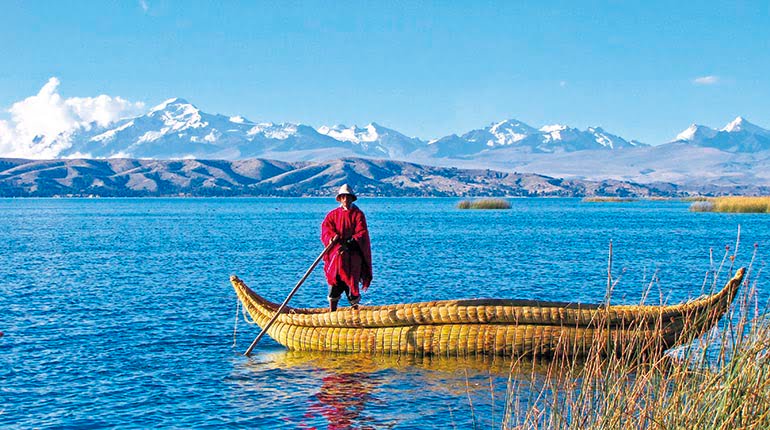
Peru also has a great many rivers and lakes, the most important being the Amazon and Ucayali rivers, along with Lake Titicaca, the largest lake in South America. The abundance of water in Peru is a valuable resource that must be protected and managed sustainably to guarantee its availability in the future.
Average rainfall and soils of Peru
Peru has average annual rainfall of 1,738 mm, placing it thirty-eighth (38th) in the global ranking for average annual precipitation as of 2020. The country’s actual humidity shapes the formation of different soil types, from the most fertile and nutrient-rich in the wettest areas to the most arid and dry in the more desert regions.
Renewable electricity and hydropower production in Peru
In 2025, Peru generated 38.5 TWh of electricity from renewable sources — 64% of its total generation of 60.4 TWh — and hydropower, the country’s main renewable energy source, supplied 33.9 TWh (Ember, 2025).
Peru’s most important hydroelectric plant is the Mantaro plant, in the Huancavelica region, with installed capacity of 1,008 MW.

Forest resources of Peru
Peru holds considerable natural wealth in forest resources. With a forest area covering 56.10% of its territory, equivalent to 718,119 km² according to 2023 data (World Bank), it ranks tenth worldwide.
The country’s most important forest region is the Amazon, home to a great variety of species and considered one of the most biodiverse areas on the planet.
Environmental performance and protection of Peru’s natural resources
Peru has an Environmental Performance Index (EPI 2024, Yale University) of 46.5 and ranks 85th of 180 countries on the Environmental Performance Index. It also has protected land and marine areas covering 16.5% of its total territorial area (World Bank, 2025), showing its commitment to conserving natural resources.
Natural parks of Peru: the hidden wealth of natural resources
Biodiversity: animal and plant resources of Peru
Birds of Peru
Peru is a country rich in natural resources, and its bird diversity shows it. With a total of 1,858 bird species recorded in 2018, Peru ranks second in the world for number of bird species.
It also had 134 endemic bird species as of 2020. However, 119 bird species are threatened. The Andean condor stands out among them.

Fish and amphibians of Peru
Peru is a country of great amphibian and fish diversity. In 2019, 572 amphibian species were recorded, placing it fourth worldwide for number of amphibian species.
It also has 1,573 fish species, ranking 21st worldwide. However, 52 fish species are threatened in the country.
Mammals of Peru
Peru is a country of great mammal diversity, with a total of 467 species as of 2016. However, 53 are threatened.
Peru ranks fifth worldwide for number of mammal species. It also had 57 endemic mammal species as of 2020, placing it eleventh worldwide for endemic mammals.
Reptiles of Peru
Peru is a country of great reptile diversity, with a total of 495 species as of 2019, placing it ninth worldwide for number of reptile species.
Plants of Peru
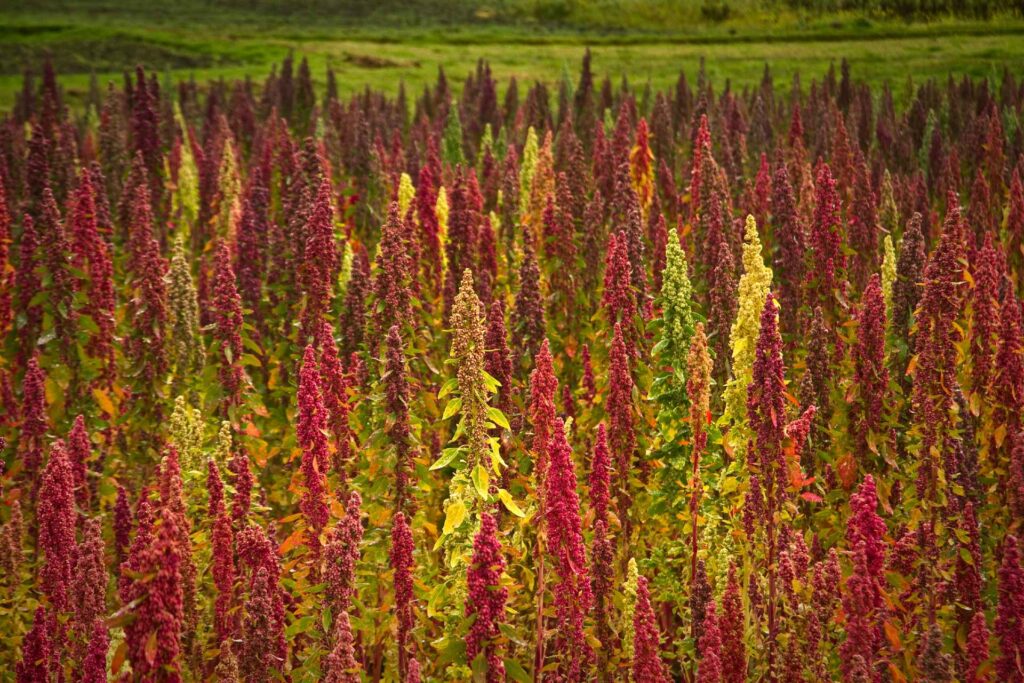
Peru has great vascular plant diversity, with a total of 19,812 species recorded in 2020, placing it sixth worldwide for number of species. Among the most notable is quinoa, an Andean plant that has gained popularity worldwide for its nutritional and culinary qualities.
Organizations that protect or study Peru’s natural resources
- Ministry of Environment of Peru: the government body responsible for conserving and protecting the environment.
- National Service of State-Protected Natural Areas (SERNANP): the government agency that manages protected natural areas.
- PROFONANPE: promotion fund for Peru’s protected natural areas.
- Peruvian Society for Environmental Law (SPDA): NGO promoting environmental legislation and policy.
- WWF Peru: international NGO working on the conservation of Peruvian biodiversity and ecosystems.
- Amazon Basin Conservation Association (ACCA): NGO protecting and studying the Peruvian Amazon.
Peru produced 2.6 million tonnes of copper in 2024, the third-largest figure worldwide after Chile and the Democratic Republic of the Congo, according to the USGS Mineral Commodity Summaries, 2025. Copper mining defines its economy and its social and environmental tensions, from the Andes to the Amazon.
Copper: third-largest producer worldwide
With those 2.6 million tonnes in 2024, Peru remains among the three largest producers on the planet (USGS, 2025). Cerro Verde and Antamina lead a mining portfolio that also includes silver, gold and zinc.
A megadiverse Amazon and protected areas
The country records 1,857 bird species, 622 amphibian species and 559 mammal species, according to the Ministry of Environment in Biodiversity in Figures, MINAM, 2019. Its state system comprises 283 protected land and marine areas (Protected Planet, 2026).
Amazon deforestation at record levels
The Peruvian Amazon lost 141,781 hectares of primary forest in 2024, the sixth-highest figure since 2002 (MAAP #229, 2025). Fires affected a further 47,574 hectares, more than double the 20,042 of 2023.
Social and environmental conflicts over mining
The Ombudsman’s Office counted 199 social conflicts up to July 2025, of which 30.2% were linked to mining activity (Defensoría del Pueblo, 2025). Loreto, Puno and Cusco accounted for the largest number of cases.
Frequently asked questions
Where does Peru rank in world copper production?
Peru was the world’s third-largest copper producer in 2024, with 2.6 million tonnes, after Chile and the Democratic Republic of the Congo (USGS, 2025).
How much Amazon forest did Peru lose in 2024?
Peru lost 141,781 hectares of primary Amazon forest in 2024, the sixth-highest annual loss since 2002 (MAAP #229, 2025).
Sources used
- Annex: Countries by mineral production – Wikipedia
- Economic data by country – The Global Economy
- Forest area (km²) – World Bank
- Forest area as a percentage – World Bank
- Oil reserves – The Global Economy
- Coal reserves – Worldometers
- Water and agriculture statistics – FAO
- Precipitation (mm) – World Bank
- Environmental performance index – Environmental Performance Index
- Bird species – Mongabay
- Amphibian species by country – Mongabay
- Amphibian species by country – Mongabay
- Mammal species – Mongabay
- Endemic mammal species – Our World in Data
- Plant species – Mongabay
- Reptile species by country – Mongabay
- Endemic bird species by country – Our World in Data
- Business Insider
- OEC (Observatory of Economic Complexity)
- AZO Mining
The Ministry of Energy and Mines of Peru noted in 2023 that the country is one of the world’s leading producers of silver, copper and zinc.
Last updated: September 26, 2026
Leave a Reply