


Chile’s natural resources revolve around copper, of which it is the world’s leading producer, at some 5.5 million tonnes in 2024. Silver also stands out, where it ranks sixth in the world, along with a freshwater reserve of 922 km³, the thirteenth largest on the planet. What are Chile’s main natural resources besides copper?
Chile, on the west coast of South America, is a country rich in natural resources. With a diverse geography that includes the Andes, the Pacific coast and the Atacama desert, the country has a great variety of ecosystems and unique biodiversity.
Table de contenidos
Copper, Chile’s star mineral, is a non-renewable natural resource that is depleted by extraction.
These natural resources of Chile — minerals, water and fertile land — have been central to its economy and development. Managing them properly is essential to guaranteeing a sustainable, prosperous future for the country.
More: Sustainable development in Chile
What is Chile’s natural wealth? Which mineral resources does it hold, and what is its global position in the rankings? How diverse are the birds, reptiles, mammals, fish, amphibians and plants in Chile?
Natural Resources
Natural resources are materials or energy sources provided by or found on Earth that are useful to humans. Every product we manufacture is made up of natural resources.
- Renewable resources: these can be restored by natural processes faster than the rate at which they are consumed. Examples include solar radiation, wind, hydroelectric power, water when used properly, and plant and animal life.
- Non-renewable resources: once extracted, these are depleted and cannot regenerate. Examples include hydrocarbons, metals and minerals.
Examples of Chile’s main natural resources
What Chile’s subsoil is worth
Economic weight of the country’s natural wealth and the conservation status of its territory.
| Total natural resource rents | 16.9% of GDP2021 |
|---|---|
| Mineral rents | 16.2% of GDP2021 |
| Forest cover | 25.0% of the territory2023 |
| Protected land area | 21.6% of the territory2025 |
| Land area | 742,832 km²2023 |
Map of Chile’s natural resources by region
Chile stretches across five natural macro-zones — Norte Grande, Norte Chico, Central Zone, Southern Zone and Austral Zone — each with distinct natural resources.
Oil and gas resources in Chile
According to Worldometer (2024), Chile produces around 20,163 barrels of oil per day. Its oil reserves as of 2022 are estimated at 150,000,000 barrels, placing it fifty-ninth (59th) in the global ranking of oil reserves.
Despite these figures, Chile is not known as an oil-producing region; its main source of natural resources is minerals, especially copper.
With output of 1,093 million cubic meters of natural gas in 2024, the country sits sixty-sixth (66th) in the world ranking of producers (EIA, 2024).
Examples of Chile’s mineral resources
In Chile, reserves of coal reached 1,301,828,110 short tons (about 1.18 billion tonnes) as of 2016, representing 0.10% of world coal reserves. The main producing region for this resource in Chile is Magallanes y Antártica Chilena. Its extraction matters to the country’s economy and to electricity generation.
Production of copper in Chile reached some 5.5 million tonnes in 2024 (Cochilco, 2025), keeping it first in the global copper production ranking (USGS 2025). That figure is an important contribution to the country’s economy, since copper is one of Chile’s main natural resources. The main copper-producing region in Chile is Antofagasta.
In 2019, Chile produced 14,000 thousand tonnes of iron ore, placing it fifteenth worldwide in the production of this resource. The main iron-ore-producing region in Chile is Atacama.
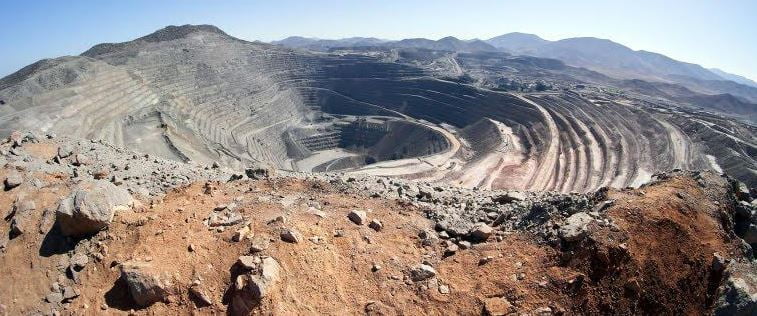
In 2024, Chile produced a total of 1,200 tonnes of silver (USGS MCS 2025), keeping it among the world’s leading producers of this mineral.
Water resources of Chile
Chile held a freshwater reserve of 922 km³ as of 2020, placing it thirteenth (13th) worldwide. This South American country is fortunate in having a great deal of fresh water.
Among its main bodies of water are the Loa and Biobío rivers, along with Lake Llanquihue, one of the largest in the country. Managing these resources properly is fundamental to guaranteeing their long-term sustainability and preservation.

Average rainfall and soils of Chile
Chile has average annual rainfall of 1,522 mm, placing it forty-eighth worldwide. Chilean soils vary with the country’s actual humidity, being wetter in areas of higher rainfall and drier where rainfall is lower.
Renewable electricity and hydropower production in Chile
In 2025, Chile generated 58.7 TWh of electricity from renewable sources — 66% of its total generation of 88.5 TWh — and hydropower supplied 19.7 TWh (Ember, 2025). The country’s main hydroelectric plant is Ralco, in the Biobío Region, with installed capacity of 690 MW.
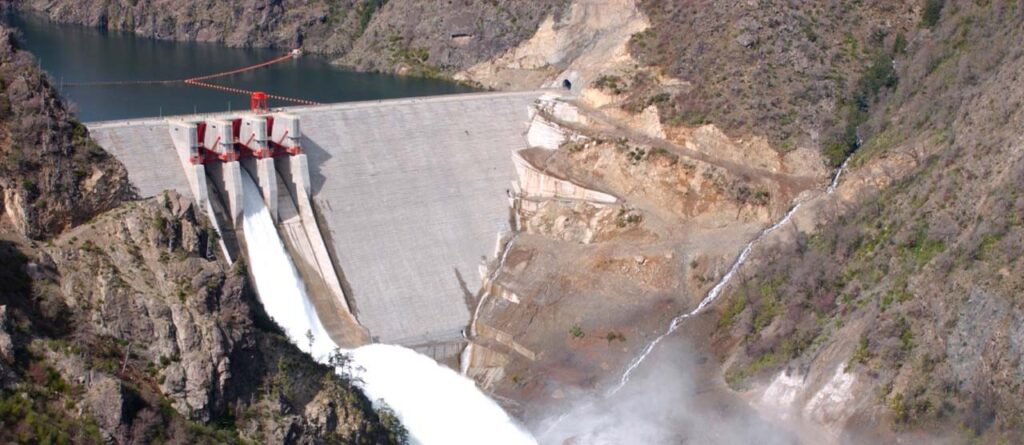
That plant is one of the country’s most important and contributes significantly to generating clean, renewable energy in Chile.
Forest resources of Chile
Chile holds considerable forest wealth. According to the World Bank (2023), the country’s forest area reaches 25.01% of its land area, equivalent to some 186,000 km².
Chile ranks 33rd worldwide for forest area.
Environmental performance and protection of Chile’s natural resources
Chile has a great many natural resources, and protecting them matters for their long-term sustainability. Protected areas play a fundamental role here, since they help preserve the country’s biodiversity and ecosystems. According to the Environmental Performance Index (EPI 2024), Chile scored 49.6 and ranked sixty-fourth (64th) worldwide.
The country also has protected land and marine areas covering 37.81% of its total territorial area (2021). More: Environmental Performance Index (EPI 2024).
Natural parks of Chile: the hidden wealth of natural resources
Biodiversity: animal and plant resources of Chile
Birds of Chile
Chile is a country of great bird diversity, with a total of 441 species as of 2018, placing it 79th worldwide. It also has 10 endemic bird species, found only in this country.
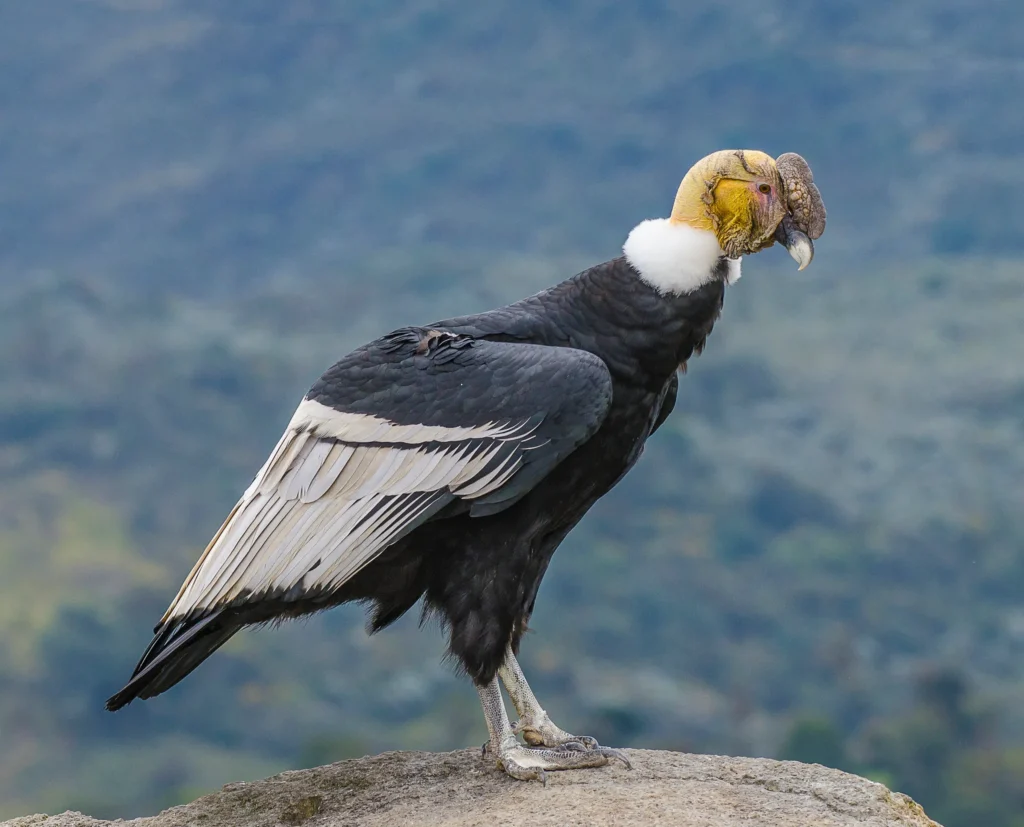
It is worth noting, however, that 35 bird species are endangered, so protective measures for this valuable natural resource matter. Among the most notable is the Andean condor, considered the country’s flagship bird.
Fish and amphibians of Chile
Chile has great diversity of amphibian and fish species, the flagship amphibian being the Chilean frog. In 2019, a total of 63 amphibian species and 771 fish species were recorded in the country, ranking 48th and 72nd worldwide respectively.
Note, however, that 27 fish species are threatened.
Mammals of Chile
Chile is a country of great mammal diversity, with a total of 143 species as of 2016. Of those, however, 19 are threatened.
Chile ranks sixtieth worldwide for number of mammal species. It also had 15 endemic mammal species as of 2020, placing it twenty-eighth.
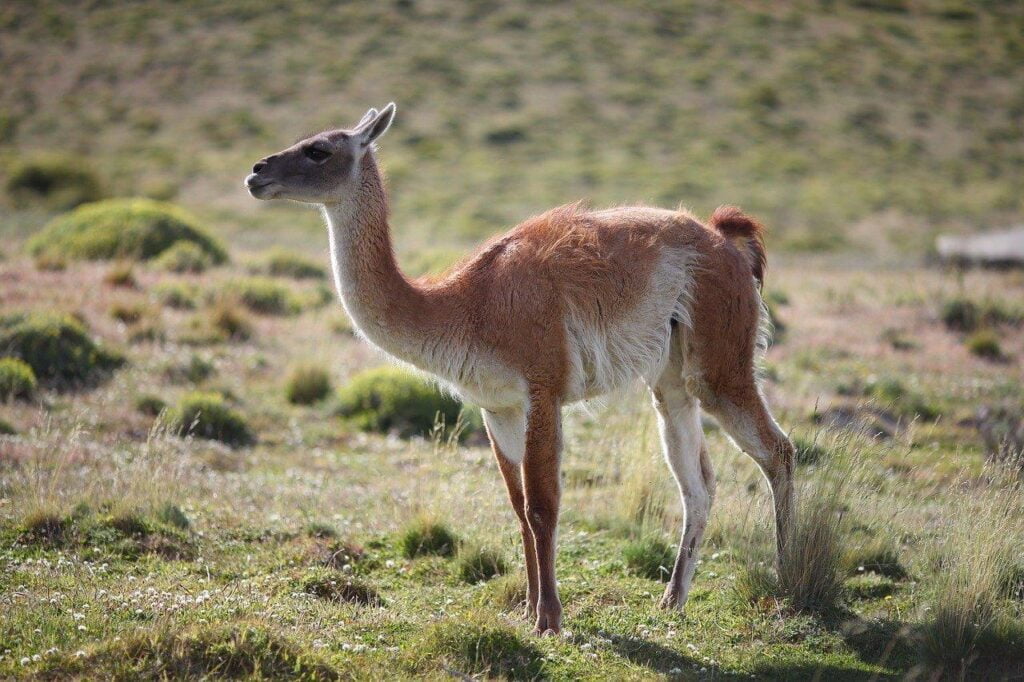
Conserving these natural resources matters, especially the country’s flagship mammal, the huemul, which appears on the national coat of arms.
Reptiles of Chile
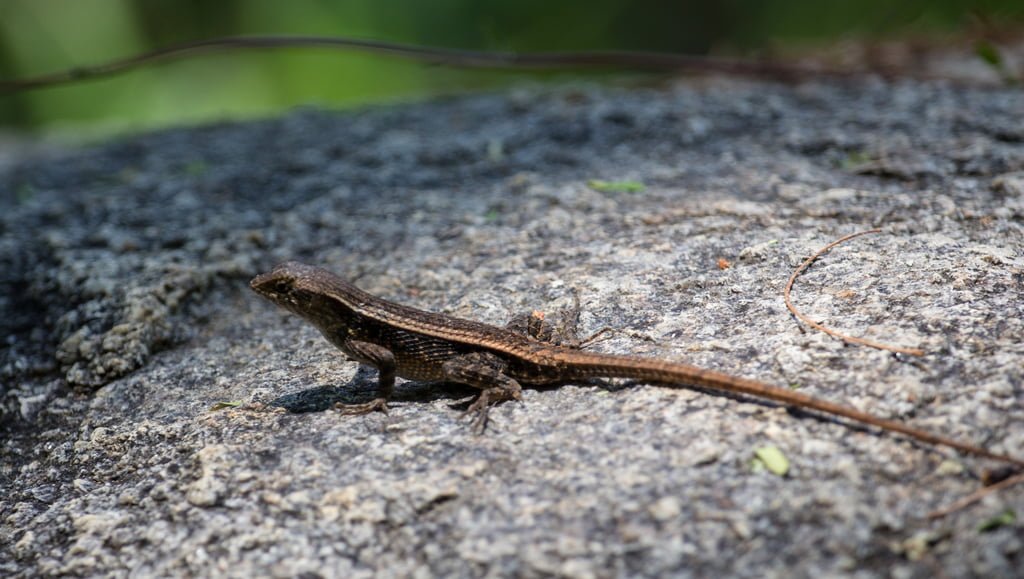
Chile has rich reptile diversity, with a total of 150 species recorded in 2019, placing it 54th worldwide for number of species. Among the most notable is the long-tailed lizard, an important resource for the country’s wildlife.
Plants of Chile
Chile has great vascular plant diversity, with a total of 5,155 species recorded in 2020, placing it 44th worldwide. The country’s flagship plant is Araucaria araucana, also known as the “Pehuén”, a tree sacred to the Indigenous peoples of southern Chile.

Organizations that protect or study Chile’s natural resources
- WWF Chile – Protects biodiversity and promotes the sustainable use of natural resources.
- Greenpeace Chile – Campaigns against pollution and climate change in Chile.
- CONAF – The Chilean government body that protects and administers the country’s protected wild areas.
- Fundación Mar Adentro – Links art and science to promote nature conservation, including at its Bosque Pehuén reserve.
Chile is the world’s largest copper producer and the second-largest for lithium, a pairing that concentrates its export base in the desert north. In 2024 it extracted 5.5 million tonnes of copper, according to Cochilco, 2025.
Copper: unbroken world leadership
Chilean copper production grew 4.9% in 2024 to 5.5 million tonnes, breaking five years of decline (Cochilco, 2025). The country supplies 23.6% of world production and leads the ranking, with a projection of 27.3% by 2034 (Cochilco, 2025).
Lithium: second-largest producer, from the Salar de Atacama
Chile produced 49,000 tonnes of lithium in 2024, behind only Australia (USGS, 2025). Almost all of that extraction comes from the Salar de Atacama, the largest lithium brine deposit on the planet, operated by SQM and Albemarle.
Water stress: pressure on Atacama
Chile ranks 24th in the world for water stress projected to 2040, with a score of 4.45 out of 5, in the extremely high category (WRI Aqueduct, 2015). The expansion of copper and lithium coincides with that scarcity in the arid north.
Natural resource rents as a share of GDP
Total natural resource rents reached 16.9% of Chilean GDP in 2021, against 5.49% in 2020 (World Bank, 2021). The indicator reflects the country’s dependence on the prices of its minerals.
Frequently asked questions
What is Chile’s main natural resource? Copper: Chile led world production in 2024 with 5.5 million tonnes and 23.6% of the global total (Cochilco, 2025).
Where does Chile rank in lithium production? Second, after Australia, with 49,000 tonnes extracted in 2024, mainly from the Salar de Atacama (USGS, 2025).
Sources used
- Lists of countries by mineral production
- Economic data by country
- Forest area (km²)
- Forest area as a percentage
- Arable land area (km²)
- Oil reserves
- Coal reserves
- Water and agriculture statistics
- Precipitation (mm)
- Environmental performance index
- CO2 emissions (metric tonnes per capita)
- Bird species
- Amphibian species by country
- Mammal species
- Endemic mammal species
- Plant species
- Reptile species by country
- Endemic bird species by country
Last updated: September 26, 2026
Leave a Reply