


Jordan’s natural resources are concentrated in minerals such as phosphates, potash, limestone and marble, along with natural gas and arable land. The country produced about 200 million cubic meters of natural gas in 2024 and has only 0.94 km³ of renewable freshwater resources in an arid region. What biodiversity does Jordan have? It has recorded 422 bird species, 594 fish species and 120 reptile species.
Jordan is a country in southwest Asia with a total area of 89,342 km². Its geography is diverse, with mountain ranges, deserts and fertile valleys.
Table de contenidos
Its natural resources include minerals such as phosphates and potash, as well as freshwater and arable land. The country’s biodiversity is rich and unique, with endemic and migratory species.
Conserving Jordan’s natural resources is vital to keeping its economy and ecosystems healthy.
What are Jordan’s most important natural resources? What natural wealth does the country have? How diverse are Jordan’s birds, reptiles, mammals, fish, amphibians and plants? How is its land used, and how is biodiversity protected in Jordan?
Natural resources
Natural resources are materials or energy sources provided by or found on Earth that are useful to humans. Every product we manufacture is made up of natural resources.
- Renewable resources: these can be restored by natural processes faster than the rate at which they are consumed. Examples include solar radiation, wind, hydroelectric power, water when used properly, and plant and animal life.
- Non-renewable resources: once extracted, these are depleted and cannot regenerate. Examples include hydrocarbons, metals and minerals.
Examples of Jordan’s main natural resources
Jordan: key environmental figures
A numerical summary of the state of the country’s land and its biological wealth.
| Forest cover | 1.1% of land area2023 |
|---|---|
| Forest area | 975 km²2023 |
| Annual change in forest area | stable (2018–2023) |
| Protected land area | 5.4% of land area2025 |
| Threatened species | 65 mammals, birds, fish and plants2022 |
| Renewable freshwater per capita | 61 m³ per year2022 |
Gas resources in Jordan
Jordan produced about 200 million cubic meters of natural gas in 2024 (EIA), a small volume by world standards.
The country’s other mineral resources include large deposits of phosphates, potash, limestone and marble, as well as dolomite, kaolin and salt. More recently discovered minerals include barite (the main ore of the metallic element barium), quartz, gypsum (used as a fertilizer) and feldspar. There are also unexplored deposits of copper, uranium and oil shale.
Water resources of Jordan
Jordan has 0.94 km³ of renewable freshwater resources, which placed it 142nd in the world ranking of water reserves in 2020. The country lies in an arid region, and its main sources of water are the Jordan and Yarmouk rivers.
Average rainfall and soils of Jordan
Jordan has an average annual rainfall of 111 mm, which places it 151st in the world. Because of the country’s low actual moisture levels, its soils are mostly arid and desert soils.
Renewable electricity and hydropower production in Jordan
In 2024, Jordan generated 5.7 TWh of electricity from renewable sources — 24% of its total generation of 23.7 TWh — while hydropower supplied only about 20 GWh (Ember, 2024). Its hydroelectric plants include the one at the King Talal Dam, on the Zarqa River, with an installed capacity of 4 MW.
Forest resources of Jordan
Jordan has forest area covering 1.10% of its territory, equivalent to 975 km² (World Bank, 2023). Although this is not a large area, it is an important resource for the country and its economy.
Jordan’s main forest region is the Ajloun area, home to the Dibeen forest, one of the most important in the country. Globally, Jordan ranks 149th for forest area.
Environmental performance and protection of Jordan’s natural resources
Jordan’s score on the Environmental Performance Index (2024) is 47.3, placing it 77th. In addition, terrestrial and marine protected areas make up 5.4% of the country’s total territorial area (World Bank, 2025). This protection of natural resources is essential to preserving biodiversity and securing a sustainable future.
Natural parks of Jordan: the hidden wealth of natural resources
Biodiversity: animal and plant resources of Jordan
Birds of Jordan
Jordan has a great diversity of birds, with a total of 422 recorded species (2024 data). The country ranks 107th in the world.
However, 14 of these species are endangered. Among the most notable species is the Sinai rosefinch, Jordan’s national bird.

Fish and amphibians of Jordan
Jordan has rich biodiversity, with 5 amphibian species and 594 fish species (2024 data); its flagship amphibian is the Levant water frog (Pelophylax bedriagae) and its flagship fish is the Nile tilapia.
However, 20 fish species are threatened.
Reptiles of Jordan
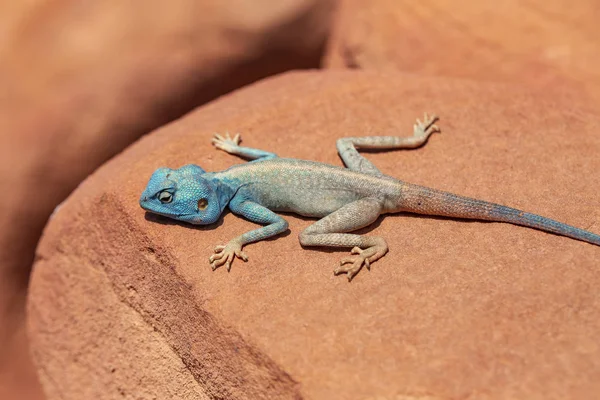
Jordan has a rich diversity of reptiles, with a total of 120 recorded species (2024 data), which places it 67th in the world. This natural resource is very important for the country; a standout species is the Sinai agama (Pseudotrapelus sinaitus).
Organizations that protect or study Jordan’s natural resources
- Royal Society for the Conservation of Nature (RSCN) – Protects Jordan’s biodiversity and ecosystems.
- Jordan River Foundation – Promotes sustainability and the conservation of the Jordan River.
- United Nations Development Programme (UNDP) in Jordan – Promotes sustainability and natural resource management in Jordan.
- Royal Botanic Garden of Jordan – Conserves and studies the flora of Jordan and the region.
Jordan has almost no conventional oil, but it is one of the world’s largest mineral producers: in 2024 it mined about 12 million tonnes of phosphate rock, the fifth-highest output in the world, behind only China, Morocco, the United States and Russia (USGS, 2025).
Phosphates: the world’s fifth-largest producer
Jordan’s phosphate rock production rose from 11.5 million tonnes in 2023 to about 12 million in 2024, ahead even of Saudi Arabia (9.5 million). The country holds reserves of close to 1 billion tonnes, concentrated in its central phosphate belt (USGS, 2025). Phosphate, the raw material for fertilizers, is one of the pillars of the country’s exports.
Potash and Dead Sea salts
Jordan obtains potash through solar evaporation of Dead Sea brines, which hold about 2 billion tonnes of potassium chloride (USGS, 2025). In 2024 it produced about 1.8 million tonnes, measured as potassium oxide (K₂O). The Arab Potash Company, the world’s eighth-largest potash producer and the only one in an Arab country, operates these plants (Arab Potash, via Wikipedia, 2024).
Oil shale beneath 60% of the country
With no crude oil fields of its own, Jordan is looking to its oil shale: the deposits underlie more than 60% of its territory and place the country among the ten largest oil shale resources on the planet (eighth, according to the World Energy Council), with official estimates of around 31 billion tonnes (WEC 2010 and Government of Jordan 2013, via Wikipedia).
Sources used
- Lists of countries by mineral production – Wikipedia
- Economic data by country – The Global Economy
- Forest area (km²) – World Bank
- Forest area (% of land area) – World Bank
- Water and agriculture statistics – FAO
- Precipitation (mm) – World Bank
- Environmental Performance Index – Environmental Performance Index
- Bird species – Mongabay
- Amphibian species by country – Mongabay
- Mammal species – Mongabay
- Endemic mammal species – Our World in Data
- Plant species – Mongabay
- Reptile species by country – Mongabay
- Endemic bird species by country – Our World in Data
The World Bank noted in 2023 that Jordan faces one of the most severe water shortages in the world, with per capita water resources among the lowest globally.
Last updated: September 26, 2026
Leave a Reply