


Indonesia’s natural resources are defined by world-leading nickel dominance, massive thermal coal reserves, extensive tropical rainforests, and unequaled biodiversity across 17,000 islands. Indonesia is the world’s undisputed top nickel producer (supplying 2.6 million tonnes or 67% of global mined output in 2025), the third-largest coal producer and leading thermal coal exporter, the seventh-largest gold producer, and ranks first globally with 777 mammal species.
Indonesia is an expansive archipelago comprising more than 17,000 islands that span over 5,000 kilometers along the equator, forming a vital centerpiece of our guide to Asia natural resources and the global natural resources by country directory. This extraordinary geography encompasses immense mineral belts, extensive tropical rainforests, and fertile volcanic soils.
Table de contenidos
The natural resources of Indonesia are abundant and multifaceted, ranging from timber, nickel, and thermal coal to global commercial crops such as palm oil, rubber, and spices. Exploitation of these resources has driven rapid macroeconomic growth and export revenue, while prompting urgent national dialogues on sustainable forestry, peatland preservation, and responsible mining.
What are Indonesia’s most critical natural resources? What comprises its mineral and biological wealth? How much renewable energy does it generate, and what is the status of its unparalleled mammal, bird, and marine biodiversity?
Natural Resources
Natural resources are materials or energy sources provided or found on Earth that are useful to humans; review our guide on the primary types of natural resources for full classifications. All industrial products originate from natural resources.
- Renewable resources: can be naturally replenished at rates faster than their consumption. Examples include solar radiation, geothermal heat, hydroelectric river flows, and living flora and fauna.
- Non-renewable resources: finite geological reserves that cannot regenerate on human timescales once extracted. Key examples include nickel, thermal coal, crude oil, natural gas, copper, and gold.
Examples of Indonesia’s Main Natural Resources
Environmental Profile of Indonesia
Land use, available freshwater, and energy in comparable figures.
| Agricultural land | 29.1% of land area2023 |
|---|---|
| Arable land | 9.4% of land area2023 |
| Forest cover | 47.7% of land area2023 |
| Renewable internal freshwater per capita | 7,240 m³ per year2022 |
| Renewable electricity output | 15.5% of total generation2021 |
| Terrestrial protected area | 12.0% of land area2025 |
Oil and Gas Resources in Indonesia
Indonesia maintains substantial petroleum extraction, producing approximately 658,820 barrels per day in 2021 and ranking 24th globally. Historic onshore and offshore basins in Sumatra, East Kalimantan, and the Java Sea, overseen by state energy company Pertamina, support domestic refining.
Indonesia possesses vast natural gas reserves, yielding an annual extraction of 71,440 million cubic meters (ranking 14th globally). Major gas fields—such as Tangguh in Papua, Mahakam in East Kalimantan, and the Natuna Sea—support large-scale liquefied natural gas (LNG) export terminals.
Examples of Mineral Resources of Indonesia
Indonesia is one of the world’s leading producers of coal, ranking third in global production and standing as the world’s number one thermal coal exporter (surpassing 775 million tonnes produced in 2023). Mines in East Kalimantan, South Kalimantan, and South Sumatra supply global power utilities. Review our analysis on global mineral resources to contextualize Indonesia’s mining prominence.
In 2024, Indonesia produced 274 thousand tonnes of aluminium, ranking 24th globally. Bauxite extraction across West Kalimantan and the Riau Islands feeds newly constructed domestic alumina refineries.
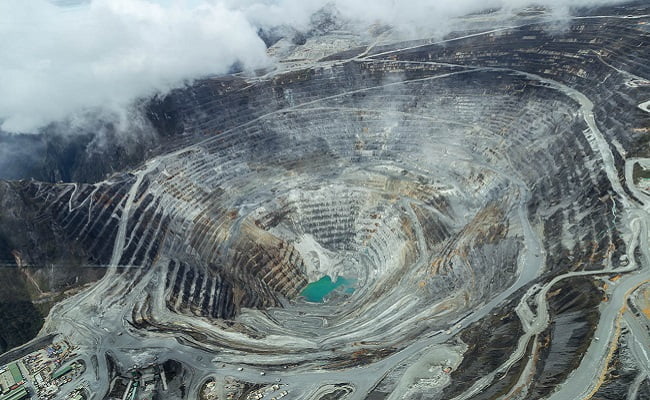
Indonesia is the world’s seventh-largest gold producer, extracting 139 tonnes in 2019. The Grasberg mine in Papua, operated by PT Freeport Indonesia, is home to one of the largest gold reserves and largest copper deposits on the planet.
Water Resources of Indonesia
Indonesia boasts an enormous renewable freshwater volume of 2,019 km³ as of 2020, placing it eighth worldwide in freshwater abundance, with vital drainage basins including the Kapuas River in West Kalimantan and Lake Toba in North Sumatra. Explore our global report on water resources for comparative international data.
Average Rainfall and Soils of Indonesia
Indonesia experiences heavy equatorial rainfall, averaging 2,702 mm annually and ranking ninth globally in precipitation. Driven by the Intertropical Convergence Zone and monsoons, deep tropical weathering produces exceptionally fertile volcanic andosols across Java, Bali, and Sumatra, juxtaposed with extensive coastal peatlands (organosols) in Kalimantan and Papua that require careful fire and drainage management.
However, steep volcanic terrain combined with extreme monsoon rainfall makes deforested slopes highly susceptible to severe soil erosion and localized flash flooding.
Renewable Electricity and Hydropower Production in Indonesia
Indonesia generated 248,613 GWh of electricity in 2021, of which 19,414 GWh was supplied by hydroelectric facilities, led by the Saguling hydroelectric station in West Java with an installed capacity of 1,400 MW. For comprehensive perspective, see our guide on global energy resources.
Forest Resources of Indonesia
Indonesia is home to the world’s third-largest tropical rainforest, spanning Kalimantan, Sumatra, Sulawesi, and Papua. In 2020, forest cover reached 49.1% of national land area, encompassing 921,332 km². Discover more in our detailed analysis of forest resources.
Ranking eighth globally in forest area, Indonesia’s peat-swamp and lowland dipterocarp forests represent globally critical carbon sinks and irreplaceable biodiversity reserves.
Environmental Performance and Protection of Indonesia’s Natural Resources
In the 2024 Environmental Performance Index, Indonesia scored 35.8, ranking 151st globally according to the Yale Center for Environmental Law & Policy 2024 report. Terrestrial and marine protected areas cover 12.0% of land area, supported by expansive national park declarations and marine protected networks across the Coral Triangle.
Natural Parks of Indonesia: The Hidden Wealth of Natural Resources
Biodiversity: Animal and Plant Resources of Indonesia
Birds of Indonesia
Indonesia records an extraordinary avian diversity of 1,749 bird species, placing it fourth in the world. However, 163 bird species are classified as threatened.
Remarkably, Indonesia is home to 525 endemic bird species, ranking first globally in avian endemism. Celebrated endemic treasures include Wilson’s bird-of-paradise (Diphyllodes respublica) in West Papua and the critically endangered Bali myna (Leucopsar rothschildi).

Fish and Amphibians of Indonesia
According to recent biological inventories (2023), Indonesia documents 393 amphibian species, ranking seventh worldwide.
In ichthyofauna, Indonesia records 5,014 fish species—the second-highest number in the world—with marine and coral reef species thriving within the Coral Triangle.
Mammals of Indonesia
Indonesia is the global champion of mammalian diversity, harboring a world-record total of 777 mammal species. Of these, 222 species are currently threatened by habitat fragmentation.
Indonesia ranks first worldwide in total mammal richness, with iconic species including the Sumatran orangutan (Pongo abelii), Bornean orangutan, Javan rhinoceros, Sumatran tiger, and Babirusa.
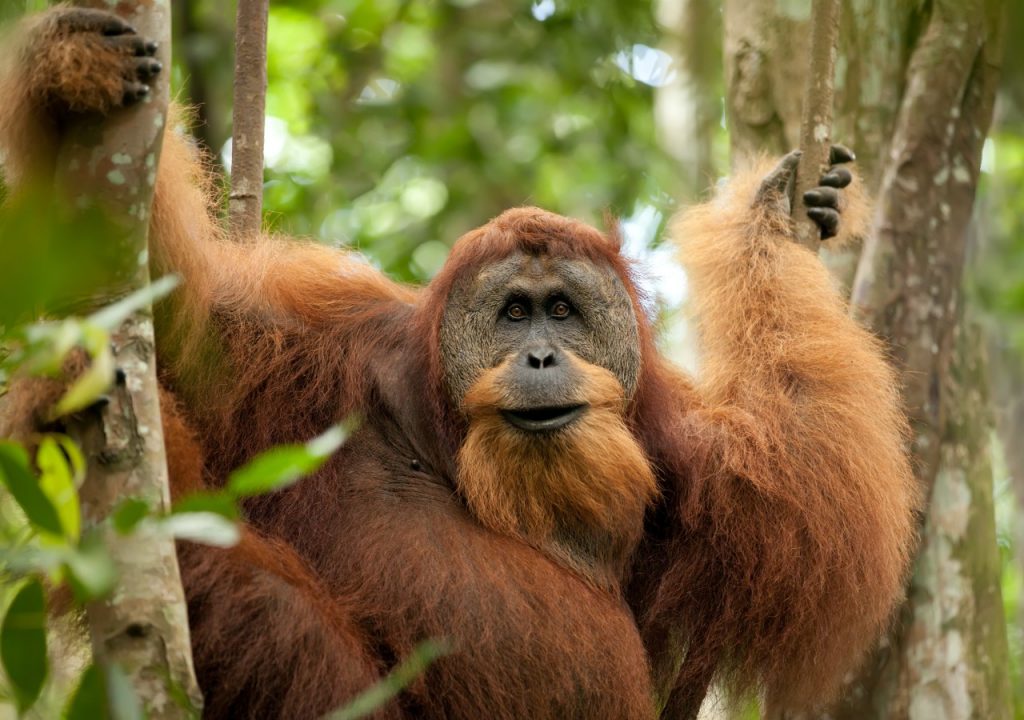
The orangutan stands as an international flagship primate whose primary habitat in peat-swamp forests requires urgent preservation against agricultural and mining encroachment.
Reptiles of Indonesia
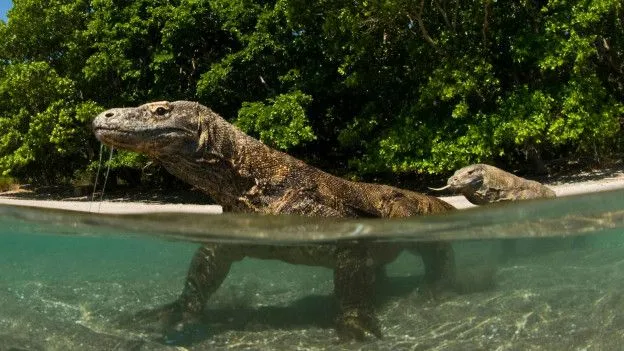
Indonesia is the world’s third-richest country in herpetological diversity, recording 799 reptile species, with 49 species facing conservation threats.
Plants of Indonesia
Indonesia documents over 19,232 vascular plant species, ranking seventh globally. Botanical highlights include Rafflesia arnoldii (the largest individual flower on Earth, native to Sumatra) and the giant corpse flower (Amorphophallus titanum).
Organizations That Protect or Study Indonesia’s Natural Resources
- Greenpeace Indonesia – Investigates deforestation, peatland drainage, and palm oil supply chains.
- Conservation International Indonesia – Manages marine protected networks and terrestrial biodiversity corridors.
- Rainforest Action Network – Campaigns against destructive logging and industrial pulp and palm expansion.
- Center for International Forestry Research (CIFOR) – Global research institute headquartered in Bogor studying forest governance, climate change, and agroforestry.
Indonesia dominates global nickel mining: it supplied 2.6 million tonnes in 2025, representing 67% of global mined output (USGS, 2026). That primacy, coupled with leading positions in thermal coal, palm oil, and extraordinary marine ecosystems, shapes its natural resource profile.
Nickel: Top Global Producer
Indonesia extracted 2.6 million tonnes of nickel in 2025, accounting for two-thirds of the 3.9 million tonnes produced worldwide (USGS, 2026). The commissioning of high-pressure acid leach (HPAL) processing plants lifted domestic nickel output by roughly 13% in 2025 alone.
Coal and Palm Oil: Dominant Exports
The nation was the world’s largest coal exporter in 2023, achieving record extraction of 775 million tonnes, with roughly 508 million tonnes destined for overseas markets (EIA, 2025). It also led global sales of crude palm oil, exporting $3.055 billion in 2023 (World Bank, 2023).
Deforestation Associated with Mining Expansion
Global Forest Watch recorded approximately 144,000 hectares of primary forest loss within official forest classes in Indonesia in 2023, representing a 27% increase compared to the prior year (Global Forest Watch, 2024). A growing portion of this footprint is directly tied to nickel mining and smelter infrastructure across Sulawesi and North Maluku.
Megadiversity in the Coral Triangle
Indonesia sits at the epicentre of the Coral Triangle, which concentrates 76% of the world’s coral species (605 of 798) and 37% of coral reef fish (Coral Triangle Initiative), representing the richest marine ecosystem on the planet.
Frequently Asked Questions
What is Indonesia’s most valuable mineral resource? Nickel: in 2025, Indonesia produced 2.6 million tonnes, accounting for 67% of total global mined supply (USGS, 2026).
Why is Indonesia’s biodiversity globally unique? Its territory in the Coral Triangle shelters 76% of all known coral species and over 5,000 fish species, while its land hosts a world-record 777 mammal species (Coral Triangle Initiative; Mongabay).
Sources Used
- Lists of Countries by Mineral Production – Wikipedia
- Economic Data by Country – The Global Economy
- Forest Area (sq. km) – World Bank
- Forest Area (% of Land Area) – World Bank
- Crude Oil Reserves – The Global Economy
- Coal Reserves by Country – Worldometers
- AQUASTAT Water and Agriculture Statistics – FAO
- Average Precipitation in Depth (mm per year) – World Bank
- Yale Center for Environmental Law & Policy — Environmental Performance Index 2024
- Bird Species by Country – Mongabay
- Amphibian Species by Country – Mongabay
- Mammal Species by Country – Mongabay
- Endemic Mammal Species by Country – Our World in Data
- Plant Species by Country – Mongabay
- Reptile Species by Country – Mongabay
- Endemic Bird Species by Country – Our World in Data
The World Bank emphasizes that Indonesia is positioned at the intersection of critical mineral demand and tropical biodiversity conservation, making sustainable mining practices, carbon taxation, and peatland restoration crucial for its long-term development.
Last updated: August 19, 2026 (Official indicators and resources factsheet review)

Leave a Reply