

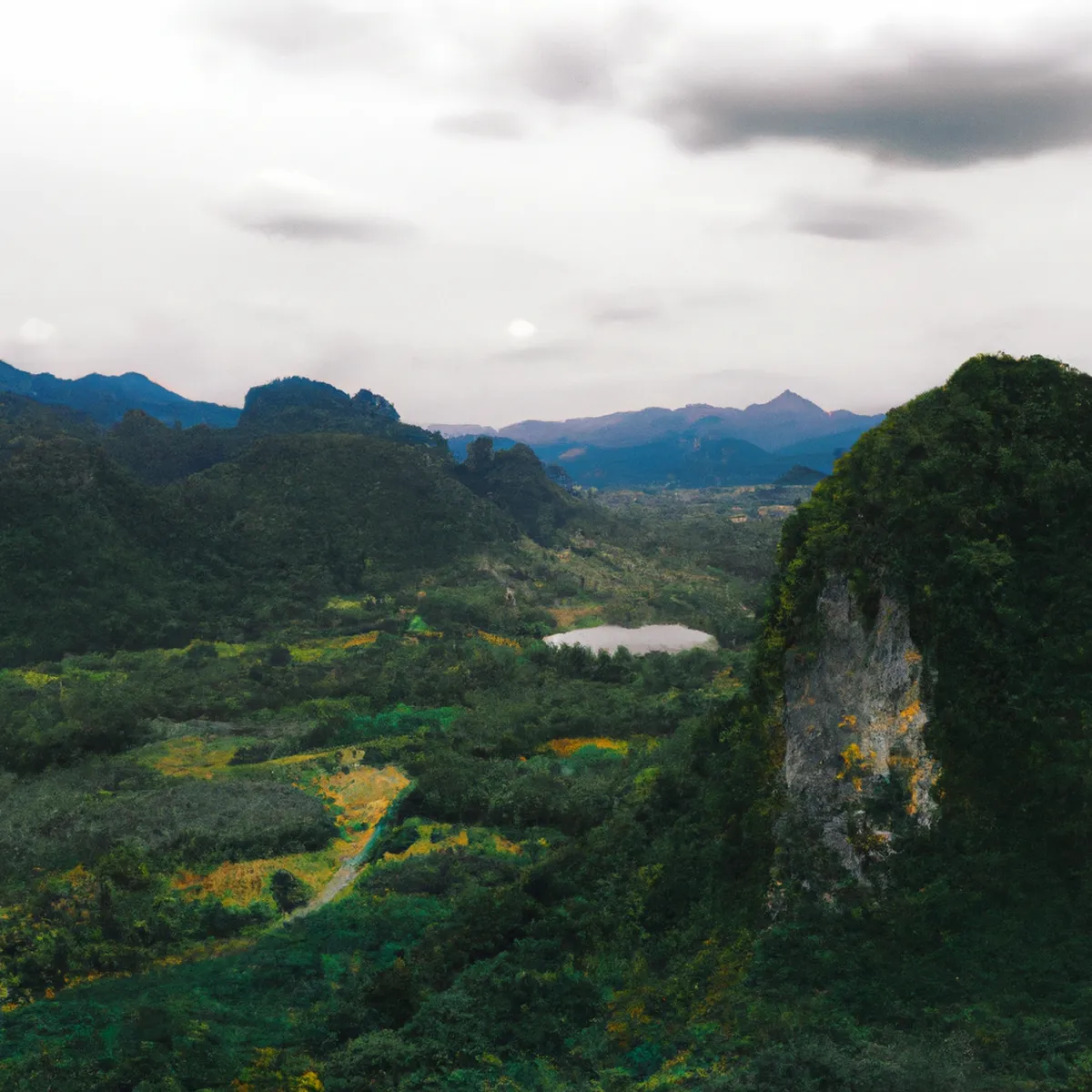
Thailand’s natural resources are anchored by 457.2 km³ of freshwater reserves (ranking 21st globally), natural gas that generates 65.5% of its electricity, and agricultural leadership as the world’s top exporter of natural rubber ($5 billion) and second-largest exporter of rice. Supported by the Chao Phraya and Mekong river basins, Thailand also produces 176,984 barrels of oil per day and 13.3 million tonnes of coal.
Thailand is a Southeast Asian nation endowed with an exceptional variety of natural resources. From expansive white-sand coastlines and forested mountain ranges to fertile alluvial plains and meandering river networks, the country possesses a multifaceted ecological foundation. As part of our regional survey of Asia natural resources and our global directory of natural resources by country, this guide analyzes Thailand’s essential physical and ecological capital.
Table de contenidos
Beyond its geography, the kingdom harbors remarkable biodiversity, with hundreds of unique animal and plant species inhabiting its diverse tropical ecosystems. The Thai economy relies heavily on its natural wealth, from export-driven commercial agriculture and fisheries to forestry and industrial mining.
In this context, understanding the sustainable management and conservation of Thailand’s natural assets is critical for long-term ecological balance and economic resilience.
What are Thailand’s most prominent natural resources? What is the scale of its natural wealth? Where does the country stand in global rankings for minerals, water, and energy? How diverse is its native flora and fauna?
Key Fact: Natural Resources
Natural resources are materials or energy sources provided by nature and found on Earth that are useful to humanity. Every product manufactured today originates from natural resources.
- Renewable natural resources: these can regenerate through natural processes faster than the rate of consumption. Examples include solar radiation, wind, hydroelectric energy, properly managed freshwater, and plant and animal biomass. For comparative dynamics, see our guide to renewable vs non-renewable resources.
- Non-renewable natural resources: once extracted and used, their finite stocks are depleted and cannot replenish on human timescales. Examples include hydrocarbons, coal, industrial metals, and mineral ores. For full classifications, explore our guide to types of natural resources.
Examples of Thailand’s Main Natural Resources
Thailand’s Conservation Factsheet
Protected territory and threatened species overview.
| Protected land area | 18.4 % of the territory2025 |
|---|---|
| Marine protected areas | 5.0 % of territorial waters2025 |
| Threatened species | 515 mammals, birds, fish and plants2022 |
| Forest cover | 38.7 % of the territory2023 |
| Annual forest area change | −360 km² per year (2018–2023) |
| Agricultural land | 43.8 % of the territory2023 |
Oil and Gas Resources in Thailand
Thailand produces approximately 176,984 barrels of oil per day (2021), ranking 24th globally in crude oil production. Its proved crude oil reserves were estimated at 404,890,000 barrels in 2022, placing the country 50th worldwide. The primary hydrocarbon-producing region is the offshore basin in the Gulf of Thailand.
Thailand is also a mid-sized producer of natural gas, with an annual output of approximately 37,700 million cubic feet. The country ranks 24th globally among natural gas producers, with production primarily extracted from offshore fields in the Gulf of Thailand. Learn more about fossil fuel reserves in our overview of energy resources.
Mineral Resources of Thailand
Thailand produced 13.3 million tonnes of coal (chiefly lignite) in 2020, ranking 21st in the global ranking of coal production. In addition, the nation held coal reserves of 1,171,755,530 tonnes in 2016. The primary coal-producing area is the Mae Moh basin in Lampang province, which fuels one of the largest thermal power stations in Southeast Asia. For broader industrial context, see our global breakdown of mineral resources.
Water Resources of Thailand
Thailand possesses a freshwater reserve of 457.2 km³, placing it 21st in the world for total renewable freshwater reserves as of 2020. This Southeast Asian nation is defined by major river systems, notably the Chao Phraya River—the agricultural and cultural artery of the central plains—and the Mekong River, which delineates its northeastern border, as well as Songkhla Lake, the largest natural lake in the country. Our comprehensive analysis of water resources examines freshwater storage dynamics worldwide.

Average Precipitation and Soils of Thailand
Thailand receives an average annual precipitation of 1,622 mm, ranking 44th globally in rainfall. This abundant precipitation is responsible for keeping Thai soils predominantly moist and highly productive, reflecting the country’s tropical wet and monsoonal climate across its agricultural basins.
Renewable Electricity and Hydropower Generation in Thailand
Thailand produces 191,321 GWh of electricity overall, with renewable sources contributing an expanding share, including 4,128 GWh generated by hydroelectric power. The country’s premier hydroelectric installation is the Sirikit Dam, located in Uttaradit province on the Nan River, with an installed capacity of 1,600 MW and an annual production of 10,000 GWh.

This facility plays a pivotal role in Thailand’s strategy to diversify its power generation away from fossil fuels and expand clean, renewable energy sources.
Forest Resources of Thailand
Thailand is a major tropical forest nation, with a forest area of approximately 197,650 km², representing 38.69% of its total land area (World Bank, 2023). This natural resource is vital for national ecology and rural livelihoods, ranking Thailand 28th globally in total forest surface. Read our guide to global forest resources to understand tropical timber and canopy management.
Environmental Performance and Resource Protection in Thailand
In Thailand, natural resources are conserved through an extensive network of terrestrial and marine protected areas covering 13.30% of total territorial land. The relationship between these conservation areas and international standards is highlighted in the Environmental Performance Index, where Thailand ranks 90th with a score of 45.7 on the Environmental Performance Index (EPI 2024).
National Parks of Thailand: The Hidden Wealth of Natural Resources
Biodiversity: Animal and Plant Resources of Thailand
Birds of Thailand
Thailand boasts rich avian diversity, counting a total of 987 bird species, positioning it 17th globally in bird species richness. Furthermore, the kingdom recorded 3 endemic bird species in 2020.
However, 62 bird species face the threat of extinction. Decisive conservation measures are essential to safeguard this natural resource and preserve Thailand’s biodiversity, including spectacular native species such as the golden pheasant.

Fish and Amphibians of Thailand
Thailand records 161 amphibian species, positioning the nation 24th worldwide in amphibian richness.
In aquatic ecosystems, Thailand is home to 2,138 species of fish, prominently featuring the giant Mekong catfish. The country ranks 14th globally in fish species diversity.
Nonetheless, 106 of these fish species are currently classified as threatened, representing an urgent challenge for freshwater habitat conservation.
Mammals of Thailand
Thailand harbors high mammalian diversity, with 344 recorded mammal species. Of these, 59 are threatened, pointing to the critical necessity of habitat protection.
Globally, Thailand ranks 22nd in total mammal species. Additionally, it documented 5 endemic mammal species in 2020, placing 38th worldwide in mammalian endemism.
Foremost among these is the Asian elephant (Elephas maximus), an iconic and deeply revered national symbol.

Reptiles of Thailand
Thailand supports exceptional reptile life, with 495 reptile species, ranking 14th in the world. Notable among its large reptiles are water monitors and reticulated pythons, which inhabit both wilderness wetlands and riverine corridors.

Plants of Thailand
Thailand is home to rich botanical diversity, counting 6,600 registered vascular plant species, which places it 34th globally. Prominent among these is Cassia fistula (the Golden Shower tree), recognized as Thailand’s national flower and celebrated for its vibrant yellow blooms.

Organizations Protecting or Studying Thailand’s Natural Resources
- Wildlife Friends Foundation Thailand (WFFT) – Protects and rescues endangered wild animals and rehabilitates native wildlife.
- Greenpeace Thailand – Campaigns against pollution and champions renewable energy and climate solutions across Thailand.
- Sea Turtle Conservation Center Thailand – Rescues, rehabilitates, and releases injured and sick sea turtles back to the ocean.
- National Parks of Thailand – Protects and manages the kingdom’s national parks, wildlife sanctuaries, and protected biodiversity.
Thailand is the world’s leading exporter of natural rubber: exporting $5 billion, or 31.2% of total global rubber shipments, according to the OEC, 2024. The kingdom also stands as the world’s second-largest rice exporter.
Rubber and Rice: Pillars of Agri-Export Trade
Natural rubber heads the country’s resource exports, generating $5 billion and commanding a 31.2% share of the world market (OEC, 2024). China concentrates the majority of those purchases.
Paddy rice production reached 33.6 million tonnes in 2024 (FAO, 2024). Thailand ranks as the second-largest rice exporter globally, capturing roughly 16% of international grain commerce, trailing only India (OEC, 2024).
A Power Grid Dominated by Natural Gas
Natural gas generated 65.5% of Thailand’s electricity in 2024, with coal providing an additional 17.8% (Ember, 2025). Fossil fuels thus account for approximately 83% of national power generation, while renewable sources contribute around 16.6%.
Forest Cover and Canopy Trends
Forests covered 38.8% of Thailand’s land surface in 2022 (World Bank, 2022), reflecting a slight decline compared to 39.0% recorded in 2018.
Terrestrial and Marine Protected Areas
Terrestrial protected areas encompass 18.5% of national land area (World Bank, 2022). Marine protected reserves cover 4.4% of territorial waters (World Bank, 2022).
Frequently Asked Questions
What natural resources does Thailand export? Principally natural rubber, generating $5 billion and 31.2% of global exports, alongside rice, where it is the world’s second-largest exporter (OEC, 2024).
How much of Thailand’s electricity comes from fossil fuels? Natural gas supplies 65.5% and coal contributes 17.8%; combined, fossil fuels account for roughly 83% of power generation (Ember, 2025).
Sources Used
- Annex: Countries by Mineral Production – Wikipedia
- Economic Data by Country – The Global Economy
- Forest Area (km²) – World Bank
- Forest Area as Percentage of Land – World Bank
- Crude Oil Reserves – Worldometers / The Global Economy
- Coal Reserves by Country – Worldometers
- Water and Agricultural Statistics – FAO AQUASTAT
- Average Precipitation (mm) – World Bank
- Environmental Performance Index – Yale Center for Environmental Law & Policy
- Bird Species Richness – Mongabay
- Amphibian Species by Country – Mongabay
- Mammal Species Richness – Mongabay
- Endemic Mammal Species by Country – Our World in Data
- Vascular Plant Species – Mongabay
- Reptile Species by Country – Mongabay
- Endemic Bird Species by Country – Our World in Data
The World Bank highlighted in 2023 that Thailand stands as the world’s leading exporter of natural rubber and a premier global rice supplier, with sustainable resource stewardship and modern manufacturing forming the twin pillars of its economy.
Last updated: August 19, 2026 (Official indicators and natural resources factsheet review)

Leave a Reply