


Malaysia’s natural resources include oil, natural gas, tin and bauxite, along with forests that cover more than half the country. It produces about 555,000 barrels of oil a day and ranks 11th in the world for natural gas, with about 80.2 billion cubic meters produced in 2025. What is Malaysia’s natural wealth?
Malaysia is a country in Southeast Asia with a wide variety of natural resources. These include its forests, which cover more than half its territory, and its rich biodiversity, with a large number of animal and plant species found nowhere else in the world.
Table de contenidos
The country also has major reserves of minerals such as tin and bauxite, as well as oil, which make it an important economic power in the region. Responsible use of Malaysia’s natural resources is crucial to ensuring their long-term conservation and sustainability.
What are Malaysia’s notable natural resources? What is its natural wealth? Which minerals does it have, and how does it rank globally? How much water does it have, and what resources does it have for generating energy?
Natural resources
Natural resources are materials or energy sources provided by or found on Earth that are useful to humans. Every product we manufacture is made up of natural resources.
- Renewable resources: these can be restored by natural processes faster than the rate at which they are consumed. Examples include solar radiation, wind, hydroelectric power, water when used properly, and plant and animal life.
- Non-renewable resources: once extracted, these are depleted and cannot regenerate. Examples include hydrocarbons, metals and minerals.
Examples of Malaysia’s main natural resources
Environmental indicators for Malaysia
Official data on forests, water, energy and threatened species.
| Forest cover | 57.7% of land area2023 |
|---|---|
| Renewable freshwater per capita | 16,717 m³ per year2022 |
| Electricity from renewable sources | 17.0% of total generation2021 |
| Threatened species | 1,647 mammals, birds, fish and plants2022 |
| Protected land area | 13.3% of land area2025 |
| Arable land | 2.4% of land area2023 |
Oil and gas resources in Malaysia
Malaysia has important natural resources, including oil. According to Worldometer (2024), its daily oil production is around 555,000 barrels.
Malaysia’s oil reserves were also estimated at a total of 3,600,000,000 barrels in 2022, which places it 26th in the world. Malaysia’s oil is produced offshore, mainly in the shallow waters off Peninsular Malaysia and Sarawak and in deeper waters off Sabah.
Malaysia also has abundant natural gas resources, with production of 80.2 billion cubic meters in 2025. The country ranks 11th among the world’s natural gas producers (Energy Institute, Statistical Review of World Energy 2026).
Examples of Malaysia’s mineral resources
Malaysia has coal reserves of around 224 million tonnes (2023). Malaysia’s coal reserves are relatively small compared with those of other countries, and its output is modest (about 3.3 million tonnes in 2024), so the country imports most of the coal it uses. Malaysia’s main coal-producing region is Sarawak, on the island of Borneo.
In 2024, Malaysia’s aluminum production reached 870 thousand tonnes, placing it around 10th in the world for production of this resource, according to Investing News Network (2025). Malaysia’s main aluminum-producing region is Sarawak, which has abundant natural resources and suitable infrastructure for producing this metal.
In 2019, Malaysia’s iron production reached 3,920 thousand tonnes, placing it 23rd in the world ranking. The main producing region for this resource is Kuantan, on the east coast of the Malay Peninsula.
Water resources of Malaysia
Average rainfall and soils of Malaysia
Malaysia has an average annual rainfall of 2,875 mm, which places it seventh in the world for rainfall. Because of this high moisture, Malaysia’s soils are mostly moist and fertile, which favors the growth of a wide variety of plants and crops.
Renewable electricity and hydropower production in Malaysia
In 2025, Malaysia generated 41.5 TWh of electricity from renewable sources — 21% of its total generation of 201.1 TWh — and hydropower alone supplied 35.2 TWh (Ember, 2025). The country’s main hydroelectric plant is the Bakun Hydroelectric Plant, on the island of Borneo, with an installed capacity of 2,400 MW.

This plant is one of the largest in Asia and is key to the country’s strategy to reduce its dependence on fossil fuels and promote renewable energy.
Forest resources of Malaysia
Malaysia is a country rich in natural resources, especially in its main forest region, the Borneo rainforest. According to the World Bank (2023), Malaysia’s forest area covers 57.7% of its land area, equivalent to about 189,636 km².
This places it 29th in the world for forest area.
Environmental performance and protection of Malaysia’s natural resources
Malaysia is a country with abundant natural resources. In the Environmental Performance Index (EPI 2024), it scored 41.0 and ranked 118th. One of the measures Malaysia has taken to protect its environment is the creation of terrestrial and marine protected areas, which cover 13.3% of its land area and 4.8% of its territorial waters. The relationship between protected areas and the country’s position in the Environmental Performance Index is clear, and you can learn more about the index at the following link: Environmental Performance Index (EPI 2024).
Natural parks of Malaysia: the hidden wealth of natural resources
Biodiversity: animal and plant resources of Malaysia
Birds of Malaysia
Malaysia is rich in natural resources, especially when it comes to its diversity of birds. With notable species such as the streaked bulbul, the country has a total of 787 bird species, placing it 31st in the world for number of species.
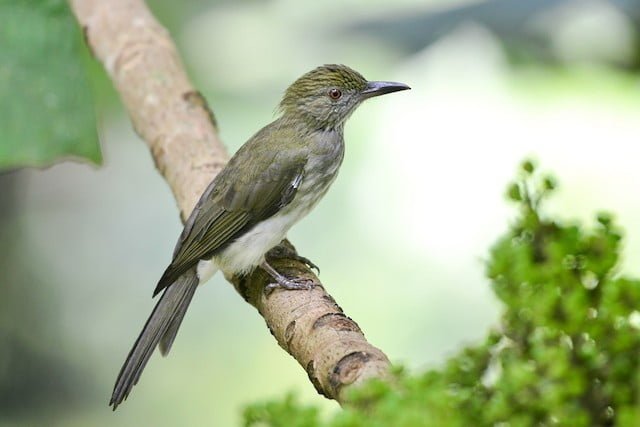
It also had 9 endemic bird species in 2020. However, there are also 63 threatened bird species in the country, which underlines the importance of protecting and conserving its rich biodiversity.
Fish and amphibians of Malaysia
There are 279 amphibian species on record, placing Malaysia 13th in the world for this group.
It also has a total of 1,938 fish species, notably the catfish. However, 87 of these species are threatened.
Mammals of Malaysia
Malaysia has a great diversity of mammals, with a total of 355 mammal species. However, 71 of them are threatened.
Malaysia ranks around 19th in the world for number of mammal species. It also had 20 endemic mammal species in 2020.
Its most iconic mammals include the Bornean orangutan, found in Sabah and Sarawak and in Indonesian Kalimantan on the island of Borneo.

Reptiles of Malaysia
Malaysia has a great diversity of reptiles, with a total of 519 reptile species, placing it 13th in the world.
Plants of Malaysia
Malaysia has a great diversity of vascular plants, with a total of 14,060 recorded species, placing it 15th in the world. Its best-known crop, the oil palm, is not native: it comes from West Africa and was introduced to Malaysia in 1910.

Organizations that protect or study Malaysia’s natural resources
- WWF-Malaysia – Protects biodiversity and promotes sustainability in Malaysia.
- Malaysian Nature Society – Promotes nature conservation and environmental education in Malaysia.
- Friends of the Earth Malaysia – Campaigns against environmental degradation and promotes social justice in Malaysia.
- Greenpeace Malaysia – Campaigns against pollution and promotes renewable energy in Malaysia.
- TRAFFIC Southeast Asia – Fights wildlife trafficking and promotes sustainable trade in Malaysia.
Malaysia is the world’s second-largest exporter of palm oil, with 33.7% of global trade in 2024, according to the Observatory of Economic Complexity, 2024. This agro-industrial leadership coexists with megadiversity concentrated in Borneo, and with the deforestation that comes with it.
Palm oil and natural gas: the resources that sustain the economy
The country produced about 19.3 million tonnes of crude palm oil in 2024, making it the world’s second-largest producer after Indonesia, according to FAOSTAT, 2024. Alongside this crop is a powerful energy sector: Malaysia was the world’s fifth-largest exporter of liquefied natural gas in 2023, according to the EIA, 2023. Natural gas and oil are the government’s main source of fiscal revenue.
Deforestation in Borneo: the environmental cost of agricultural expansion
Between 2002 and 2022, Malaysia lost 2.85 million hectares of humid primary forest, according to Global Forest Watch, 2022. Since 2001, total tree cover loss has exceeded 9.5 million hectares, about 32% of the forest that existed in 2000. Commercial agriculture accounts for 94% of that loss. However, primary forest loss fell by 57% between 2015–2017 and 2020–2022.
Megadiversity: a world-class biological heritage
Malaysia is one of the planet’s 17 megadiverse countries and is home to about 15,300 species of vascular plants and 307 mammals. Its forests shelter iconic threatened species: the Bornean orangutan numbers about 104,700 individuals and the Malayan tiger fewer than 150, according to the IUCN Red List, 2024. The national network includes 528 protected areas, with 13.3% of the territory under protection in 2024, according to Protected Planet, 2024.
Frequently asked questions
What is Malaysia’s main natural resource? Palm oil tops its resources: Malaysia is the world’s second-largest exporter, with 33.7% of global trade in 2024, according to the Observatory of Economic Complexity, 2024. Liquefied natural gas complements this export base.
How much forest has Malaysia lost? The country lost 2.85 million hectares of humid primary forest between 2002 and 2022, according to Global Forest Watch, 2022, with 94% of the loss driven by commercial agriculture.
Sources used
- List of countries by mineral production – Wikipedia
- Economic data by country – The Global Economy
- Forest area (km²) – World Bank
- Forest area (% of land area) – World Bank
- Oil reserves – The Global Economy
- Coal reserves – Worldometers
- Water and agriculture statistics – FAO
- Precipitation (mm) – World Bank
- Environmental Performance Index – Environmental Performance Index
- Bird species – Mongabay
- Amphibian species by country – Mongabay
- Mammal species – Mongabay
- Endemic mammal species – Our World in Data
- Plant species – Mongabay
- Reptile species by country – Mongabay
- Endemic bird species by country – Our World in Data
The World Bank noted in 2023 that Malaysia is the world’s second-largest producer of palm oil and one of the leading exporters of liquefied natural gas (LNG).
Last updated: September 26, 2026
Leave a Reply