

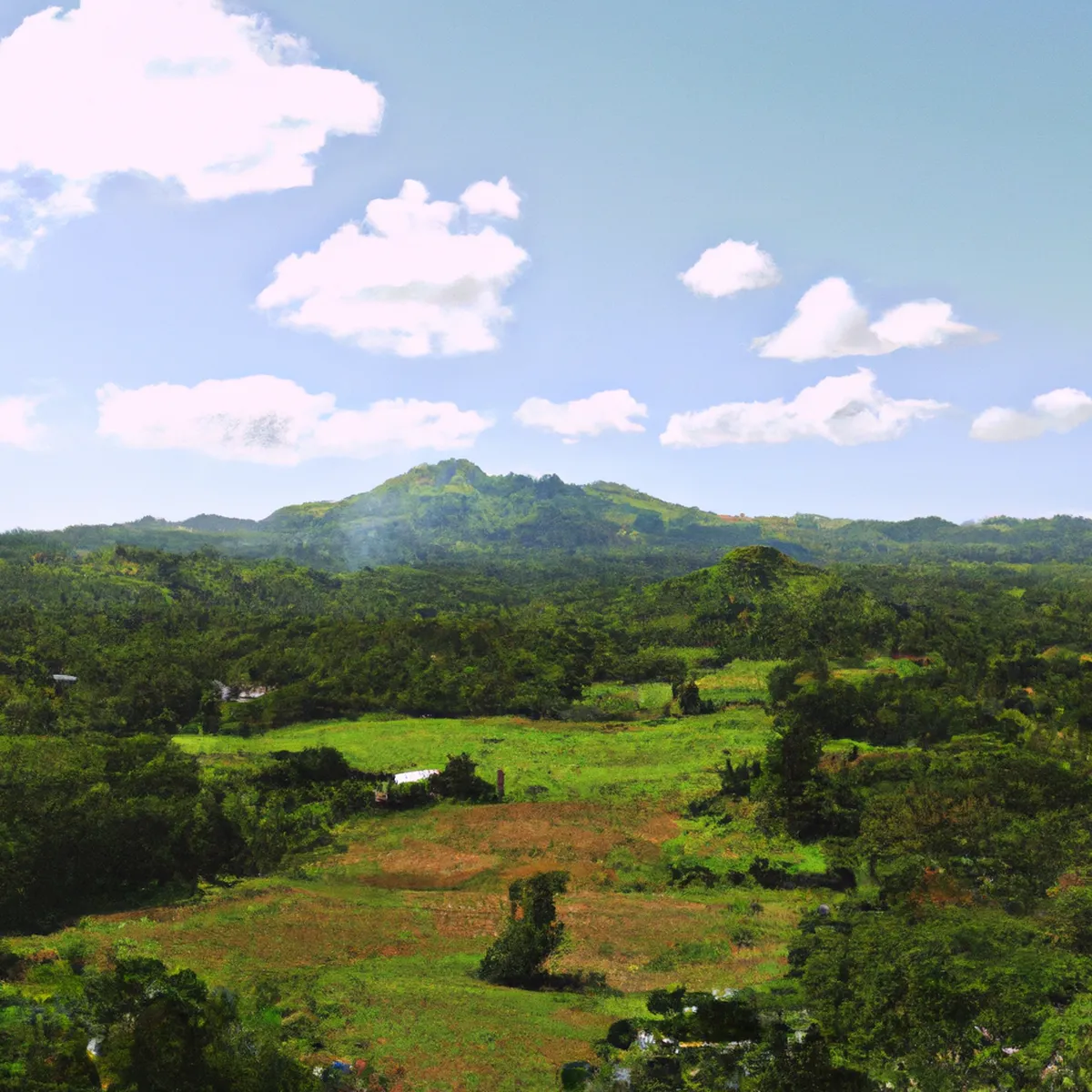
The Philippines’ natural resources combine mining, biodiversity and clean energy: the country is the world’s second-largest nickel producer and harnesses the Pacific Ring of Fire to generate geothermal energy. Highlights include its 593 bird species, such as the Philippine eagle, and more than 10,000 vascular plant species. What are the Philippines’ most important natural resources?
The Philippines is an archipelago with a great diversity of natural resources. From its beaches of crystal-clear water to its mountains covered in tropical rainforest, the country offers unrivaled wealth in flora and fauna.
Contents
The biodiversity of the Philippines is one of its greatest attractions, and its natural resources, such as forests, minerals and rivers, are fundamental to its economy. The country’s location on the so-called “Pacific Ring of Fire” also makes it a major producer of geothermal energy.
What are the Philippines’ most important natural resources? What natural wealth does the country have? Which minerals are available, and how does it rank globally? How is its land used, and what measures does the country take to protect its biodiversity?
Natural resources
Natural resources are materials or energy sources provided by or found on Earth that are useful to humans. Every product we manufacture is made up of natural resources.
- Renewable resources: these can be restored by natural processes faster than the rate at which they are consumed. Examples include solar radiation, wind, hydroelectric power, water when used properly, and plant and animal life.
- Non-renewable resources: once extracted, these are depleted and cannot regenerate. Examples include hydrocarbons, metals and minerals.
Examples of the Philippines’ main natural resources
The Philippines: the state of its forests
Changes in forest area and the country’s environmental context.
| Forest cover | 24.5% of land area2023 |
|---|---|
| Forest area | 72,933 km²2023 |
| Annual change in forest area | +349 km² per year (2018–2023) |
| Agricultural land | 42.7% of land area2023 |
| Protected land area | 16.0% of land area2025 |
| Threatened species | 1,179 mammals, birds, fish and plants2022 |
Oil and gas resources in the Philippines
The Philippines produced 953 barrels of oil per day in 2021, placing it 69th in the world. Its oil reserves were estimated at 138,500,000 barrels in 2022, placing it 68th in the world ranking of oil reserves.
Despite these figures, the Philippines is not known as a major oil-producing region; its economy relies instead on other natural resources, such as agriculture and fishing.
The Philippines also has some natural gas resources. In 2024, the country produced 1,659 million cubic meters of natural gas, according to the U.S. Energy Information Administration (EIA).
Examples of the Philippines’ mineral resources
In the Philippines, coal reserves stood at 348,329,960 tonnes in 2016. Although this figure is very low, the main coal-producing area in the Philippines is Semirara Island, in Antique province, whose mine accounted for 92% of national coal production in 2015.
The Philippines’ most strategic mineral is nickel, an essential input for stainless steel and electric-vehicle batteries: the country is one of the world’s largest producers (second only to Indonesia), and its main mines are in Mindanao and Palawan (USGS, Mineral Commodity Summaries 2025).
Water resources of the Philippines
The Philippines had 479 km³ of renewable freshwater resources in 2020, placing it 19th in the world. The country has many rivers and lakes, the main ones being the Cagayan and Agusan rivers and Lake Lanao.

These water resources are vital to the Filipino people, as they are used for human consumption, agriculture and hydroelectric power generation.
Average rainfall and soils of the Philippines
The Philippines has an average annual rainfall of 2,348 mm, which places it 16th in the world for precipitation. This rainfall is influenced by the country’s actual moisture levels, which makes its soils mostly moist and fertile.
Renewable electricity and hydropower production in the Philippines
In 2025, the Philippines generated 28.7 TWh of electricity from renewable sources — 23% of its total generation of 123.1 TWh — and hydropower alone supplied 12.7 TWh (Ember, 2025). One of the country’s main hydroelectric plants is the San Roque Hydroelectric Power Plant, in Pangasinan province, which has an installed capacity of 345 MW.
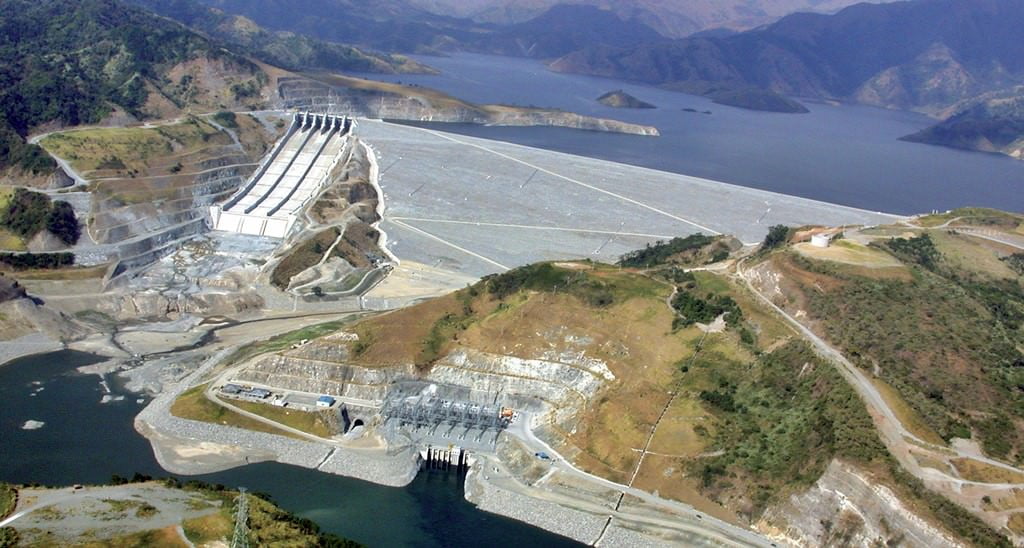
This plant is an important source of renewable energy for the Philippines and makes a significant contribution to reducing greenhouse gas emissions.
Forest resources of the Philippines
The Philippines’ forest area covers 24.46% of its territory, equivalent to 72,933 km², according to 2023 data (World Bank). This natural resource is very important to the country, as it not only provides timber and other forest products but is also essential for biodiversity conservation and climate regulation.
The Philippines’ main forest region is the Cordillera, in the north of the country. Globally, the Philippines ranks 58th for forest area.
Environmental performance and protection of the Philippines’ natural resources
Natural resources are very important in the Philippines, and measures have been taken to protect them. The country scores 32.1 on the Environmental Performance Index (EPI 2024, Yale University) and ranks 169th out of 180 countries. Terrestrial protected areas also cover 16.0% of its land area.
Natural parks of the Philippines: the hidden wealth of natural resources
Biodiversity: animal and plant resources of the Philippines
Birds of the Philippines
The Philippines is an invaluable resource for bird biodiversity, notably the Philippine eagle. With 593 bird species in 2018, the country ranks 57th in the world for number of species.
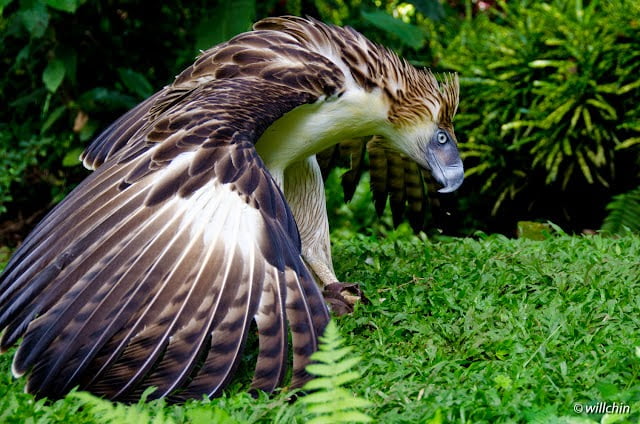
It also had 259 endemic bird species in 2020. However, 93 bird species in the country are threatened.
Fish and amphibians of the Philippines
In 2019, 114 amphibian species were recorded in the country, placing it 30th in the world.
The Philippines also has a total of 3,339 fish species, making it the country with the sixth-highest number of fish species in the world. However, 91 fish species in the country are threatened.
Among the Philippines’ flagship fish species is the clownfish.
Mammals of the Philippines
The Philippines has a great diversity of mammal species, with a total of 190 species in 2016. However, 38 of them are threatened.
The Philippines ranks 40th in the world for number of mammal species. It also had 133 endemic mammal species in 2020, which places it sixth in the world for endemic mammals.
Reptiles of the Philippines
The Philippines has a great diversity of reptiles. With a total of 350 reptile species, the Philippines ranks 21st in the world for number of these species.
Among the most notable species is the Philippine sailfin lizard, an important resource for the local economy and the country’s biodiversity.

Plants of the Philippines
The Philippines has a great diversity of vascular plants, with a total of 10,107 species recorded in 2020, placing it 19th in the world. Among the most notable species is the rice plant, the country’s main food source and one of the most important in the world.
Organizations that protect or study the Philippines’ natural resources
- Haribon Foundation – Protects the biodiversity and forests of the Philippines through conservation and education.
- WWF Philippines – Works to protect the wildlife and ecosystems of the Philippines through conservation and sustainability.
- Philippine Rice Research Institute – Develops sustainable agricultural technologies and practices to protect natural resources and improve food security in the Philippines.
The Philippines was the world’s second-largest nickel producer in 2024, with 9.5% of global production USGS, 2024. This Southeast Asian archipelago combines remarkable mineral wealth with one of the highest concentrations of endemic species on the planet.
Nickel, gold and copper: the backbone of mining
Nickel leads Philippine mining, supported by extensive laterite deposits. In 2024 the country ranked second in the world, with 9.5% of production, despite a decline of nearly 20% from the previous year USGS, 2024. Gold, nickel and copper accounted for 98% of the value of the country’s mineral production USGS, 2024.
A megadiverse country with exceptional endemism
The Philippines is one of the 17 megadiverse countries and has the world’s highest concentration of unique species per unit of area CBD Philippines, 2013. It is home to more than 52,177 described species; of its 1,238 terrestrial vertebrates, 618 (50%) exist nowhere else CBD Philippines, 2013.
The Coral Triangle: a marine epicenter
The archipelago lies in the Coral Triangle, the global epicenter of marine biodiversity, which holds more than 76% of the planet’s coral species and more than 2,000 species of reef fish CTI-CFF. In 2022, Philippine fisheries and aquaculture produced 4.34 million tonnes of fishery products BFAR, 2022.
The country’s protected areas
The country manages 274 terrestrial and marine protected areas Protected Planet, 2025. Terrestrial protected areas covered 15.87% of the country’s land area in 2022 World Bank, 2022.
Frequently asked questions
What is the Philippines’ main mineral resource? Nickel: in 2024 the country was the world’s second-largest producer, with 9.5% of global production USGS, 2024.
Why is the Philippines considered megadiverse? It is one of the 17 megadiverse countries, with more than 52,177 described species, and 50% of its terrestrial vertebrates are endemic CBD Philippines, 2013.
Sources used
- Lists of countries by mineral production – Wikipedia
- Economic data by country – The Global Economy
- Forest area (km²) – World Bank
- Forest area (% of land area) – World Bank
- Oil reserves – The Global Economy
- Coal reserves – Worldometers
- Water and agriculture statistics – FAO
- Precipitation (mm) – World Bank
- Environmental Performance Index – Environmental Performance Index
- Bird species – Mongabay
- Amphibian species by country – Mongabay
- Mammal species – Mongabay
- Endemic mammal species – Our World in Data
- Plant species – Mongabay
- Reptile species by country – Mongabay
- Endemic bird species by country – Our World in Data
The World Bank noted in 2023 that the Philippines is one of the world’s largest nickel producers and has extensive reserves of copper, gold and chromite.
Last updated: September 26, 2026

Leave a Reply