

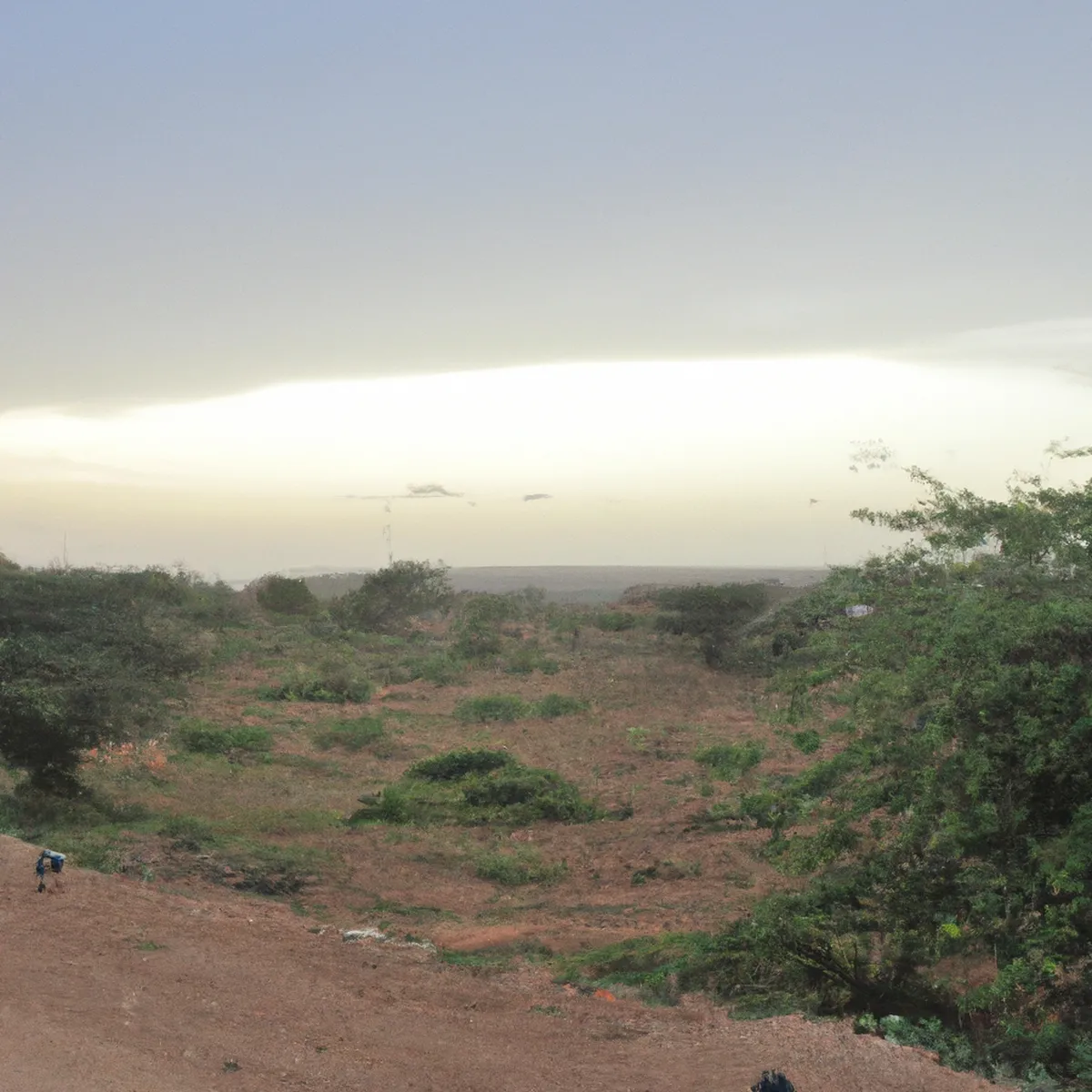
Somalia’s natural resources include minerals such as uranium, gypsum and iron ore, along with possible offshore oil and gas reserves that remain untapped because of instability. Which of Somalia’s natural resources are most prominent? Its 17.28 km³ of renewable freshwater resources, the Juba and Shabelle rivers and a rich birdlife of 665 species stand out.
Somalia is a country in the Horn of Africa, bordered by the Gulf of Aden to the north and the Indian Ocean to the east. Its geography is characterized by a wide coastal plain and a central plateau that extends to the south.
Contents
In terms of biodiversity, Somalia has a wide variety of animal and plant species, many of them endemic to the region. Somalia’s natural resources are abundant and diverse, including minerals such as uranium, gypsum and iron ore, as well as possible oil and natural gas reserves.
What are Somalia’s most important natural resources? What natural wealth does the country have? How much water is there, and how is it used to produce energy? What is grown in its soils, and how is biodiversity protected?
Natural resources
Natural resources are materials or energy sources provided by or found on Earth that are useful to humans. Every product we manufacture is made up of natural resources.
- Renewable resources: these can be restored by natural processes faster than the rate at which they are consumed. Examples include solar radiation, wind, hydroelectric power, water when used properly, and plant and animal life.
- Non-renewable resources: once extracted, these are depleted and cannot regenerate. Examples include hydrocarbons, metals and minerals.
Examples of Somalia’s main natural resources
Somalia in figures: water and energy
Freshwater availability and the share of renewables in electricity.
| Renewable freshwater per capita | 337 m³ per year2022 |
|---|---|
| Electricity from renewable sources | 11.2% of total generation2021 |
| Forest cover | 9.2% of land area2023 |
| Protected land area | 0.0% of land area2025 |
| Land area | 627,340 km²2023 |
| Threatened species | 160 mammals, birds, fish and plants2022 |
Somalia has mineral resources such as uranium, gypsum, kaolin and iron ore, as well as possible offshore oil and gas reserves. However, decades of conflict, political instability and security challenges have hindered the commercial exploitation and development of these resources.
Water resources of Somalia
Somalia has 17.28 km³ of renewable freshwater resources, which placed it 112th in the world ranking of water reserves in 2020. This African country has important water sources: its main rivers are the Juba and the Shabelle.

Average rainfall and soils of Somalia
Somalia has an average annual rainfall of 282 mm, which places it 137th in the world ranking for average annual rainfall. Because of the country’s low humidity, its soils are mostly arid and semi-arid, which makes agriculture and food production difficult.
Forest resources of Somalia
According to the World Bank (2023), forest covers 9.17% of Somalia’s territory, equivalent to about 57,497.5 km². Although this is not a very high figure, it is worth noting that the Gedo region is the country’s main forest region.
Despite the importance of this resource, Somalia ranks 65th in the world for forest area, which shows that much remains to be done to protect and conserve its forests.
Environmental performance and protection of Somalia’s natural resources
Natural parks of Somalia: the hidden wealth of natural resources
Biodiversity: animal and plant resources of Somalia
Birds of Somalia
Somalia has a rich diversity of birds, with a total of 665 species, placing it 49th in the world for number of species. The country is also home to 9 endemic bird species.
However, 21 bird species are endangered, so it is important to take measures to protect this valuable natural resource. Among Somalia’s most emblematic birds is the Somali ostrich, one of the largest birds in the world.

Fish and amphibians of Somalia
Somalia has a rich diversity of amphibians and fish, with a total of 36 amphibian species and 841 fish species. Globally, the country ranks 67th for number of amphibian species and 65th for number of fish species.
However, 31 fish species are threatened (World Bank, 2018).
Mammals of Somalia
Somalia has a rich diversity of mammals, with a total of 187 mammal species. However, 16 of these species are threatened.
Somalia ranks 63rd in the world for number of mammal species. It also has 9 endemic mammal species.
This places it 31st in the world for number of endemic mammals. Among the most notable species is the camel.

Reptiles of Somalia
Somalia has a great diversity of reptiles, with a total of 234 reptile species, placing it 41st in the world for number of species.
Plants of Somalia
Somalia has a great diversity of vascular plants, with a total of 1,267 recorded species. It ranks around 96th in the world for number of vascular plant species.
The country’s main plant species is the frankincense tree, used to produce essential oils and perfumes.

With about 3,333 kilometers of coastline, Somalia has the longest coast in mainland Africa (only the island of Madagascar has a longer one on the whole continent), according to CIA World Factbook data (2020) compiled by Wikipedia. That frontage on the Gulf of Aden and the Indian Ocean is also its most underused natural resource.
The sea: the biggest untapped fishery
The U.S. Department of Commerce estimates that Somalia controls about 1,000,000 square kilometers of waters out to 200 nautical miles and could sustainably catch more than 200,000 tonnes of fish a year. In 2022, however, local artisanal fishing landed only about 6,000 tonnes and foreign industrial fleets around 13,000, according to trade.gov (2022). Its exclusive economic zone covers 830,389 square kilometers rich in tuna and other migratory species, according to the Sea Around Us database cited by Wikipedia.
Livestock: the export mainstay
Livestock is the engine of the Somali economy and contributes about 40% of GDP. In 2014 the country set a record with 5 million head exported to Gulf markets for about $360 million: 4.6 million sheep and goats, 340,000 cattle and 77,000 camels, according to the FAO (FAO, 2015). It was the largest number of live animals sold in two decades.
Frankincense and myrrh: the resins of the north
Somalia’s arid north produces olibanum (frankincense) and myrrh from trees of the genera Boswellia and Commiphora. About 90% of the world’s frankincense comes from the Horn of Africa, mainly from border communities between Somalia and Ethiopia, according to Wikipedia. Boswellia frereana, whose golden resin is known as maydi, grows in the mountains of northern Somalia and is the most prized variety in the Arabian Peninsula.
Sources used
- Economic data by country – The Global Economy
- Forest area (km²) – World Bank
- Forest area (% of land area) – World Bank
- Water and agriculture statistics – FAO
- Precipitation (mm) – World Bank
- Environmental Performance Index – Environmental Performance Index
- Bird species – Mongabay
- Amphibian species by country – Mongabay
- Mammal species – Mongabay
- Endemic mammal species – Our World in Data
- Plant species – Mongabay
- Reptile species by country – Mongabay
- Endemic bird species by country – Our World in Data
The FAO noted in 2023 that Somalia has one of the longest coastlines in Africa and significant fishing potential, although the sector remains largely untapped.
Organizations that protect or study Somalia’s natural resources
- Ministry of Environment and Climate Change of Somalia: National authority that protects Somalia’s ecosystems, biodiversity and natural resources.
- FAO Somalia (SWALIM – Water and Land Information Management): FAO program that monitors Somalia’s water, soils and natural resources.
- IUCN – International Union for Conservation of Nature: Global union that studies and conserves the biodiversity of the Horn of Africa.
- UNEP – UN Environment Programme: UN environmental agency that supports ecological assessment in Somalia.
- UNDP Somalia: UN agency with climate and natural resource programs in Somalia.
- Adeso – African Development Solutions: African NGO that protects forests and promotes community-based environmental management.
Last updated: September 26, 2026

Leave a Reply