

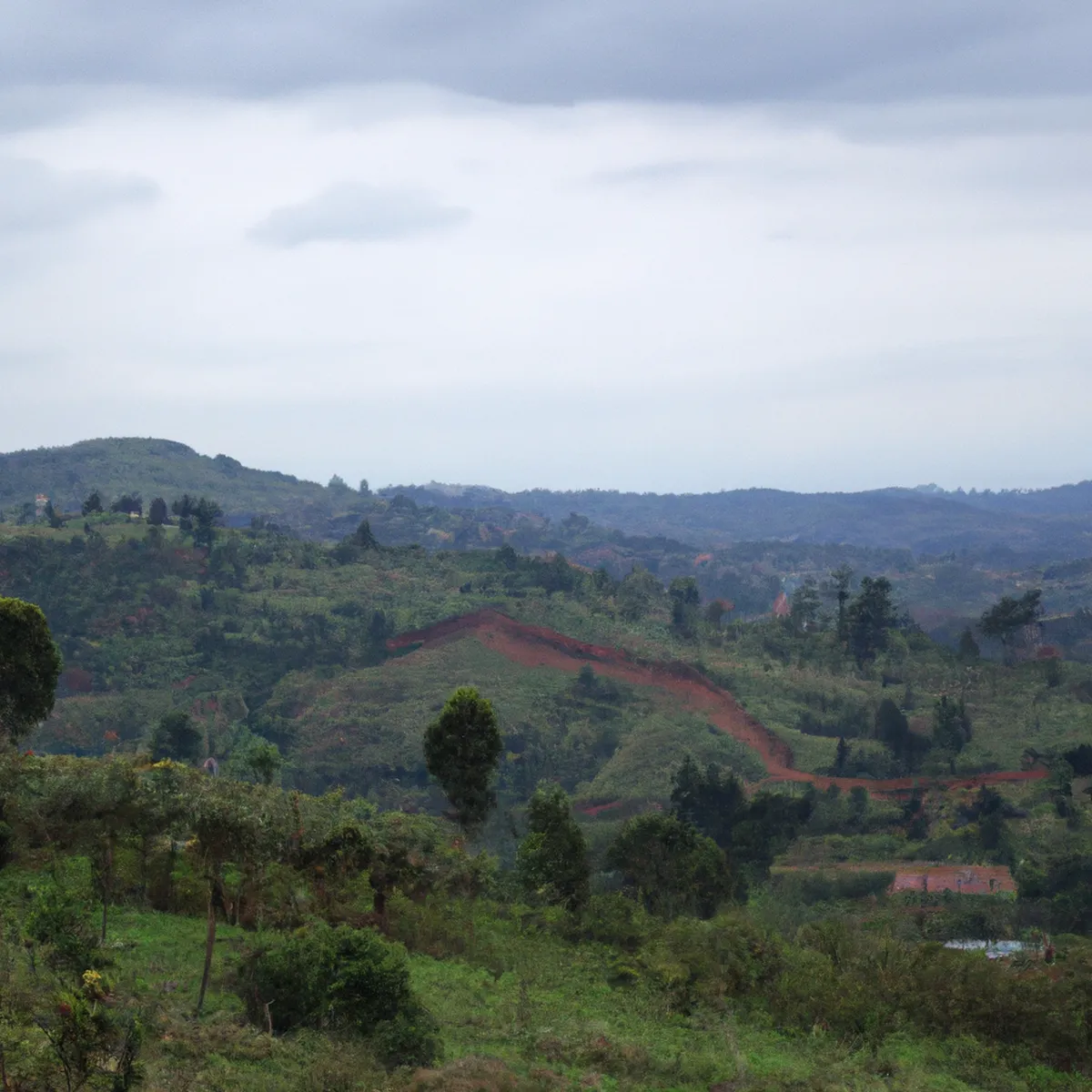
Rwanda’s natural resources are concentrated in water, fertile soils, forests and remarkable biodiversity. What are Rwanda’s most important natural resources? The country has 9.5 km³ of renewable freshwater resources, forest cover of 11.3% and the 28 MW Nyabarongo hydroelectric plant. It is also home to 638 bird species and 211 mammal species.
Rwanda is a country in central Africa known for its impressive biodiversity and wealth of natural resources. Its privileged geographic location and varied topography support numerous ecosystems, from mountains to savannas and wetlands.
Table de contenidos
These areas are home to a large number of endemic animal and plant species, some of them endangered. Rwanda’s natural resources are a vital source of livelihoods and economic development for its people.
What are Rwanda’s main natural resources? What natural wealth does the country have? How much water is available, and how is it used to produce energy? How are the soils used, and what measures does Rwanda take to protect its biodiversity?
Natural resources
Natural resources are materials or energy sources provided by or found on Earth that are useful to humans. Every product we manufacture is made up of natural resources.
- Renewable resources: these can be restored by natural processes faster than the rate at which they are consumed. Examples include solar radiation, wind, hydroelectric power, water when used properly, and plant and animal life.
- Non-renewable resources: once extracted, these are depleted and cannot regenerate. Examples include hydrocarbons, metals and minerals.
Examples of Rwanda’s main natural resources
What Rwanda’s land produces
Natural resource rents, fisheries and agricultural land use, along with the state of conservation.
| Natural resource rents | 4.0% of GDP2021 |
|---|---|
| Capture fisheries | 34,670 t per year2024 |
| Agricultural land | 76.3% of land area2023 |
| Arable land | 47.0% of land area2023 |
| Forest cover | 11.3% of land area2023 |
| Protected land area | 9.1% of land area2025 |
Water resources of Rwanda
Rwanda has 9.5 km³ of renewable freshwater resources, which placed it 125th in the world ranking of water reserves in 2020. This African country has many rivers and lakes, the main ones being the Kagera and Nyabarongo rivers and Lake Kivu.

Average rainfall and soils of Rwanda
Rwanda has an average annual rainfall of 1,212 mm, which places it 62nd in the world. Because of this moisture, Rwanda’s soils are mostly fertile and suitable for agriculture, which has been an important source of income for the country.
Renewable electricity and hydropower production in Rwanda
In 2024, Rwanda generated 560 GWh of electricity from renewable sources — 50% of its total generation of 1.1 TWh — and hydropower alone supplied 520 GWh (Ember, 2024). Its largest hydroelectric plant is the 80 MW Rusumo Falls plant on the Kagera River, commissioned in 2024, whose output is shared equally with Burundi and Tanzania; the largest plant serving Rwanda alone is Nyabarongo I, with an installed capacity of 28 MW.

Forest resources of Rwanda
Rwanda’s forest area covers 11.3% of its territory, equivalent to 2,790 km² (World Bank, 2023). Although it ranks 142nd in the world for forest area, this resource is very important for the region.
Rwanda’s main forest region is Nyungwe Forest, which is home to a wide variety of animal and plant species as well as important water resources.
Environmental performance and protection of Rwanda’s natural resources
In Rwanda, natural resources are safeguarded by protected areas, which cover 9.1% of the country’s land area (World Bank, 2025). The country also scored 33.9 on the Environmental Performance Index in 2024, ranking 162nd (Yale EPI 2024).
Natural parks of Rwanda: the hidden wealth of natural resources
Biodiversity: animal and plant resources of Rwanda
Birds of Rwanda
Rwanda has a great diversity of birds, with a total of 638 species in 2018, which places it 47th in the world for number of bird species. However, 20 of its bird species are endangered, so it is essential to protect and conserve this natural resource.
Among the most notable species are the great blue turaco and the Rwenzori turaco, an Albertine Rift endemic.
Fish and amphibians of Rwanda
Rwanda has a great diversity of natural resources, including 45 amphibian species and 82 fish species (WorldRainforests). It ranks 61st in the world for number of amphibian species and 203rd for fish.
In addition, 7 fish species are threatened in the country. The main amphibian and fish species include the reed frog Hyperolius kivuensis and the Nile tilapia.
Mammals of Rwanda
Rwanda has rich biodiversity, with a total of 211 mammal species (WorldRainforests). However, it also faces the threat of 24 endangered mammal species.
Globally, it ranks 52nd for number of mammal species.
Reptiles of Rwanda
Rwanda has 82 reptile species (WorldRainforests), ranking 84th in the world. This natural resource is very important for the country; a standout species is the Rwenzori three-horned chameleon (Trioceros johnstoni), which is endemic to the highlands of the Albertine Rift.
Plants of Rwanda
Rwanda has a great diversity of vascular plants, with a total of 1,883 species recorded in 2020, which places it 93rd in the world (WorldRainforests). Among the most notable species is the banana, a plant of great economic and cultural importance in the country.
Organizations that protect or study Rwanda’s natural resources
- Rwanda Environment Management Authority (REMA): The national authority that protects, conserves and manages Rwanda’s environment.
- Ministry of Environment (Rwanda): The Rwandan ministry responsible for environmental conservation and national climate resilience.
- Rwanda Development Board (RDB): The state agency that manages national parks, tourism and wildlife conservation.
- Rwanda Wildlife Conservation Association (RWCA): A Rwandan association that protects threatened species such as the gray crowned crane.
- Dian Fossey Gorilla Fund: An organization that protects and studies mountain gorillas in Rwanda.
- African Parks: An NGO that manages Akagera and Nyungwe national parks in Rwanda.
Rwanda was the world’s second-largest tantalum producer in 2023, with about 520 tonnes, behind only neighboring Democratic Republic of the Congo (DRC), which supplied 980 (Investing News Network, with USGS data, 2024). That is a remarkable share for a landlocked country of just 26,000 km²: its tantalum ends up in the capacitors of phones and computers.
Coltan and the 3T minerals
Tantalum is extracted from coltan and, together with tin (cassiterite) and tungsten, makes up the 3T minerals, the backbone of Rwandan mining. The DRC accounted for 41% of the world’s mined supply in 2023, and part of the ore Rwanda exports is smuggled in from eastern Congo, a controversy that makes “conflict-free” traceability a commercial requirement (Investing News Network / USGS, 2024).
Methane gas from Lake Kivu
Lake Kivu is one of the few lakes in the world that hold dissolved methane in their deep waters, between 270 and 500 meters down, an energy resource shared equally with the DRC. The KivuWatt plant extracts this gas and has been generating electricity since December 2015 with a nominal capacity of 26 MW; it was the world’s first large-scale methane project. It is joined by the Shema Power plant, with 56 MW of contracted net capacity (Rwanda Energy Group, n.d.). Harnessing the same gas that makes Kivu a “killer lake” has no equivalent in the region.
High-altitude tea and coffee
Export agriculture relies on high-altitude crops. Tea is the leading agricultural product by revenue: 38,467.7 tonnes generated $114.8 million in fiscal year 2023/2024, from more than 33,000 hectares planted (NAEB, 2024). Coffee added 16,479 tonnes and $78.7 million in the same period (NAEB, annual report 2023/2024). Together they account for about a quarter of the country’s $839 million in agricultural exports.
Frequently asked questions
Where does Rwanda rank in world tantalum production? Second in 2023, with about 520 tonnes, behind the DRC (980 tonnes, 41% of the total mined), according to the USGS via Investing News Network (INN / USGS, 2024).
What is Rwanda’s main export crop? Tea, with $114.8 million in 2023/2024, ahead of coffee ($78.7 million), according to NAEB (NAEB, 2024).
Sources used
- Economic data by country – The Global Economy
- Forest area (km²) – World Bank
- Forest area (% of land area) – World Bank
- Water and agriculture statistics – FAO
- Precipitation (mm) – World Bank
- Environmental Performance Index – Environmental Performance Index
- Bird species – Mongabay
- Amphibian species by country – Mongabay
- Mammal species – Mongabay
- Endemic mammal species – Our World in Data
- Plant species – Mongabay
- Reptile species by country – Mongabay
- Endemic bird species by country – Our World in Data
The World Bank indicated in 2023 that Rwanda has made ecotourism and the conservation of its mountain forests pillars of its sustainable development.
Last updated: September 26, 2026
Leave a Reply