


Bangladesh’s natural resources rest on forests, rivers and fertile land that place it among the world’s major rice producers. The country produced about 18 billion cubic meters of natural gas in 2025, is home to Bengal tigers and Asian elephants, and has 1,227 km³ of renewable freshwater resources. What is Bangladesh’s real natural wealth?
Bangladesh is a country in South Asia. It borders India and Myanmar and has rich biodiversity thanks to its geographic location and tropical climate.
Table de contenidos
Bangladesh’s natural resources include extensive forests, rivers and fertile land, which make it one of the world’s leading rice producers. It also has a wide variety of plant and animal species, including Bengal tigers and Asian elephants.
Bangladesh’s economy relies heavily on the use of its natural resources, especially agriculture and fishing.
What is Bangladesh’s natural wealth? Which water sources does it use to generate energy? How varied are the country’s animal and plant species?
Natural resources
Natural resources are materials or energy sources provided by or found on Earth that are useful to humans. Every product we manufacture is made up of natural resources.
- Renewable resources: these can be restored by natural processes faster than the rate at which they are consumed. Examples include solar radiation, wind, hydroelectric power, water when used properly, and plant and animal life.
- Non-renewable resources: once extracted, these are depleted and cannot regenerate. Examples include hydrocarbons, metals and minerals.
Examples of Bangladesh’s main natural resources
Bangladesh: environmental profile
The latest data on Bangladesh’s land, water and biodiversity.
| Land area | 129,980 km²2023 |
|---|---|
| Forest cover | 14.5% of land area2023 |
| Agricultural land | 72.3% of land area2023 |
| Arable land | 60.6% of land area2023 |
| Renewable freshwater per capita | 620 m³ per year2022 |
| Threatened species | 185 mammals, birds, fish and plants2022 |
Oil and gas resources in Bangladesh
Bangladesh produced 3,000 barrels of oil per day in 2021, which places it 63rd in the world ranking of oil production. Its oil reserves for 2022 are estimated at 28,000,000 barrels, placing it 78th in the world ranking of oil reserves.
Although Bangladesh is not one of the world’s leading oil producers, its modest crude oil output comes mainly from the northeastern Sylhet Division, where the country’s first commercial oil field opened at Haripur in 1986.
Despite its significant natural gas resources, Bangladesh is a mid-sized producer, with output of 18.0 billion cubic meters in 2025. The country ranks 31st among the world’s natural gas producers (Energy Institute, Statistical Review of World Energy 2026).
Examples of Bangladesh’s mineral resources
Bangladesh had coal reserves of 322,976,830 tonnes in 2016, which represents about 0.03% of the world’s coal reserves. Although the country has relatively little coal compared with other countries, coal has become an important source of energy for Bangladesh’s industry and economy.
Bangladesh’s main coal-producing area is Barapukuria, in Dinajpur District.
Other important minerals include limestone, hard rock, gravel, boulders, glass sand, construction sand, white clay, brick clay, peat and the heavy minerals found in beach sand.
Water resources of Bangladesh
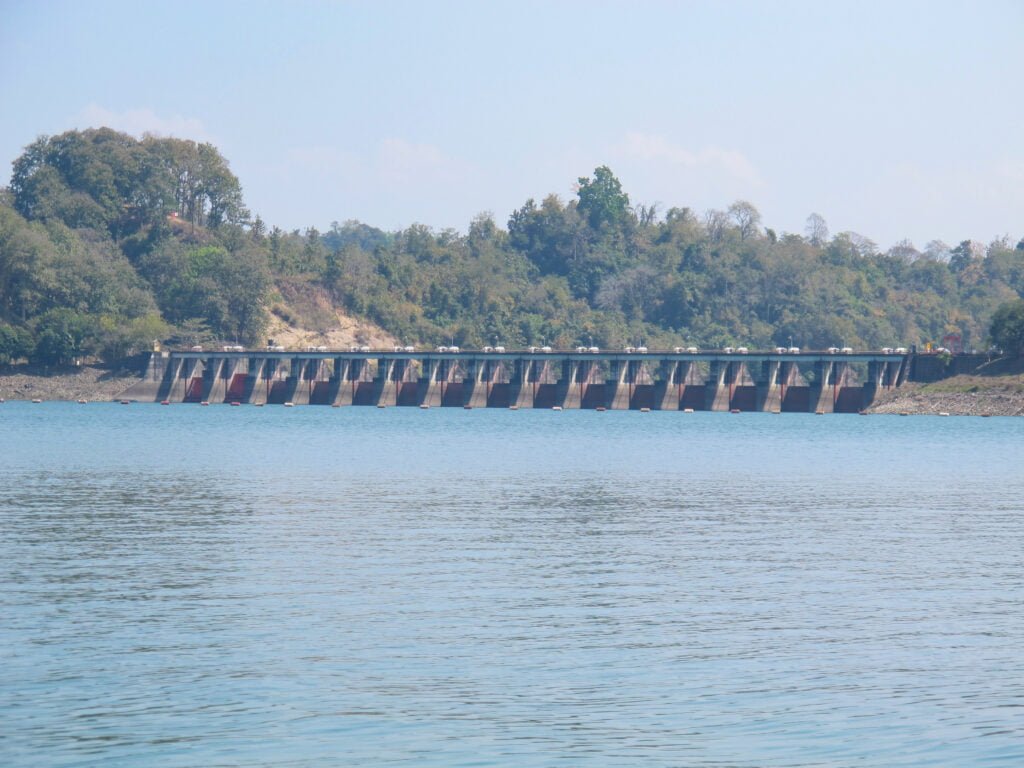
Bangladesh has an impressive 1,227 km³ of renewable freshwater resources, which placed it eleventh in the world ranking of water reserves in 2020. This South Asian country has many rivers and lakes, the main ones being the Brahmaputra River, the Ganges River and Kaptai Lake.
These freshwater reserves are vital to the development and well-being of the population, as well as to agriculture and industry.
Average rainfall and soils of Bangladesh
Bangladesh has an average annual rainfall of 2,666 mm, which places it tenth in the world for precipitation. Because of this high moisture, Bangladesh’s soils are mostly clayey and marshy, which makes building infrastructure difficult.
Renewable electricity and hydropower production in Bangladesh
In 2025, Bangladesh generated 2.2 TWh of electricity from renewable sources — 2% of its total generation of 103.4 TWh — and hydropower alone supplied 650 GWh (Ember, 2025). Although hydroelectricity is not a major source in the country, its main hydroelectric plant is Kaptai, with an installed capacity of 230 MW.
Forest resources of Bangladesh
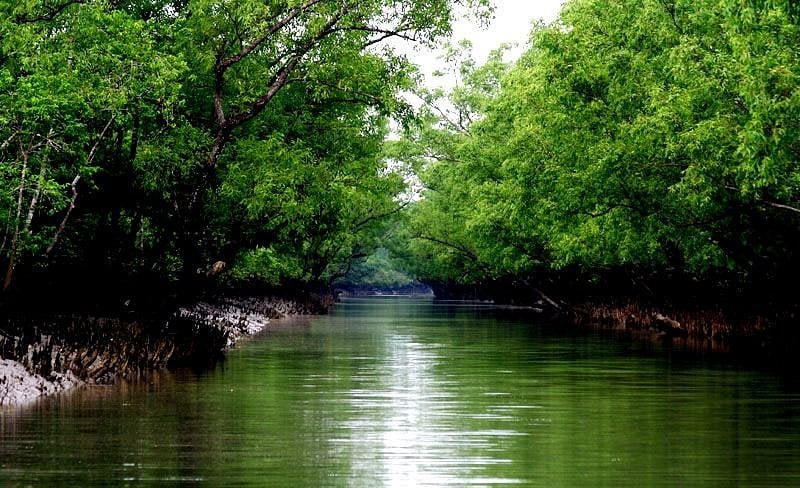
Bangladesh has forest cover on 14.47% of its territory, equivalent to 18,834 km². Although it is not near the top of the world ranking for forest area, this resource is very important to the country’s economy and environment.
Bangladesh’s most important forest region is the Sundarbans, on the country’s southern coast, which is considered the largest mangrove reserve in the world.
Environmental performance and protection of Bangladesh’s natural resources
Natural resources are very important in Bangladesh, and measures have been taken to protect them. The country scored 28.1 on the Environmental Performance Index (EPI 2024), ranking 175th.
Terrestrial and marine protected areas make up 5.9% of the total territorial area (World Bank, 2025). The relationship between these protected areas and the country’s position in the Environmental Performance Index is worth noting.
Natural parks of Bangladesh: the hidden wealth of natural resources
Biodiversity: animal and plant resources of Bangladesh
Birds of Bangladesh
Bangladesh has a great diversity of birds, with a total of 663 species, which ranks it 53rd in the world for number of bird species. Although it had no endemic bird species in 2020, it is worth noting that 36 of its bird species are endangered.
Among the most notable species is the Indian cormorant, one of the country’s most emblematic birds.
Fish and amphibians of Bangladesh
According to the most recent data, a total of 43 amphibian species have been recorded, placing the country 65th in the world ranking for number of amphibian species.
It also has 569 fish species, the most important of which is the hilsa. Despite this natural wealth, 29 fish species are threatened in the country.
Mammals of Bangladesh
Bangladesh has rich mammal biodiversity, with a total of 152 mammal species. However, 37 of them are endangered.
Despite this great variety, the country had no endemic mammal species in 2020, which ranks it 86th in the world. Conserving these natural resources is essential, especially the country’s flagship mammal, the Bengal tiger, which is critically endangered.

Reptiles of Bangladesh
Bangladesh has a rich diversity of reptiles, with a total of 145 reptile species, ranking 58th in the world. Among the most notable species is the saltwater crocodile.
Organizations that protect or study Bangladesh’s natural resources
- Ministry of Environment, Forest and Climate Change of Bangladesh: The national ministry that governs the country’s environmental, forest and climate policy.
- Department of Environment (DoE): National agency that controls pollution and enforces environmental laws.
- Bangladesh Forest Department: Government agency responsible for protecting forests and wildlife.
- Bangladesh Poribesh Andolon (BAPA): National civic movement that has defended the environment since 2000.
- IUCN Bangladesh: International network that conserves Bangladesh’s biodiversity and ecosystems.
Jute: the fiber that leads the world
The country is today the world’s leading producer and exporter of jute, a delta crop tied to small-scale farming. The FAO estimates that Bangladesh accounts for more than 75% of world trade in jute overall. Together with rice, this natural fiber supports a large share of exports and rural employment.
The Ganges-Brahmaputra delta and climate vulnerability
Bangladesh is one of the countries most exposed to climate change. The World Bank projects a 65 cm rise in sea level by 2080, which would flood 18% of the territory and affect 11% of the population. Cyclone Sidr (2007) cost US$1,700 million, or 2.6% of GDP.
The Sundarbans: mangroves and the Bengal tiger
The Sundarbans form the largest mangrove forest in the world and the Bengal tiger’s only mangrove habitat. The IUCN reported 125 tigers in the 2024 census, an increase of 18%. The species is listed as Endangered on the global Red List and as Critically Endangered within Bangladesh.
Electricity mix: natural gas dominates
Natural gas is the country’s main energy resource. According to EIA and Ember data, gas supplied about 64% of the electricity generated in 2025, followed by coal at around 22%, with only a limited share from clean sources.
Frequently asked questions
Which natural resource sets Bangladesh apart? Jute: the country accounts for more than 75% of world trade in this fiber, according to the FAO.
Why is its delta so vulnerable? Because it is low-lying and densely populated: the World Bank expects a 65 cm rise in sea level to flood 18% of the territory by 2080.
Leave a Reply