


Nepal’s natural resources revolve around the water and biodiversity of the Himalayas, with 210.5 km³ of renewable freshwater resources and electricity generation of about 11,125 GWh in 2024, almost all of it hydroelectric. What are Nepal’s most notable natural resources? The country is home to 870 bird species, 196 mammal species such as the Bengal tiger, and 6,200 plant species, and forests cover 41.6% of its land area.
Nepal, a country in the heart of the Himalayas, is known for its impressive landscapes and rich culture, and it has abundant natural resources to offer.
Table de contenidos
From the vast diversity of its plants and animals to its rivers and mountains, Nepal is a treasure trove of valuable natural resources.
What are Nepal’s most notable natural resources, and what natural wealth does it have? What is its water potential, and how does it use it to generate energy? How diverse are Nepal’s animals and plants? And how does Nepal use and protect its soils and biodiversity?
Natural resources
Natural resources are materials or energy sources provided by or found on Earth that are useful to humans. Every product we manufacture is made up of natural resources.
- Renewable resources: these can be restored by natural processes faster than the rate at which they are consumed. Examples include solar radiation, wind, hydroelectric power, water when used properly, and plant and animal life.
- Non-renewable resources: once extracted, these are depleted and cannot regenerate. Examples include hydrocarbons, metals and minerals.
Examples of Nepal’s main natural resources
Nepal: the state of its forests
Changes in forest area and the country’s environmental context.
| Forest cover | 41.6% of land area2023 |
|---|---|
| Forest area | 59,620 km²2023 |
| Annual change in forest area | stable (2018–2023) |
| Agricultural land | 26.1% of land area2023 |
| Protected land area | 23.6% of land area2025 |
| Threatened species | 103 mammals, birds, fish and plants2022 |
Water resources of Nepal
Nepal has an impressive 210.5 km³ of renewable freshwater resources, which places it 38th in the world ranking of water reserves.
Nepal is home to two major rivers, the Koshi and the Karnali, and its most important lake is Rara Lake. Conserving and sustainably using this valuable water reserve is essential to ensure a prosperous future for Nepal and its people.

Average rainfall and soils of Nepal
Nepal has an average annual rainfall of 1,500 mm, which places it 50th in the world ranking for average annual precipitation. This amount of rain affects the country’s moisture levels and, in turn, the composition of its soils.
In general, Nepal’s soils are rich in nutrients and minerals because the high humidity favors the decomposition of organic matter. However, the humidity can also cause erosion and landslides in areas with steep slopes.
Renewable electricity and hydropower production in Nepal
Nepal stands out for its renewable energy production: in 2024 it generated 11.1 TWh of electricity, all of it from renewable sources, and hydropower alone supplied 11.0 TWh (Ember, 2024; countryeconomy.com). The country’s largest hydroelectric plant has been Upper Tamakoshi (456 MW) since it entered service in 2021; another key plant is Kali Gandaki “A”, with an installed capacity of 144 MW and annual generation of close to 860 GWh (Kaligandaki A). This plant is one of the most important in the country and is key to Nepal’s energy supply.

Forest resources of Nepal
Nepal is rich in forest resources, and its main forest region is the Terai. According to the latest World Bank data (2023), the country’s forest area remains at around 41.6% of its land area, equivalent to about 59,620 km² (World Bank).
These figures place Nepal 66th in the world ranking of forest area, which shows the importance of this resource for the country.
Environmental performance and protection of Nepal’s natural resources
According to the 2024 Environmental Performance Index, Nepal scores 33.1 and ranks 165th in the world (Yale EPI 2024). Protected areas make up 23.63% of the country’s total territorial area. It is worth stressing that there is a direct link between the conservation of these areas and the country’s position on the Environmental Performance Index.
Natural parks of Nepal: the hidden wealth of natural resources
Biodiversity: animal and plant resources of Nepal
Birds of Nepal
Nepal has a great diversity of birds, with a total of 870 species according to the most recent count (Mongabay), which places it 26th in the world. It also had one endemic bird species in 2020 and has 38 threatened bird species.
The conservation of these species is an invaluable resource for the country, especially its flagship bird, the Himalayan monal (danphe), a national symbol and a source of pride for the country’s people.

Fish and amphibians of Nepal
According to the most recent count, a total of 60 amphibian species (Mongabay) and 241 fish species (Mongabay) have been recorded, and the flagship species is the mahseer. However, 7 of these fish species are threatened.
Mammals of Nepal
Nepal has a great diversity of wildlife, and its flagship mammal is the Bengal tiger. With a total of 196 mammal species according to the most recent count (Mongabay), Nepal ranks 46th in the world for number of species.
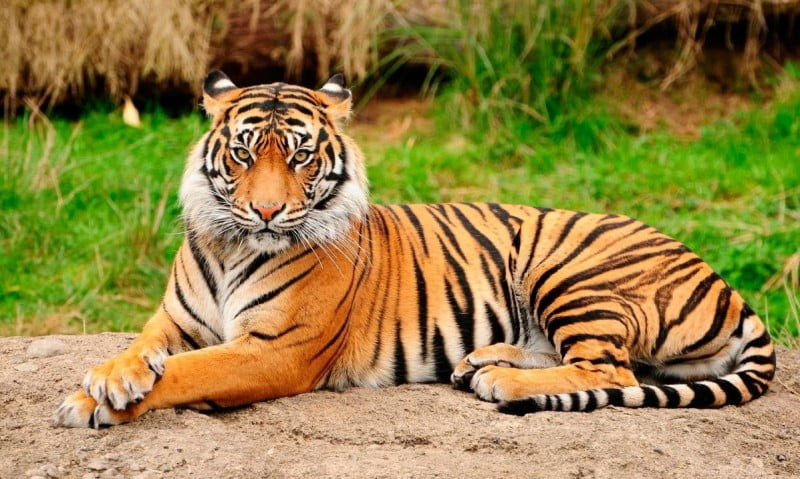
However, 29 of these species are threatened, which makes the conservation of natural resources a priority in the country.
Reptiles of Nepal
Nepal has a great diversity of wildlife, especially when it comes to reptiles. With a total of 143 reptile species according to the most recent count (Mongabay), Nepal ranks 55th in the world for number of reptile species.
Among the most notable species is the Indian cobra, a venomous snake that is an important resource for traditional medicine in the region.

Plants of Nepal
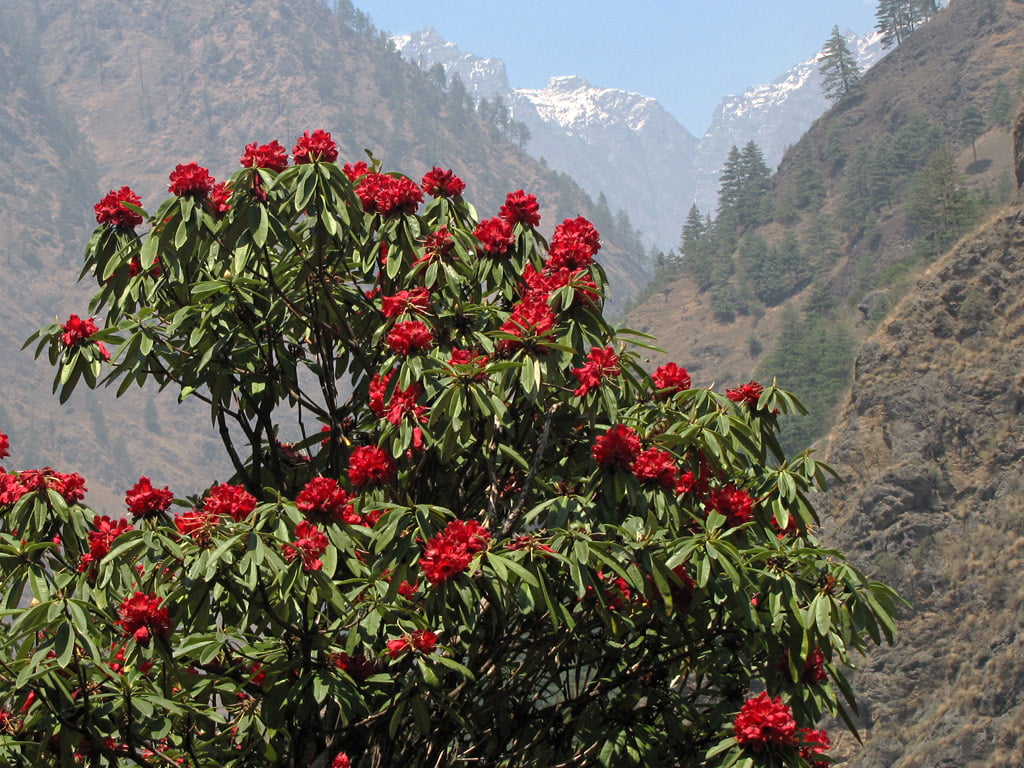
Nepal has a great diversity of vascular plants, with a total of 6,200 species recorded in 2020, placing it 31st in the world. Among the most notable species is Rhododendron arboreum, Nepal’s national flower and one of the country’s most emblematic plants.
Organizations that protect or study Nepal’s natural resources
- Ministry of Forests and Environment of Nepal: The government body responsible for forests, biodiversity and environmental policy in Nepal.
- Department of National Parks and Wildlife Conservation (DNPWC): National authority that manages parks and wildlife protected areas.
- National Trust for Nature Conservation (NTNC): Nepali organization for nature conservation and community protected areas.
- Bird Conservation Nepal (BCN): Nepali NGO dedicated to conserving birds, their habitats and sites.
- WWF Nepal: WWF’s Nepal branch, working on species and landscape conservation.
- International Centre for Integrated Mountain Development (ICIMOD): Regional Himalayan center for climate, mountains and the environment.
Nepal went from importing almost all of its electricity to becoming a net exporter for the first time in fiscal year 2023/24: it sold more power to India than it bought, about 1,940 million units (kWh), or roughly 1.94 TWh, for 17,070 million rupees (Kathmandu Post, 2024).
Hydropower: the potential of Himalayan rivers
The country’s roughly 6,000 rivers have a combined length of about 45,000 km and an estimated theoretical potential of 83,000 MW, of which about half, some 41,000 MW, is considered economically viable, according to Asian Development Bank research (Kathmandu Post, 2023). India approved its first purchase, of just 39 MW, in October 2021; in less than three years that figure had grown more than 24-fold, to close to 1,000 MW authorized (Kathmandu Post, 2024).
Mountain tourism: eight of the fourteen “eight-thousanders”
Eight of the fourteen internationally recognized peaks above 8,000 m are in Nepal, led by Everest (8,848.86 m), Kangchenjunga (8,586 m) and Lhotse (8,516 m) (Kathmandu Post, 2025). The mountains are also a fiscal resource: in 2024 the country collected $5.78 million in expedition royalties, of which Everest contributed $4.52 million from 421 climbers (The Tourism Times, 2025).
Medicinal and aromatic plants: a resource of the altitudinal gradient
The climb from the Terai plains to the Himalayan peaks supports a wild pharmacopeia: Nepal has 2,331 recorded species of medicinal and aromatic plants, of which about 300 are traded. Its exports of raw herbs and Ayurvedic products were around $60 million in 2014, less than 1% of world supply (Shrestha et al., Ecology and Evolution, 2022).
Frequently asked questions
How much hydropower potential does Nepal have? Its theoretical potential is estimated at 83,000 MW, of which about half, some 41,000 MW, is economically viable, according to the Asian Development Bank (Kathmandu Post, 2023).
How many of the world’s mountains above 8,000 m are in Nepal? Eight of the fourteen recognized internationally, led by Everest (8,848.86 m) (Kathmandu Post, 2025).
Sources used
- Economic data by country – The Global Economy
- Forest area (km²) – World Bank
- Forest area (% of land area) – World Bank
- Water and agriculture statistics – FAO
- Precipitation (mm) – World Bank
- Environmental Performance Index – Environmental Performance Index
- Bird species – Mongabay
- Amphibian species by country – Mongabay
- Mammal species – Mongabay
- Endemic mammal species – Our World in Data
- Plant species – Mongabay
- Reptile species by country – Mongabay
- Endemic bird species by country – Our World in Data
The World Bank noted in 2023 that Nepal has one of the largest hydroelectric potentials in the world, estimated at about 83,000 MW of theoretical capacity.
Last updated: September 26, 2026
Leave a Reply