


China’s natural resources encompass world-leading deposits of coal, rare earths, aluminium, and vast hydroelectric networks. In 2023, the country achieved record coal production of 4,660 million tonnes, mined 270,000 tonnes of rare earth oxides (69% of the global total) in 2025, and produced 213 million tonnes of crude oil in 2024, supported by 2,813 km³ of renewable freshwater reserves.
China is a country of immense geographic diversity and vast natural resource wealth, serving as a focal point in our guide to Asia natural resources and the global natural resources by country directory. From snow-capped Himalayan peaks to the fertile floodplains of the Yangtze and Yellow rivers, the nation encompasses vast mineral basins, dense temperate and subtropical forests, and globally significant biodiversity.
Table de contenidos
Coal remains one of the most widely used non-renewable natural resources in China, anchoring heavy industry and power generation while the country scales clean alternatives.
The extraction and sustainable management of these resources is critical to China’s long-term economic development. The country’s minerals, river flows, and fertile soils have propelled modern industrialization, while simultaneously generating severe air, water, and soil challenges that are driving a historic national transition toward environmental stewardship and green technology.
What are China’s most important natural resources and where does its natural wealth lie? Where does China stand in global mineral rankings? How much renewable energy does it generate, and what is its available freshwater capacity? What is the status of its birds, reptiles, mammals, fish, amphibians, and flora?
Natural Resources
Natural resources are materials or energy sources provided or found on Earth that are useful to humans; consult our guide on the primary types of natural resources for further insight. All manufactured goods ultimately originate from natural resources.
- Renewable resources: can be naturally replenished at rates faster than their consumption. Examples include solar radiation, wind currents, hydroelectric power, freshwater when managed prudently, and biological flora and fauna.
- Non-renewable resources: once extracted and consumed, these finite deposits deplete and cannot regenerate on human timescales. Key examples include fossil fuels (coal, oil, gas), metals, and industrial minerals.
Examples of China’s Main Natural Resources
What China’s Subsoil Is Worth
Economic weight of natural wealth and conservation status of the territory.
| Total natural resource rents | 1.9% of GDP2021 |
|---|---|
| Mineral rents | 0.8% of GDP2021 |
| Forest cover | 23.4% of land area2023 |
| Protected land area | 15.6% of land area2025 |
| Land area | 9,388,211 km²2023 |
| Resource | Reserves / Production | Source |
|---|---|---|
| Petroleum | 3,833,000 barrels/day (2021, 5th worldwide) | EIA |
| Natural gas | 6,242,000 million ft³ (2021, 4th worldwide) | EIA |
| Coal | 4,660M tonnes (2023, record, 1st worldwide) | Caixin Global / NBS |
| Aluminium | 36,000 thousand tonnes (2019, 1st worldwide) | USGS |
| Rare earth elements | 270,000 tonnes REO (2025, ~69% global output) | USGS 2026 |
| Freshwater | 2,813 km³ (2020, 5th worldwide) | FAO |
Oil and Gas Resources in China
China is among the world’s leading crude oil producers. In 2024, domestic output reached approximately 213 million tonnes (averaging over 3.8 million barrels per day in 2021, ranking fifth globally), driven by major historic oilfields such as Daqing in Heilongjiang, Shengli in Shandong, and expanding offshore developments in Bohai Bay and the South China Sea.
Additionally, the country holds proven crude oil reserves estimated at 25,132,122,000 barrels as of 2022, ranking 13th worldwide. These reserves support substantial petrochemical clusters but cover only a portion of the nation’s immense industrial consumption.
In natural gas, China produced 209.2 billion cubic meters in 2021, holding the fourth position globally. Production is centered in the Sichuan Basin, the Tarim Basin in Xinjiang, and the Ordos Basin, with deep shale gas exploitation expanding rapidly.
Examples of Mineral Resources of China
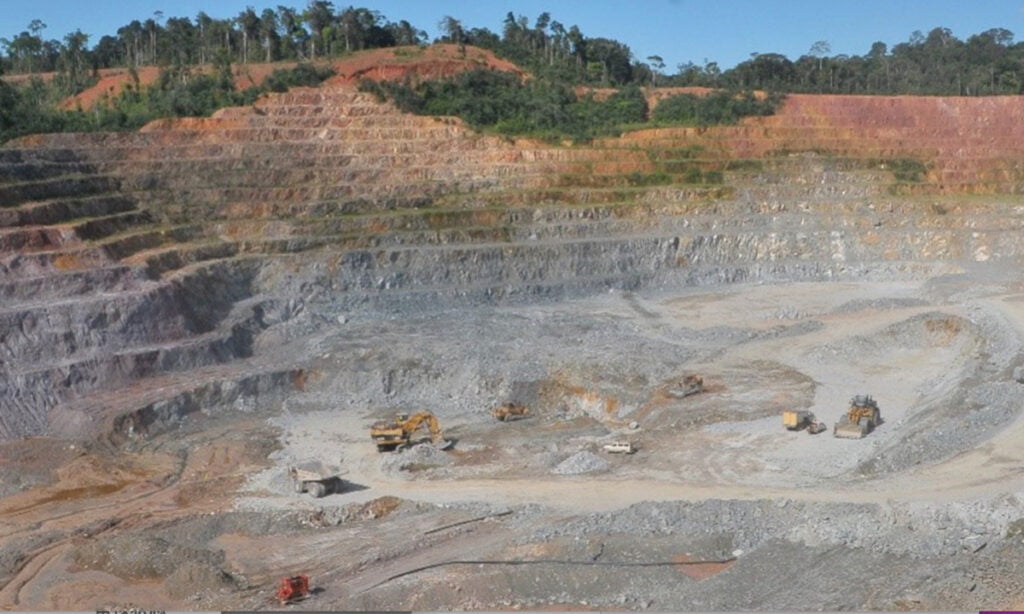
China is the world’s undisputed leading producer of coal, reaching a historic peak of 4,660 million tonnes in 2023, according to Caixin Global and official NBS statistics. The primary mining regions are Shanxi, Shaanxi, and Inner Mongolia. Explore our specialized guide on mineral resources to evaluate China’s influence across global supply chains.
In 2019, China produced 36,000 thousand tonnes of primary aluminium, commanding first place globally with more than half of world supply, heavily concentrated in Shandong and Xinjiang.
In copper, China mined 1,700 thousand tonnes in 2020 (ranking third globally in mine production) and represents by far the largest global refined copper consumer and smelter operator, led by Jiangxi Copper in Dexing.
In 2019, Chinese iron ore production reached 350,000 thousand tonnes, placing it third in global extraction. Mined extensively in Hebei and Liaoning, domestic ores have lower iron content, necessitating massive imports from Australia and Brazil.
In silver, China produced 3,570 tonnes in 2018, ranking third worldwide. Silver is primarily recovered as a byproduct of lead, zinc, and copper smelting in Henan, Yunnan, and Hunan.
China ranks sixth globally in platinum recovery, recording 2,500 kg in 2019, predominantly extracted from nickel-copper polymetallic deposits such as Jinchuan in Gansu province.
China is also the world’s top gold producer, extracting 380 tonnes in 2019, with the Jiaodong Peninsula in Shandong province serving as the primary gold-producing hub.
Water Resources of China
China holds an impressive renewable freshwater volume of 2,813 km³, ranking fifth globally in total reserves in 2020. See our analysis of global water resources for comparative hydrological metrics.
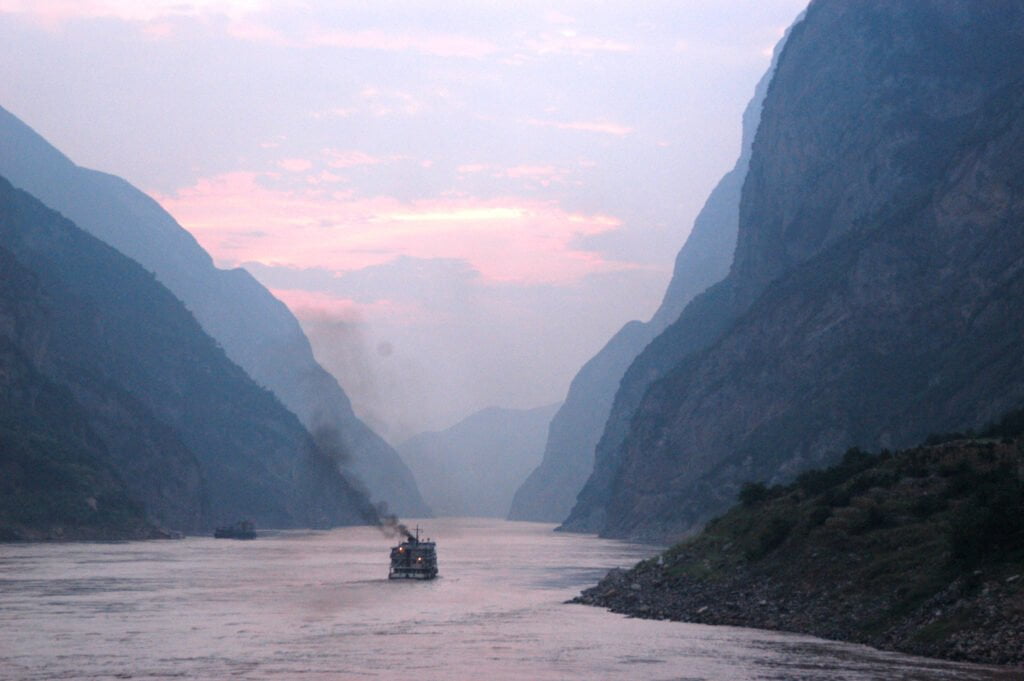
China’s drainage network is anchored by two legendary waterways: the Yangtze River (6,300 km, the third-longest river on Earth) and the Yellow River (Huang He, 5,464 km), while Poyang Lake in Jiangxi constitutes the largest freshwater lake in the country.
Average Rainfall and Soils of China
China ranks 105th globally in average annual precipitation, receiving 645 mm per year. Rainfall is starkly uneven, exceeding 2,000 mm annually in southern monsoon zones while dropping below 100 mm in the northwest deserts. Soils mirror this divide: nutrient-rich Chernozems (black soils) span northeastern grain belts, fertile alluvial deposits cover southern river basins, and the fragile Loess Plateau characterizes the north-central interior.
Renewable Electricity and Hydropower Production in China
China is the world’s premier producer of renewable electricity, generating 1,787,678 GWh annually. Hydropower accounts for 1,189,840 GWh of this clean output. Review our overview of world energy resources for global capacity comparisons.
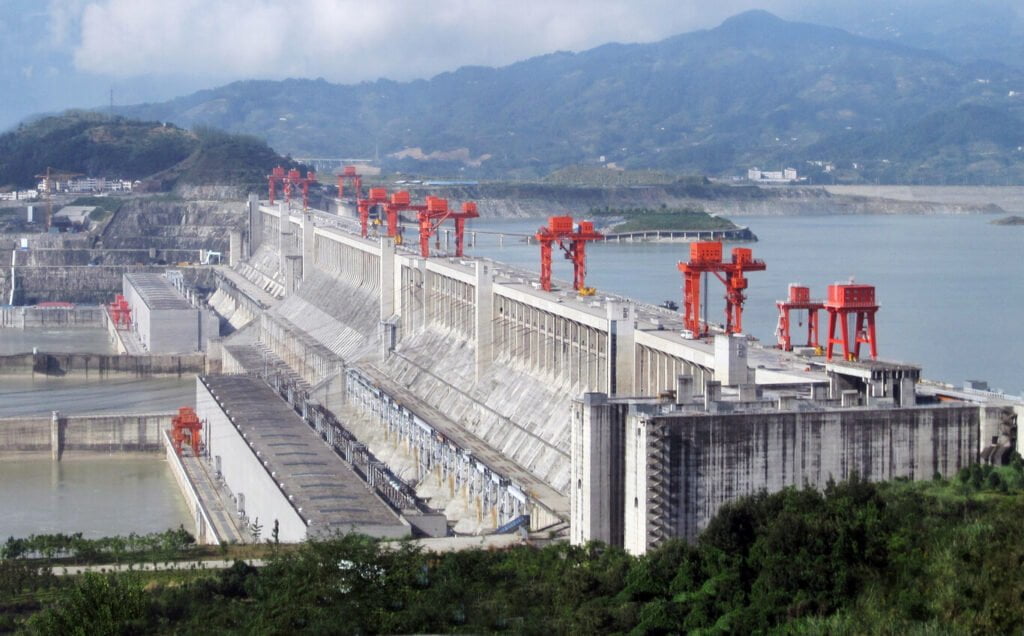
The crown jewel of China’s hydro infrastructure is the Three Gorges Dam on the Yangtze River in Hubei province, the world’s largest power station with an installed capacity of 22,500 MW.
Forest Resources of China
China maintains forest cover over 24.03% of its territory, encompassing 2,256,169 km² in 2020. Learn more in our dedicated analysis of global forest resources.
The foremost forest heartland is the Northeast Forest Zone, spanning Heilongjiang, Jilin, and Inner Mongolia (Greater and Lesser Khingan ranges), complemented by vast southern subtropical woodlands and extensive artificial reforestation programs under the Great Green Wall project.
Environmental Performance and Protection of China’s Natural Resources
China received an Environmental Performance Index score of 35.4 in the 2024 EPI, ranking 154th worldwide according to the Yale Center for Environmental Law & Policy 2024 report. Terrestrial protected areas cover 15.6% of its landmass, reflecting the formalization of national park systems across critical headwaters.
Natural Parks of China: The Hidden Wealth of Natural Resources
Biodiversity: Animal and Plant Resources of China
Birds of China
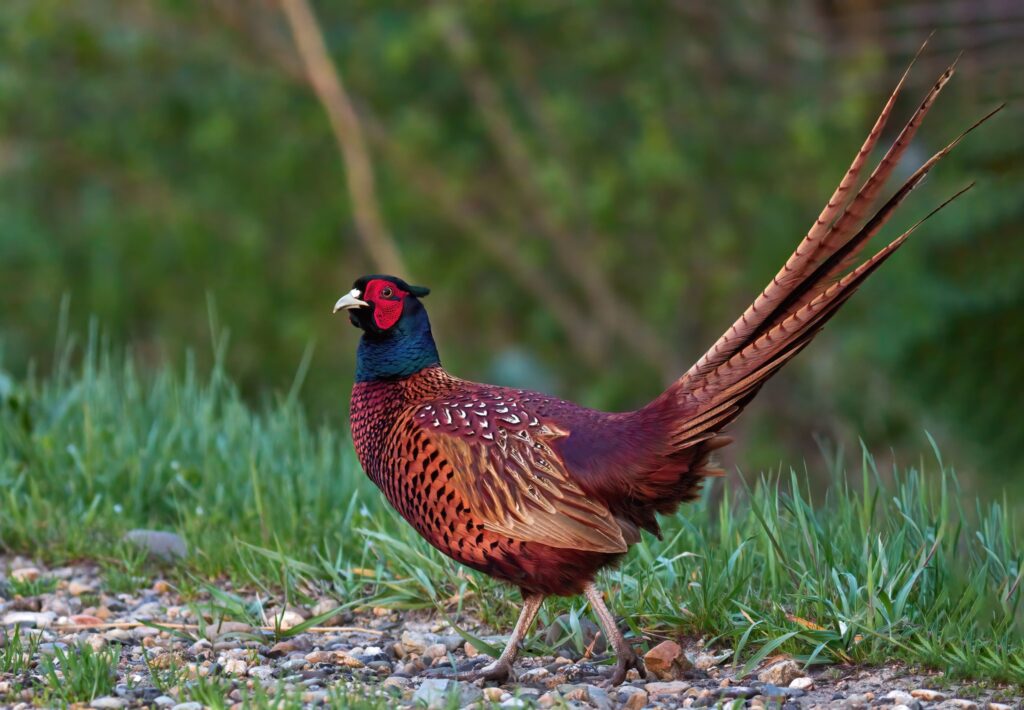
China is a major migratory crossroads and biological haven, recording 1,288 bird species in 2019 and holding seventh position globally. However, 96 of these species face conservation threats.
Furthermore, China records 70 endemic bird species. Flagship avian treasures include the Red-crowned Crane (Grus japonensis), the Crested Ibis (Nipponia nippon), and the Chinese Monal.
Fish and Amphibians of China
In 2019, 461 amphibian species were recorded in China, placing it fifth in the world. The Chinese giant salamander (Andrias davidianus), the largest amphibian on Earth, represents an ancient evolutionary lineage.
In ichthyofauna, China counts 3,622 fish species, ranking fifth globally. However, 161 of these fish species are categorized as threatened due to dam construction and waterway alterations.
Notable freshwater species include the Chinese tree frog and the Asian arowana, alongside critically endangered sturgeons in the Yangtze River.
Mammals of China
China boasts an extraordinary mammalian assemblage, recording 551 mammal species and ranking third in the world. Of these, 74 species face significant extinction threats.
China also sustains 88 endemic mammal species, placing it fifth globally in mammalian endemism. The Giant Panda (Ailuropoda melanoleuca), golden snub-nosed monkey, and snow leopard represent the pinnacle of its conservation heritage.

Reptiles of China
China is home to 490 reptile species, ranking eighth in the world. Celebrated native reptiles include the Chinese alligator (Alligator sinensis) in the lower Yangtze and the Chinese softshell turtle.
Plants of China
China ranks third globally in floral richness, recording 31,362 vascular plant species. Notable botanical resources include the Ginkgo biloba, Dawn Redwood (Metasequoia glyptostroboides), and extensive moso bamboo forests that underpin both rural forestry and giant panda conservation.
Organizations That Protect or Study China’s Natural Resources
- WWF China – Protects giant pandas, river basins, and endangered ecosystems across China.
- Greenpeace China – Investigates pollution, coal consumption, and renewable energy adoption.
- The Nature Conservancy China – Collaborates on national parks, river basin health, and land conservation.
- China Water Risk – Non-profit initiative analyzing water scarcity and environmental risks affecting Chinese economic policy.
- Dialogue Earth – Independent environmental journalism platform tracking Chinese climate and biodiversity initiatives.
- Forest Trends – Analyzes international timber trade flows and forest tenure governance in China.
China is the world’s leading producer of rare earth elements and coal, two decisive inputs for industrial manufacturing and the global energy transition. In 2025, it extracted 270,000 tonnes of rare earth oxides (REO), representing approximately 69% of global mined output (USGS, 2026). In coal, extraction reached 4.76 billion tonnes in 2024, an all-time record (China Daily / National Bureau of Statistics, 2025).
Rare Earths and Coal: Two Global Leaderships
In rare earths, China mined 270,000 tonnes of REO in 2025 and controls roughly 44 million tonnes of reserves, about 40% of the world total (USGS, 2026). In coal, 2024 output grew by 1.3% to reach 4.76 billion tonnes, cementing domestic self-sufficiency while fueling heavy industries (NBS, 2025).
The World’s Largest Carbon Dioxide Emitter
China emitted approximately 11.9 billion tonnes of fossil CO₂ in 2023, representing around 32% of global emissions (Global Carbon Budget, 2024). Its reliance on coal-fired power remains the principal factor in its emissions footprint.
Power Grid: Dominant Coal Alongside Rising Renewables
Coal supplied 61% of total electricity generation in 2023 (5,765 TWh). Meanwhile, solar and wind generated 16% (1,475 TWh) and hydropower supplied 13% (1,241 TWh), positioning China as the fastest deployer of clean hardware globally (Ember, 2024).
A Megadiverse Country
China is home to over 31,000 vascular plant species (third globally) and more than 550 mammal species. Terrestrial protected areas reached 15.6% of total land area in 2024 (Yale EPI, 2024), with major initiatives preserving giant panda corridors across Sichuan, Shaanxi, and Gansu.
Frequently Asked Questions
What share of the world’s rare earths does China produce? In 2025, China produced approximately 69% of global mined rare earth oxides (270,000 tonnes) and controls 40% of world reserves (USGS, 2026).
How much coal does China produce each year? China mined 4.76 billion tonnes of coal in 2024, representing an all-time historical high (NBS, 2025).
Sources Used
- Lists of Countries by Mineral Production – Wikipedia
- Economic Data by Country – The Global Economy
- Forest Area (sq. km) – World Bank
- Forest Area (% of Land Area) – World Bank
- Agricultural Land (sq. km) – World Bank
- Crude Oil Reserves – The Global Economy
- Coal Reserves by Country – Worldometers
- AQUASTAT Water and Agriculture Statistics – FAO
- Average Precipitation in Depth (mm per year) – World Bank
- Yale Center for Environmental Law & Policy — Environmental Performance Index 2024
- Terrestrial Protected Areas (% of Total Land Area) – World Bank
- Bird Species by Country – Mongabay
- Amphibian Species by Country – Mongabay
- Amphibian Species by Country – Mongabay
- Mammal Species by Country – Mongabay
- Endemic Mammal Species by Country – Our World in Data
- Plant Species by Country – Mongabay
- Reptile Species by Country – Mongabay
- Endemic Bird Species by Country – Our World in Data
According to the International Renewable Energy Agency (IRENA), China’s total installed renewable capacity surpassed 1,400 GW in 2023, representing more than 40% of global renewable capacity additions.
Last updated: August 19, 2026 (Official indicators and resources factsheet review)

Leave a Reply