


South Africa’s natural resources are crowned by global mineral supremacy: holding 83% of world platinum group metal reserves in the Bushveld Complex, ranking as the top global manganese producer, and generating 238 million tonnes of coal (7th worldwide in 2023). Complementing its mineral wealth, South Africa contains 51.4 km³ of freshwater reserves and the Cape Floral Kingdom, one of Earth’s six floral realms.
South Africa is a nation endowed with extraordinary geological and ecological wealth. From expansive highveld plateaus and dramatic escarpments to major rivers and arid savannahs, the southern African powerhouse holds an exceptional resource base. Within our regional survey of Africa natural resources and our global directory of natural resources by country, this guide analyzes South Africa’s strategic physical assets.
Table de contenidos
Its bedrock stores world-dominant reserves of platinum group metals, gold, diamonds, chromium, and manganese, alongside massive coal deposits. In parallel, South Africa is home to globally unique biodiversity, including the Cape Floral Kingdom and iconic megafauna like the white rhinoceros and Cape mountain zebra.
These natural resources have driven South Africa’s industrial and economic development for over a century, and their sustainable management remains critical for future economic transformation and community well-being.
What are South Africa’s most prominent natural resources? Where does it rank in global mineral reserves? How does it utilize its water and energy resources amidst transition challenges? Which unique plants and animals define its megadiverse landscapes?
Key Fact: Natural Resources
Natural resources are materials or energy sources provided by nature and found on Earth that are useful to humanity. Every product manufactured today originates from natural resources.
- Renewable natural resources: these can regenerate through natural processes faster than the rate of consumption. Examples include solar radiation, wind, hydroelectric energy, properly managed freshwater, and plant and animal biomass. For comparative dynamics, see our guide to renewable vs non-renewable resources.
- Non-renewable natural resources: once extracted and used, their finite stocks are depleted and cannot replenish on human timescales. Examples include hydrocarbons, coal, and metallic minerals. For full classifications, explore our guide to types of natural resources.
Examples of South Africa’s Main Natural Resources
South Africa: Environmental Summary in Six Figures
Key indicators regarding the nation’s natural capital.
| Forest cover | 14.0 % of the territory2023 |
|---|---|
| Protected land area | 9.6 % of the territory2025 |
| Renewable fresh water per capita | 718 m³ per year2022 |
| Natural resource rents | 7.3 % of GDP2021 |
| Electricity from renewable sources | 6.4 % of total generation2021 |
| Threatened species | 668 mammals, birds, fish and plants2022 |
| Resource | Reserves / Production | Source |
|---|---|---|
| Oil | 950 barrels/day (2021, 70th) | EIA |
| Natural gas | 1,100M m³ (65th) | EIA |
| Coal | 238M t (2023, 7th worldwide) | Worldometers 2023 |
| Aluminum | 714,000 t (2019, 13th) | USGS |
| Iron ore | 77,000,000 t (2019, 6th) | USGS |
| Platinum | ≈120 t (2023, ~70% of world, 1st) | USGS |
Oil and Gas Resources in South Africa
South Africa produced approximately 950 barrels of crude oil per day in 2021, ranking 70th globally in oil production. Proved oil reserves stood at approximately 15,000,000 barrels in 2022, placing the country 173rd worldwide.
South Africa is not a major crude producer, as its economic structure has historically been built on vast solid mineral reserves, notably gold, coal, and diamonds.
With domestic natural gas output of 1,100 million cubic meters, the nation ranks 65th globally among natural gas producers, with exploratory offshore projects underway along its southern coast.
Mineral Resources of South Africa
South Africa is one of the world’s premier coal producers. In 2023, its coal extraction reached approximately 238 million tonnes, maintaining 7th position in global rankings (Worldometers). Proved coal reserves totaled 35,053,458,000 tonnes in 2016, accounting for 3.10% of the world’s total coal deposits, concentrated primarily in Mpumalanga province.
In 2019, South Africa produced 714,000 tonnes of primary aluminum, ranking 13th globally in aluminum production, centered around the Hillside Aluminium smelter in Richards Bay.
In 2019, South Africa extracted 77 million tonnes of iron ore, ranking 6th worldwide. The primary iron mining regions are Limpopo and the Northern Cape (notably the Sishen and Kolomela open-pit complexes), supplying major Asian and European steelmakers.

South Africa is the undisputed global leader in platinum production, extracting roughly 120 tonnes in 2023 (approximately 70% of world supply), securely holding 1st place in the global ranking (Mining Technology). Flagship operations include Anglo American Platinum’s complexes in Rustenburg.
South Africa also stands among the historically dominant gold producers of the world, mining roughly 110 tonnes in 2023 with remaining underground reserves of 6,000 tonnes (Mining Technology), ranking 11th globally. The Mponeng mine in Gauteng province is renowned as the deepest gold mine on Earth. For broader global mining data, see our detailed guide to mineral resources.
Water Resources of South Africa
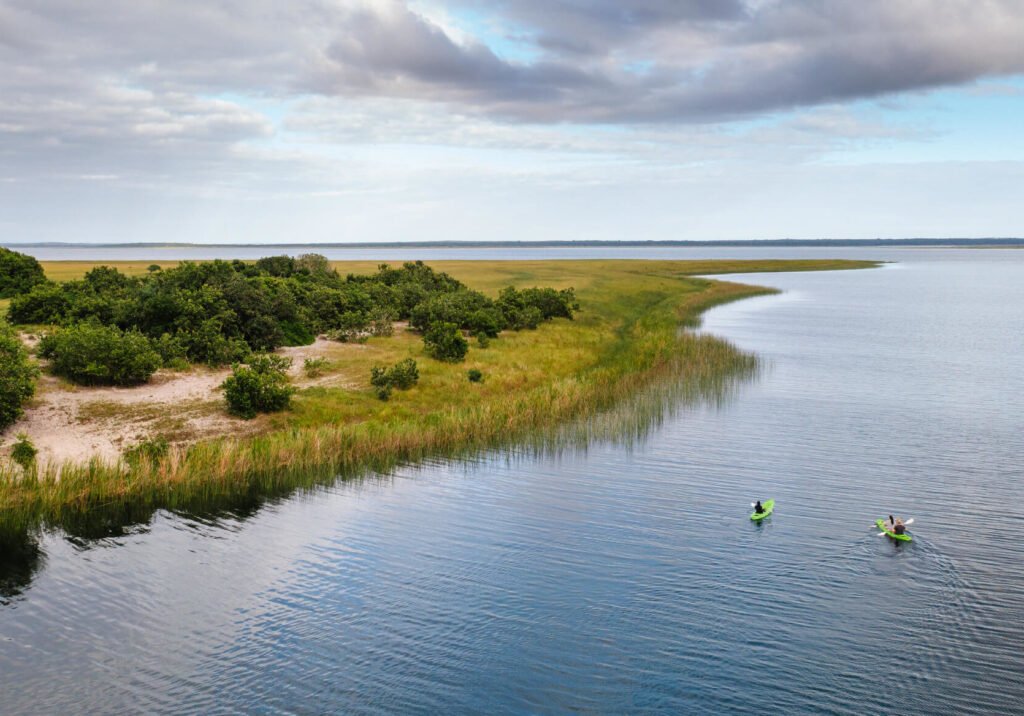
South Africa holds 51.4 km³ of renewable freshwater reserves, ranking 84th globally in water availability. The nation’s hydrology is dominated by the Orange River (feeding extensive irrigation and hydro systems) and the Limpopo River, alongside freshwater wetlands like Lake Sibaya in KwaZulu-Natal, South Africa’s largest natural freshwater lake. Learn more about water availability in our guide to global water resources.
Average Precipitation and Soils of South Africa
South Africa experiences an average annual precipitation of 495 mm, placing it 125th worldwide. This relatively dry climate directly influences soil fertility and moisture gradients across the territory.
In general, South African soils exhibit marked regional variation, possessing greater arable productivity in the higher-rainfall eastern provinces and becoming progressively shallower, alkaline, and arid across the vast western Karoo and Kalahari basins.
Renewable Electricity and Hydropower Generation in South Africa
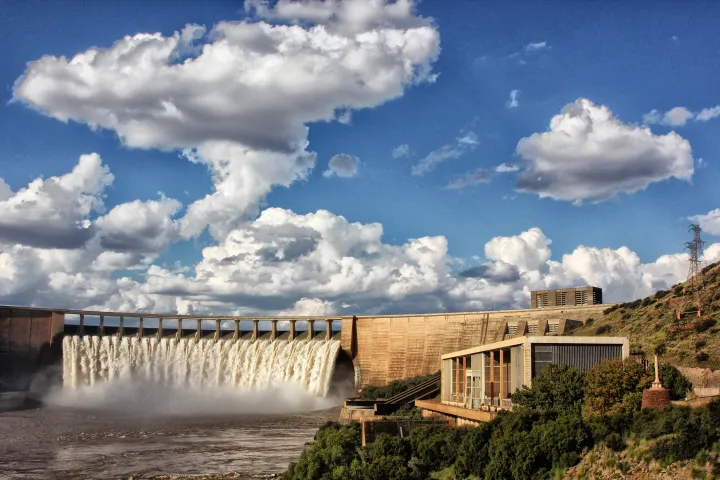
South Africa produces 252,747 GWh of total electricity, with 3,892.5 GWh generated by hydroelectric power plants. The country’s largest conventional hydroelectric station is the Gariep Hydroelectric Power Station on the Orange River, with an installed capacity of 360 MW. Explore energy transition trends in our guide to energy resources.
Forest Resources of South Africa
Forests and woodlands cover 13.97% of South Africa’s land area, totaling 169,409 km² as of 2023 (World Bank), positioning the nation 37th globally in forest area.
This resource is critical for both conservation and commercial forestry, with major commercial timber plantations located in Mpumalanga, KwaZulu-Natal, and the Eastern Cape. Read our worldwide analysis of forest resources.
Environmental Performance and Resource Protection in South Africa
South Africa recorded an Environmental Performance Index score of 42.7 (EPI 2024, Yale University), ranking 92nd out of 180 countries. Terrestrial and marine protected areas cover 12.49% of the nation’s total territory.
National Parks of South Africa: The Hidden Wealth of Natural Resources
Biodiversity: Animal and Plant Resources of South Africa
Birds of South Africa
South Africa possesses great avian wealth, recording 762 bird species in 2018, ranking 30th globally in bird species richness. Furthermore, it supports 18 endemic bird species.
However, 54 bird species are currently threatened with extinction. Notable species include the African fish eagle and the osprey (Pandion haliaetus), emblematic raptors across southern African wetlands.

Fish and Amphibians of South Africa
South Africa’s freshwater and marine fauna are extraordinarily rich. In 2019, 132 amphibian species were recorded, placing the country 26th globally in amphibian diversity.
In aquatic biodiversity, South Africa documents 2,087 fish species, ranking 15th worldwide. However, 121 of these fish species are under conservation threat.
Notable freshwater and coastal species include the bushveld rain frog and diverse endemic marine sparids.
Mammals of South Africa
South Africa hosts 297 mammal species (18th globally in total species), with 30 classified as threatened. The country is home to 37 endemic mammal species, placing 16th worldwide in mammalian endemism.
Among its iconic megafauna, the southern white rhinoceros (Ceratotherium simum simum) stands as a monumental conservation focus, with South Africa holding the majority of the global population.

Reptiles of South Africa
South Africa is a global hotspot for herpetology, possessing 447 reptile species, which earns it 14th place in the world. Notable species include the rock monitor and Nile monitor, as well as an extraordinary concentration of endemic tortoises and dwarf chameleons.
Plants of South Africa
South Africa boasts world-renowned botanical richness, harboring 21,250 vascular plant species, ranking 5th in the world in total plant species. Foremost among them is the King Protea (Protea cynaroides), the national flower and emblem of the fynbos biome.

Organizations Protecting or Studying South Africa’s Natural Resources
- WWF South Africa: Protects critical biomes and champions sustainable natural resource stewardship.
- SANBI (South African National Biodiversity Institute): Conducts scientific research and biodiversity planning nationwide.
- Greenpeace Africa: Advocates for energy transition, anti-pollution enforcement, and climate justice in South Africa.
- WESSA (Wildlife and Environment Society of South Africa): Promotes youth environmental education and eco-tourism accreditation.
- Conservation International Africa: Safeguards high-value biodiversity corridors and marine ecosystems.
- BirdLife South Africa: Focuses on avian conservation, habitat restoration, and Important Bird Areas (IBAs).
South Africa holds the world’s largest reserves of platinum group metals (PGMs): approximately 83% of the global known total, according to the USGS, 2025. That dominance is anchored in the Bushveld Igneous Complex, the planet’s single largest PGM deposit.
Platinum: Mineral Supremacy from the Bushveld Complex
The country possesses the largest PGM reserves in the world—an estimated 63 million kilograms—and the Bushveld Complex supplies about 70% of mined platinum worldwide, according to the USGS, 2025. These precious metals are indispensable for industrial catalytic converters, clean hydrogen fuel cells, and green energy technology.
Manganese: The Largest Reserves on Earth
South Africa also leads the globe in manganese, holding an estimated 560 million tonnes of reserves (the world’s largest) and ranking as the top global producer in 2024, according to the USGS, 2023. The vast majority of these deposits are situated in the Kalahari Manganese Field.
Electricity: A Coal-Dominated Power Grid
South Africa’s electrical generation still relies on coal for over 80% of its power, while low-carbon sources account for roughly 18%, according to Low Carbon Power, 2025. This reliance explains the country’s high energy carbon intensity and drives its ongoing Just Energy Transition Partnership.
Cape Floral Kingdom: Megadiverse Botanical Heritage
The Cape Floral Region is the smallest and richest of the world’s six floral kingdoms, harboring over 9,000 vascular plant species, of which 69% are strictly endemic, according to UNESCO (Cape Floral Region Protected Areas, 2004). Fynbos shrubland defines this extraordinary Mediterranean-type biome.
Frequently Asked Questions
What natural resource sets South Africa apart globally? Platinum and platinum group metals: South Africa contains roughly 83% of world reserves, concentrated in the Bushveld Complex, according to the USGS, 2025.
How does South Africa rank in environmental performance? South Africa ranked 106th out of 180 countries with a score of 42.7 on the Environmental Performance Index, according to Yale EPI, 2024.
Sources Used
- Annex: Countries by Mineral Production – Wikipedia
- Economic Data by Country – The Global Economy
- Forest Area (km²) – World Bank
- Forest Area as Percentage of Land – World Bank
- Crude Oil Reserves – The Global Economy
- Coal Reserves by Country – Worldometers
- Water and Agricultural Statistics – FAO AQUASTAT
- Average Precipitation (mm) – World Bank
- Environmental Performance Index – Yale Center for Environmental Law & Policy
- Bird Species Richness – Mongabay
- Amphibian Species by Country – Mongabay
- Mammal Species Richness – Mongabay
- Endemic Mammal Species by Country – Our World in Data
- Vascular Plant Species – Mongabay
- Reptile Species by Country – Mongabay
- Endemic Bird Species by Country – Our World in Data
The Department of Mineral Resources and Energy of South Africa reported in 2023 that the country possesses the world’s largest known reserves of platinum group metals, chromium, and manganese.
Last updated: August 19, 2026 (Official indicators and natural resources factsheet review)

Leave a Reply