


Morocco’s natural resources combine mining, fishing and Mediterranean agriculture. Its key resource is phosphate: the country holds more than 70% of the world’s reserves and produces about 35 million tonnes a year, making it the world’s leading exporter (USGS 2025). What are Morocco’s most important natural resources? Iron, coal and 30.7 km³ of renewable freshwater resources also stand out.
Located in northwest Africa, Morocco has a wide variety of natural resources. From the Atlantic coast to the Sahara Desert, the country is home to a range of ecosystems that support rich biodiversity.
Table de contenidos
Morocco is also rich in mineral resources such as phosphates and lead, and it has developed a major agricultural sector thanks to its Mediterranean climate. In this context, Morocco’s natural resources are a key element of its economy and its sustainable development.
What are Morocco’s most important natural resources? What natural wealth does the country have? What are its minerals, and how does it rank globally? How much water is there, and how is energy generated? How diverse are Morocco’s animals and plants?
Natural resources
Natural resources are materials or energy sources provided by or found on Earth that are useful to humans. Every product we manufacture is made up of natural resources.
- Renewable resources: these can be restored by natural processes faster than the rate at which they are consumed. Examples include solar radiation, wind, hydroelectric power, water when used properly, and plant and animal life.
- Non-renewable resources: once extracted, these are depleted and cannot regenerate. Examples include hydrocarbons, metals and minerals.
Examples of Morocco’s main natural resources
Morocco in figures: land and conservation
Land area, land use and protected areas, with their reference year.
| Land area | 446,300 km²2023 |
|---|---|
| Protected land area | 2.1% of land area2025 |
| Marine protected areas | 0.3% of its waters2025 |
| Forest cover | 12.9% of land area2023 |
| Agricultural land | 66.7% of land area2023 |
| Threatened species | 183 mammals, birds, fish and plants2022 |
| Resource | Reserves / production | Source |
|---|---|---|
| Phosphate | ≈35 million t/year; >70% of world reserves; world’s No. 1 exporter | USGS 2025 |
| Iron | 15 thousand t (2019); 38th | USGS |
| Oil | ≈160 barrels/day (2021); 76th | EIA |
| Coal (reserves) | 15,432,340 t (2016) | USGS |
| Renewable freshwater | 30.7 km³; 97th | FAO |
Oil and gas resources in Morocco
Morocco produced around 160 barrels of oil per day in 2021, which places it 76th in the world ranking of oil production. It also had oil reserves of 684,000 barrels in 2022, which places it 146th in the world ranking of oil reserves.
Morocco is not known as a major oil-producing region; instead, it stands out for its natural resources in other sectors, such as fishing and agriculture.
With natural gas production of 94 million cubic meters (2015 estimate), the country ranked 82nd among the world’s producers.
Examples of Morocco’s mineral resources
Morocco had coal reserves of 15,432,340 tonnes in 2016. The country has developed a significant mining industry in the Jerada region, in the northeast.
In 2019, Morocco’s iron production reached 15 thousand tonnes, placing it 38th in the world ranking for iron production. Morocco has major deposits of this resource, especially in the Atlas region.
Morocco’s most important mineral resource is phosphate: the country holds more than 70% of the world’s phosphate rock reserves (about 50,000 million tonnes) and produces about 35 million tonnes a year, which places it among the largest producers and makes it the world’s leading exporter, mainly through the state-owned OCP Group (USGS, Mineral Commodity Summaries 2025).
Water resources of Morocco
Morocco has 30.7 km³ of renewable freshwater resources, which places it 97th in the world ranking of water reserves. This African country has important water resources; its most important rivers are the Moulouya and the Oum Er-Rbia, and one of its main reservoirs is Bin el Ouidane, created by a dam on the El Abid River.

Average rainfall and soils of Morocco
Morocco has an average annual rainfall of 346 mm, which places it 133rd in the world ranking for average annual rainfall. With such low rainfall, arid and semi-arid soils predominate in Morocco, covered by vegetation adapted to dry conditions.
Renewable electricity and hydropower production in Morocco
In 2025, Morocco generated 10.3 TWh of electricity from renewable sources — 23% of its total generation of 44.2 TWh — and hydropower supplied 920 GWh (Ember, 2025). Among its hydroelectric facilities is the Afourer pumped-storage station, in Azilal province, with an installed capacity of 465 MW.
Forest resources of Morocco
Morocco’s forest area covers about 12.9% of its territory, equivalent to 57,738 km² according to 2023 data (World Bank). Worldwide, it ranks 67th for forest area.
This natural resource is very important for the country’s economy and environment, and the Rif is Morocco’s main forest region.
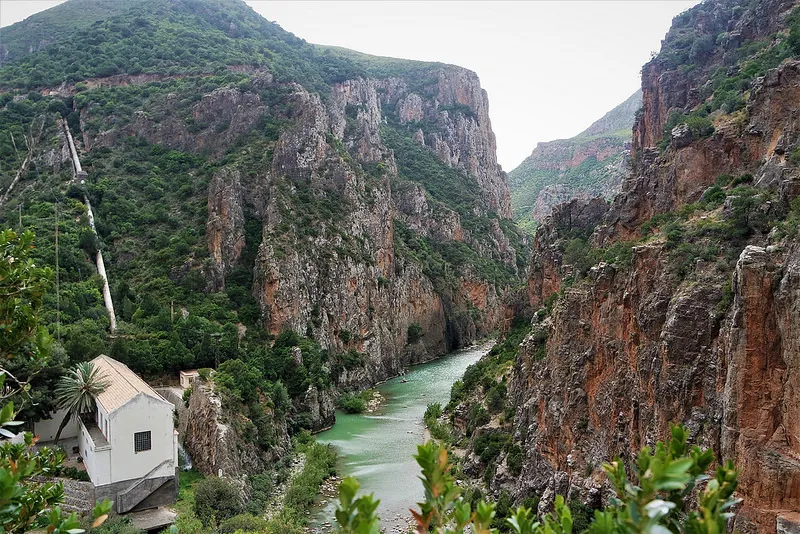
Environmental performance and protection of Morocco’s natural resources
Morocco has an Environmental Performance Index (EPI 2024, Yale University) score of 39.5 and ranks 128th out of 180 countries on the index. In addition, protected areas cover 2.1% of its land area and 0.3% of its waters; together, terrestrial and marine protected areas make up 1.4% of its total territorial area (World Bank, 2025).
Natural parks of Morocco: the hidden wealth of natural resources
Biodiversity: animal and plant resources of Morocco
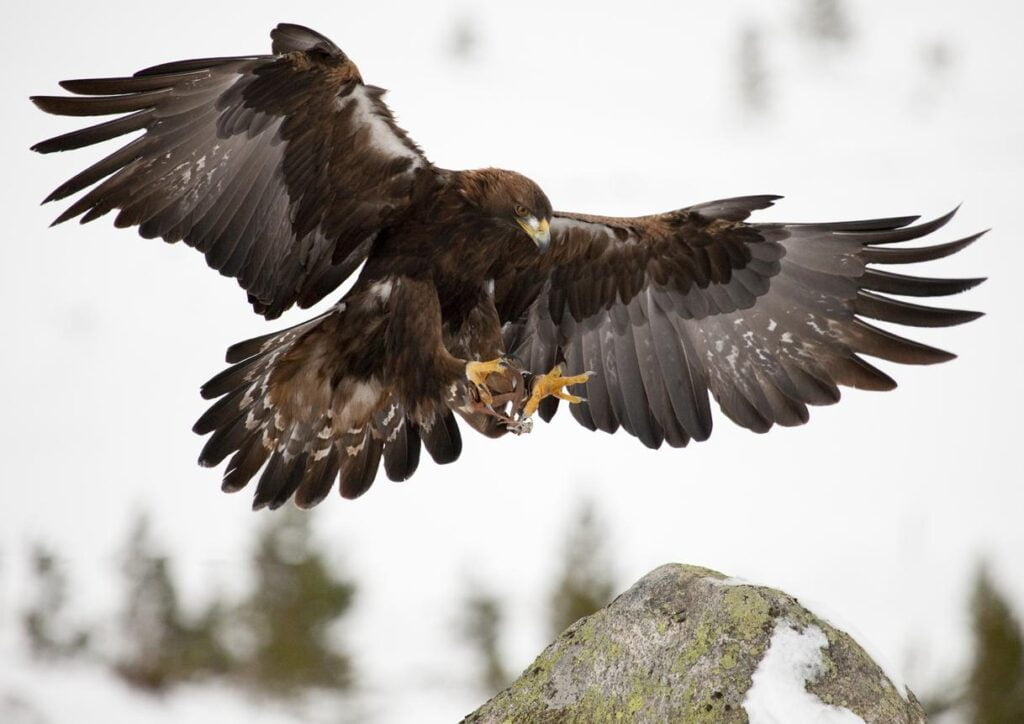
Birds of Morocco
Morocco has a rich diversity of birds, with a total of 341 species recorded in 2018. Although it had no endemic bird species in 2020, the country ranks 105th in the world for number of bird species.
However, 18 of these species are endangered, so it is essential to protect and conserve this natural resource.
Fish and amphibians of Morocco
Morocco’s diverse natural resources include a large number of amphibian and fish species. In 2019, 14 amphibian species were recorded in the country, placing it 83rd in the world.
Morocco also has a total of 734 fish species, and its flagship fish is the swordfish. In the world ranking for number of fish species, Morocco ranks 74th.
However, it is important to note that 54 fish species are threatened in the country.
Mammals of Morocco
Morocco has a great diversity of mammals, with a total of 133 species in 2016. However, 18 of these species are threatened.
Morocco ranks 63rd in the world for number of mammal species. It also has 4 endemic mammal species, which places it 44th in the world ranking for endemic mammals.
The camel stands out.
Reptiles of Morocco
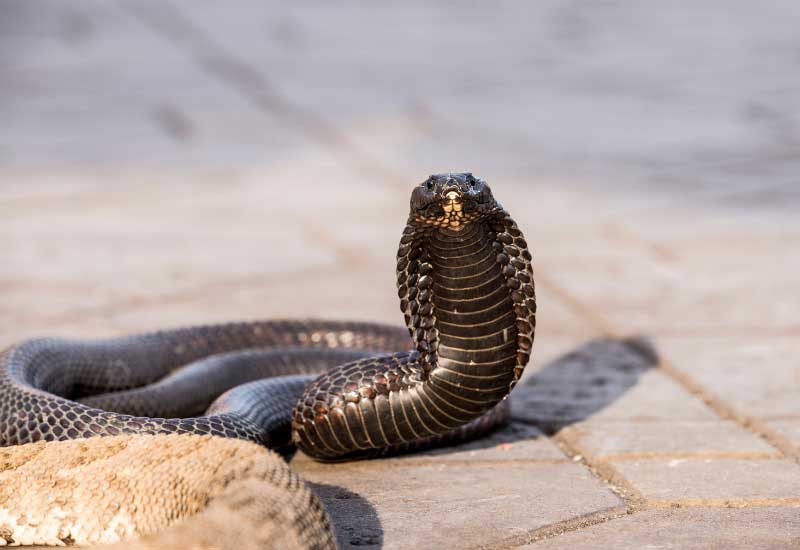
Morocco has a total of 109 reptile species recorded in 2019, which places it 70th in the world. The Egyptian cobra stands out as one of the most emblematic reptile species in the region.
Plants of Morocco
Morocco has a great diversity of vascular plants, with a total of 3,100 species recorded in 2020, which places it 64th in the world. Among the most notable species is the argan, a tree endemic to the country’s southwest whose oil is highly prized in the cosmetics and food industries.
Organizations that protect or study Morocco’s natural resources
- Agence Nationale des Eaux et Forêts (National Agency for Water and Forests, ANEF): State agency that manages forests and biodiversity and fights desertification.
- Département du Développement Durable (Ministry of Energy Transition): Ministry responsible for the country’s environmental policy and sustainable development.
- Fondation Mohammed VI pour la Protection de l'Environnement (Mohammed VI Foundation for Environmental Protection): Royal foundation dedicated to environmental education and environmental protection.
- Société Protectrice des Animaux et de la Nature (SPANA Maroc): Moroccan association that protects animals and the country’s natural heritage.
- GREPOM/BirdLife Maroc: Moroccan NGO that conserves wild birds and their natural habitats.
- AESVT Maroc: Educational association that promotes environmental protection and sustainable development.
Phosphates: the world’s largest reserves
The US Geological Survey estimates Morocco’s reserves at about 50,000 million tonnes, out of a world total of close to 73,000 million. That is equivalent to about 70% of the global inventory. The state-owned OCP Group mines the Khouribga, Gantour and Boucraâ deposits, and Morocco ranks as the world’s second-largest producer. Source: USGS, 2025.
Solar power: the Noor Ouarzazate complex
The Noor Ouarzazate complex has 582 MW of installed capacity, including 510 MW of concentrated solar power, which makes it the largest solar thermal plant in the world. Its phases came online between 2016 and 2018. The project supports the national goal of reaching 52% renewable electricity capacity by 2030. Sources: Wikipedia / Ouarzazate Solar Power Station, 2024 and World Bank, 2022.
Structural water stress
Water is the country’s great environmental constraint. The World Resources Institute ranks Morocco 19th in the world for projected water stress in 2040, with a score of 4.68 out of 5. Renewable water availability fell to about 620 m³ per person in 2020, well below the scarcity threshold of 1,000 m³. Sources: WRI Aqueduct, 2015 and World Bank, 2023.
Global environmental performance
On Yale University’s Environmental Performance Index, Morocco ranks 128th with 39.5 points out of 100. The score reflects uneven progress across environmental health, ecosystem vitality and climate. Source: Yale EPI, 2024.
Frequently asked questions
How large are Morocco’s phosphate reserves? About 50,000 million tonnes, close to 70% of the world total, mined by OCP Group, according to the USGS, 2025.
How serious is water scarcity in Morocco? The country has about 620 m³ of renewable water per person, below the scarcity threshold, and ranks among the 20 most water-stressed countries by 2040, according to the WRI, 2015.
Leave a Reply