


Uruguay’s natural resources underpin a high-productivity economy centered on agriculture, livestock ranching, commercial forestry, and clean power. The country holds 122 km³ of internal renewable freshwater reserves (ranking 54th globally), exceptionally fertile prairie soils receiving 1,300 mm of annual rainfall, and a near-100% renewable electricity grid generating 13,238 GWh (with 7,842 GWh from hydro). What natural resources define Uruguay’s sustainable development model?
Uruguay is a South American nation that has transformed its natural resource endowment into a highly productive, sustainable development model. Situated in the Southern Cone between Argentina and Brazil, Uruguay’s topography is characterized by gently undulating plains, fertile pampas grasslands, low rocky ridges (cuchillas), and dense riparian forests. Positioned within the rich mosaic of Latin America’s natural resources, Uruguay has become a regional benchmark for agricultural productivity and clean energy integration.
Table de contenidos
The country’s primary wealth stems from deep, nutrient-dense agricultural soils, extensive freshwater river networks, expanding commercial forestry plantations, and favorable conditions for wind and biomass energy generation. To assess how Uruguay’s natural asset balance compares to other economies, see our international overview on natural resources by country.
Where does Uruguay rank globally in freshwater reserves, precipitation, and clean power generation? How has its forestry law reshaped rural land use, and what is the conservation status of its native bird, reptile, mammal, fish, and plant species? The sections below provide a comprehensive assessment based on official 2026 data.
Natural Resources
Natural resources are materials or energy flows originating from the Earth that are utilized to sustain human welfare, generate economic value, and support modern society, as classified in our guide to the types of natural resources.
- Renewable resources: can replenish through biological reproduction or continuous natural cycles faster than the rate of consumption. Examples include solar radiation, wind currents, hydroelectric river flows, and sustainable timber plantations (see renewable vs non-renewable resources).
- Non-renewable resources: geological stocks formed over millions of years that do not regenerate on human timescales and deplete with extraction. Examples include fossil fuels, metallic ores, and industrial minerals.
Examples of the Main Natural Resources of Uruguay
Conservation and Resource Profile of Uruguay
Protected territory, forest trends, and threatened biodiversity from official indicators.
| Protected terrestrial area | 3.1% of land area2025 |
|---|---|
| Marine protected areas | 1.5% of territorial waters2025 |
| Threatened species | 124 mammals, birds, fish, and plants2022 |
| Forest cover | 12.0% of land area2023 |
| Annual forest expansion | +210 km² annually (2018–2023) |
| Agricultural land | 81.4% of land area2023 |
Map of Natural Resources in Uruguay by Region
Uruguay can be grouped into five geographic regions—Western Littoral, North, Center, East, and South/Metropolitan—each with distinct resource advantages.
| Resource | Reserves / Production | Source |
|---|---|---|
| Freshwater | 122 km³ (2020); 54th worldwide | FAO |
| Precipitation | 1,300 mm/year; 59th worldwide | World Bank |
| Renewable electricity | 13,238 GWh (7,842 GWh hydro) | EIA |
| Forests | 11.96% (20,958 km², 2023) | World Bank |
| Environmental performance | EPI 44.1; rank 84/180 | Yale EPI 2024 |
| Birds | 408 species | Mongabay |
Water Resources of Uruguay
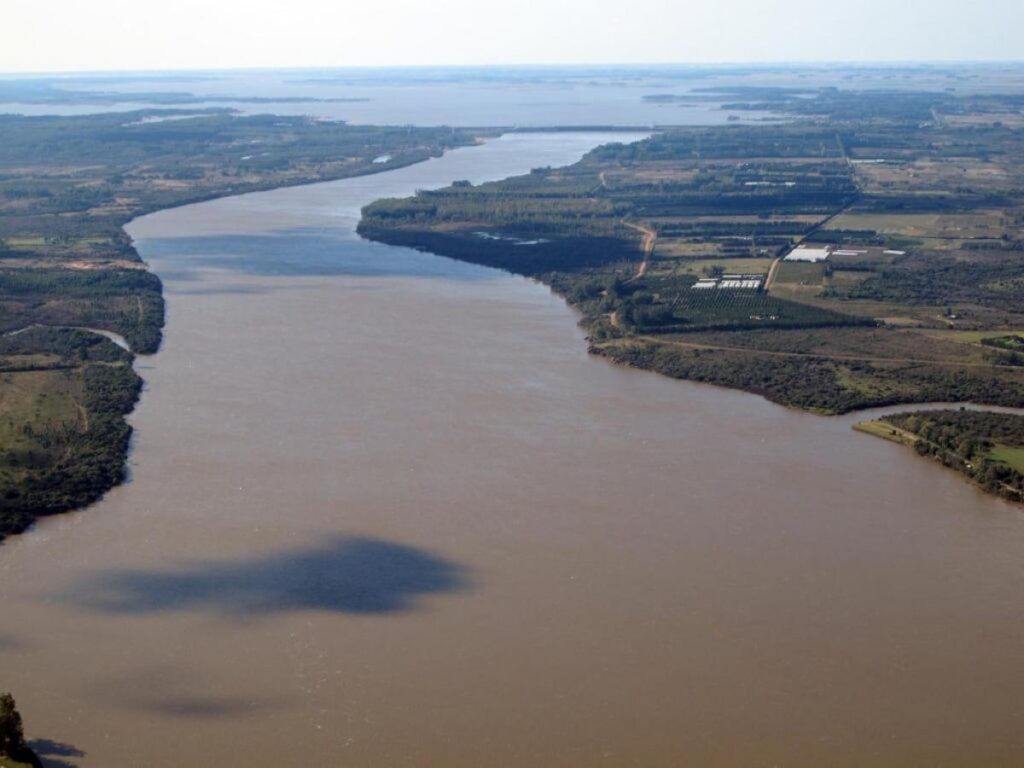
Uruguay held internal renewable freshwater reserves of 122 km³ in 2020, positioning it 54th globally according to FAO AQUASTAT. This bountiful water resource framework is shaped by major fluvial boundaries and interior river arteries.
The southern edge is defined by the expansive Río de la Plata estuary, while the western border is demarcated by the Uruguay River. Domestically, the Río Negro traverses the nation from northeast to southwest, featuring three major cascaded reservoir systems—Rincón del Bonete, Baygorria, and Palmar—which generate hydroelectricity and regulate inland water storage.
Average Precipitation and Soils of Uruguay
Uruguay experiences an average annual precipitation of 1,300 mm, ranking 59th globally. This rainfall is well distributed throughout all four seasons, supporting the formation of deep, fertile prairie soils (mollisols) across 81.4% of the national territory classified as agricultural land. These soils provide exceptional natural fertility for pasture-fed beef cattle, dairy herds, wheat, barley, and soybeans.
Renewable Electricity Generation and Hydropower in Uruguay
Uruguay is internationally celebrated for its green energy transition, generating 13,238 GWh of renewable electricity annually. Hydroelectricity historically provided the core baseline with 7,842 GWh, led by the binational Salto Grande Dam (1,890 MW shared with Argentina) and the Río Negro hydroelectric complex. Over the past decade, rapid investments in utility-scale wind power, biomass co-generation, and solar PV have diversified the energy resources matrix into a resilient, decarbonized system.
Forest Resources of Uruguay
Uruguay’s forest resources represent 11.96% of the national land area, totaling 20,958 km² according to World Bank indicators. Unlike many countries where forestry involves clearing primary jungle, Uruguay’s forest expansion is driven by planted industrial forests.
Native forests—including riparian gallery forests, hill woodlands, and palm savannas—span roughly 850,000 hectares and are strictly protected by law against commercial felling. Alongside these native reserves, over 1.16 million hectares of fast-growing commercial eucalyptus and pine plantations supply Uruguay’s advanced pulp mills.
Environmental Performance and Natural Resource Protection in Uruguay
In the Environmental Performance Index (EPI 2024, Yale University), Uruguay earned a score of 44.1, placing it 84th globally among 180 countries. While terrestrial protected areas within the National System of Protected Areas (SNAP) currently encompass 3.1% of national land and marine protected areas cover 1.5% of territorial waters, efforts are underway to expand formal conservation coverage across sensitive coastal lagoons and grassland habitats.
National Parks of Uruguay: The Protected Wealth of Natural Resources
Biodiversity: Animal and Plant Resources of Uruguay
Birds of Uruguay
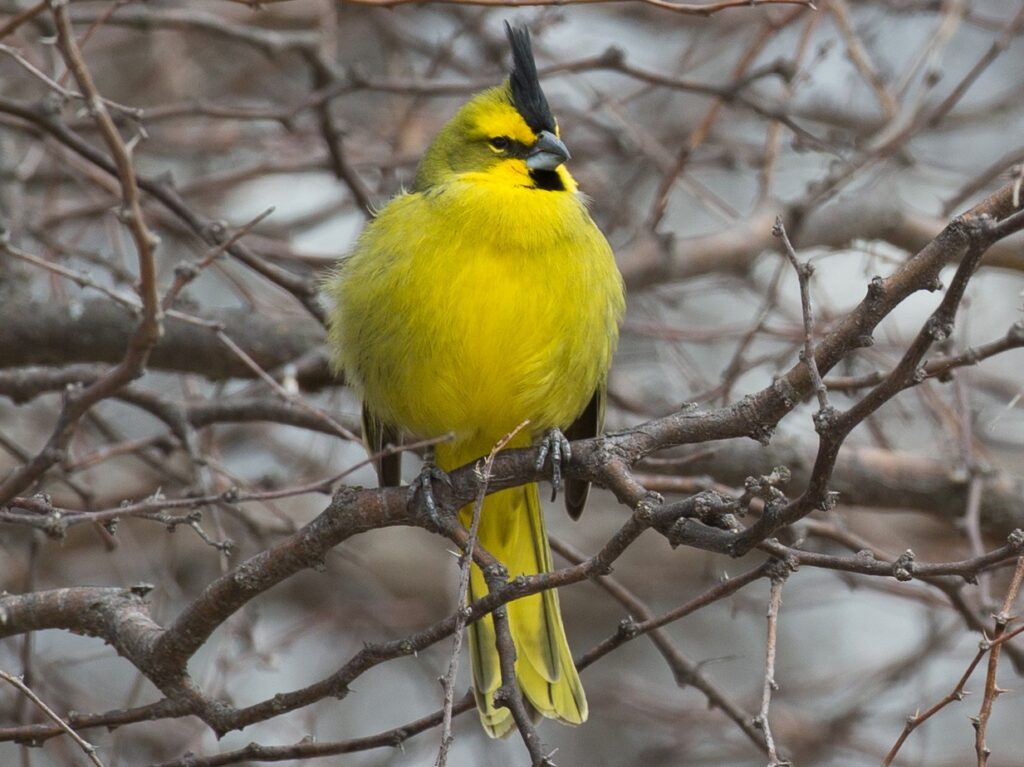
Uruguay is home to 408 documented bird species, recorded as of 2018. However, 22 of these species face conservation threats due to agricultural intensification and wetland alterations.
The southern lapwing (Vanellus chilensis, known locally as the tero) is the widely recognized national bird of Uruguay, while greater rheas (Rhea americana, ñandú) roam open pastures as emblematic grassland fauna.
Fish and Amphibians of Uruguay
Uruguay records 48 amphibian species, including the Creole frog (Leptodactylus luctator) and the Montevideo tree frog. In aquatic habitats, the country registers 214 fish species across the Río de la Plata estuary and interior rivers, where golden dorado, sabalo, and black drum support commercial, artisanal, and sport fisheries.
Mammals of Uruguay
Uruguay supports 111 documented mammal species, of which 7 are globally threatened. Iconic mammals include the capybara (Hydrochoerus hydrochaeris, carpincho)—the world’s largest rodent—alongside the maned wolf, Geoffroy’s cat, and marsh deer inhabiting wetland reserves.
Reptiles of Uruguay
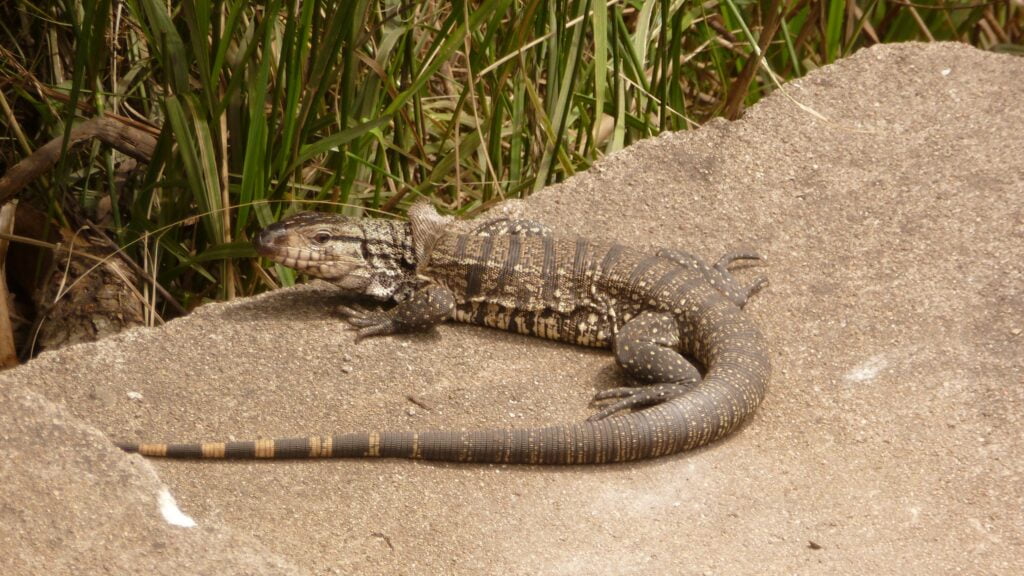
Uruguay hosts 80 reptile species, placing it 85th in the world for reptilian diversity. The Argentine black and white tegu (Salvator merianae, lagarto overo) represents the largest native lizard, playing a vital ecological role in regulating invertebrate and small vertebrate populations.
Plants of Uruguay
Uruguayan flora comprises 2,911 vascular plant species documented in 2020. Notable native flora includes the Ceibo (Erythrina crista-galli), whose crimson bloom is the national flower, and the Yatay and Butiá palm groves (Butia odorata) forming ancient biocultural landscapes in the eastern department of Rocha.
Organizations Protecting or Researching Natural Resources in Uruguay
- Vida Silvestre Uruguay – Leads biodiversity conservation, ecological corridor establishment, and sustainable natural resource management.
- FUCVAM – Federation of mutual aid housing cooperatives integrating urban environmental sustainability and social habitat rights.
- Ministerio de Ambiente – National ministry directing public environmental policy, water management, protected areas, and climate commitments.
- Sociedad Uruguaya de Geología – Professional geological association advancing research on groundwater hydrology, mineral resources, and regional stratigraphy.
A Near-100% Renewable Electricity Matrix
In 2024, Uruguay’s total electricity generation was derived almost entirely from renewables: hydroelectricity contributed 42%, wind power 28%, industrial biomass 26%, and solar photovoltaics 3%, while fossil-fueled thermal generation supplied just 1% (Renewables Now / MIEM, 2024). The greenhouse gas emission factor of the national interconnected grid fell to 7 tonnes of CO2 per GWh—the lowest recorded level of the decade.
Cellulose, Beef, and Soybeans Lead Export Revenues
Total merchandise exports reached US$12.845 billion in 2024, an increase of 13% over 2023 figures (Uruguay XXI, 2025). Bleached kraft cellulose pulp led national exports for the first time in history, generating US$2.545 billion (20% of the total), followed by beef with US$2.026 billion (16%) and raw soybeans with US$1.199 billion (9%). China was the primary destination market, absorbing 24% of all foreign sales.
Planted Commercial Forests and Cellulose Mills
Commercial planted forest plantations expanded to 1,161,851 hectares by 2023, representing 6.6% of the national territory (MGAP-DGF, 2024). From just 148,614 hectares in 1975 under initial forestry promotion policies, this plantation base—dominated by certified Eucalyptus grandis and Eucalyptus dunnii (80%)—directly feeds the UPM and Montes del Plata cellulose mega-mills.
Frequently Asked Questions
Where does Uruguay rank on the Environmental Performance Index?
Uruguay achieved a score of 44.1 and ranked 84th (98th across broader multi-tier indicators) in the 2024 Environmental Performance Index (Yale EPI, 2024).
What proportion of Uruguay’s electricity comes from renewable sources?
Renewables generated approximately 99% of all electricity produced in Uruguay in 2024, with hydroelectricity and wind power serving as the primary contributors (Renewables Now / MIEM, 2024).
Sources and References Used
- Forest Area (km²) – World Bank
- Forest Area (% of Land Area) – World Bank
- AQUASTAT Water and Agriculture Statistics – FAO
- Average Annual Precipitation (mm) – World Bank
- Environmental Performance Index (EPI 2024) – Yale University
- Bird Species by Country – Mongabay
- Amphibian Species by Country – Mongabay
- Mammal Species by Country – Mongabay
- Endemic Mammal Species by Country – Our World in Data
- Plant Species by Country – Mongabay
- Reptile Species by Country – Mongabay
- Endemic Bird Species by Country – Our World in Data
The World Bank highlighted in 2023 that Uruguay generates virtually 95% to 99% of its electricity from renewable sources, establishing itself as a global pioneer in clean energy transition among developing nations.
Last updated: August 19, 2026 (Review of official indicators and natural resource technical factsheet)

Leave a Reply