


Ecuador’s natural resources include abundant freshwater, extensive forests, exceptional biodiversity, and strategic minerals: the country holds 382 km³ of renewable freshwater and its forest cover spans roughly 49.55% of its territory (World Bank, 2023). Recognized as one of Earth’s 17 megadiverse nations, Ecuador harbors over 16,000 plant species alongside major crude oil reserves and expanding hydropower capacity. What are the main natural resources of Ecuador?
What natural resources stand out in Ecuador? What constitutes the country’s natural wealth?
Table de contenidos
Ecuador is a South American country endowed with extraordinary natural resource diversity. Its privileged geographic location provides an exceptional wealth of flora, fauna, and distinct ecosystems extending from the Pacific coastline across the towering Andean highlands to the Amazon rainforest and the volcanic Galapagos archipelago.
Among the natural resources of Ecuador, its dense rainforests, extensive river systems, lakes, and mountain ranges stand out as fountains of biodiversity and provide the primary inputs sustaining the national economy.
Natural Resources
Natural resources are materials and energy sources provided by the Earth that are useful to human civilization. All manufactured goods, infrastructure, and consumer products originate from natural resource inputs.
- Renewable resources: resources that can be replenished through natural biogeochemical cycles faster than their rate of consumption, such as solar radiation, wind, hydropower, sustainably managed freshwater flows, and living biomass.
- Non-renewable resources: finite geological assets that cannot regenerate on human timescales once extracted, including hydrocarbons (crude oil, natural gas, coal) and metallic minerals. Compare both categories in our guide to renewable vs. non-renewable resources.
What Are the Natural Resources of Ecuador?
Environmental Balance of Ecuador
What international indicators reveal about the country’s conservation status and ecological wealth.
| Protected terrestrial area | 23.8% of territory2025 |
|---|---|
| Marine protected areas | 19.3% of territorial waters2025 |
| Forest cover | 49.5% of territory2023 |
| Threatened species | 2,263 mammals, birds, fish and plants2022 |
| Renewable electricity share | 80.9% of total generation2021 |
| Total land area | 248,360 km²2023 |
Natural Resources Map of Ecuador by Region
Regional distribution of the country’s main economic activities and natural wealth.
Galapagos (Insular region) is located ~1,000 km west of the continental coast in the Pacific Ocean.
Ecuador possesses an extraordinary diversity of natural resources across four major geographical regions: the Pacific Coast, the Andean Highlands (Sierra), the Amazon Rainforest (Oriente), and the Galapagos Archipelago (Insular region).
The country’s natural endowment is essential to its macroeconomic performance, generating fiscal revenue, employment, and export earnings. To understand how Ecuador fits into the broader continental framework, consult our regional guide to Latin America’s natural resources or browse our global Natural Resources by Country directory.
Types of Natural Resources in Ecuador
Ecuador’s wealth comprises both renewable and non-renewable natural resources:
- Renewable resources: flows that regenerate naturally over short timeframes, such as abundant freshwater river basins, fertile volcanic soils, diverse forestry ecosystems, solar irradiance, and high Andean hydrological potential for clean energy. Learn more about all categories of natural resources.
- Non-renewable resources: finite geological reserves formed over millions of years, including subsoil crude oil deposits, natural gas, coal, and metallic mineral deposits of gold, copper, and silver.
Main Natural Resources of Ecuador
| Resource | Reserves / Production | Source |
|---|---|---|
| Freshwater | 382 km³ (2020); 25th in the world | FAO |
| Precipitation | 2,274 mm/year; 20th in the world | World Bank |
| Forests | 49.55% of territory (2023) | World Bank |
| Biodiversity | 16,000+ plant species; megadiverse country | Mongabay |
| Renewable energy | 27,314 GWh (15,833 GWh hydropower) | EIA |
Water Resources of Ecuador
Ecuador possesses 31 hydrographic systems comprising 79 river basins and more than 2,000 rivers and streams. Of these systems, 24 drain toward the Pacific Ocean (including major basins such as the Guayas and Esmeraldas rivers), while 7 drain east into the Amazon Basin (including the Napo, Pastaza, and Santiago rivers). Discover our comprehensive global analysis of freshwater resources.
According to FAO AQUASTAT, Ecuador maintained total renewable freshwater reserves of 382 km³ in 2020, placing the nation in 25th position globally. This abundant freshwater supply sustains municipal drinking water needs, extensive agricultural irrigation in coastal valleys, and large-scale hydroelectric generation across Andean valleys.
Average Rainfall and Soils of Ecuador
Ecuador receives an average annual precipitation of 2,274 mm, ranking 20th in the world for rainfall intensity according to the World Bank. Supported by this high humidity and frequent precipitation, Ecuadorian soils—particularly in the coastal floodplains and Andean inter-montane valleys—are exceptionally fertile and rich in volcanic minerals, enabling year-round cultivation of bananas, cocoa, coffee, and flowers.
Renewable Electricity and Hydropower Production in Ecuador
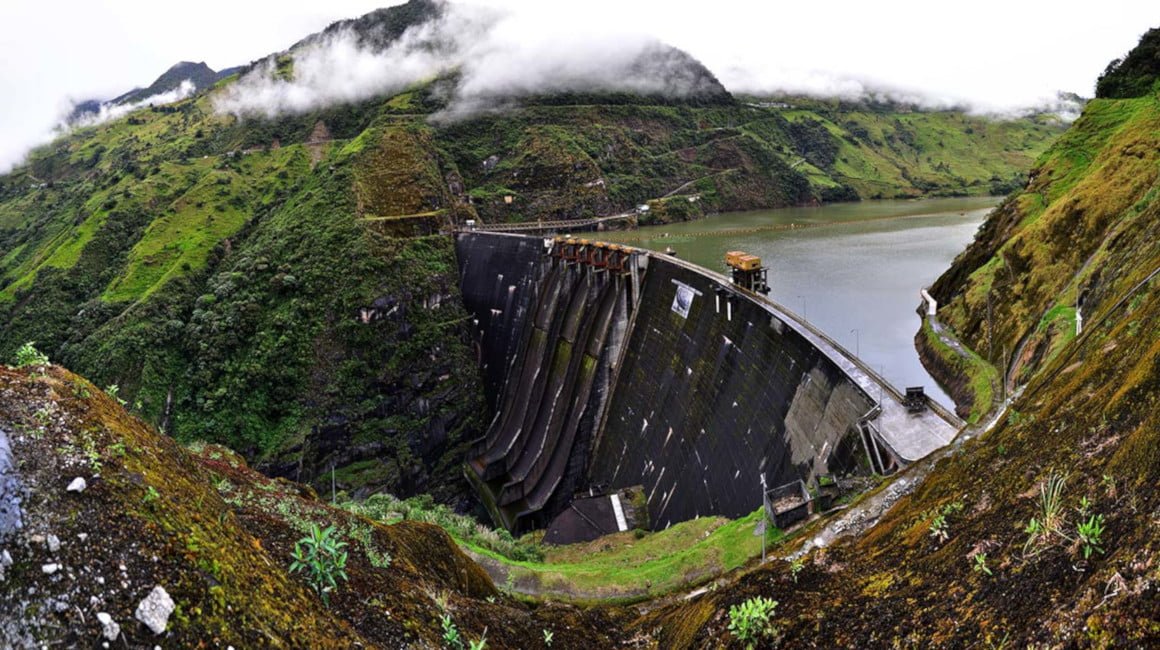
According to data from the U.S. Energy Information Administration (EIA), Ecuador generates 27,314 GWh of renewable electricity annually, with 15,833 GWh contributed directly by hydropower. Key installations include the Paute Hydroelectric Complex in Azuay Province, boasting an installed capacity of 1,075 MW, along with the Coca Codo Sinclair plant (1,500 MW). These hydroelectric plants form the backbone of Ecuador’s clean energy transition. Learn more about clean power generation in our guide to energy resources.
Forest Resources of Ecuador
Ecuador holds significant forest capital, with the Amazonian region serving as the nation’s primary woodland reservoir. According to the World Bank, forest cover represented approximately 49.55% of Ecuador’s land area in 2023 (~12.3 million hectares). For a deeper understanding of timber ecosystems, explore our guide to global forest resources.
These official figures place Ecuador in 44th position worldwide for total forested territory, encompassing dense tropical rainforests, Andean cloud forests, and coastal mangrove belts.
Environmental Performance and Protection of Natural Resources in Ecuador
In the 2024 Environmental Performance Index (EPI) developed by Yale University, Ecuador achieved a score of 51.3, ranking 55th out of 180 countries—a notable improvement from 66th place in 2022. Terrestrial and marine protected areas together safeguard approximately 20.2% of the country’s total sovereign domain (World Bank, 2025). Learn more through the official Yale EPI database.
Natural Parks of Ecuador: The Hidden Wealth of Natural Resources
The Esmeraldas River is one of the most prominent water arteries of the Pacific basin, collecting runoff from the western slopes of the Andes and sustaining thriving estuarine and mangrove ecosystems.
🐊🐦🌿 Biodiversity of Ecuador: Animal and Plant Resources
Ecuador is celebrated as one of the 17 megadiverse countries on Earth, forming part of an exclusive group of nations that collectively harbor over 70% of the planet’s terrestrial and marine biodiversity.
Despite covering only ~0.2% of Earth’s landmass, Ecuador contains more biological species per square kilometer than nearly any other nation. Scientific inventories document more than 16,000 species of vascular plants (with over 4,000 endemics), 1,616 bird species (52 endemics), 394 reptile species, 415 amphibian species (60% endemic), and 369 mammal species (30% endemic).

Notable endemic species in Ecuador include giant tortoises, marine iguanas, lava lizards, Darwin’s finches, the Galapagos fur seal, waved albatrosses, flightless cormorants, and hammerhead sharks in marine sanctuaries.
Ecuador maintains 11 national parks that strictly conserve ecological processes and natural species: Cayambe-Coca, Cotopaxi, Galapagos, Llanganates, Machalilla, Podocarpus, Sangay, Sumaco Napo-Galeras, Yasuní, Yacuri, and El Cajas. These protected core units cover roughly 18% of the national territory.

⛏⛽ Mineral and Hydrocarbon Resources of Ecuador
The primary subsurface commodities extracted in Ecuador are crude petroleum, gold, and silver, complemented by large undeveloped deposits of copper, iron ore, lead, and molybdenum. Discover our global survey of mineral resources.
Petroleum extraction remains the dominant industrial pillar. In 2024, Ecuador produced an average of 475,000 barrels of crude oil per day, totaling approximately 173.4 million barrels annually (ARCH, 2024), centered in the northeastern Amazon provinces of Sucumbíos and Orellana.
Proved crude oil reserves were estimated at approximately 8,273,000,000 barrels as of 2023, positioning Ecuador around 18th place worldwide (Worldometer, 2023). While domestic natural gas production is modest at ~497 million cubic meters annually (73rd globally), it provides critical fuel for thermal generation on the Gulf of Guayaquil.
Mining has grown into a major economic driver. In 2024, Ecuadorian mining exports achieved a record US$3,074.85 million, representing roughly 8.58% of total national exports (Mining Chamber of Ecuador, 2024). Large-scale operations such as the Fruta del Norte gold mine and the Mirador copper project have transformed the southern Amazon into an international mining hub.
In terms of solid fossil fuels, Ecuador held estimated coal reserves of 26,455,440 tonnes in 2016. Although minor in global terms, deposits located in Azuay and Cañar provinces have historically supported local industrial kilns.
Exploration continues to reveal extensive mineralized porphyry deposits containing gold, copper, silver, and molybdenum across Pichincha, Bolívar, Esmeraldas, Imbabura, Zamora Chinchipe, Napo, and Sucumbíos provinces, indicating that Ecuador’s mineral potential remains substantially under-explored.

The Galapagos Archipelago shelters 42 endemic reptile species, more than 45 endemic birds, and 79 endemic fish species within 7,970 km² of national park territory (Galapagos National Park, 2024). This concentration of endemism underpins Ecuador’s designation among the 17 megadiverse countries recognized by the Convention on Biological Diversity (CBD, 2024). Economically, crude oil generates approximately one-quarter of total merchandise export value and has been the focus of major conservation debates in Amazonian Block 43-ITT.
Galapagos: Endemism Concentrated in 7,970 km²
Established in 1959, Galapagos National Park covers 7,970 km², protecting 97% of the archipelago’s land territory (Galapagos National Park, 2024). UNESCO inscribed the islands as a Natural World Heritage Site on September 8, 1978, with the Galapagos Marine Reserve added on December 2, 2001. The national park conserves roughly 95% of the flora and fauna originally documented by early naturalists.
The official scientific inventory verifies remarkable biodiversity metrics:
- 42 endemic reptile species, including iconic giant tortoises and marine iguanas.
- More than 45 endemic bird species and 15 marine mammal species.
- 79 endemic fish species documented within the marine reserve.
- Nearly 500 species of native vascular plants, bryophytes, and marine algae.
Data source: Galapagos National Park Directorate, 2024.
Continental Megadiversity: Highest Floral Density in South America
The Convention on Biological Diversity classifies Ecuador among Earth’s 17 megadiverse nations (CBD, 2024). The official country profile notes that Ecuador concentrates more plant species per unit of surface area than any other South American state. This botanical density is distributed across four distinct biogeographical zones: the Pacific coastal plain, the high Andes, the western Amazon basin, and the Galapagos Islands.
Petroleum: The Leading Export Commodity
Crude oil generated USD 7.8 billion in export earnings in 2023, out of total merchandise exports of USD 31,126 million (World Bank – WITS, 2023). Accounting for roughly 25% of all outbound trade, petroleum remains the nation’s single largest export product, followed by bananas, crustaceans (farmed shrimp), and fresh cut flowers.
Heavy reliance on oil exports exposes Ecuador’s fiscal budget to international commodity volatility. It also closely ties the trade balance to extraction in the Amazon basin—the center of the country’s primary environmental and territorial debates.
Amazonian Deforestation: 95,570 Hectares Annually
Ecuador’s Ministry of the Environment, Water and Ecological Transition (MAATE) documented an average gross deforestation rate of 95,570 hectares per year between 2020 and 2022 (MAATE / Mongabay, 2023). Within the Amazon region, 2022 registered the highest forest loss in a decade at 18,902 hectares—nearly double the ~12,000 hectares lost in 2021.
Agricultural frontier expansion, artisanal and illegal mining, and new road construction represent the primary drivers of land-use change in the tropical moist forest biome.
Yasuní-ITT: The 2023 Historic Referendum
On August 20, 2023, Ecuador carried out a landmark national referendum regarding Block 43-ITT (Ishpingo-Tambococha-Tiputini), located in the northeastern Amazon. The ballot question asked voters whether the government should keep crude oil reserves in the block permanently in the subsoil. The National Electoral Council (CNE) certified final results on August 31, 2023:
- Yes (Keep oil underground): 5,541,585 votes (58.95%).
- No: 3,859,507 votes (41.05%).
The affirmative option won a decisive majority of valid votes (CNE, 2023). Block 43-ITT is situated within Yasuní National Park, recognized globally as one of the most biodiverse places on Earth.
Protected Areas: 23.6% of Land Territory
Terrestrial protected areas encompassed 23.6% of Ecuador’s land area in 2024 (World Bank, 2024). The global database of protected areas records 103 designated conservation areas across the country (Protected Planet, 2024). Galapagos National Park was the first to be established, in 1959.
Organizations Protecting or Studying Ecuador’s Natural Resources
- Ministerio del Ambiente, Agua y Transición Ecológica (MAATE): Governing ministry directing national environmental policy, water management, and protected areas across Ecuador.
- Instituto Nacional de Biodiversidad (INABIO): Public research institute generating scientific data and biodiversity inventories for Ecuadorian ecosystems.
- Charles Darwin Foundation: International non-profit research institution dedicated to the scientific study and conservation of Galapagos ecosystems.
- Conservación Internacional Ecuador: NGO implementing marine, forest, and freshwater conservation projects alongside local communities.
- WWF Ecuador: Field office promoting sustainable fisheries, forest protection, and climate resilience in the Amazon and Galapagos.
- Fundación Jocotoco: Ecuadorian conservation foundation creating private nature reserves to protect critically endangered bird species and habitats.
Frequently Asked Questions
What is Ecuador’s primary export commodity?
Crude oil, generating USD 7.8 billion in 2023, representing roughly 25% of total national merchandise exports of USD 31,126 million (World Bank – WITS, 2023).
What was the outcome of the 2023 Yasuní-ITT referendum?
The “Yes” vote to keep crude oil indefinitely in the ground won with 5,541,585 votes (58.95%) against 3,859,507 “No” votes (41.05%), with final results proclaimed by the CNE on August 31, 2023 (CNE, 2023).
How much of Ecuador’s territory is under environmental protection?
Terrestrial protected areas covered 23.6% of Ecuador’s land area in 2024 (World Bank, 2024), distributed across 103 conservation units (Protected Planet, 2024).
Authoritative Information Sources Used
- Worldometer: Global Coal Reserves by Country
- FAO AQUASTAT: Global Information System on Water and Agriculture
- World Bank: Forest Area (sq. km) – Ecuador
- World Bank: Forest Area (% of Land Area) – Ecuador
- Observatory of Economic Complexity (OEC): Ecuador Trade Profile
- AZoMining: Overview of Ecuador Mining Industry
Last updated: June 13, 2026. Data verified against official environmental and economic records.

Leave a Reply