

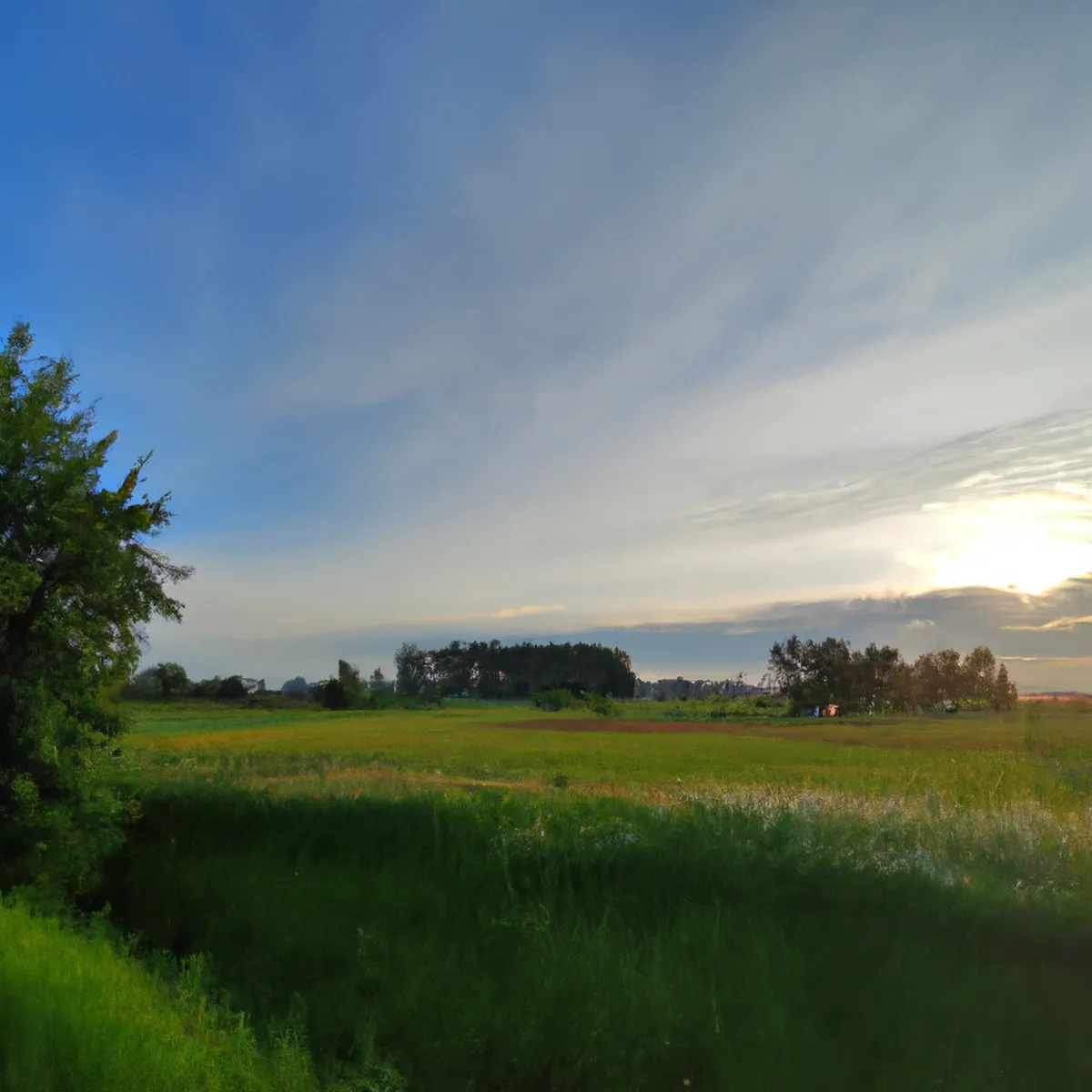
Poland’s natural resources are concentrated in coal and copper. In 2020 it produced 100.7 million tonnes of coal, 10th in the world, and 400 thousand tonnes of copper, 13th in the world. Its mining is centered in Upper Silesia, and forests cover about 30% of the country. What natural wealth defines Poland?
Poland is a country with a wide variety of natural resources. It has significant forest wealth, which covers around 30% of its total area.
Table de contenidos
It also has a wide diversity of animal and plant species, which makes it an important center of biodiversity. Geographically, it stands out for its coastline on the Baltic Sea and a broad central plain crossed by major rivers such as the Vistula and the Oder.
Poland’s natural resources are undoubtedly an important heritage that must be preserved and managed sustainably to ensure their use now and in the future.
What are Poland’s most important natural resources? What natural wealth does the country have? How much water is available, and how is it used to generate energy? What variety of animals and plants can be found in Poland?
Natural resources
Natural resources are materials or energy sources provided by or found on Earth that are useful to humans. Every product we manufacture is made up of natural resources.
- Renewable resources: these can be restored by natural processes faster than the rate at which they are consumed. Examples include solar radiation, wind, hydroelectric power, water when used properly, and plant and animal life.
- Non-renewable resources: once extracted, these are depleted and cannot regenerate. Examples include hydrocarbons, metals and minerals.
Examples of Poland’s main natural resources
What Poland’s land produces
Natural resource rents, fisheries and agricultural land use, along with the state of conservation.
| Natural resource rents | 1.0% of GDP2021 |
|---|---|
| Capture fisheries | 140,741 t per year2024 |
| Agricultural land | 47.6% of land area2023 |
| Arable land | 36.6% of land area2023 |
| Forest cover | 31.1% of land area2023 |
| Protected land area | 39.6% of land area2025 |
Oil and gas resources in Poland
Poland produces a moderate amount of oil, with output of 17,835 barrels per day in 2021, which places it 48th in the world. It also has significant oil reserves, totaling 137,752,000 barrels in 2022, which puts it 69th in the world ranking.
Even so, Poland is not known as a major oil-producing region, since its natural resources are focused mainly on coal mining and agriculture.
Poland is also a mid-sized natural gas producer, with production of about 5.4 billion cubic meters in 2019 (USGS).
Examples of Poland’s mineral resources
Poland is a major world producer of coal. In 2020, its output reached 100.7 million tonnes, placing it 10th in the world ranking for coal production. It also has large reserves of this resource, totaling 28,451,723,410 tonnes in 2016, which represents 2.50% of the world’s coal reserves. Poland’s main coal-producing region is Upper Silesia, in the south of the country.
In 2020, Poland’s copper production reached 400 thousand tonnes, placing it 13th in the world ranking for copper production. This is a significant contribution to the global market for this resource, and Poland is one of Europe’s leading copper producers. Poland’s main copper-producing area is the Lubin region, in the southwest of the country, home to major deposits of this mineral.
In 2018, Poland’s silver production reached 1,470 tonnes, placing it fifth in the world ranking. Poland’s main silver-producing region is the Lower Silesian Voivodeship, in the southwest of the country, where silver is recovered as a by-product of KGHM’s copper mines in the Lubin-Głogów district. This region has major silver deposits, which makes it one of the most important areas in the world for extracting this resource.
Poland also produces small amounts of platinum, about 8 kilograms in 2019 according to USGS estimates, recovered as a by-product of KGHM’s copper processing in Lower Silesia.
Water resources of Poland
Poland has 63.33 km³ of renewable freshwater resources, which places it 76th in the world ranking of water reserves. This resource is essential for supplying the population and the country’s economic activity.
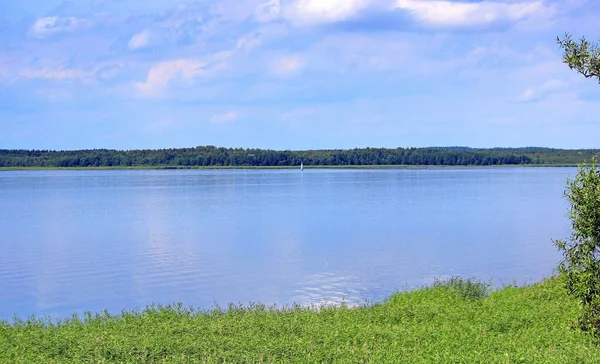
Poland’s most important rivers are the Vistula and the Oder, while its largest lake is Lake Śniardwy. Proper conservation and management of these water sources is essential to ensure their long-term availability.
Average rainfall and soils of Poland
Poland has an average annual rainfall of 600 mm, which places it 114th in the world for precipitation.
Renewable electricity and hydropower production in Poland
In 2025, Poland generated 53.9 TWh of electricity from renewable sources — 31% of its total generation of 172.6 TWh — and hydropower alone supplied 1.7 TWh (Ember, 2025). The Solina Hydroelectric Power Station on the San River, a 200 MW pumped-storage plant, sits at the dam that forms Lake Solina, Poland’s largest artificial lake; the country’s largest hydroelectric plant by capacity, however, is the Żarnowiec pumped-storage station.
Forest resources of Poland
Poland has an important forest region known as Białowieża, home to a wide variety of animal and plant species. Forests are fundamental to the country’s economy: they account for 30.98% of its land area and cover a total of 94,830 km². Poland ranks 52nd in the world for forest area.
Environmental performance and protection of Poland’s natural resources
Protected areas cover 39.6% of Poland’s land area and 38.1% of its total territorial area, including marine areas (World Bank, 2025), which shows its commitment to conserving natural resources.
Natural parks of Poland: the hidden wealth of natural resources
Biodiversity: animal and plant resources of Poland
Birds of Poland
Poland has a total of 290 species recorded in 2018. Although it had no endemic bird species in 2020, the country ranks 126th in the world for number of bird species.
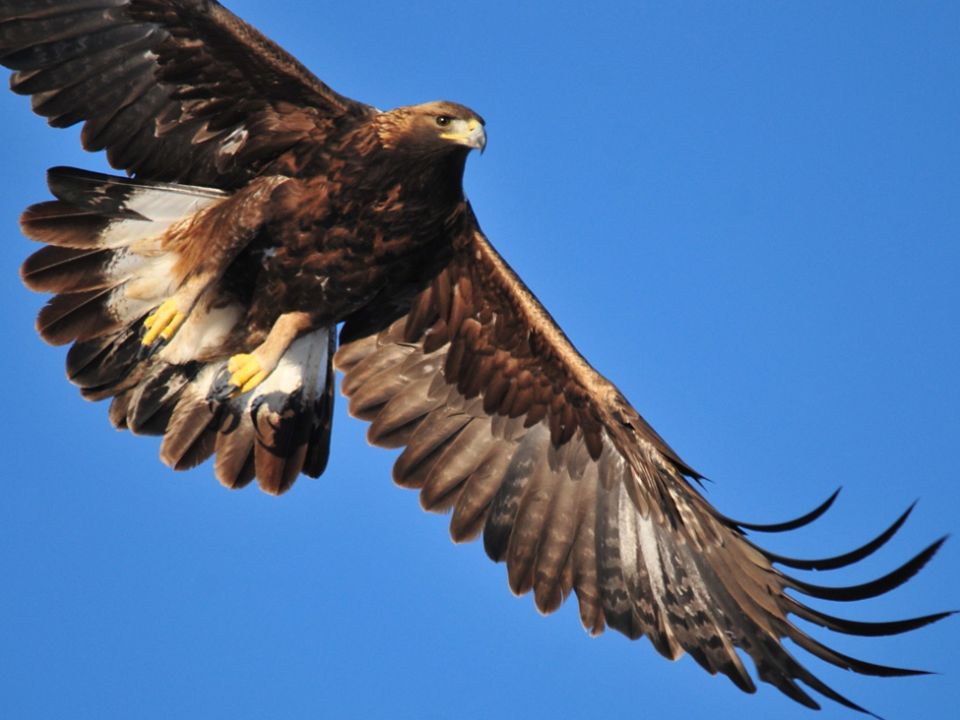
However, 11 of these species are endangered. Among the most notable species is the golden eagle, while the white-tailed eagle is regarded as Poland’s national bird.
Fish and amphibians of Poland
Poland has 18 amphibian species and 144 fish species; notable among them are the common frog and, as the flagship fish species, the common carp. Poland ranks 79th in the world for number of amphibian species and 181st for number of fish species.
Reptiles of Poland
Poland has a moderate diversity of reptiles, with a total of 12 species recorded in 2019. It ranks 131st in the world for number of reptile species.
Among the most notable species is the common European adder.
Plants of Poland
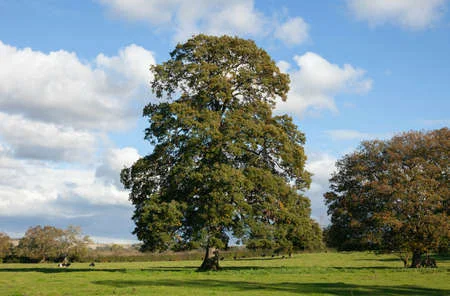
Poland has a great diversity of vascular plants, with a total of 2,300 species recorded in 2020, placing it 84th in the world. Among the most notable species is the pedunculate oak, the country’s flagship plant, which is found across much of its territory.
Organizations that protect or study Poland’s natural resources
- WWF Poland – Protects biodiversity and promotes sustainability in Poland.
- Greenpeace Poland – Fights pollution and defends environmental rights in Poland.
- Ministry of Climate and Environment of Poland – Manages and regulates environmental protection in Poland.
Poland is one of the world’s largest silver producers: it ranked fifth in the world with 1,320 tonnes in 2023, according to data from the USGS via TheGlobalEconomy, 2023. That silver comes from the copper mined by the state-owned mining company KGHM in the Lubin-Głogów basin.
Silver and copper: the KGHM deposit
Polish silver is not mined on its own. It is recovered as a by-product of copper, so its volume depends on the economics of copper, not on the price of silver. With 1,320 tonnes, Poland was behind only Mexico, China, Peru and Bolivia in 2023, according to the USGS via TheGlobalEconomy, 2023.
Coal: the European Union’s largest producer
Poland mined 44 million tonnes of hard coal in 2024, 97% of all production in the European Union, according to Eurostat, 2024. Counting lignite as well, Poland is the bloc’s largest coal producer.
Electricity: a coal-dependent grid in transition
The electricity mix is still dominated by coal. Fossil fuels provided about 67% of generation in the most recent period, and coal alone exceeded half of the total, according to Low Carbon Power, 2025-2026. Clean sources already account for around 33%.
Environmental performance
Poland ranked 20th with 64.2 points on the 2024 Environmental Performance Index, according to Yale University, 2024. The country improved by 2.5 points in a decade.
Frequently asked questions
Where does Poland rank in world silver production? It was the world’s fifth-largest producer, with 1,320 tonnes in 2023, according to the USGS via TheGlobalEconomy, 2023.
How much coal does Poland produce within the European Union? It accounted for 97% of the EU’s hard coal in 2024, with 44 million tonnes, according to Eurostat, 2024.
Sources used
- Lists of countries by mineral production – Wikipedia
- Economic data by country – The Global Economy
- Forest area (km²) – World Bank
- Forest area (% of land area) – World Bank
- Oil reserves – The Global Economy
- Coal reserves – Worldometers
- Water and agriculture statistics – FAO
- Precipitation (mm) – World Bank
- Environmental Performance Index – Environmental Performance Index
- Bird species – Mongabay
- Amphibian species by country – Mongabay
- Plant species – Mongabay
- Reptile species by country – Mongabay
- Endemic bird species by country – Our World in Data
The Energy Regulatory Office (URE) regulates Poland’s power sector, which is in transition: renewables supplied 28% of electricity generation in 2023 and 31% in 2025 (Ember).
Last updated: September 26, 2026
Leave a Reply