

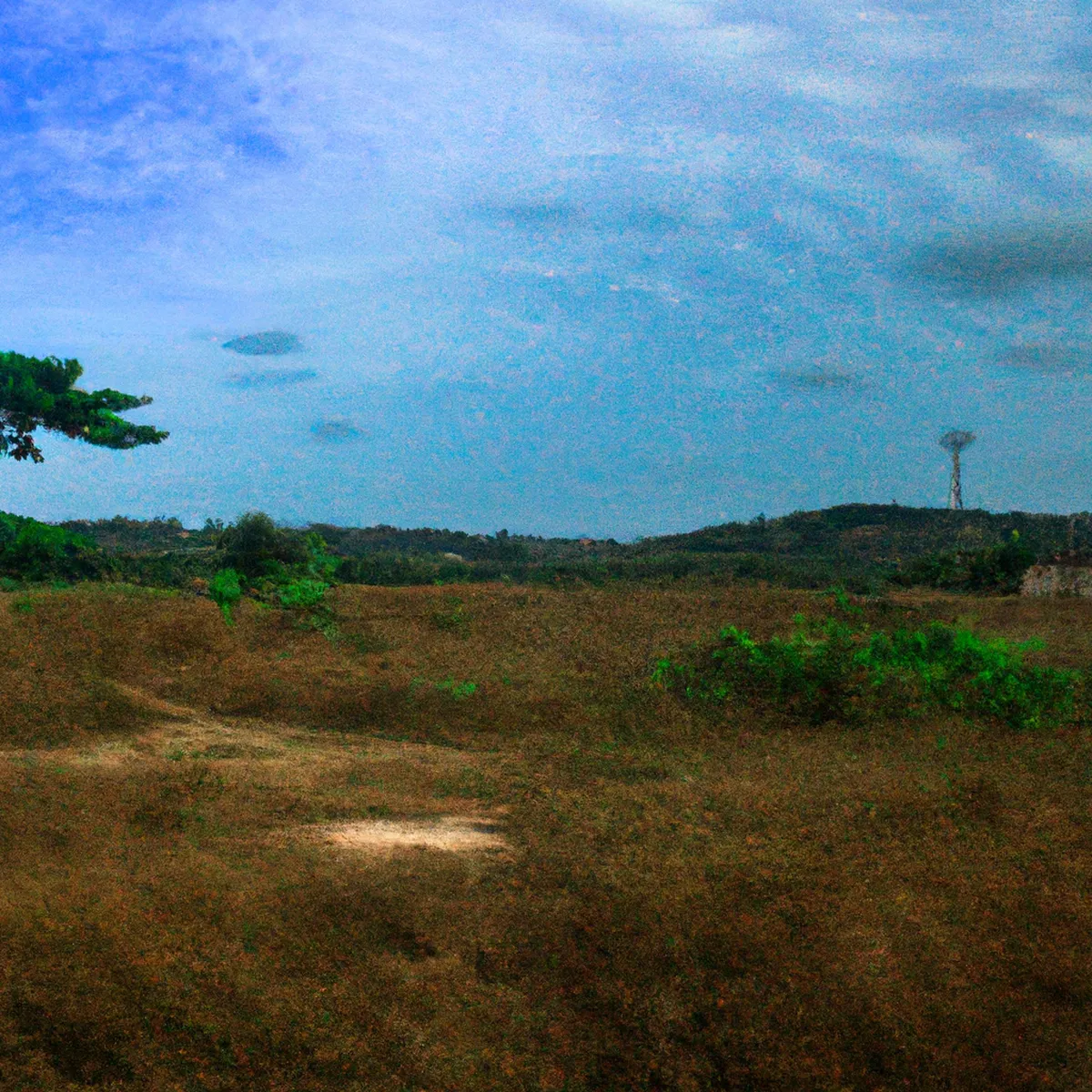
Liberia’s natural resources span mining, fishing, agriculture and one of the largest forest covers in the world, with 78.1% of its land forested and 211.9 km³ of renewable freshwater resources. What wildlife does Liberia have? The country records 593 bird species, 212 mammal species such as chimpanzees and colobus monkeys, and 626 fish species.
Liberia, in West Africa, has a wide range of natural resources, some of which are of great economic and strategic value today. From mining and fishing to agriculture and logging, Liberia’s natural resources are an important source of income and livelihoods for its population.
Table de contenidos
Its biodiversity is also impressive, with a variety of animal and plant species living in its tropical forests and coastal mangroves. Proper management of these resources is key to the country’s sustainable development.
What are Liberia’s natural resources? What is the country’s natural wealth, and where does it stand in the world rankings? Which minerals does it have? How is its land used, and how is its biodiversity protected?
Natural resources
Natural resources are materials or energy sources provided by or found on Earth that are useful to humans. Every product we manufacture is made up of natural resources.
- Renewable resources: these can be restored by natural processes faster than the rate at which they are consumed. Examples include solar radiation, wind, hydroelectric power, water when used properly, and plant and animal life.
- Non-renewable resources: once extracted, these are depleted and cannot regenerate. Examples include hydrocarbons, metals and minerals.
Examples of Liberia’s main natural resources
Liberia’s natural economy
How much weight natural resource rents carry, and the state of the land that generates them.
| Natural resource rents | 21.9% of GDP2021 |
|---|---|
| Mineral rents | 5.4% of GDP2021 |
| Capture fisheries | 26,764 t per year2024 |
| Forest cover | 78.1% of land area2023 |
| Agricultural land | 20.0% of land area2023 |
Water resources of Liberia
Liberia has an impressive 211.9 km³ of renewable freshwater resources, which placed it 35th in the world ranking in 2020.
Liberia’s main rivers include the Cavalla, its longest, the Saint Paul, the Saint John, the Lofa and the Mano, and its largest lake is Lake Piso; these are important sources of water for the population and the country’s economy.

Average rainfall and soils of Liberia
Liberia has an average annual rainfall of 2,391 mm, which places it 14th in the world for precipitation. This amount of rain makes Liberia’s soils very moist and fertile, which favors the growth of vegetation and agriculture.
However, the rains can also cause flooding and landslides in areas with steep slopes.
Forest resources of Liberia
Liberia is very rich in forest resources. In 2023, Liberia’s forest area accounted for 78.1% of its land area, equivalent to 75,266.6 km².
These figures place Liberia 57th in the world for forest area.
Environmental performance and protection of Liberia’s natural resources
In Liberia, natural resources are very important for the country’s sustainable development. Liberia has a score of 34.3 on the Environmental Performance Index (2024) and ranks 161st in the world on the index. In addition, protected areas cover 4.0% of its land area (1.2% of its total land and marine territory, World Bank 2025). To learn more about the Environmental Performance Index (2024), visit the following page: Environmental Performance Index (2024).
Natural parks of Liberia: the hidden wealth of natural resources
Biodiversity: animal and plant resources of Liberia
Birds of Liberia
Liberia has a rich diversity of birds, with a total of 593 species according to updated data, which places it among the countries with the greatest bird diversity in the world. However, 14 of its bird species are endangered.
Among Liberia’s most notable bird species is the white-crested turaco, a colorful, eye-catching species that lives in the country’s forests.
Fish and amphibians of Liberia
According to updated data, 61 amphibian species and 626 fish species have been recorded.
Mammals of Liberia
Liberia has rich biodiversity, with a total of 212 mammal species, notably primates such as chimpanzees and colobus monkeys. However, 24 of them are threatened.
Liberia ranks 48th in the world for number of mammal species.
Reptiles of Liberia
Liberia has rich reptile biodiversity, with a total of 108 species according to updated data. Among the most notable is the West African crocodile, an important resource for the local economy and for wildlife conservation.

Plants of Liberia
Liberia has a great diversity of vascular plants, with a total of 2,403 species according to updated data, placing it 81st in the world. The country’s main plant species is the African mahogany tree, which is highly valued for its timber and is endangered because of illegal logging.
Organizations that protect or study Liberia’s natural resources
- Environmental Protection Agency of Liberia (EPA): Government agency that regulates and protects Liberia’s environment.
- Forestry Development Authority (FDA): State authority responsible for the sustainable management of Liberia’s forests.
- Society for the Conservation of Nature of Liberia (SCNL): Liberia’s oldest conservation organization and a BirdLife International partner.
- Wild Chimpanzee Foundation: International organization that protects wild chimpanzees and their habitat in Liberia.
- Conservation International Liberia: International NGO that conserves Liberia’s forests and marine ecosystems.
In Harbel, Firestone operates the world’s largest contiguous natural rubber plantation, in operation since 1926 on an original concession of one million acres, according to Wikipedia (with data from the 1926 concession).
Iron ore and gold: the mining that sustains exports
Iron ore is Liberia’s leading mineral: in 2022 it provided about 27% of export earnings, around $285.7 million, with production of roughly 5 million tonnes, according to the U.S. Department of Commerce (2022, with data from the Central Bank of Liberia). ArcelorMittal operates the Tokadeh mine in the north, linked by a 243-kilometer railway to the port of Buchanan. In 2023 the country exported 4,002,474 tonnes of iron ore and 12,379 kilograms of gold worth about $653.6 million; Bea Mountain and ArcelorMittal accounted for 93% of mining exports (Liberian Observer / LEITI, 2023 report).
Rubber: the Firestone plantation in Harbel
Rubber is one of Liberia’s historic export products. The Firestone plantation, active since 1926, is the largest contiguous natural rubber operation on the planet, and as early as 2005 it accounted for almost a third of the land devoted to this crop in the country (Firestone Natural Rubber Company, Wikipedia).
The ship registry: the world’s largest merchant fleet
The Liberian flag of convenience is the country’s great economic curiosity. Liberia’s ship registry is the largest in the world, with more than 300 million gross tons and about 17% of the world’s ocean-going fleet (LISCR, 2026). In 2023 it overtook Panama, which had led the ranking for about 30 years (MercoPress / Clarksons Research, 2023).
Sources used
- List of countries by mineral production – Wikipedia
- Economic data by country – The Global Economy
- Forest area (km²) – World Bank
- Forest area (% of land area) – World Bank
- Water and agriculture statistics – FAO
- Precipitation (mm) – World Bank
- Environmental Performance Index – Environmental Performance Index
- Bird species – Mongabay
- Amphibian species by country – Mongabay
- Mammal species – Mongabay
- Endemic mammal species – Our World in Data
- Plant species – Mongabay
- Reptile species by country – Mongabay
- Endemic bird species by country – Our World in Data
The World Bank reported in 2023 that Liberia has extensive iron ore reserves and tropical forests, resources that have attracted foreign investment in the extractive sector.
Last updated: September 26, 2026
Leave a Reply