

Antarctica’s natural resources are unique on Earth: they belong to no single nation and commercial mining is strictly prohibited. The Antarctic ice sheet stores approximately 90% of the planet’s ice and about 70% of all global fresh water (Australian Antarctic Program). Its primary exploitable living resources reside in the Southern Ocean—chiefly Antarctic krill—strictly managed by CCAMLR, while its sub-ice minerals and hydrocarbons remain legally locked away under the Madrid Protocol. What resources does the white continent actually hold, and why are they protected?
Antarctica is the only continent on Earth without a permanent human population, without national governments, and without sovereign sovereign borders, making its natural resources a completely unique case in global geopolitics. Unlike any country, here there are no commercial mines in operation and no active oil wells: an international treaty signed by dozens of nations sets aside the entire continent exclusively for peace and scientific research. Yet, the white continent holds Earth’s greatest reservoir of freshwater, an immense biomass of marine wildlife, and substantial mineral deposits that remain untouched by collective international agreement.
Table de contenidos
To grasp the sheer scale of Antarctica’s assets, consider a single metric: the Antarctic ice sheet contains approximately 26.6 million km³ of ice, representing roughly 90% of all ice on the planet (Australian Antarctic Program, 2024). If this entire ice sheet were to melt, global sea levels would rise by approximately 58 meters (NSIDC, 2024). That immense ice mass is, in its own right, Antarctica’s most valuable planetary resource.
What natural resources does Antarctica possess? Which sub-ice minerals lie buried beneath kilometers of glaciers, and why is their commercial exploitation prohibited? How does the Antarctic Treaty System safeguard this wilderness, and how does anthropogenic climate change threaten the Southern Ocean ecosystem? Below, supported by verified scientific data, we explore the freshwater, mineral, marine, and biological resources of the southernmost continent.
Natural Resources
Natural resources are materials or energy sources provided or found on Earth that are useful to human beings. All manufactured products originate from natural resources.
- Renewable resources: can be restored through natural processes faster than the rate at which they are consumed. Examples include solar radiation, wind, hydroelectric power, water when managed sustainably, and flora and fauna.
- Non-renewable resources: once extracted and used, they are depleted and cannot regenerate on human timescales. Examples include hydrocarbons, metals, and minerals.
The Ice Sheet: The World’s Largest Freshwater Reservoir
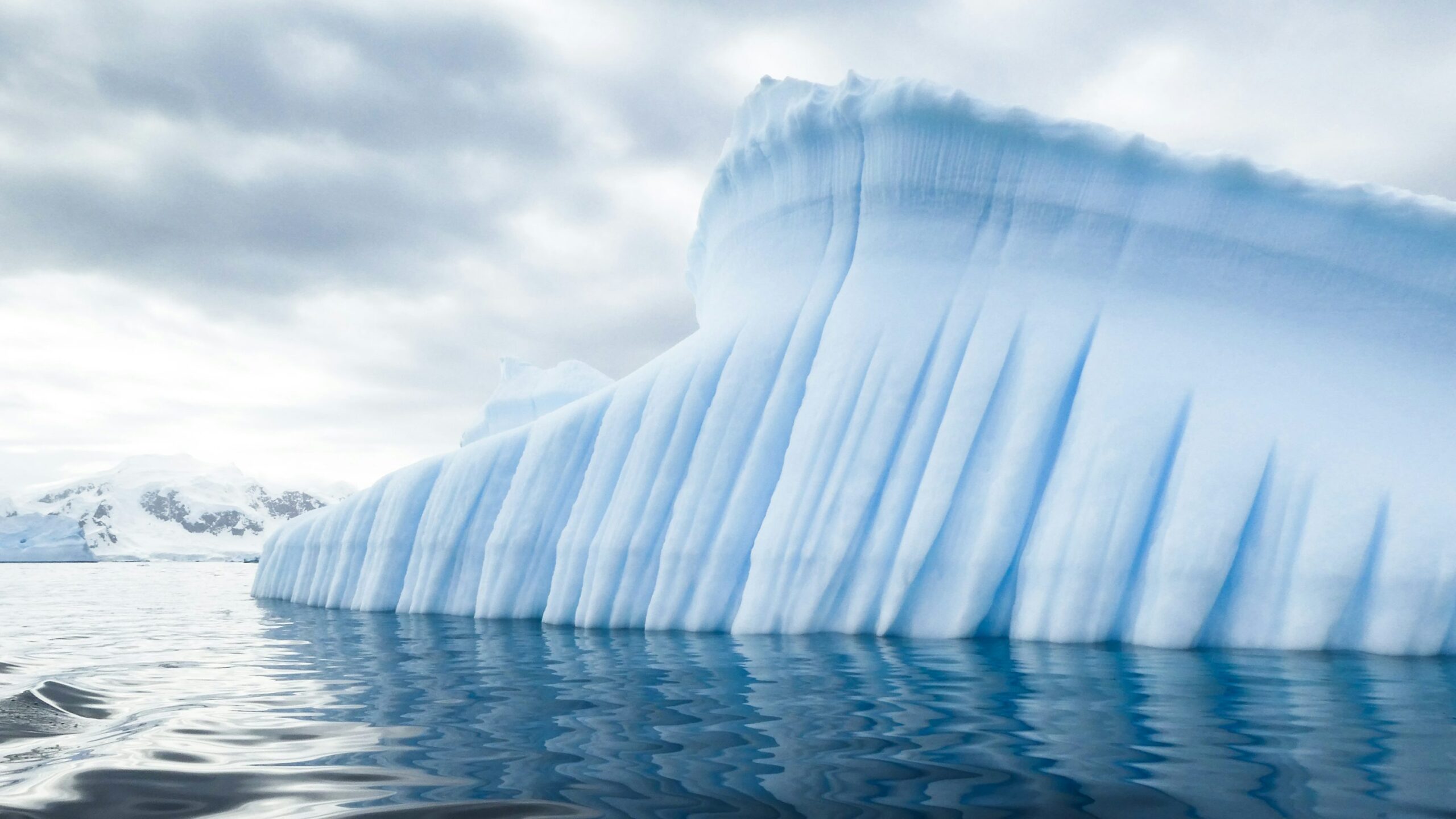
The most abundant and strategically vital resource in Antarctica is fresh water, locked within the largest ice sheet on Earth. Covering almost the entire continent with an average thickness exceeding two kilometers, this continental mantle contains approximately 90% of Earth’s terrestrial ice and roughly 70% of the world’s freshwater reserves (Australian Antarctic Program, 2024). Together with Greenland, the two polar ice sheets account for more than 99% of all freshwater ice on the planet (NSIDC, 2024).
While no commercial enterprise “extracts” this ice for export, its ecological and thermodynamic value is beyond calculation: it regulates global ocean currents, reflects incoming solar radiation through high planetary albedo, and stabilizes the global climate system. It represents an immense planetary store of water resources and renewable natural resources that human-driven warming is destabilizing at an alarming pace.
Minerals and Hydrocarbons: Potential Kept Under Lock and Key
Extensive mineral deposits exist beneath the Antarctic bedrock, but none are commercially exploited. Geological surveys across exposed nunataks and mountain ranges have identified substantial coal beds in the Transantarctic Mountains, banded iron formations in the Prince Charles Mountains, and traces of base and precious metals including copper, gold, lead, chromium, and zinc (Encyclopaedia Britannica, 2024). However, landmark studies such as USGS Circular 909 established that these known deposits are non-economic due to extreme geographic isolation, harsh polar weather, and ice sheets several kilometers thick (USGS Circular 909, 1983).
Regarding offshore hydrocarbons, trace amounts of natural gas were encountered in scientific drilling cores within the Ross Sea, and speculative seismic estimates have hypothesized potential hydrocarbon deposits of up to 511 billion barrels of oil equivalent beneath the Weddell Sea. Crucially, these geophysical hypotheses do not represent proven commercial reserves, as all exploratory drilling is strictly barred by treaty law (PBS Peril and Promise, 2022). In practice, all such non-renewable natural resources and mineral resources remain legally and physically sealed away.
The Southern Ocean and Its Living Resources: Krill and Fisheries
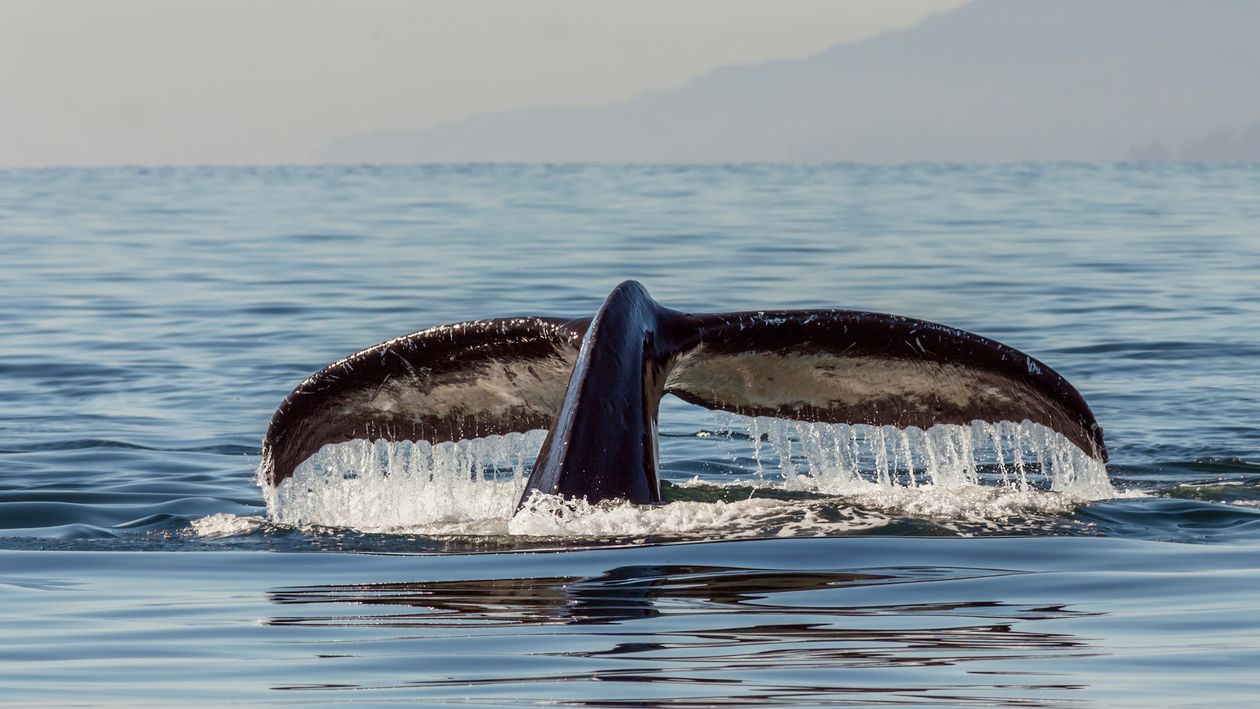
The only natural resources currently harvested in the Antarctic domain reside in the marine waters of the Southern Ocean. These circumpolar waters sustain an immense living biomass whose ecological keystone is the Antarctic krill (Euphausia superba), a small pelagic crustacean with an estimated circumpolar biomass of roughly 379 million tonnes (PNAS, 2024). Krill serves as the foundational food source for baleen whales, crabeater seals, Adélie penguins, seabirds, and demersal fish.
Management of these marine living resources falls under the Commission for the Conservation of Antarctic Marine Living Resources (CCAMLR). In the South Atlantic sector (Area 48), CCAMLR sets a precautionary catch limit of 5.61 million tonnes, but enforces a much tighter interim “trigger level” of 620,000 tonnes to prevent localized depletion around breeding colonies. In 2025, commercial krill harvests approached this limit at approximately 625,000 tonnes (CCAMLR, 2025). The other commercially regulated fishery targets Patagonian and Antarctic toothfish (Dissostichus species), with annual landings capped near 15,000 tonnes under strict scientific observation (CCAMLR, 2024).
Antarctic Biodiversity: Penguins, Whales and Seals
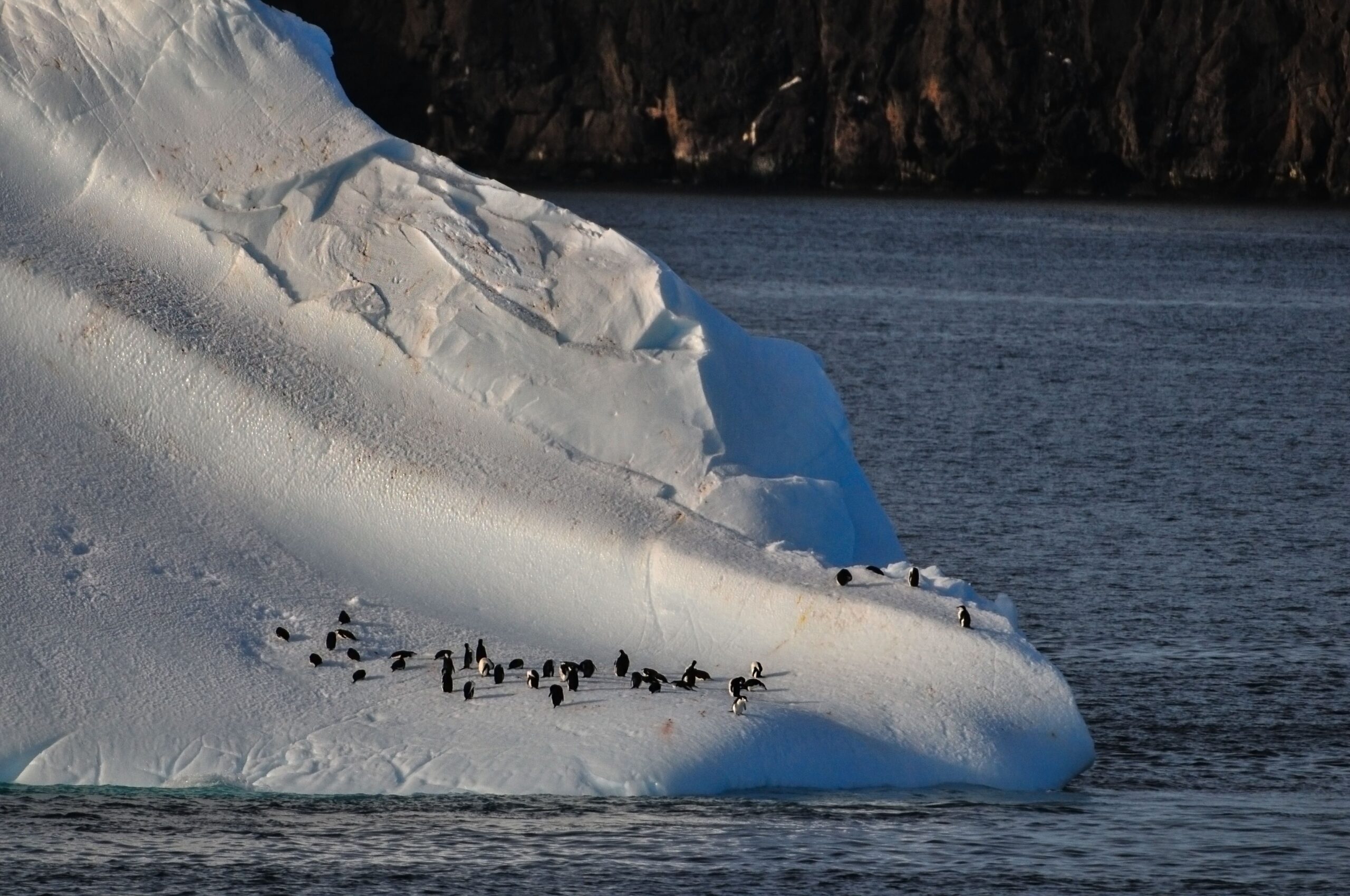
Wildlife constitutes Antarctica’s greatest biological treasure. Approximately eight penguin species inhabit the wider Antarctic region, though only two—the emperor penguin and the Adélie penguin—breed directly on the continental mainland and surrounding fast ice (UK Antarctic Heritage Trust, 2024). They share polar habitats with six seal species—including the crabeater seal, whose estimated population of roughly 15 million individuals makes it the most numerous pinniped species on the planet—and seven species of baleen whales, notably the blue whale, fin whale, and humpback whale (Encyclopaedia Britannica, 2024).
To safeguard this polar biodiversity, CCAMLR established the Ross Sea Region Marine Protected Area (MPA) in 2016, creating the world’s largest marine reserve across roughly 2 million km² (NOAA, 2016). Entering into force in 2017, the reserve completely prohibits commercial fishing across 72% of its zone to safeguard top predators. This international stewardship mirrors the biodiversity conservation frameworks explored in our overview of Australia natural resources.
The Antarctic Treaty and the Madrid Protocol: Why Commercial Mining Is Banned
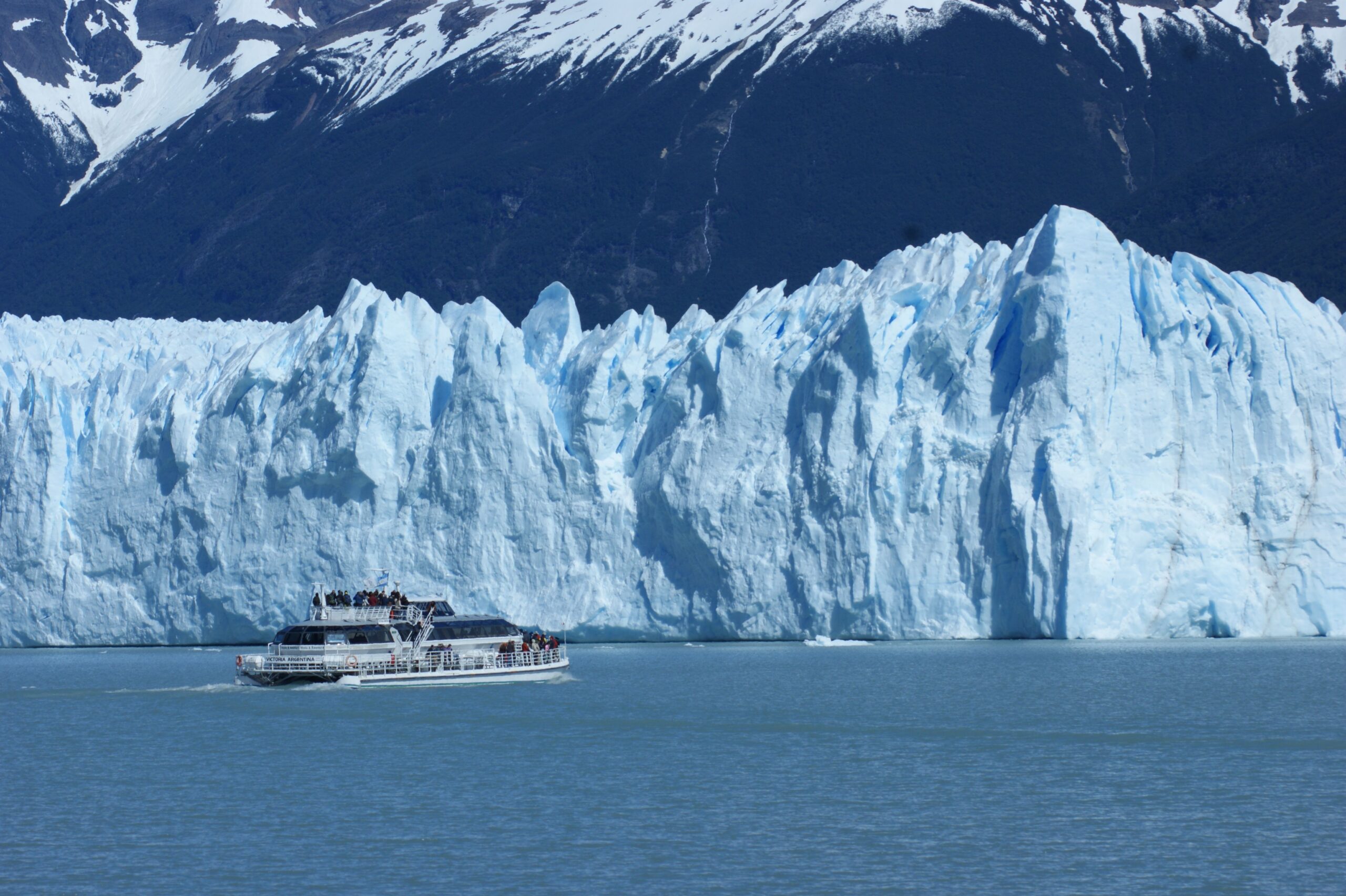
The decisive reason Antarctic minerals remain completely intact is legal and political. The Antarctic Treaty was signed in Washington on December 1, 1959, by 12 founding nations and entered into force in 1961; today, 29 Consultative Parties exercise collective decision-making power (British Antarctic Survey, 2024). The treaty indefinitely froze all sovereign territorial claims—including overlapping claims by nearby nations such as Chile and the United Kingdom—dedicating the continent solely to peaceful scientific pursuits.
The conservation cornerstone arrived with the Protocol on Environmental Protection to the Antarctic Treaty, commonly known as the Madrid Protocol, signed in 1991 and in effect since 1998. Article 7 of the protocol strictly prohibits any activity relating to mineral resources, other than scientific research, designating Antarctica as a “natural reserve, devoted to peace and science.” This ban is open-ended and cannot be formally reviewed before 2048 at the earliest (Australian Antarctic Program, 2024). It stands as history’s most successful example of multilateral environmental governance, a cornerstone of genuine sustainable development.
Climate Change: The Greatest Threat to Antarctic Resources
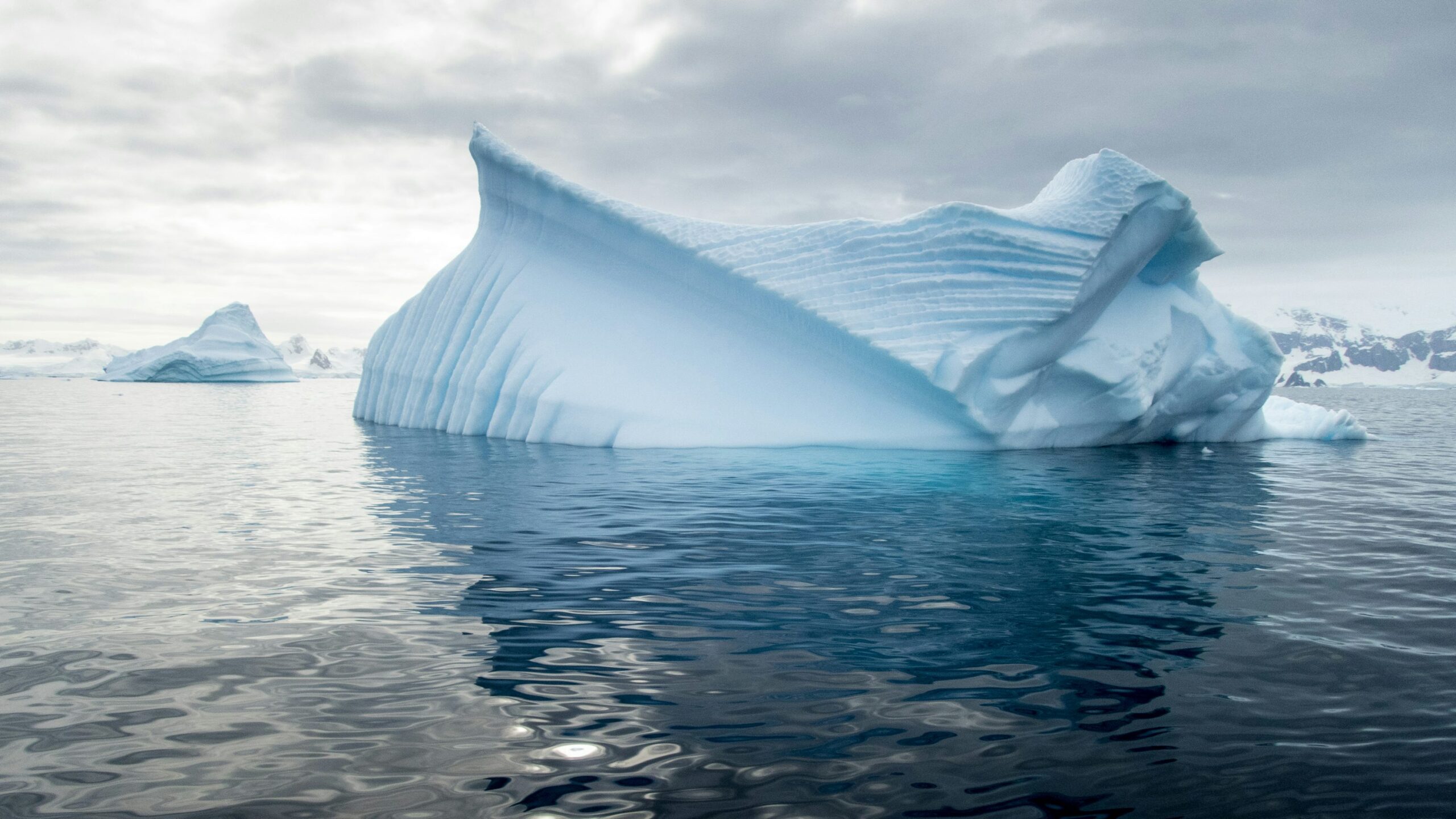
No extractive industry poses as immediate a threat to Antarctica’s natural capital as global atmospheric warming. The Antarctic Peninsula represents one of the fastest-warming regions on the planet, recording temperature increases of roughly 3 °C since 1950 (UCAR, 2024). Gravimetric measurements from NASA’s GRACE satellites show the continent lost approximately 150 billion tonnes of ice mass per year between 2002 and 2023 (NASA, 2024).
Surrounding sea ice has shown acute distress. In February 2023, Antarctic sea ice extent plunged to an all-time summer minimum of 1.79 million km²—the lowest in the 45-year satellite observation era—followed by an unprecedented winter deficit where maximum extent reached only 16.96 million km² (NSIDC, 2023). These disruptions threaten krill nursery grounds beneath the ice pack, destabilize polar food webs, and accelerate global eustatic sea-level rise, directly linking Antarctica’s environmental fate to maritime nations across the South Atlantic, such as Uruguay.
Explore More Natural Resource Guides
- Types of natural resources: definitions, classifications, and global examples
- Renewable natural resources: what they are, types, and sustainable management
- Non-renewable natural resources: characteristics, minerals, and depletion risks
- Water resources: global freshwater availability and river basin dynamics
- Mineral resources: strategic metals, mining extraction, and green technology
- Energy resources: fossil fuels, renewable power, and clean grid transitions
- Forest resources: global biomass reserves, rainforests, and deforestation
- Natural resources of Chile: copper leader and historic Antarctic gateway
- Natural resources of the United Kingdom: North Sea energy and mineral history
- Natural resources of Australia: minerals, biodiversity, and Southern Ocean ties
- Natural resources of Uruguay: agricultural soils, clean energy, and ocean access
- Global natural resources directory: explore profiles for over 70 nations
Sources and References
- Australian Antarctic Program — The Antarctic Ice Sheet, volume, and freshwater storage
- National Snow and Ice Data Center (NSIDC) — Ice Sheet Quick Facts and global sea level potential
- USGS Circular 909 — Petroleum and Mineral Resources of Antarctica (1983)
- Encyclopaedia Britannica — Antarctica: Economic Resources, Minerals, and Geology
- CCAMLR — Antarctic Krill Fisheries, catch limits, and Area 48 trigger levels
- CCAMLR — Toothfish Fisheries management and precautionary regulations
- NOAA Fisheries — Ross Sea Region Marine Protected Area designation
- British Antarctic Survey (BAS) — The Antarctic Treaty System and legal framework
- Australian Antarctic Program — The Madrid Protocol on Environmental Protection
- NASA Science — Antarctic Ice Mass Loss 2002–2023 from GRACE and GRACE-FO satellites
- NSIDC — Antarctic Sea Ice Settles to Record Lows in 2023
Antarctica proves that a continent can be unimaginably rich in natural resources while remaining permanently shielded from commercial exploitation. Its freshwater reserves, marine wildlife, and sub-ice minerals are guarded by an unprecedented global consensus that elevates scientific discovery and environmental protection above short-term economic gain. Preserving the white continent is far more than protecting penguins and glaciers: it is safeguarding the thermal regulator and freshwater reserve of the entire planet.
Related Articles
Last updated: September 13, 2026

Leave a Reply