


The natural resources of the United Arab Emirates rest on oil and gas. It has produced an average of almost four million barrels a day of oil and other liquids since 2016, and in 2025 it produced about 60 billion cubic meters of natural gas, the world’s 15th-largest output. Why is the United Arab Emirates so rich? Because of these hydrocarbons, despite severe water scarcity, with just 0.15 km³ of renewable freshwater resources.
The United Arab Emirates is a country rich in natural resources. From its vast oil and natural gas fields to its mineral resources and biodiversity, this Persian Gulf nation has a range of resources that have driven its economy and development in recent decades.
Contents
Its strategic location on the Arabian Peninsula also gives it privileged access to international trade and the opportunity to make even greater use of its natural resources. In this context, the natural resources of the United Arab Emirates are a source of wealth and prosperity for this fast-growing nation.
What are the natural resources of the United Arab Emirates? What wealth does it have? How much water does it have, and what energy sources does it use? Is there a diversity of animals and plants in the country?
Natural resources
Natural resources are materials or energy sources provided by or found on Earth that are useful to humans. Every product we manufacture is made up of natural resources.
- Renewable resources: these can be restored by natural processes faster than the rate at which they are consumed. Examples include solar radiation, wind, hydroelectric power, water when used properly, and plant and animal life.
- Non-renewable resources: once extracted, these are depleted and cannot regenerate. Examples include hydrocarbons, metals and minerals.
Examples of the main natural resources of the United Arab Emirates
The United Arab Emirates in figures: environmental indicators
The most recent official figures available on the state of the environment in the United Arab Emirates.
| Forest cover | 4.5% of land area2023 |
|---|---|
| Protected land area | 19.2% of land area2025 |
| Annual change in forest area | stable (2018–2023) |
| Renewable freshwater per capita | 15 m³ per year2022 |
| Threatened species | 74 mammals, birds, fish and plants2022 |
| Agricultural land | 5.5% of land area2023 |
Oil and gas resources in the United Arab Emirates
From 2016 to 2025, the United Arab Emirates produced an average of almost four million barrels a day of oil and other liquid fuels (EIA, 2026).
It also has abundant natural gas resources, which allowed it to produce about 60 billion cubic meters in 2025. The country ranks 15th among the world’s natural gas producers (OPEC Annual Statistical Bulletin, 2026).
Examples of the mineral resources of the United Arab Emirates
In 2019, the United Arab Emirates produced a total of 2,700 thousand tonnes of aluminum, placing it fifth in the world ranking for production of this resource.
Water resources of the United Arab Emirates
The United Arab Emirates has 0.15 km³ of renewable freshwater resources, which places it 147th in the world ranking of water reserves. Although the country has abundant natural resources, water scarcity is a constant problem in the region.
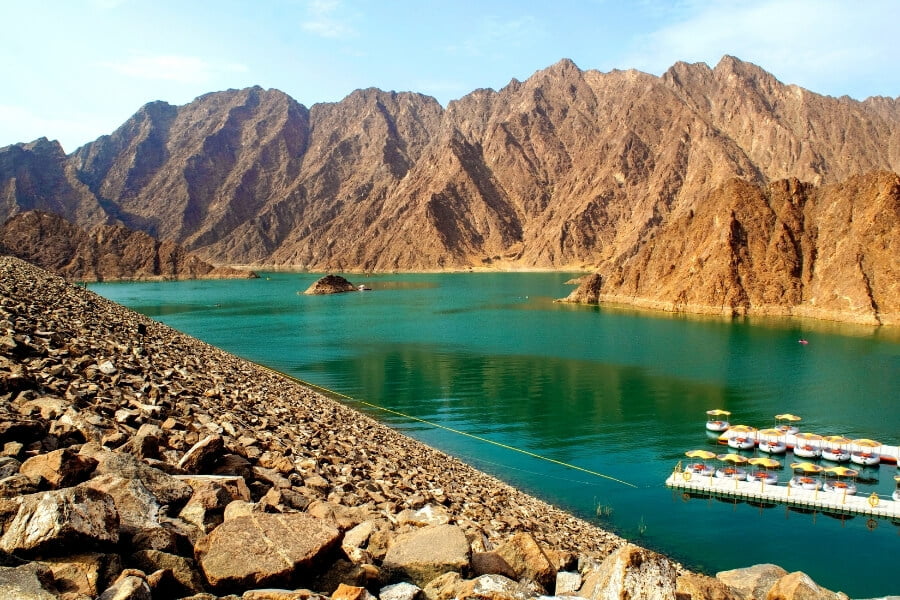
The United Arab Emirates has no permanent rivers; its main watercourses are wadis such as Wadi Al Wurayah and Wadi Ghalilah, and its best-known freshwater body is Lake Hatta, the reservoir of the Hatta Dam. Proper management of these resources is essential to guarantee a supply of drinking water for the population and the country’s sustainable development.
Average rainfall and soils of the United Arab Emirates
The United Arab Emirates has an average annual rainfall of 78 mm, which places it 155th in the world ranking for average annual rainfall.
Forest resources of the United Arab Emirates
The United Arab Emirates has forest covering 4.47% of its territory, equivalent to 3,173 km². Although it is not a prominent forest region, the country has implemented measures to protect and conserve this natural resource.
In the world ranking of forest area, the United Arab Emirates ranks 139th.
Environmental performance and protection of the natural resources of the United Arab Emirates
The United Arab Emirates has a 2024 Environmental Performance Index score of 51.6 and ranks 53rd out of 180 countries. In addition, protected areas cover 19.2% of its land area (16.1% of its total land and marine territory, World Bank 2025), which shows its commitment to conserving natural resources.
Natural parks of the United Arab Emirates: the hidden wealth of natural resources
Biodiversity: animal and plant resources of the United Arab Emirates
Birds of the United Arab Emirates
The United Arab Emirates has a total of 293 bird species recorded in 2018. The country ranks 124th in the world for number of bird species.
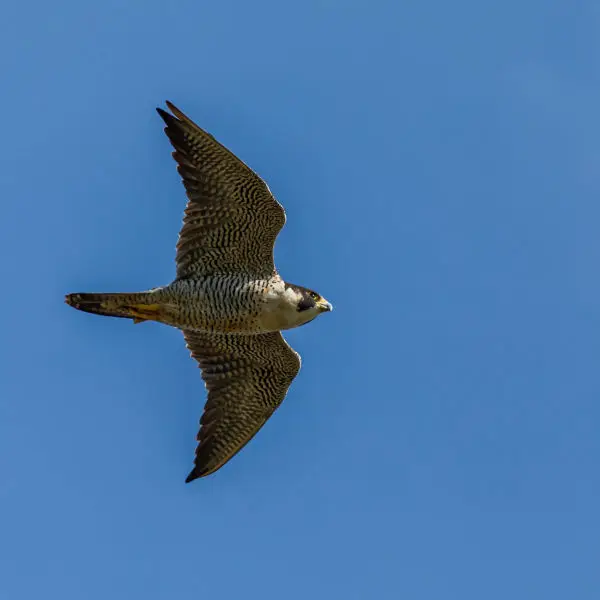
However, 13 of these species are endangered. Among the country’s most notable bird species is the peregrine falcon, considered the national bird of the United Arab Emirates.
Mammals of the United Arab Emirates
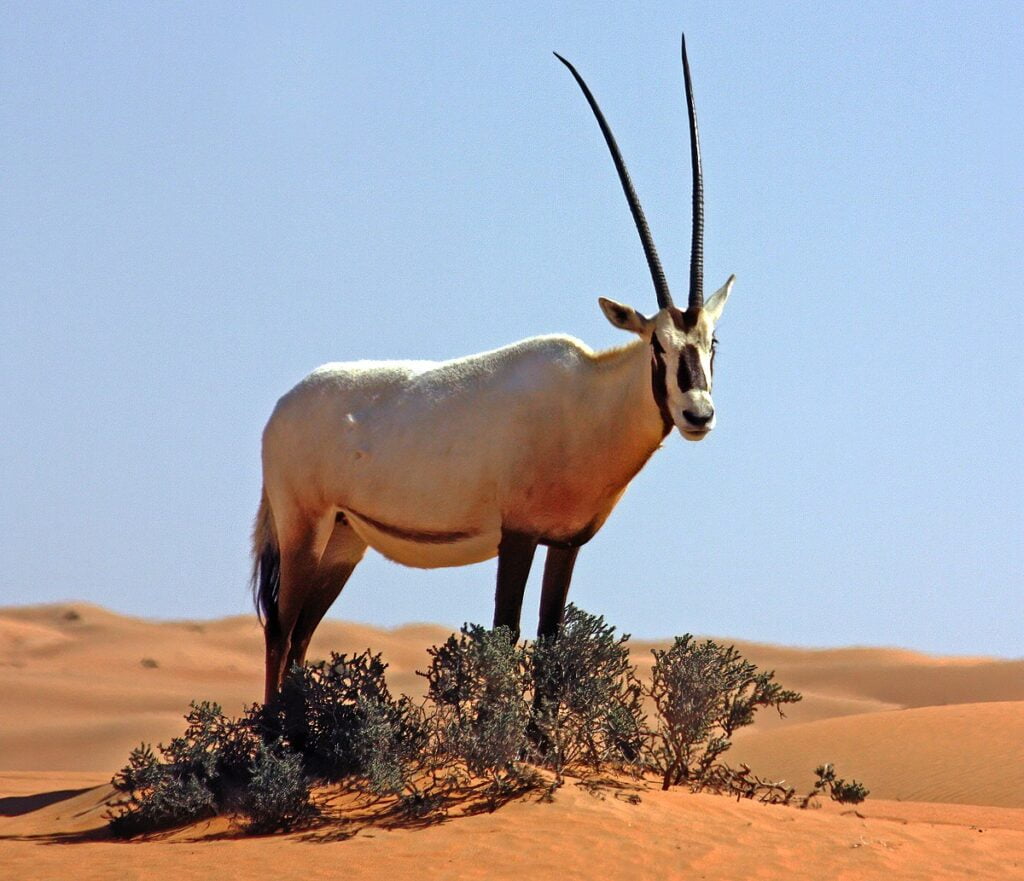
The United Arab Emirates had 8 threatened mammal species in 2016. It is home to the Arabian oryx, which has been successfully reintroduced into its natural habitat.
Reptiles of the United Arab Emirates
The United Arab Emirates has a rich diversity of reptiles, with a total of 74 species recorded in 2019. Despite this large number, the country ranks 87th in the world for number of reptile species.
Among the most notable species is the spiny-tailed lizard.
Organizations that protect or study the natural resources of the United Arab Emirates
- Ministry of Climate Change and Environment (MOCCAE): Federal ministry that regulates the environment and climate change.
- Environment Agency – Abu Dhabi (EAD): Abu Dhabi’s environmental regulator, which protects biodiversity, air and water.
- Dubai Municipality – Dubai Protected Areas: Dubai’s municipal authority, which manages protected nature reserves such as Al Marmoom.
- Emirates Environmental Group (EEG): Dubai NGO dedicated to environmental education and waste management.
- Mohamed bin Zayed Species Conservation Fund: Abu Dhabi fund that finances the conservation of threatened species.
- Emirates Nature-WWF: WWF-affiliated organization that conserves the nature of the Emirates.
Oil and gas: the foundation of the economy
The UAE was the world’s ninth-largest producer of liquid fuels in 2025 and the fourth-largest within OPEC, which it left in May 2026; its reserves are concentrated in Abu Dhabi. The country aims to raise its crude oil production capacity to 5 million barrels a day by 2027; its crude oil and condensate output reached about 3.8 million barrels a day in 2025, according to the EIA, 2026. Its main export crudes are Murban and Upper Zakum.
Water: extreme stress and desalination
Water is the country’s scarcest resource. Aqueduct projections give the UAE a water stress score of 5.0 out of 5.0, the highest category, according to the World Resources Institute, 2015. To cope with this scarcity, desalination supplies 42% of drinking water through about 70 major plants, equivalent to 14% of the world’s desalinated water output, according to the UAE Government, 2024.
Energy transition: nuclear and solar
The country is diversifying its energy mix with low-carbon power. The Barakah nuclear power plant operates four reactors with 5.6 GWe of capacity and covers about 25% of the nation’s electricity; its Unit 4 entered commercial operation in September 2024, according to the World Nuclear Association, 2024. In solar, the Mohammed bin Rashid Al Maktoum Solar Park stands out, with 3,460 MW installed, according to the IEA via The National, 2025.
Frequently asked questions
How large are the United Arab Emirates’ oil reserves? The country held about 111 billion barrels of proven crude oil reserves at the start of 2023, according to the EIA, 2024.
Where does the UAE get its drinking water? Desalination provides 42% of drinking water through about 70 major plants, in the face of water stress classified as extreme, according to the UAE Government, 2024.

Leave a Reply