

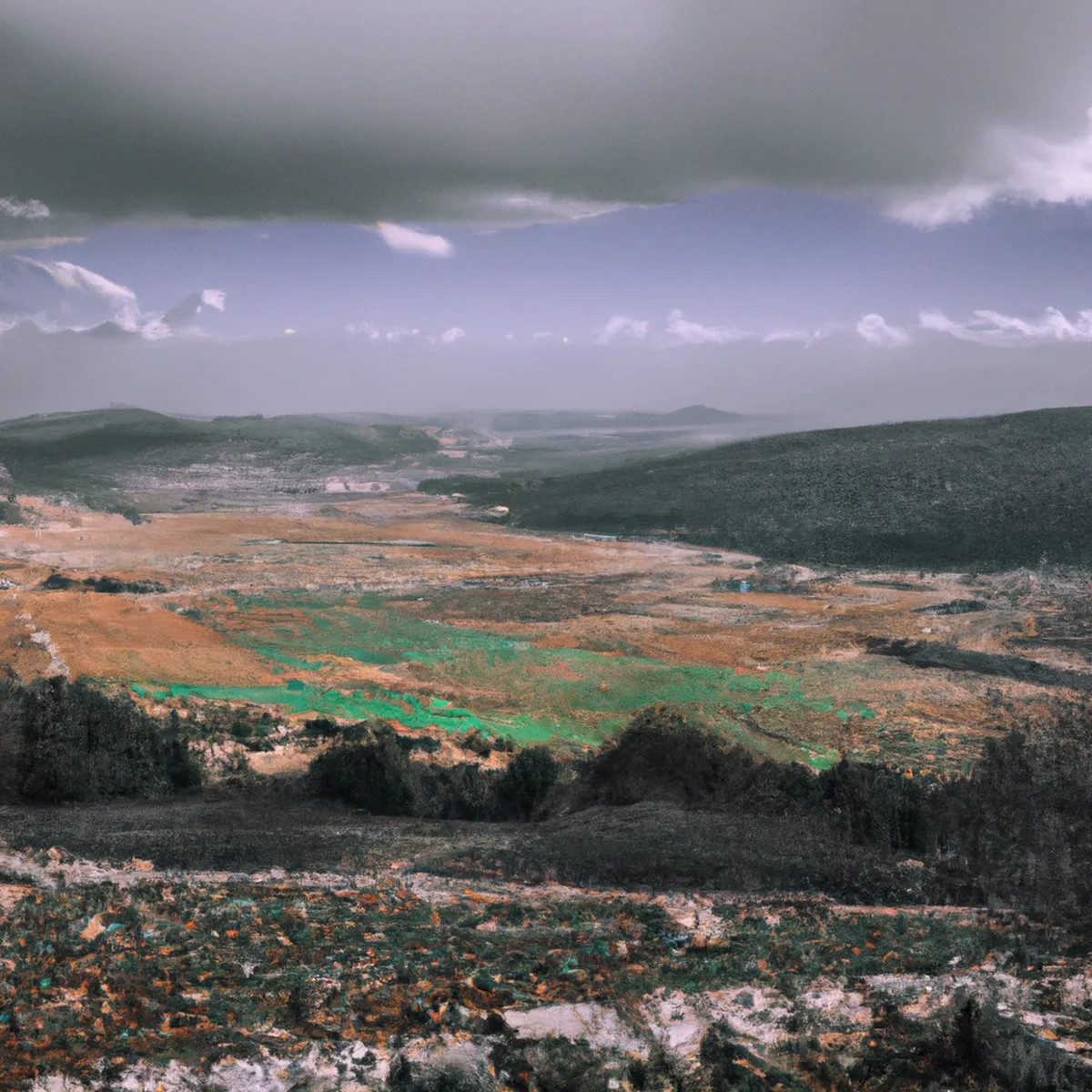
Syria’s natural resources revolve around oil and gas, with estimated reserves of 2,500 million barrels that place it around 32nd in the world. What natural resources does Syria have besides oil? It has the Euphrates and Tigris rivers, the 880 MW Tabqa Dam and 14.7 km³ of renewable freshwater resources, although the conflict has affected their use.
Syria is a Middle Eastern country known for its cultural and historical wealth. However, it also has a wide variety of natural resources of great economic and ecological importance.
Contents
From its vast expanses of fertile land to its oil and gas deposits, as well as its forests, rivers and lakes, Syria has a great diversity of natural resources that have been exploited for centuries. However, war and internal conflict have severely affected the conservation and sustainable use of these resources.
What natural wealth does Syria have, and how do its mineral resources compare globally? How much water does it use to generate energy, and how diverse are its animals and plants? How is biodiversity protected, and how is the land used?
Natural resources
Natural resources are materials or energy sources provided by or found on Earth that are useful to humans. Every product we manufacture is made up of natural resources.
- Renewable resources: these can be restored by natural processes faster than the rate at which they are consumed. Examples include solar radiation, wind, hydroelectric power, water when used properly, and plant and animal life.
- Non-renewable resources: once extracted, these are depleted and cannot regenerate. Examples include hydrocarbons, metals and minerals.
Examples of Syria’s main natural resources
Syria in data: water and energy
Freshwater availability and the share of renewables in electricity.
| Renewable freshwater per capita | 318 m³ per year2022 |
|---|---|
| Renewable electricity | 3.4% of total generation2021 |
| Forest cover | 2.8% of land area2023 |
| Protected land area | 0.7% of land area2025 |
| Land area | 183,630 km²2023 |
| Threatened species | 141 mammals, birds, fish and plants2022 |
Oil and gas resources in Syria
Syria has significant natural resources, including oil. According to Worldometer (2024), its daily oil production is around 63,400 barrels.
Syria also has estimated oil reserves of 2,500,000,000 barrels, which places it around 32nd in the world for oil reserves. Its main oil-producing field or region is Deir ez-Zor.
With natural gas production of about 2,760 million cubic meters in 2023, the country ranks 54th among the world’s producers (CIA World Factbook).
Water resources of Syria
Syria has 14.7 km³ of renewable freshwater resources, which places it 114th in the world for water reserves. The country is suffering a severe water crisis because of the war and the lack of adequate distribution infrastructure.
Syria’s two main rivers are the Euphrates and the Tigris, and its most important lake is Lake al-Assad.

Renewable electricity and hydropower production in Syria
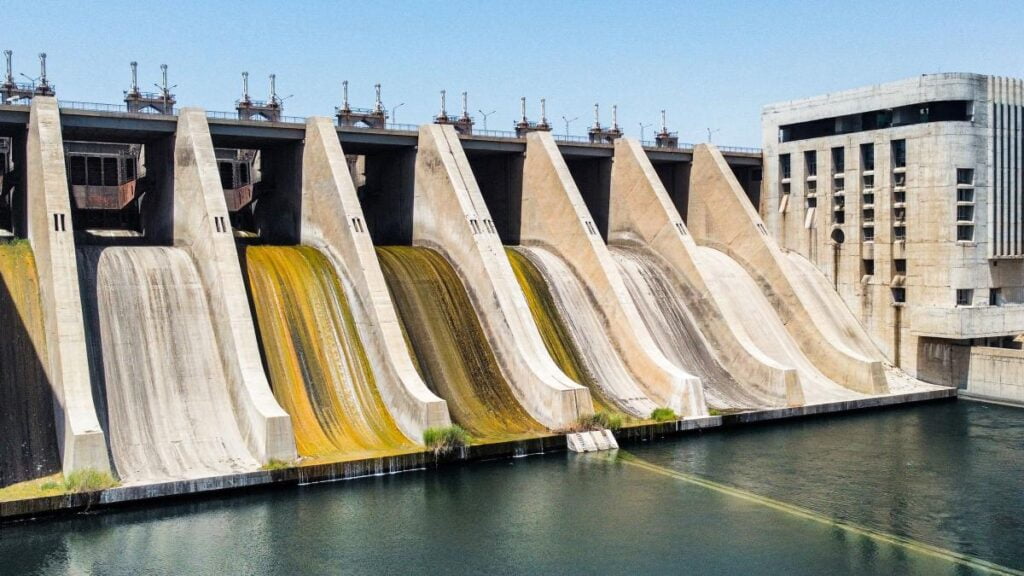
In 2024, Syria generated 880 GWh of electricity from renewable sources — 3.5% of its total generation of 24.9 TWh — and hydropower alone supplied 750 GWh (Ember, 2024). The country’s main hydroelectric plant is the Tabqa Dam, on the Euphrates River, with a generating capacity of 880 MW.
Forest resources of Syria
According to the World Bank, forests cover 2.84% of Syria’s territory, equivalent to 5,220.8 km². The country ranks 131st in the world for forest area. This resource is very important for the country, especially in the hills and mountains of coastal Syria, around Latakia and in the Jabal al-Ansariya range, where Turkish pine (Pinus brutia) woodland grows.
Natural parks of Syria: the hidden wealth of natural resources
Biodiversity: animal and plant resources of Syria
Birds of Syria
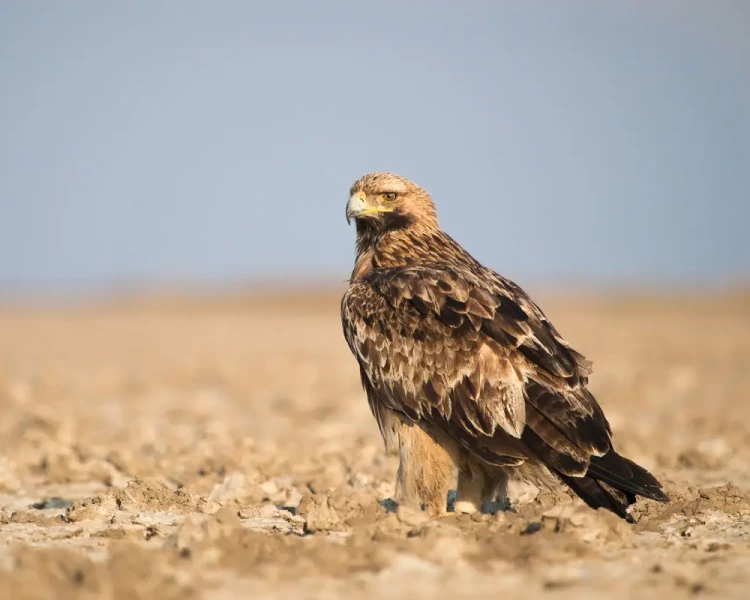
Syria has an impressive diversity of birds, with a total of 395 species.
Unfortunately, 17 of these species are endangered, which makes responsible use of natural resources necessary to protect their habitat. The imperial eagle stands out.
Fish and amphibians of Syria
Syria has significant biological diversity, with a total of 7 amphibian species, including the Levant water frog (Pelophylax bedriagae), and 418 fish species. Despite this natural wealth, the country faces a worrying conservation situation, with 51 threatened fish species.
It is important to stress the need to protect and preserve these natural resources to ensure their survival and that of the communities that depend on them.
Reptiles of Syria
Syria has a rich diversity of reptiles, with a total of 101 species recorded in 2019, placing it 76th in the world. This natural resource is very important for the country; Bosc’s fringe-toed lizard (Acanthodactylus boskianus) stands out, living in sandy and gravelly areas, wadis and oases.

Organizations that protect or study Syria’s natural resources
- Ministry of Local Administration and Environment of Syria: Syrian ministry that manages the environment and protects the country’s natural resources.
- FAO in Syria: UN agency that restores natural resources, water and sustainable agriculture in Syria.
- United Nations Environment Programme (UNEP): UN environmental program that assesses and supports environmental governance in Syria.
- IUCN – Regional Office for West Asia: Global conservation union that promotes nature protection in Syria.
- ICARDA – International Center for Agricultural Research in the Dry Areas: Conserves agrobiodiversity and the gene bank that originated in Aleppo, Syria.
- PAX (Climate, Environment and Conflict Program): NGO that documents the environmental impact of the conflict on Syria’s natural resources.
Before 2011, oil was Syria’s fiscal engine: the country pumped about 380,000 barrels a day, and the energy sector provided 20-25% of state revenue. The war cut that output to fewer than 25,000 barrels a day, a drop of close to 90%, according to the U.S. Energy Information Administration (EIA, 2015).
Oil and gas: the income the war wiped out
Syria still holds proven reserves of about 2,500 million barrels of crude oil and 8,500 billion cubic feet of natural gas, according to the Oil & Gas Journal as cited by the EIA (EIA, 2015). Syrian crude is mostly heavy and sour, which requires specialized refineries. With the conflict, production fell to about 40,000 barrels a day in 2015 and to between 15,000 and 30,000 in 2019, with key fields outside state control, according to Al Jazeera (Al Jazeera, 2026).
Wheat, cotton and olive oil: the historic breadbasket
Syria was once a regional agricultural pantry. Its wheat harvest hit a record 4.18 million tonnes in 1994/95, and the country went from importer to net exporter in the 1990s, according to the FAO (FAO, 2003). Cotton, its most important export after oil, expanded from 156,000 hectares planted in 1990 to a peak of 275,000 in 1998. In olive oil, Syria became the world’s fifth- or sixth-largest producer, with 130,000 tonnes in 2000/01 (5% of the world total), according to the FAO (FAO, 2003).
Phosphates: the great mineral reserve of Palmyra
Syria’s subsoil holds one of the largest phosphate reserves in the region. The deposits in the Palmyra desert total about 1,800 million tonnes, and the Khneifiss mines another 150 million, with export capacity of 3.5 million tonnes a year, according to Syrian government figures reported by Al-Estiklal (Al-Estiklal, 2025). Phosphate, the basis of fertilizers, is exported through the port of Tartus.
Sources used
- List of countries by mineral production – Wikipedia
- Economic data by country – The Global Economy
- Forest area (km²) – World Bank
- Forest area (% of land area) – World Bank
- Oil reserves – The Global Economy
- Water and agriculture statistics – FAO
- Precipitation (mm) – World Bank
- Bird species – Mongabay
- Amphibian species by country – Mongabay
- Plant species – Mongabay
- Reptile species by country – Mongabay
- Endemic bird species by country – Our World in Data
The World Bank indicated in 2023 that Syria has oil and phosphate reserves, although the prolonged internal conflict has severely affected the production capacity of the extractive sector.
Last updated: September 26, 2026

Leave a Reply