

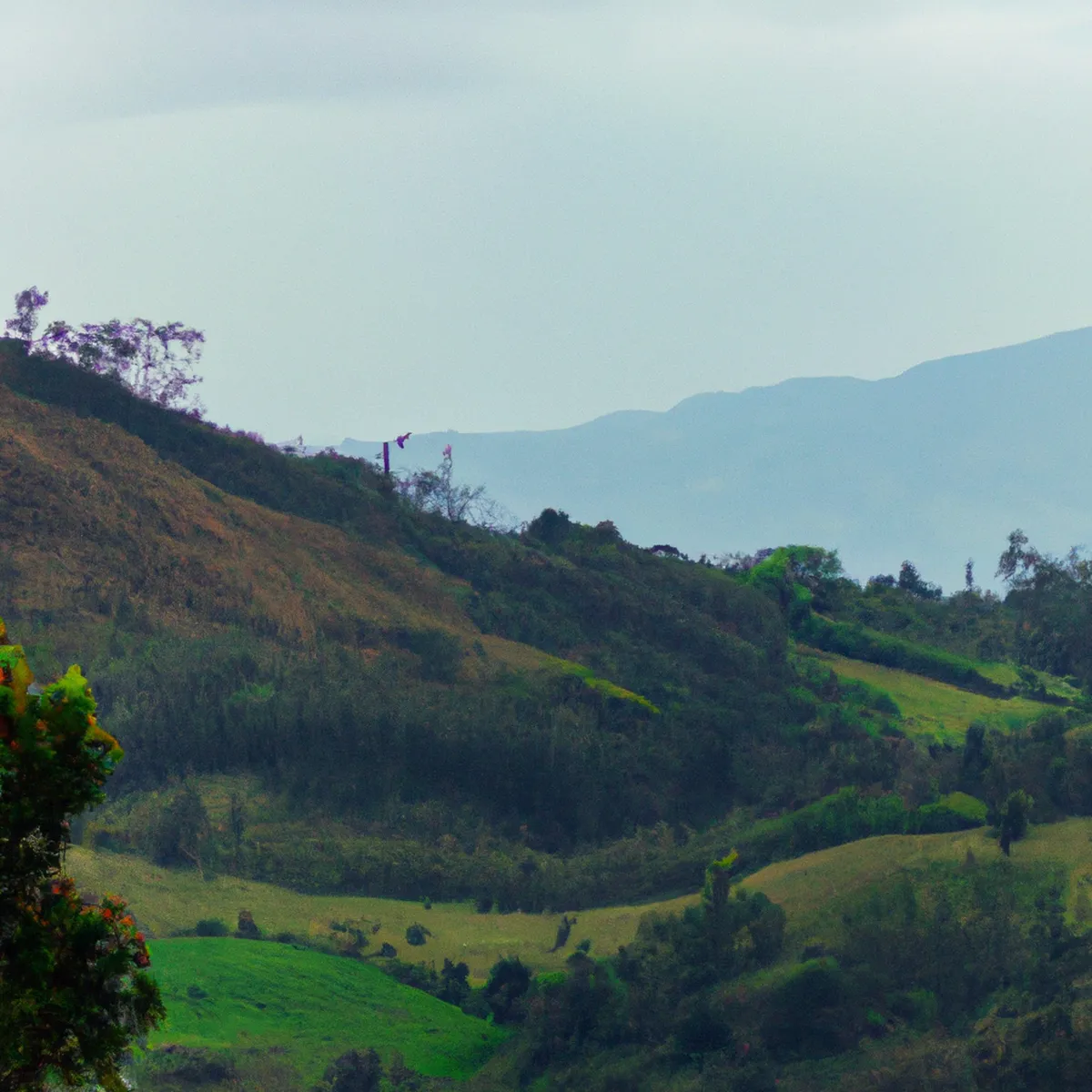
Gabon’s natural resources are concentrated in oil, gas and a rainforest that covers 91.2% of the territory. What are Gabon’s most important natural resources? The country produced 204,000 barrels of oil a day in 2023 and generated 910 GWh of hydroelectric power in 2024, and it has 5,236 species of vascular plants.
Gabon is an African country on the Atlantic coast. Its territory is covered by dense tropical rainforest that is home to a great deal of wildlife and provides important natural resources.
Contents
Among them, oil, gas and other minerals stand out, along with a wide variety of exotic plant and animal species. Gabon’s natural wealth has been both exploited and conserved throughout history, and today it remains a subject of interest for research and sustainable development in the region.
What are Gabon’s most important natural resources? What natural wealth does the country have? Which minerals are found there, and how does it rank globally? How diverse are Gabon’s birds, reptiles, mammals, fish, amphibians and plants?
Natural resources
Natural resources are materials or energy sources provided by or found on Earth that are useful to humans. Every product we manufacture is made up of natural resources.
- Renewable resources: these can be restored by natural processes faster than the rate at which they are consumed. Examples include solar radiation, wind, hydroelectric power, water when used properly, and plant and animal life.
- Non-renewable resources: once extracted, these are depleted and cannot regenerate. Examples include hydrocarbons, metals and minerals.
Examples of Gabon’s main natural resources
Gabon in data: threatened biodiversity
Species at risk and protected area, with the latest available data.
| Threatened species | 588 mammals, birds, fish and plants2022 |
|---|---|
| Protected land area | 22.6% of land area2025 |
| Marine protected areas | 26.8% of its waters2025 |
| Forest cover | 91.2% of land area2023 |
| Annual change in forest area | −119 km² per year (2018–2023) |
| Land area | 257,670 km²2023 |
Gas resources in Gabon
Gabon’s marketed natural gas production was 482 million cubic meters in 2025, according to OPEC.
According to TheGlobalEconomy, Gabon produced 204,000 barrels of oil per day in 2023.
Water resources of Gabon
Gabon had 164 km³ of renewable freshwater resources in 2020, which places it 43rd in the world ranking. This African country has a large amount of freshwater; the Ogooué is its most important river, at 1,200 km long, followed by the Nyanga, at 640 km.

Average rainfall and soils of Gabon
Gabon has an average annual rainfall of 1,831 mm, which places it 34th in the world ranking for average annual rainfall. Because of this high humidity, Gabon’s soils are mostly moist and fertile, which favors the growth of a wide variety of plants and trees.
Renewable electricity and hydropower production in Gabon
In 2024, Gabon generated 920 GWh of electricity from renewable sources — 35% of its total generation of 2.6 TWh — and hydropower alone supplied 910 GWh (Ember, 2024). The country’s largest hydroelectric plant is Grand Poubara, on the Ogooué River in Haut-Ogooué province, with an installed capacity of 160 MW.

Forest resources of Gabon
Gabon’s forest area covers 91.2% of its territory (2023), an area of 235,306 km², which ranks it 22nd in the world.
Environmental performance and protection of Gabon’s natural resources
Natural resources are very important in Gabon, and their conservation is essential for the country. Its Environmental Performance Index (2024) score is 53.3, and it ranks 44th on the index. In addition, terrestrial and marine protected areas make up 25.13% of the country’s total territorial area. The link between protected areas and the country’s position on the Environmental Performance Index is worth highlighting.
Natural parks of Gabon: the hidden wealth of natural resources
Biodiversity: animal and plant resources of Gabon
Birds of Gabon
Gabon has a great diversity of birds, with a total of 659 species in 2023, which places it 54th in the world. However, 5 of its bird species were threatened in 2022.
One of Gabon’s most notable birds is the great blue turaco, a colorful and striking bird that lives in the country’s tropical forests.
Fish and amphibians of Gabon
Gabon has 97 amphibian species and 863 fish species; its flagship amphibian is the tree frog and its flagship fish is the catfish. This places it 68th in the world ranking for number of fish species and 36th for number of amphibian species.
Mammals of Gabon
Gabon has rich biodiversity, with a total of 202 mammal species, 18 of which are threatened. Worldwide, it ranks 46th.
Reptiles of Gabon
Gabon has a good diversity of reptile species, with a total of 133 species in 2023, which places it 57th in the world. A notable example is the African rock python, which lives in Gabon’s tropical rainforests.
Plants of Gabon
Gabon has a great diversity of vascular plants, with 5,236 species in total, which places it 43rd in the world. Notable species include the okoumé, the country’s emblematic tree, used in the timber industry.

Organizations that protect or study Gabon’s natural resources
- Wildlife Conservation Society – Protects Gabon’s wildlife and plants through research and education.
- Ministry of Environment and Sustainable Development of Gabon – Responsible for protecting and managing Gabon’s natural resources.
- Rainforest Trust – Works to protect Gabon’s tropical forests and their biodiversity.
- Conservation International Gabon – Works to conserve Gabon’s forests and biodiversity through research and education.
Beneath the Bangombé plateau, near Moanda, lies one of the richest manganese deposits on the planet. Its operator, Comilog, a subsidiary of the French group Eramet, is the world’s second-largest producer of manganese ore, and in 2014 Gabon was the third-largest producing country, behind only South Africa and Australia (Comilog, Wikipedia, 2014).
Manganese: a deposit estimated to last a century
The original Moanda deposit, discovered in 1951, was estimated at more than 100 million tonnes of marketable ore, with reserves projected to last nearly a hundred years of mining. In 2011 Comilog, which operates the Moanda mine, produced 3.43 million tonnes of manganese ore and exported 3.38 million tonnes (Comilog, Wikipedia; Manganese, Wikipedia, 2011).
Oil: half of GDP, but in decline
Crude oil remains the backbone of the country’s economy. By 2023 Gabon was pumping about 200,000 barrels a day, and oil accounted for 50% of GDP and 80% of exports. Production, however, has been falling since its peak of 370,000 barrels a day in 1997 (Economy of Gabon, Wikipedia, 2023).
The forest that absorbs more carbon than the country emits
With 91.2% of its territory covered by rainforest, part of the Congo Basin, Gabon’s forests act as a net carbon sink: the country absorbs more CO₂ than it emits, and in 2023 it accounted for just 0.04% of global greenhouse gas emissions (24.7 million tonnes). In June 2021 Gabon became the first African country to receive payments for reducing deforestation and the associated emissions (Gabon, Wikipedia, 2023).
Sources used
- Lists of countries by mineral production – Wikipedia
- Economic data by country – The Global Economy
- Forest area (km²) – World Bank
- Forest area (% of land area) – World Bank
- Water and agriculture statistics – FAO
- Precipitation (mm) – World Bank
- Environmental Performance Index – Environmental Performance Index
- Bird species – Mongabay
- Amphibian species by country – Mongabay
- Mammal species – Mongabay
- Endemic mammal species – Our World in Data
- Plant species – Mongabay
- Reptile species by country – Mongabay
- Endemic bird species by country – Our World in Data
According to the World Bank in 2023, 91.2% of Gabon’s territory is covered by tropical rainforest, making it one of the most heavily forested countries in Africa.
Last updated: September 26, 2026

Leave a Reply