


Equatorial Guinea’s natural resources combine oil, gas, timber and minerals. Gas stands out, with annual production of 6,200 million cubic meters (2015 estimate), and forests cover 87.29% of the territory, about 24,484 km². The country also has 26 km³ of renewable freshwater resources. What is Equatorial Guinea’s main natural resource?
Equatorial Guinea is a country in Central Africa with a variety of natural resources such as oil, gas, timber and minerals. It also has great biological diversity, including a large number of endemic species.
Table de contenidos
Equatorial Guinea’s rich biodiversity also spans many ecosystems, from tropical forests to coastal mangroves. Responsible use of Equatorial Guinea’s natural resources is essential to the country’s economic and environmental well-being.
What natural resources does Equatorial Guinea have? What is its natural wealth, and which minerals are mined in the country? How is energy obtained from its water resources? Which animal and plant species are found in its territory? What activities take place on its soils, and how is biodiversity protected in Equatorial Guinea?
Natural resources
Natural resources are materials or energy sources provided by or found on Earth that are useful to humans. Every product we manufacture is made up of natural resources.
- Renewable resources: these can be restored by natural processes faster than the rate at which they are consumed. Examples include solar radiation, wind, hydroelectric power, water when used properly, and plant and animal life.
- Non-renewable resources: once extracted, these are depleted and cannot regenerate. Examples include hydrocarbons, metals and minerals.
Examples of Equatorial Guinea’s main natural resources
Equatorial Guinea in figures: threatened biodiversity
Species at risk and protected areas, with the latest available data.
| Threatened species | 274 mammals, birds, fish and plants2022 |
|---|---|
| Protected land area | 19.0% of land area2025 |
| Marine protected areas | 0.3% of its waters2025 |
| Forest cover | 86.4% of land area2023 |
| Annual change in forest area | −84 km² per year (2018–2023) |
| Land area | 28,050 km²2023 |
Gas resources in Equatorial Guinea
Although it has significant natural gas resources, Equatorial Guinea is a mid-sized producer, with annual production of 6,200 million cubic meters (2015 estimate), which ranked it 47th in the world.
Other minerals found in the country include gold, diamonds, base metals, iron ore and bauxite.
Water resources of Equatorial Guinea
Equatorial Guinea has 26 km³ of renewable freshwater resources, which places it 101st in the world ranking. This resource is vital to the country, as it is used for human consumption, agriculture and industry.
Equatorial Guinea also has important bodies of water, such as the Muni and Mbini rivers, and its main lake, Lake Biao.
Average rainfall and soils of Equatorial Guinea
Equatorial Guinea has an average annual rainfall of 2,156 mm, which places it 23rd in the world.
Renewable electricity and hydropower production in Equatorial Guinea
In 2024, Equatorial Guinea generated 400 GWh of electricity from renewable sources, all of it from hydropower — 27% of its total generation of 1.5 TWh (Ember, 2024). Its main hydroelectric plant is Djibloho, with a generating capacity of 120 MW. Despite its great hydroelectric potential, the country has not yet managed to develop its renewable energy capacity.
Forest resources of Equatorial Guinea
Equatorial Guinea is rich in forest resources, and its main forest region is Mbini. In 2020, the country’s forest area made up 87.29% of its land area, equivalent to 24,484.2 km².
Globally, it ranks 93rd for forest area.
Environmental performance and protection of Equatorial Guinea’s natural resources
Equatorial Guinea has an Environmental Performance Index (EPI 2024) score of 41.7 and ranks 114th in the index. Protected areas cover 19.0% of its land area; counting marine waters as well, terrestrial and marine protected areas make up 1.8% of its total territorial area (World Bank, 2025).
Natural parks of Equatorial Guinea: the hidden wealth of natural resources
Biodiversity: animal and plant resources of Equatorial Guinea
Birds of Equatorial Guinea
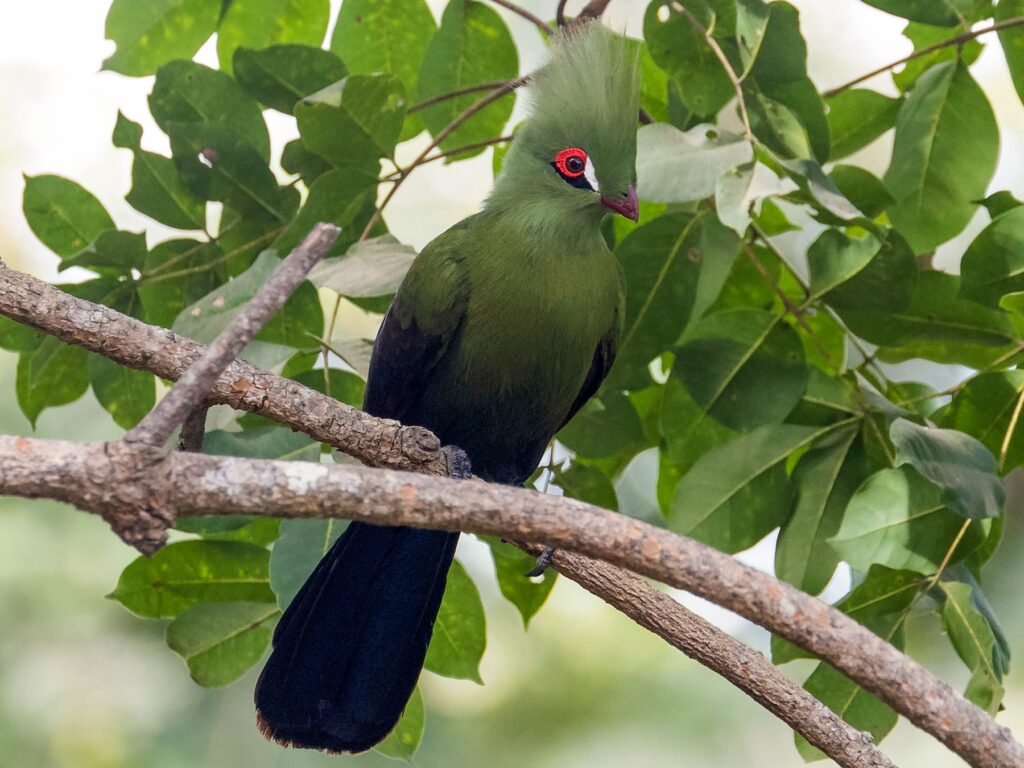
Equatorial Guinea has a rich diversity of birds, with a total of 466 species, placing it 94th in the world. The country is also home to 4 endemic bird species, which means they can only be found in this region of the world.
However, it also faces the threat of extinction of 3 bird species. The country’s flagship bird is the Guinea turaco.
Fish and amphibians of Equatorial Guinea
Equatorial Guinea has a great diversity of amphibian and fish species; its flagship amphibian is the African tree frog and its flagship fish is the Nile tilapia. A total of 51 amphibian species and 585 fish species are recorded in the country, ranking it 53rd and 101st in the world, respectively.
However, 82 fish species are threatened, so it is important to take measures to protect this natural resource.
Mammals of Equatorial Guinea
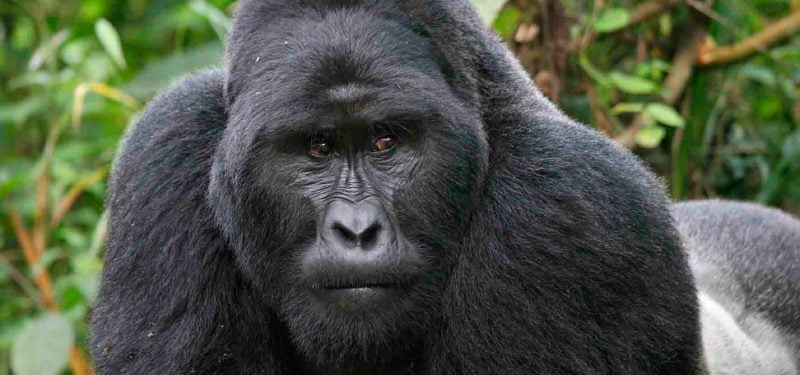
Equatorial Guinea has a rich diversity of mammals, with a total of 187 mammal species. However, 24 of these are threatened. The country ranks 51st in the world for number of mammal species.
It also has three endemic mammal species. The western lowland gorilla, which the country shares with Cameroon, Gabon and other Central African countries, also stands out.
Reptiles of Equatorial Guinea
Equatorial Guinea has a diversity of 117 reptile species, ranking 84th in the world. The forest cobra is notable among them.
Plants of Equatorial Guinea
Equatorial Guinea has a great diversity of vascular plants, with a total of 3,049 recorded species, placing it 80th in the world. Among the most notable species is the cacao tree, used to make chocolate and one of the country’s main crops.
Organizations that protect or study Equatorial Guinea’s natural resources
- United Nations – Promotes sustainable development and environmental protection in Equatorial Guinea.
- Government of Equatorial Guinea – Implements policies and programs to protect the country’s environment and natural resources.
Oil made Equatorial Guinea one of the largest producers in sub-Saharan Africa after Mobil discovered the Zafiro field in 1995 (Equatorial Guinea, Wikipedia). In 2005, when its output made it Africa’s third-largest crude producer, its estimated GDP per capita reached $50,240, second only to Luxembourg (Petroleum industry in Equatorial Guinea, Wikipedia, 2005).
The collapse of crude oil production
That boom is over. Crude production peaked at about 393,000 barrels a day in December 2004 and by April 2026 had fallen to about 44,000 barrels a day, according to OPEC data (Trading Economics / OPEC, 2026). Even so, its weight was enormous: crude accounted for more than 90% of export earnings in 2000 and provided about two-thirds of government revenue (Economy of Equatorial Guinea, Wikipedia, citing the U.S. Department of State).
Natural gas and the Punta Europa LNG plant
As crude declined, gas gained prominence. The Punta Europa liquefied natural gas (LNG) plant on Bioko Island began operating in May 2007, and a methanol plant, a $300 million investment, had already been running since 2000 (Economy of Equatorial Guinea, Wikipedia).
Bioko cocoa and okoumé timber
Before oil, the country’s exportable resources were different. Cocoa production on Bioko fell from 36,161 tonnes in 1969 to just 4,800 tonnes in 2000. Timber, mainly okoumé, provided about 12.4% of export earnings between 1996 and 1999 and reached a record 789,000 cubic meters in 1999, although only 3% was processed in the country (Economy of Equatorial Guinea, Wikipedia).
Sources used
- Lists of countries by mineral production – Wikipedia
- Economic data by country – The Global Economy
- Forest area (km²) – World Bank
- Forest area (% of land area) – World Bank
- Arable land area (km²) – World Bank
- Coal reserves – Worldometers
- Water and agriculture statistics – FAO
- Precipitation (mm) – World Bank
- Environmental Performance Index – Environmental Performance Index
- Bird species – Mongabay
- Amphibian species by country – Mongabay
- Mammal species – Mongabay
- Endemic mammal species – Our World in Data
- Plant species – Mongabay
- Reptile species by country – Mongabay
- Endemic bird species by country – Our World in Data
According to the World Bank’s Equatorial Guinea Economic Update (2025), the country is one of sub-Saharan Africa’s oil producers, with output of about 57,000 barrels a day in 2024, 6.8% less than the previous year because of maturing fields.
Last updated: September 26, 2026
Leave a Reply