


Iran’s natural resources center on vast fossil reserves, ranking second globally in proven natural gas reserves (~34 trillion cubic meters) and third in crude oil (~209 billion barrels), with annual gas production reaching 256.7 billion cubic meters and oil output averaging 2.5 million barrels per day (2022). Strategic minerals include iron ore (77,000 thousand tonnes in 2023, 6th globally), coal, and aluminum, juxtaposed against extreme water stress across its arid interior. What natural resources define Iran’s economy and landscape?
Iran is a nation exceptionally endowed with natural resources, spanning diverse physiographic zones ranging from hyper-arid central deserts to rugged alpine mountain ranges and the lush, subtropical coastline of the Caspian Sea. The country’s wealth includes enormous reserves of crude oil, natural gas, iron ore, copper, lead, zinc, coal, uranium, gold, and other valuable minerals.
Table de contenidos
In addition to mineral wealth, Iran harbors notable biological diversity, featuring endemic species adapted to its high-altitude plateaus and ancient Caspian forests. As an integral component of Asia natural resources, balancing industrial resource extraction with environmental conservation remains Iran’s paramount sustainable development challenge.
What are Iran’s most important natural resources? What mineral reserves exist beneath its soil, and how does the country rank internationally? How are its land and water systems managed, and what protections safeguard its biodiversity?
Natural Resources
Natural resources are materials or energy sources provided by Earth that are utilized by humans. Every manufactured product originated from natural resources.
- Renewable resources: resources that are restored through natural processes faster than the rate of human consumption. Examples include solar radiation, wind, hydroelectric flows, sustainably managed water, and flora and fauna.
- Non-renewable resources: finite geological assets that, once extracted and consumed, cannot regenerate on human timescales. Examples include hydrocarbons, metallic ores, and industrial minerals.
Key Natural Resources of Iran
Iran’s Environmental Balance Sheet
Land use, available water and energy, in comparable figures.
| Agricultural land | 29.0 % of land area2023 |
|---|---|
| Arable land | 9.7 % of land area2023 |
| Forest cover | 6.6 % of land area2023 |
| Renewable freshwater per capita | 1,435 m³ per year2022 |
| Renewable electricity share | 4.2 % of total generation2021 |
| Protected land area | 7.8 % of territory2025 |
| Resource | Reserves / Production | Source |
|---|---|---|
| Natural gas | 256.7 billion cu m/yr; 3rd worldwide (EIA) | EIA / Ministry of Petroleum |
| Petroleum | 2.5 million barrels/day (2022); 209 billion bbl reserves | OPEC / EIA |
| Iron ore | 77,000 thousand tonnes (2023); 6th worldwide | USGS 2024 |
| Aluminum | 632 thousand tonnes (2023); 18th worldwide | Al Circle 2023 |
| Freshwater reserves | 137 km³ (2020); 53rd worldwide | FAO AQUASTAT |
| Average precipitation | 228 mm/year; 142nd worldwide | World Bank |
Natural Gas and Petroleum Resources in Iran
Iran possesses world-class hydrocarbon reserves. According to official data from the OPEC Annual Statistical Bulletin (2024) and the U.S. Energy Information Administration (EIA, 2024), Iran holds approximately 209 billion barrels of proven crude oil reserves—ranking third globally and accounting for roughly 12% of the world’s total oil endowment. In 2022, Iranian crude oil production averaged 2.5 million barrels per day, with major extraction hubs concentrated in Khuzestan and the West Karoun cluster.
In natural gas, Iran ranks second in the world behind Russia in proven reserves, holding an estimated 34 trillion cubic meters (equivalent to roughly 17.8% of global gas reserves), according to the Ministry of Petroleum and the EIA (2024). Iran’s annual gross natural gas extraction exceeds 256.7 billion cubic meters, anchored by the massive offshore South Pars field in the Persian Gulf, which represents the world’s largest gas reservoir (shared jointly with Qatar).
Mineral Resources of Iran
Iran’s mining sector forms an increasingly pivotal pillar of its industrial economy, with deep geological reserves across metallics and fossil energy:
Iron Ore: According to the United States Geological Survey (USGS, 2024), Iran produced approximately 77,000 thousand tonnes of usable iron ore in 2023, placing it 6th globally. The major producing deposits are concentrated in Kerman province (notably the Golgohar complex) and Yazd province (Chadormalu), providing the feedstock for domestic steel mills and export markets.
Coal: Iran holds proven coal reserves estimated at about 1.2 billion tonnes (Worldometers, 2023 data), accounting for roughly 0.1% of global coal reserves. The primary extraction basins are situated in the Kerman and Tabas coal regions, providing metallurgical coal for blast-furnace coke production.
Aluminum: In 2023, Iranian smelters produced 632 thousand tonnes of primary aluminum ingot, placing Iran 18th globally (Al Circle, 2023). Production is anchored by the South Aluminum Corporation (SALCO) complex and the Almahdi smelter in Bandar Abbas, alongside IRALCO in Arak.
Additional significant mineral resources include extensive porphyry copper deposits (such as the Sarcheshmeh mine in Kerman, among the largest copper mines on Earth), lead, zinc (Mehdiabad deposit), and gold.
Water Resources and Hydrological Pressure in Iran
Iran’s total renewable freshwater resources amount to roughly 137 km³, ranking the country 53rd globally according to FAO AQUASTAT (2020 data). The country’s primary drainage basins include the Karun River (Iran’s largest river by discharge, traversing the Zagros mountains to the Shatt al-Arab / Arvand Rud), the Karkheh River, and endorheic basins flowing into internal salt lakes.
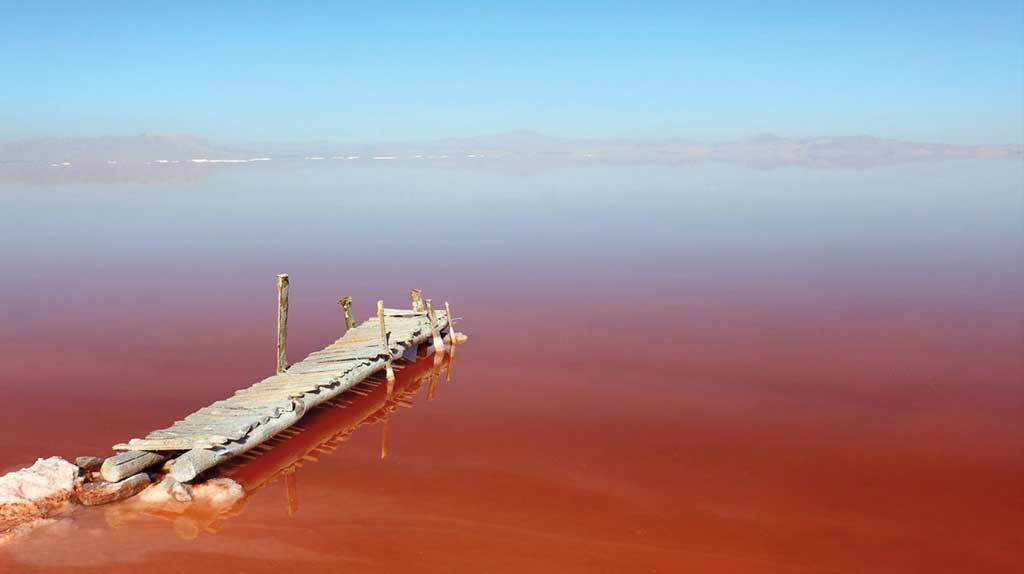
Lake Urmia in northwestern Iran, once the largest lake in the Middle East and one of the largest hypersaline lakes on Earth, has suffered severe desiccation due to agricultural over-extraction and prolonged drought. Managing dynamic water resources represents Iran’s most critical domestic ecological crisis.
Average Precipitation and Soil Characteristics
According to World Bank climatic data, Iran receives an average annual precipitation of only 228 mm, ranking 142nd worldwide. Precipitation exhibits stark geographical asymmetry: while the Caspian coastal plain receives over 1,000 to 1,800 mm annually, the vast Central Plateau (Dasht-e Kavir and Dasht-e Lut) receives under 50 mm. Soils across much of the plateau are arid Aridisols and Entisols, requiring precision irrigation to sustain cereal, pistachio, and date palm cultivation.
Renewable Electricity and Hydropower Generation
In 2025, Iran generated 15.2 TWh of renewable electricity — 4% of its total generation of 395.8 TWh — and hydropower supplied 13.0 TWh (Ember), mostly from plants on the high-gradient rivers of the Zagros range. The premier facility is the Karun-3 Hydroelectric Dam in Khuzestan province, featuring an installed capacity of 2,280 MW. Non-hydro renewables (solar and wind) remain under 2% of generation, although national plans target 10 GW of renewable capacity to diversify away from domestic gas consumption.
Forest Resources of Iran
According to FAO Global Forest Resources Assessment data, Iran possesses approximately 107,518 km² of forested area (representing 6.6% of the national territory, ranking 48th globally). The crown jewel of Iranian forest resources is the ancient Caspian Hyrcanian mixed forests, inscribed as a UNESCO World Heritage site.
Stretching along the southern rim of the Caspian Sea and northern slopes of the Alborz mountains, the Hyrcanian forest is a biological relic dating back 25 to 50 million years, serving as a Tertiary refuge during Pleistocene glaciations with endemic species including Persian ironwood (Parrotia persica) and chestnut-leaved oak.
Environmental Performance and Conservation Framework
In the 2024 Environmental Performance Index (Yale University EPI), Iran achieved a score of 41.8, ranking 113th out of 180 evaluated nations. Protected terrestrial areas cover 7.8% of the country’s total land area according to World Bank figures (2025). The primary domestic conservation priorities involve wetland restoration, halting aquifer depletion, and controlling soil erosion across grazed rangelands.
National Parks of Iran: Protected Natural Heritage
Biodiversity: Fauna and Flora of Iran
Avian Diversity
Iran supports 527 recorded bird species (ranking 75th globally in avian richness). Situated along the Western Palearctic and Asian migratory flyways, Iranian wetlands provide critical overwintering grounds for millions of waterfowl. However, 28 bird species face global conservation threats. Notable species include the Eurasian eagle-owl (Bubo bubo), the pleske’s ground jay (Podoces pleskei, an endemic desert corvid), and wintering populations of greater flamingos.

Fish and Amphibians
Iran harbors 21 recorded amphibian species (76th globally) and 673 fish species (86th globally). In commercial and ecological terms, the Caspian Sea basin supports indigenous sturgeon species (family Acipenseridae), including the beluga (Huso huso) and Persian sturgeon (Acipenser persicus), renowned historically for wild caviar production and now critically endangered. Inland rivers also support native brown trout and endemic barbel species.
Mammals of Iran
Iran is home to 186 native mammal species, of which 18 are categorized as threatened under IUCN red list criteria, with 9 strictly endemic to the country. Flagship carnivores include the critically endangered Asiatic cheetah (Acinonyx jubatus venaticus), with its last global population surviving in the central arid deserts of Touran and Kavir, and the robust Persian leopard (Panthera pardus saxicolor) inhabiting the Alborz and Zagros mountain corridors.

Reptiles
With 332 recorded reptile species, Iran ranks 23rd globally in herpetological diversity. Its diverse terrain supports specialized desert agamas, geckos, and venomous vipers. Prominent species include the Central Asian cobra (Naja oxiana), the Iranian saw-scaled viper, and the extraordinary spider-tailed horned viper (Pseudocerastes urarachnoides), endemic to western Iran.

Flora and Botanical Heritage
Iran hosts an estimated 7,500 species of vascular plants, ranking 24th globally in floral richness, with approximately 30% of species endemic. The country is a world center of genetic origin for crucial horticultural crops, including the pistachio (Pistacia vera, heavily cultivated in Kerman), saffron crocus (Crocus sativus, where Iran supplies over 90% of global output), pomegranate, walnuts, and wild almond varieties.
Organizations Managing Natural Resources in Iran
- Department of Environment (DOE): National environmental authority overseeing wildlife conservation and protected area management across Iran.
- Natural Resources and Watershed Management Organization (FRWO): State agency responsible for preserving forests, rangelands, and watershed hydrological health.
- Iranian Cheetah Society (ICS): Leading non-governmental conservation body dedicated to protecting the Asiatic cheetah and desert carnivores.
- Ramsar Convention on Wetlands: Landmark global wetland treaty signed in Ramsar, Iran, in 1971, which continues to guide international wetland protection.
- UNDP Iran: United Nations agency collaborating on wetland rehabilitation, Zagros forest conservation, and carbon mitigation programs.
- Convention on Migratory Species (CMS): International treaty protecting migratory animal species, with Iran participating as a contracting party.
Extreme Water Stress Amid Hydrocarbon Wealth
Water marks Iran’s strictest ecological limit. According to the World Resources Institute (WRI, 2025), Iran is classified under “extremely high water stress,” annually withdrawing more than 80% of its total renewable freshwater resources—a figure that climbs significantly higher during cyclical drought years. Uncontrolled extraction of deep fossil groundwater has triggered widespread land subsidence across agricultural plains, making aquifer stabilization an urgent national security imperative.
Frequently Asked Questions
Where does Iran rank in global natural gas reserves? Iran ranks second globally in proven natural gas reserves with approximately 34 trillion cubic meters, trailing only Russia (EIA, 2024 / Ministry of Petroleum).
How severe is Iran’s water crisis? Iran operates under “extremely high water stress,” withdrawing over 80% of its renewable water flows each year (WRI Aqueduct), leading to the dramatic shrinkage of Lake Urmia and dropping groundwater tables.
Authoritative Information Sources
- Iran Energy Analysis and Hydrocarbon Statistics – U.S. Energy Information Administration (EIA)
- OPEC Annual Statistical Bulletin – Proven Reserves and Output – Organization of the Petroleum Exporting Countries
- Mineral Commodity Summaries: Iron Ore – United States Geological Survey (USGS)
- AQUASTAT Water Database: Iran Country Profile – Food and Agriculture Organization (FAO)
- World Development Indicators: Forest Area and Environment – World Bank
- Environmental Performance Index 2024: Iran – Yale Center for Environmental Law & Policy
- Biodiversity Statistics: Avian and Reptile Richness – Mongabay
To explore more about regional resources, consult our comprehensive guide to Asia natural resources or view our full international guide in the natural resources by country directory.
Last updated: September 26, 2026
Leave a Reply