


Qatar’s natural resources are concentrated in hydrocarbons, with daily production of about 1.8 million barrels of oil and other petroleum liquids in 2023 (14th in the world) and sixth place in natural gas. Beyond oil, what natural resources does Qatar have? The country produced 616 thousand tonnes of aluminum in 2019 and is home to 287 bird species and 514 fish species, despite having just 0.06 km³ of renewable freshwater resources.
Qatar is a country on the Persian Gulf, known for its great wealth of natural resources. Its economy has traditionally been based on the oil and gas industry, which has generated large profits and enabled the development of modern infrastructure.
Contents
However, the country also has other very important natural resources, such as fisheries, agriculture and mining, which have been key to diversifying its economy. Qatar is also rich in biodiversity and unique ecosystems, which must be protected and conserved to ensure their long-term sustainability.
What are Qatar’s most notable natural resources? What makes up its natural wealth? Which minerals does it have, and how do they rank globally? Which animals and plants live in Qatar?
Natural resources
Natural resources are materials or energy sources provided by or found on Earth that are useful to humans. Every product we manufacture is made up of natural resources.
- Renewable resources: these can be restored by natural processes faster than the rate at which they are consumed. Examples include solar radiation, wind, hydroelectric power, water when used properly, and plant and animal life.
- Non-renewable resources: once extracted, these are depleted and cannot regenerate. Examples include hydrocarbons, metals and minerals.
Examples of Qatar’s main natural resources
What Qatar’s land produces
Natural resource rents, fisheries and agricultural land use, along with the state of conservation.
| Natural resource rents | 27.3% of GDP2021 |
|---|---|
| Capture fisheries | 20,377 t per year2024 |
| Agricultural land | 6.4% of land area2023 |
| Arable land | 1.8% of land area2023 |
| Forest cover | 0.0% of land area2023 |
| Protected land area | 15.6% of land area2025 |
Oil and gas resources in Qatar
Qatar is one of the world’s leading oil producers. In 2023, its total petroleum production, including condensates and other natural gas liquids, reached about 1.8 million barrels a day, placing it 14th in the world ranking of oil production (CIA World Factbook).
It also has significant oil reserves, estimated at 25,244,000,000 barrels in 2022, which places it 14th in the world ranking of oil reserves. Qatar is known as a region rich in natural resources, especially oil.
Qatar also has abundant natural gas resources, which allowed it to produce about 171.8 billion cubic meters in 2023. The country ranks sixth among the world’s natural gas producers (CIA World Factbook).
Examples of Qatar’s mineral resources
In 2019, Qatar’s aluminum production reached 616 thousand tonnes, placing it 15th in the world ranking for production of this resource. Qatar’s main aluminum-producing area is the city of Mesaieed, home to the country’s largest aluminum plant.
Water resources of Qatar
Qatar has 0.06 km³ of renewable freshwater resources, which placed it 150th in the world ranking of water reserves in 2020. Despite the country’s great oil wealth, water scarcity is a constant problem because it lies in a desert region.
Qatar has no permanent rivers or lakes: its dry valleys (wadis) are found mainly in the north and around Jebel Dukhan, and most of its water is obtained by desalinating seawater, with the rest coming from underground sources.
Average rainfall and soils of Qatar
Qatar has an average annual rainfall of 74 mm, which places it 156th in the world ranking of average annual precipitation. Because of the country’s low humidity, its soils are predominantly arid desert soils, with sparse vegetation adapted to the extreme climate.
Environmental performance and protection of Qatar’s natural resources
Qatar’s Environmental Performance Index score (EPI 2024) is 46.8, and the country ranks 82nd on the index. In addition, protected areas cover 15.6% of its land area and 5.8% of its total territorial area, including marine waters (World Bank, 2025).
Natural parks of Qatar: the hidden wealth of natural resources
Biodiversity: animal and plant resources of Qatar
Birds of Qatar
Qatar, a country on the Persian Gulf, has 287 bird species (latest count) (Mongabay), most notably the peregrine falcon. Although it has no endemic bird species, 9 of its species are threatened.
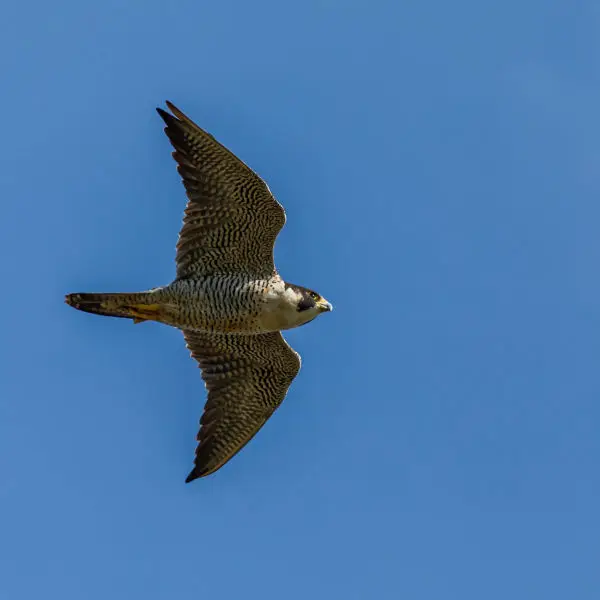
Globally, it ranks 151st for number of bird species.
Fish and amphibians of Qatar
Qatar has a rich diversity of natural resources, but the situation for amphibians is worrying, as no species were recorded in 2019. For fish, however, the country has a total of 514 species (latest count) (Mongabay), notably the catfish.
Even so, 17 of these species are threatened. Globally, Qatar ranks 118th for number of fish species.
Reptiles of Qatar
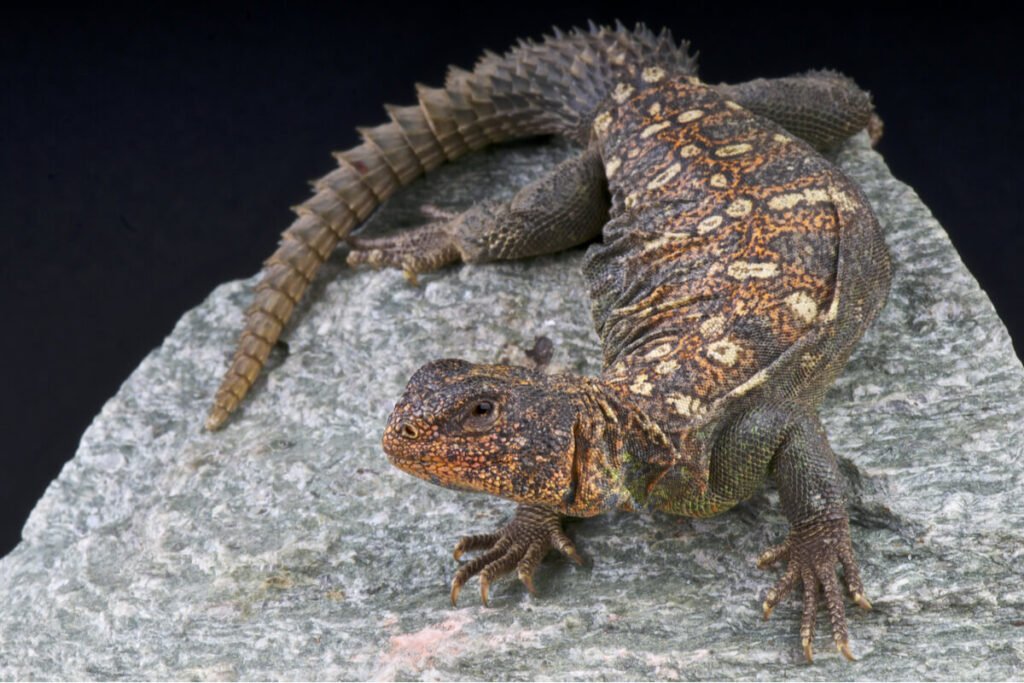
Qatar has a total of 38 reptile species (latest count) (Mongabay), ranking 118th in the world for diversity of these animals. The spiny-tailed lizard stands out.
The North Field, off Qatar’s northeast coast, is the world’s largest non-associated natural gas field: it covers more than 6,000 km² (close to half the country’s area) and holds recoverable reserves of more than 900 trillion cubic feet, around 10% of the planet’s known gas (QatarEnergy, n.d.). That single deposit accounts for almost all of the country’s resource wealth.
Natural gas and LNG leadership
Qatar has the world’s third-largest proven gas reserves, behind Russia and Iran, with about 11% of the world total (EIA, 2021). That base made it the world’s second-largest exporter of liquefied natural gas (LNG) in 2024. Its liquefaction capacity of 3.7 trillion cubic feet a year will nearly double, to 6.8 trillion, by 2030 with the new trains linked to the North Field expansion (EIA, 2024).
Oil: an engine in gradual decline
Crude oil is no longer the centerpiece. Qatar produced about 615,000 barrels of oil a day in 2024, below the peak of 852,000 reached in 2008 (EIA, 2024). Adding condensates and other natural gas liquids, total liquid hydrocarbon production reached 1.9 million barrels a day that year: the country increasingly gets more value from gas than from crude.
Helium: a strategic by-product
Gas from the North Field also makes Qatar the world’s second-largest helium producer, after the United States, with about a third of global supply. According to the USGS, it produced about 63 million cubic meters, compared with 81 million for the United States (The National, with USGS data, 2026). Helium, essential for MRI scanners and semiconductors, is separated from natural gas during liquefaction.
Sources used
- List of countries by mineral production – Wikipedia
- Economic data by country – The Global Economy
- Forest area (km²) – World Bank
- Forest area (% of land area) – World Bank
- Oil reserves – The Global Economy
- Water and agriculture statistics – FAO
- Precipitation (mm) – World Bank
- Environmental Performance Index – Environmental Performance Index
- Bird species – Mongabay
- Amphibian species by country – Mongabay
- Plant species – Mongabay
- Reptile species by country – Mongabay
- Endemic bird species by country – Our World in Data
OPEC reported in 2023 that Qatar has the world’s third-largest natural gas reserves, at about 23.9 trillion cubic meters.
Organizations that protect or study Qatar’s natural resources
- Ministry of Environment and Climate Change of Qatar (MECC): Qatari ministry that regulates and protects the country’s environment and climate.
- Environmental Science Center, Qatar University: University center that researches Qatar’s marine and terrestrial biodiversity.
- Earthna Center for a Sustainable Future (Qatar Foundation): Qatar Foundation center for environmental sustainability in arid climates.
- Qatar e-Nature: Awareness initiative about Qatar’s flora, fauna and nature reserves.
- Al Reem Biosphere Reserve (UNESCO-MAB): UNESCO biosphere reserve that protects oryx and gazelles in Qatar.
- IUCN – International Union for Conservation of Nature: International union for the conservation of nature and natural resources.
Last updated: September 26, 2026

Leave a Reply