


Mauritania’s natural resources combine mining, fishing and desert and coastal biodiversity. What are Mauritania’s most important natural resources? Iron is the main one, with 14,200 thousand tonnes in 2024 (an all-time record for SNIM), mined mainly around Zouerate. The country also has 540 bird species and just 92 mm of rain a year.
Mauritania, in northwest Africa, is a country rich in natural resources. Its varied landscape includes deserts, plains and coastline, offering a wide range of resources.
Table de contenidos
These include minerals such as iron, gold and copper, as well as oil and natural gas. Fishing is also an important source of income for the country, thanks to its fish-rich waters.
The country’s biodiversity is also impressive, with a wide variety of animal and plant species, some of them endemic to the region.
What is Mauritania’s natural wealth, and what are its key resources? Where does it rank in the world for mineral resources? How does it generate energy, and how much water does it have?
Natural resources
Natural resources are materials or energy sources provided by or found on Earth that are useful to humans. Every product we manufacture is made up of natural resources.
- Renewable resources: these can be restored by natural processes faster than the rate at which they are consumed. Examples include solar radiation, wind, hydroelectric power, water when used properly, and plant and animal life.
- Non-renewable resources: once extracted, these are depleted and cannot regenerate. Examples include hydrocarbons, metals and minerals.
Examples of Mauritania’s main natural resources
Environmental indicators for Mauritania
Official data on forests, water, energy and threatened species.
| Forest cover | 0.3% of land area2023 |
|---|---|
| Renewable freshwater per capita | 82 m³ per year2022 |
| Electricity from renewable sources | 19.4% of total generation2021 |
| Threatened species | 121 mammals, birds, fish and plants2022 |
| Protected land area | 0.6% of land area2025 |
| Arable land | 0.4% of land area2023 |
Examples of Mauritania’s mineral resources
In 2024, iron production in Mauritania (SNIM) reached 14,200 thousand tonnes, an all-time record according to SNIM data published in 2025. Mauritania’s main iron-producing region is the Zouerate area, in the north of the country.
Water resources of Mauritania
Mauritania has 11.4 km³ of renewable freshwater resources, which places it 124th in the world for water reserves. Although the country lies in an arid and semi-arid zone, it has significant water resources from the Senegal River, which forms its southern border, and from seasonal lakes such as Lake R’Kiz, which is fed by the river’s floodwaters.
These bodies of water are fundamental to the life and development of the Mauritanian people, and their proper conservation and management are essential to ensure their availability in the future.
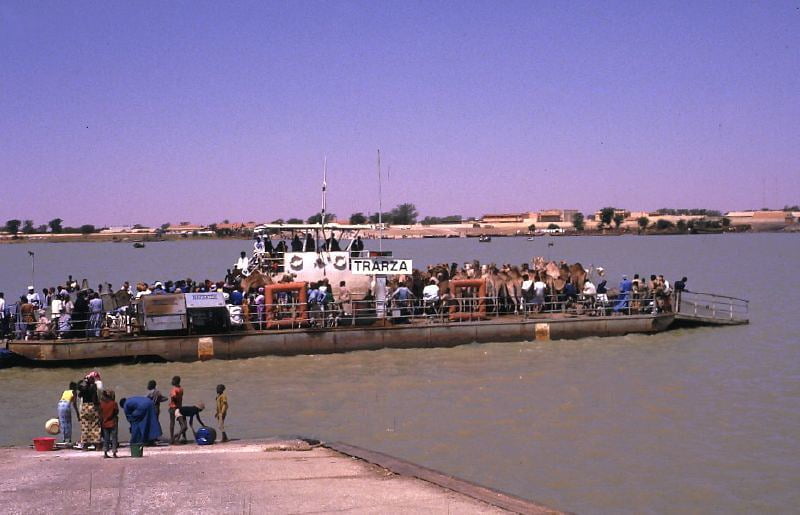
Average rainfall and soils of Mauritania
Mauritania has an average annual rainfall of 92 mm, which places it 152nd in the world for this indicator. Because of the country’s low humidity, its soils tend to be arid and poorly suited to agriculture.
However, in some areas where humidity is higher, more fertile soils suitable for farming can be found.
Forest resources of Mauritania
Mauritania has limited forest resources: its forest area represents only 0.30% of its land area, equivalent to 2,964 km² (2023 data). Globally, it ranks 140th for forest area.
The Trarza region is the country’s main forest region.
Environmental performance and protection of Mauritania’s natural resources
Natural resources are very important in Mauritania. The country has a 2024 Environmental Performance Index score of 34.6 and ranks 159th in the Environmental Performance Index. In addition, protected areas cover 0.6% of its land area and 1.0% of its total territorial area, including marine areas (World Bank, 2025).
Natural parks of Mauritania: the hidden wealth of natural resources
Biodiversity: animal and plant resources of Mauritania
Birds of Mauritania
Mauritania has a rich diversity of birds, with a total of 540 species according to the most recent count, which ranks it 73rd in the world for number of bird species. However, 24 of its bird species are threatened (2022), so it is essential to protect and conserve this natural resource.
Fish and amphibians of Mauritania
Mauritania has 12 amphibian species and 743 species of fish, notably the hammerhead shark. Of the fish species, 78 are threatened (2022).
Mauritania ranks 85th for number of amphibian species and 79th for number of fish species.
Reptiles of Mauritania
Mauritania has a rich diversity of reptiles, with a total of 98 species recorded according to the most recent count, which places it 81st in the world for number of species.
Organizations that protect or study Mauritania’s natural resources
- Banc d'Arguin National Park (Parc National du Banc d'Arguin, PNBA): Coastal national park that protects migratory birds and Mauritania’s marine biodiversity.
- Diawling National Park (Parc National du Diawling, PND): National park in the Senegal River delta; wetlands and ecological restoration.
- BACoMaB Trust Fund: Trust fund that finances the conservation of Mauritania’s coastal and marine biodiversity.
- Nature Mauritanie: National NGO dedicated to wetlands, birds and the fight against desertification.
- Wetlands International: International organization that restores wetlands in the Sahel and on the Mauritanian coast.
- IUCN (International Union for Conservation of Nature): International union that supports the conservation of protected areas in Mauritania.
Mauritania’s most visible natural resource travels on a single train: the line linking the Zouérat iron mines to the Atlantic port of Nouadhibou hauls 200 to 210 cars, each carrying up to 84 tonnes of ore, along 704 km, in trains up to 3 km long, among the longest and heaviest in the world (Wikipedia, 2025). That iron explains why the extractive sector generated 76.28% of the country’s exports in 2023 (EITI, 2023).
Iron: giant reserves and a 704 km railway
The direct-shipping ore reserves of SNIM, the state mining company, total about 300 million tonnes, plus another 3 billion tonnes that require beneficiation to raise their grade (Mining Technology). Production was around 12.5 million tonnes in 2020 (Mining Technology). Iron is the dominant raw material of a country that EITI classifies as a leading producer of iron, copper and gold (EITI, 2023).
One of the richest fishing grounds in the Atlantic
Mauritania’s 200-nautical-mile exclusive economic zone is among the richest fishing grounds in the world, with about 600 marine species, more than 200 of them of commercial value. Mauritania is one of the world’s five largest octopus suppliers: about 40,000 tonnes were exported in 2022, close to 8% of global production, and fishery exports were worth $759 million that year (Business Focus).
Deepwater natural gas: the GTA project
The newest resource is gas. The Greater Tortue Ahmeyim (GTA) field, shared with Senegal, delivered its first gas on December 31, 2024, and its first LNG in February 2025. The first phase produces about 2.7 million tonnes of LNG a year from reservoirs up to 2,850 meters deep, one of the deepest subsea developments in Africa (Kosmos Energy).
Sources used
- Lists of countries by mineral production – Wikipedia
- Economic data by country – The Global Economy
- Forest area (km²) – World Bank
- Forest area (% of land area) – World Bank
- Water and agriculture statistics – FAO
- Precipitation (mm) – World Bank
- Environmental Performance Index – Environmental Performance Index
- Bird species – Mongabay
- Amphibian species by country – Mongabay
- Plant species – Mongabay
- Reptile species by country – Mongabay
- Endemic bird species by country – Our World in Data
The World Bank reported in 2023 that Mauritania has major iron ore reserves in the Zouerate region, a key sector for its exports.
Last updated: September 26, 2026
Leave a Reply