


Montenegro’s natural resources combine coal (reserves of 156,528,020 tonnes in Pljevlja), forests covering 61.49% of the territory and hydropower that supplied 1.4 TWh in 2025 (Ember), with the Piva plant (342 MW). Which of Montenegro’s natural resources matter most? The country is home to 381 bird species, 342 fish species and 2,550 vascular plants, with the olive tree and the brown trout among its flagship species.
Montenegro is a small country in southeastern Europe with a wide variety of natural resources. Located on the Adriatic Sea, it has a striking coastline and rugged mountains that cover much of its territory.
Table de contenidos
Its biodiversity is rich and varied, with endemic species and a great variety of plants and animals. Montenegro’s natural resources are abundant, ranging from minerals and timber to hydropower and fisheries.
The country’s economy depends heavily on these resources, and their sustainability is key to its future.
What are the most important natural resources in Montenegro? How abundant is the country’s natural wealth? Which minerals are available, and how do they compare globally? How much water and what energy sources does it have? Which animals and plants are found in Montenegro?
Natural resources
Natural resources are materials or energy sources provided by or found on Earth that are useful to humans. Every product we manufacture is made up of natural resources.
- Renewable resources: these can be restored by natural processes faster than the rate at which they are consumed. Examples include solar radiation, wind, hydroelectric power, water when used properly, and plant and animal life.
- Non-renewable resources: once extracted, these are depleted and cannot regenerate. Examples include hydrocarbons, metals and minerals.
Examples of Montenegro’s main natural resources
Environmental indicators for Montenegro
Official data on forests, water, energy and threatened species.
| Forest cover | 61.5% of land area2023 |
|---|---|
| Renewable electricity | 61.8% of total generation2021 |
| Threatened species | 78 mammals, birds, fish and plants2022 |
| Protected land area | 22.2% of land area2025 |
| Arable land | 0.7% of land area2023 |
Examples of Montenegro’s mineral resources
In Montenegro, coal reserves reached 156,528,020 tonnes in 2016. The main region for this resource in Montenegro is the Pljevlja area, in the north of the country.
Renewable electricity and hydropower production in Montenegro
In 2025, Montenegro generated 1.9 TWh of electricity from renewable sources — 76% of its total generation of 2.5 TWh — and hydropower alone supplied 1.4 TWh (Ember, 2025). The main hydroelectric plant is Piva, in the north of the country.
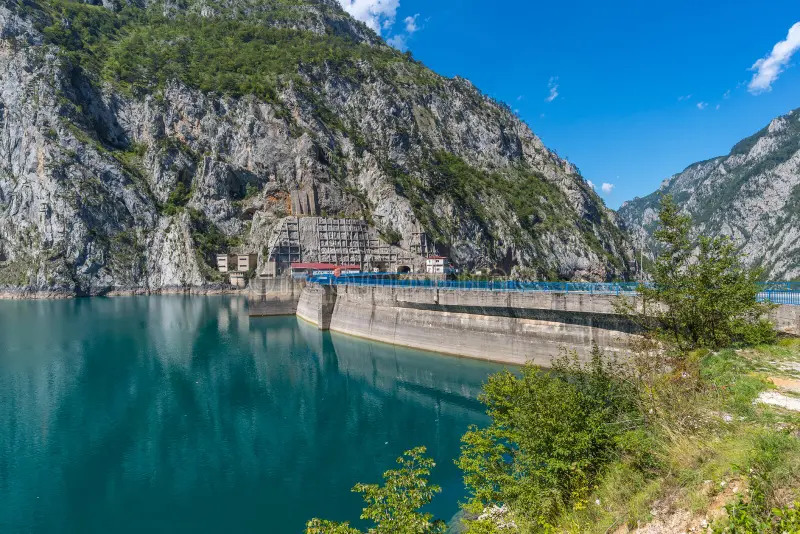
This plant can generate up to 342 MW of clean, renewable power, contributing significantly to reducing greenhouse gas emissions in the region.
Forest resources of Montenegro
Montenegro has considerable natural wealth in forest resources. With forests covering 61.49% of its territory, equivalent to 8,270 km², it ranks 121st in the world.
Montenegro’s main forest region is in the north of the country, in the Durmitor area, where conifer and beech forests, among other species, can be found.
Environmental performance and protection of Montenegro’s natural resources
Montenegro has an Environmental Performance Index (2024) score of 47.7 and ranks 73rd on the index (EPI 2024, Yale). In addition, protected areas cover 22.2% of its land area and 16.3% of its total territorial area, including marine areas (World Bank, 2025). To learn more about the Environmental Performance Index, visit Environmental Performance Index (2024).
Natural parks of Montenegro: the hidden wealth of natural resources
Biodiversity: animal and plant resources of Montenegro
Birds of Montenegro
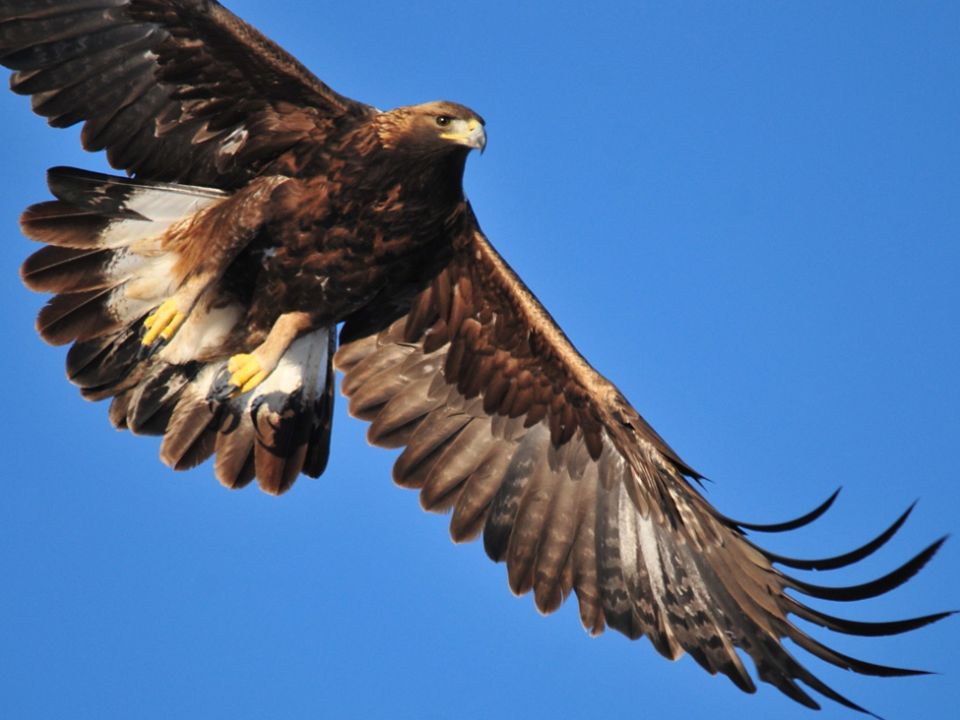
Montenegro has a rich diversity of birds, with a total of 381 recorded species, ranking 146th in the world for number of bird species (Mongabay). However, 13 of its bird species are endangered.
Conserving these species is a valuable resource for the country; the golden eagle is a standout.
Fish and amphibians of Montenegro
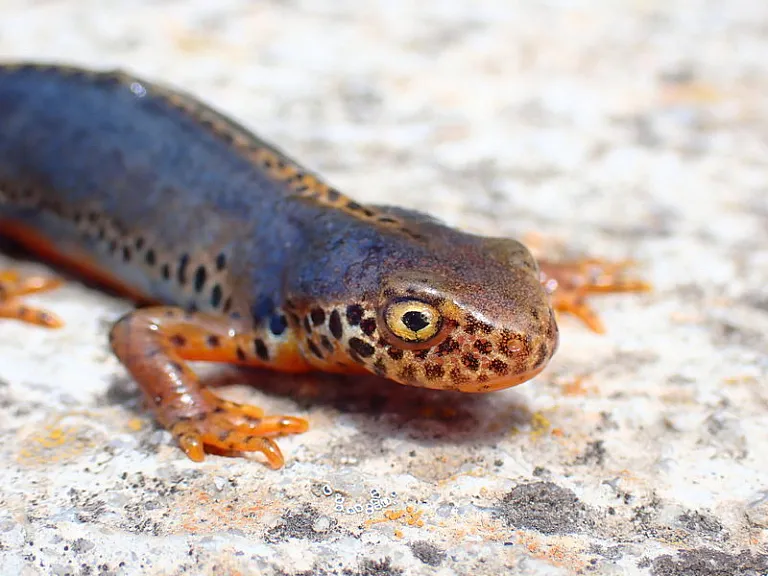
Montenegro is a country with rich biodiversity, including 17 amphibian species and 342 fish species (Mongabay / worldrainforests.com). Globally, it ranks 80th for number of amphibian species and 148th for number of fish species.
However, 52 fish species are threatened (2022). Among the country’s most representative species are the alpine newt and the brown trout.
Reptiles of Montenegro
Montenegro has 40 reptile species (Mongabay / worldrainforests.com), ranking 121st in the world for number of species.
Plants of Montenegro
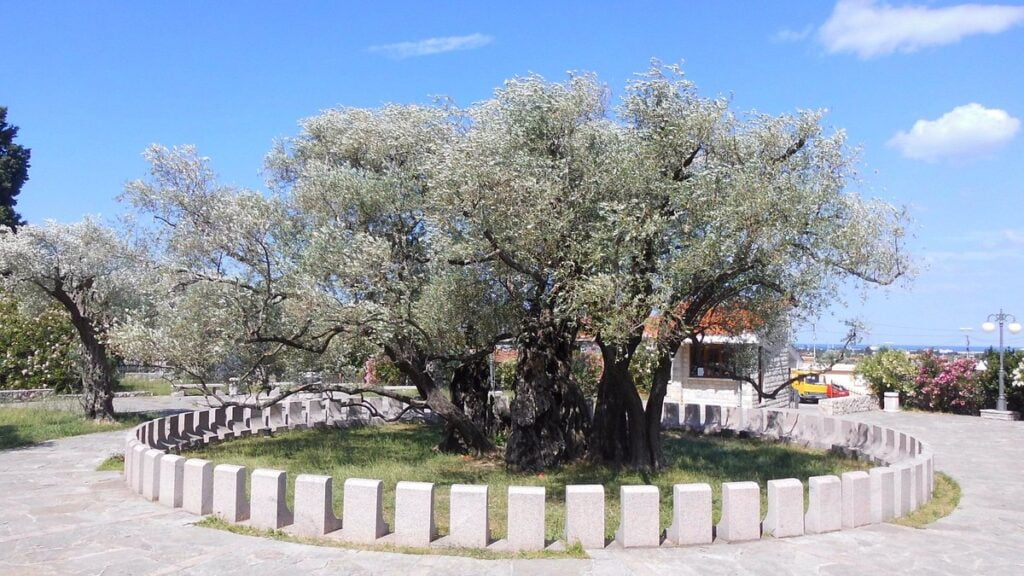
Montenegro has a great diversity of vascular plants, with a total of 2,550 species recorded in 2020, placing it 77th in the world. Among the most notable species is the olive, the country’s main plant, which is grown in large quantities in the coastal region.
Organizations that protect or study Montenegro’s natural resources
- Ministry of Ecology, Sustainable Development and Northern Region Development: Ministry that regulates ecology and the sustainable use of natural resources.
- Environmental Protection Agency of Montenegro (EPA): State agency that monitors the environment and protects Montenegro’s natural heritage.
- National Parks of Montenegro: Public enterprise that manages and protects Montenegro’s five national parks.
- CZIP (Center for Protection and Research of Birds, BirdLife partner): BirdLife partner NGO that protects Montenegro’s birds and biodiversity.
- NGO Green Home: NGO that protects Montenegro’s environment and natural resources.
Montenegro was the first country in the world to declare itself an “ecological state”: the Declaration was adopted on September 20, 1991, in the mountain town of Žabljak, and the following year it was enshrined in the Constitution, which defines the country as a “democratic, social and ecological state” (Žabljak Tourist Organization; Balkan Insight, 2021).
Bauxite: the basis of Montenegrin aluminum
The Nikšić deposit holds estimated reserves of 135.2 million tonnes of bauxite, the largest in the country and one of the largest in Europe (Wikipedia, citing a Serbian primary source). The ore feeds the Podgorica Aluminum Plant (KAP), which extracts its own alumina using the Bayer process and has an installed capacity of 120,000 tonnes of liquid aluminum a year (Wikipedia, Aluminium Plant Podgorica).
Hydropower: almost three-quarters of installed capacity
Two large plants support the power system: Perućica (307 MW), in service since 1960, and Piva (342 MW). Together they provide 649 MW of hydro capacity, about 74% of the country’s 874 MW of installed capacity; the rest comes from the only coal-fired power plant, in Pljevlja, with 225 MW (Bankwatch; U.S. ITA, Country Commercial Guide).
Nature tourism: the deepest canyon in Europe
The Tara River has carved a canyon about 80 km long and up to 1,300 meters deep, the deepest in Europe. It is protected within Durmitor National Park, which was inscribed on the UNESCO World Heritage List in 1980 (Wikipedia, Durmitor).
Sources used
- Forest area (km²) – World Bank
- Forest area (% of land area) – World Bank
- Coal reserves – Worldometers
- Water and agriculture statistics – FAO
- Precipitation (mm) – World Bank
- Environmental Performance Index – Environmental Performance Index
- Bird species – Mongabay
- Amphibian species by country – Mongabay
- Plant species – Mongabay
- Reptile species by country – Mongabay
- Endemic bird species by country – Our World in Data
The World Bank noted in 2023 that Montenegro has one of the cleanest Adriatic coastlines in Europe and significant hydropower potential in its mountainous interior.
Last updated: September 26, 2026
Leave a Reply