


Guatemala’s natural resources include extensive tropical forests, 111.3 km³ of freshwater, metallic minerals (nickel, gold, silver), and agricultural soils that lead world cardamom production (52.2% of global exports). Forests cover 32.92% of its territory, anchored by the 2.09-million-hectare Maya Biosphere Reserve, while low-carbon sources generate 72% of the country’s electricity. What are the key natural resources of Guatemala?
Guatemala is a Central American nation characterized by exceptional natural resource diversity. From its towering volcanic cordilleras and highland lakes to the dense tropical forests of the Petén lowlands, the country encompasses a diverse range of biomes that position it among the most biodiverse areas in Mesoamerica.
Table de contenidos
Furthermore, its strategic geography endows it with mineral and energy wealth, including substantial nickel and gold deposits, modest oil production, and high hydroelectric potential. Balancing the economic utilization of these natural resources with long-term ecological conservation represents one of Guatemala’s primary sustainable development challenges.
What are the main natural resources of Guatemala? What constitutes the country’s mineral and agricultural wealth? How abundant are its freshwater basins, and how is clean electricity generated? What wildlife and plant species inhabit Guatemala?
Natural Resources
Natural resources are materials or energy flows provided by nature that are essential and valuable for human society. All manufacturing industries, agricultural supply chains, and power systems depend upon natural resources.
- Renewable resources: resources that naturally replenish through environmental cycles faster than their consumption rate, such as solar irradiance, wind power, hydroelectric water flows, agricultural soils, and managed timber stands.
- Non-renewable resources: geological stocks that exist in finite quantities and cannot regenerate on human timescales once extracted, including petroleum, nickel, gold, and limestone. Learn more about the differences in our guide to renewable vs. non-renewable resources.
Examples of the Main Natural Resources of Guatemala
Environmental Overview of Guatemala
Key official metrics on land use, water availability, and conservation status in Guatemala.
| Agricultural land area | 43.0% of territory2023 |
|---|---|
| Arable land | 14.5% of territory2023 |
| Forest cover | 32.6% of territory2023 |
| Renewable freshwater per capita | 6,118 m³ per year2022 |
| Renewable electricity share | 60.6% of total generation2021 |
| Protected terrestrial area | 20.1% of territory2025 |
Natural Resources Map of Guatemala by Region
Regional distribution of the nation’s primary agricultural, mineral, and forestry assets.
| Resource | Reserves / Production | Source |
|---|---|---|
| Crude oil | 5,780 barrels/day (2023); reserves ~83M barrels | The Global Economy 2023 |
| Minerals and metals | ~14.5% of total merchandise exports (2016) | USGS |
| Freshwater | 111.3 km³ (2020); 58th globally | FAO |
| Precipitation | 1,996 mm/year | World Bank |
| Forest cover | 32.92% of territory (35,463 km²); 2023 | World Bank 2023 |
Petroleum Resources in Guatemala
Guatemala produced approximately 5,780 barrels of crude oil per day in 2023 (The Global Economy, 2023), reflecting a structural decline from peak production in the early 2000s. The country possesses proved crude oil reserves estimated at roughly 83 million barrels, situated primarily in the South Petén Basin (Xan oil field).
Mineral and Metallic Resources
Guatemala possesses diverse metallic and industrial mineral deposits, including nickel, gold, silver, lead, zinc, copper, antimony, and jadeite. Discover our global overview of mineral resources.
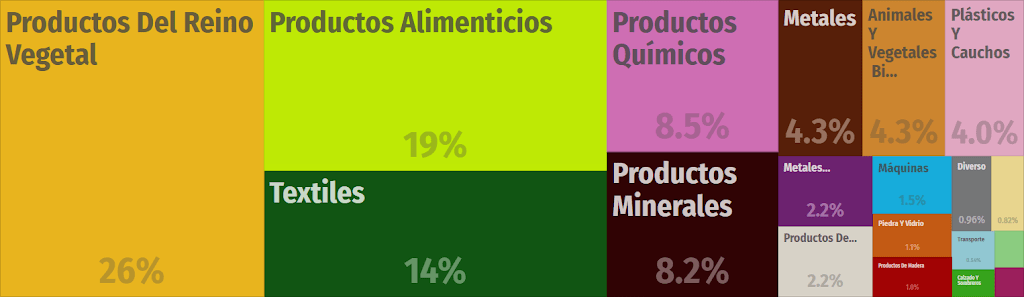
Mining products and base metals have historically represented around 14.5% of Guatemala’s total export value (USGS, 2016). The Fénix project near Lake Izabal constitutes one of the largest lateritic nickel reserves in Central America, while the Marlin mine historically generated significant gold and silver exports.
Water Resources of Guatemala
Guatemala holds total renewable freshwater reserves of 111.3 km³ (2020), ranking 58th globally according to FAO AQUASTAT. For comparative international perspectives, see our comprehensive guide to global water resources.
The national territory is divided into three primary hydrological slopes: the Pacific Slope, the Atlantic (Caribbean) Slope, and the Gulf of Mexico Slope. Guatemala features approximately 1,151 lake systems, comprising 7 major lakes, 365 lagoons, and 779 smaller lake bodies.
The Pacific Slope encompasses 18 river basins draining 22% of the national territory. Rivers on this slope are characteristically short and steep, descending rapidly from the volcanic mountain chain to the coastal plain.
The Atlantic Slope includes 10 basins spanning 31% of the country, featuring major river systems such as the Motagua River (Guatemala’s longest river at 486 km), the Polochic River, and the Río Dulce, which drains Lake Izabal into the Caribbean Sea.
The Gulf of Mexico Slope covers 47% of national territory across 10 basins, carrying large volumes via the Usumacinta and Chixoy rivers into southern Mexico.
Among Guatemala’s lakes, Lake Izabal is the largest (589.6 km²), while Lake Atitlán, situated at 1,562 meters in a volcanic caldera, is celebrated worldwide for its depth and clarity.

Average Rainfall and Soils of Guatemala
Guatemala receives an average annual precipitation of 1,996 mm, ranking 29th globally in rainfall volume. Precipitation varies markedly, exceeding 4,000 mm on the northern Caribbean mountain slopes while falling below 600 mm in the semi-arid Motagua Valley rain shadow.
Guatemala’s volcanic highlands feature deep and fertile andosol soils rich in organic matter and volcanic ash, ideal for specialty Arabica coffee and vegetables, while the northern Petén is dominated by shallow, fragile calcareous limestone soils.
Renewable Electricity and Hydropower Production in Guatemala
According to official data, Guatemala generates approximately 8,460 GWh of renewable electricity annually, with 5,142 GWh supplied by hydropower plants. Flagship hydroelectric installations include the Chixoy Hydroelectric Plant (300 MW), which supplies roughly 15% of national power demand, alongside the Aguacapa (90 MW) and Jurún Marinalá plants. Explore our global analysis in energy resources.
Forest Resources of Guatemala
According to the World Bank, in 2023 forest cover encompassed 32.92% of Guatemala’s land area (roughly 35,463 km² or 3.55 million hectares), placing Guatemala 83rd globally in forested area. Review our detailed global analysis on forest resources.
Guatemala’s forest estate includes tropical broadleaf rainforests in Petén, coniferous pine-oak forests in the central highlands, and mangrove forests along both coastlines, supplying precious woods such as mahogany (Swietenia macrophylla) and Spanish cedar.
Environmental Performance and Protection of Natural Resources in Guatemala
In the 2024 Environmental Performance Index (EPI) from Yale University, Guatemala scored 38.1, ranking 135th globally. Terrestrial protected areas encompass approximately 20.1% of national land area, anchored by the UNESCO-recognized Maya Biosphere Reserve.
Natural Parks of Guatemala: The Hidden Wealth of Natural Resources
Biodiversity: Animal and Plant Resources of Guatemala
Birds of Guatemala
Guatemala shelters 738 documented bird species, representing over 65% of Central America’s total avifauna. The national bird is the Resplendent Quetzal (Pharomachrus mocinno), an inhabitant of high-elevation cloud forests, alongside the Horned Guan (Oreophasis derbianus) and the Ocellated Turkey (Meleagris ocellata) in the northern lowlands.
Fish and Amphibians of Guatemala
Guatemala counts over 220 species of freshwater fish, including cichlids, machaca, and the marine and estuarine fisheries of the Caribbean and Pacific coasts. Amphibians exceed 140 species, with high rates of endemism in the cloud forests of the Sierra de las Minas and the Cuchumatanes.
Mammals of Guatemala
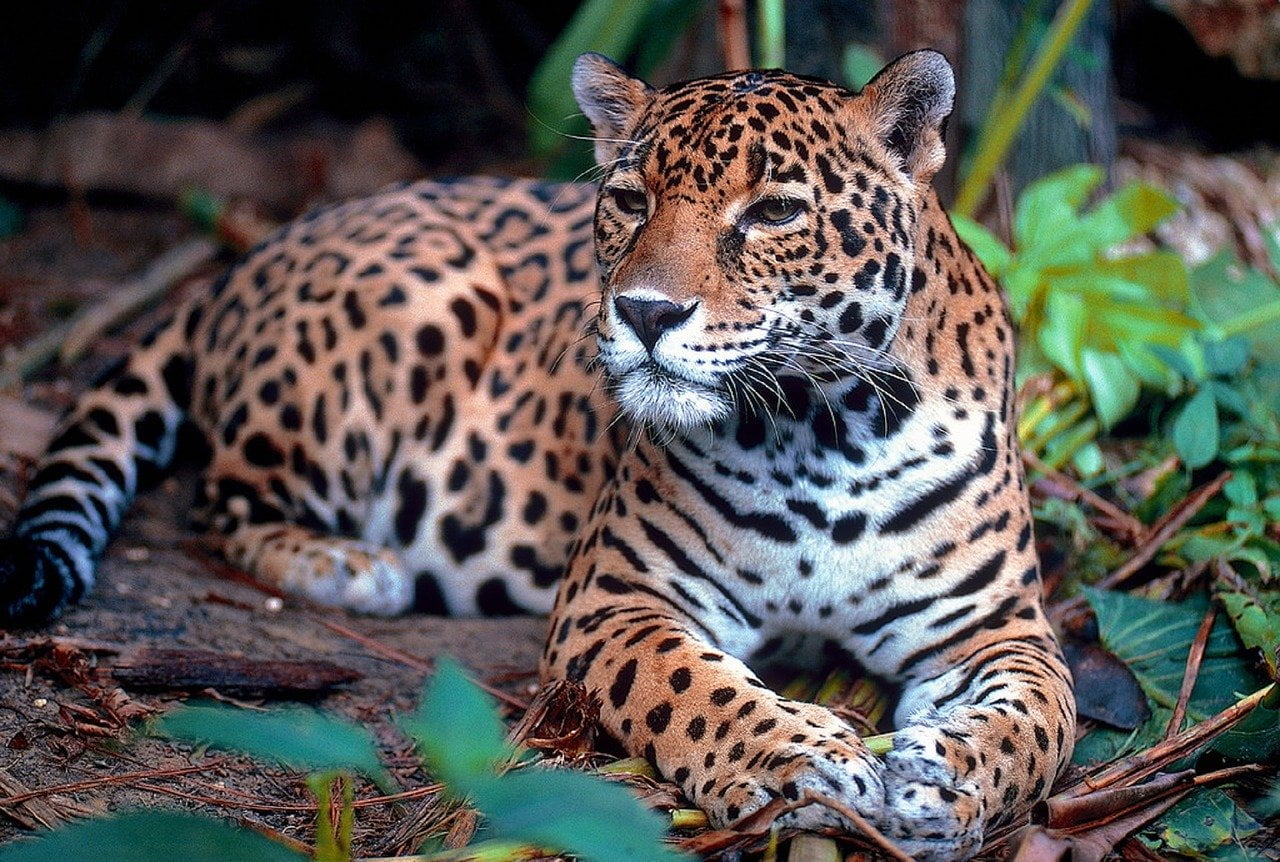
Over 250 species of mammals inhabit Guatemala. The Petén rainforest harbors the largest population of jaguars (Panthera onca) north of the Amazon basin, alongside pumas, Baird’s tapirs, mantled howler monkeys, Geoffroy’s spider monkeys, and white-lipped peccaries.
Reptiles of Guatemala
Guatemala is home to roughly 245 reptile species, including Morelet’s crocodile in lowland wetlands, fer-de-lance pit vipers, and the critically endangered Guatemalan black spiny-tailed iguana (Ctenosaura palearis), endemic to the semi-arid Motagua thorn scrub.

Plants of Guatemala
The flora of Guatemala exceeds 8,000 vascular plant species. Guatemala is renowned for its orchid diversity, harboring over 1,200 species, including the national flower, the White Nun Orchid (Lycaste virginalis var. alba, Monja Blanca).

Organizations Protecting or Studying Guatemala’s Natural Resources
- Ministerio de Ambiente y Recursos Naturales (MARN): Lead government ministry formulating and enforcing environmental regulations and conservation policies.
- Consejo Nacional de Áreas Protegidas (CONAP): State council administering the Guatemalan System of Protected Areas (SIGAP) and biodiversity conservation.
- Instituto Nacional de Bosques (INAB): National forestry institute promoting sustainable forest management and incentive programs like PROBOSQUE.
- Defensores de la Naturaleza: NGO managing major protected areas including Sierra de las Minas Biosphere Reserve and Bocas del Polochic.
- Wildlife Conservation Society (WCS Guatemala): International research organization supporting biological monitoring and community forest concessions in Petén.
Guatemala leads global exports of green cardamom, generating US$495.9 million and capturing 52.2% of worldwide trade in this specialty spice in 2024, according to Worlds Top Exports (UN Comtrade), 2024. This agricultural export supremacy exists alongside a contracting forest frontier and the stewardship of the largest contiguous protected area in Mesoamerica.
Cardamom and Coffee: High-Value Agricultural Exports
Guatemala’s primary agricultural export economy is anchored by two flagship crops with dedicated global destinations. Cardamom supplies markets across the Middle East and South Asia, while specialty Arabica coffee is primarily exported to North America and Europe.
- Cardamom: World’s No. 1 exporter, generating US$495.9 million and 52.2% of total global export value in 2024 (Worlds Top Exports / UN Comtrade, 2024).
- Green Coffee: 4.08 million quintals (3.13 million 60-kg bags) exported during the 2023–2024 coffee cycle, yielding US$898,796,996 in foreign exchange earnings (Coffee Geography / Anacafé, 2024).
Deforestation in Petén and Contraction of Forest Cover
National forested area declined from 6,973,924 hectares in 1950 to 3,574,244 hectares in 2016, covering 32.8% of the country (UNEP-GRID / Interactive Country Fiches, 2016). The same monitoring system estimated gross annual deforestation at 122,985 hectares between 2010 and 2016.
The northern department of Petén accounts for the highest forest loss, with agricultural expansion advancing rapidly through municipalities such as Sayaxché, La Libertad, and San Andrés. Cattle ranching and large-scale monocultures serve as the primary drivers of land-use change.
Maya Biosphere Reserve: The Nation’s Largest Protected Area
The Maya Biosphere Reserve spans 2,090,667 hectares—representing roughly one-fifth of Guatemala’s total land area—according to CONAP, 2024. Established in 1990 by Congressional Decree 5-90, the reserve is structured into strict core conservation zones, sustainable community forestry concessions, and buffer zones.
Mesoamerican Biodiversity and Species Under Pressure
The Maya Biosphere Reserve shelters 513 bird species (71% of Guatemala’s avifauna) and 122 mammal species (64% of the national total), according to CONAP, 2024.
The Resplendent Quetzal (Pharomachrus mocinno), the national bird of Guatemala, is evaluated as Near Threatened with a declining population trend (IUCN Red List / BirdLife International, 2023), driven by cloud forest fragmentation in mountain chains.
Electricity Grid: Hydropower Dominance and Clean Energy
In 2023, 72% of Guatemala’s total electrical generation originated from low-carbon power sources, according to Low Carbon Power (Ember data), 2023. Hydroelectricity contributed approximately 41% and biomass/biofuels supplied roughly 24% of the total generated power. Discover more in our guide to energy resources.
Frequently Asked Questions
What is Guatemala’s primary agricultural export commodity?
Cardamom, generating US$495.9 million and accounting for 52.2% of total global export value in 2024, securing Guatemala’s rank as the world’s leading exporter (Worlds Top Exports / UN Comtrade, 2024).
How large is the Maya Biosphere Reserve?
The Maya Biosphere Reserve encompasses 2,090,667 hectares—representing one-fifth of Guatemala’s national territory—protecting cultural and natural heritage since 1990 (CONAP, 2024).
What share of Guatemala’s electricity comes from low-carbon sources?
Low-carbon sources provided 72% of Guatemala’s electrical generation in 2023, dominated by hydropower (approximately 41%) and biomass cogeneration (Low Carbon Power / Ember, 2023).
Authoritative Information Sources Used
- FAO: Country Profile – Guatemala
- The Global Economy: Economic Data – Guatemala
- World Bank: Forest Area (sq. km) – Guatemala
- World Bank: Forest Area (% of Land Area) – Guatemala
- FAO AQUASTAT: Global Information System on Water and Agriculture
- World Bank: Average Precipitation in Depth (mm per year) – Guatemala
- Yale University: Environmental Performance Index (EPI 2024)
- Our World in Data: Endemic Bird Species by Country
To explore additional country studies and natural resource balances, visit our Natural Resources by Country directory or explore our regional profile of Latin America’s natural resources.
Last updated: June 13, 2026. Data verified against official environmental and economic records.

Leave a Reply