


Costa Rica’s natural resources stand out for water, forests and biodiversity. The country holds water reserves of 112.4 km³ and annual rainfall of 2,926 mm, the fifth highest in the world. Its forest area covers 59.44% of the territory and it records 857 bird species, among them the quetzal. Which natural resources in Costa Rica matter most?
Costa Rica is a country known for its wealth of natural resources, in biodiversity as well as ecological systems. With a great variety of ecosystems, from the Pacific coast to the rainforest, Costa Rica is home to many unique plant and animal species.
Table de contenidos
Alongside its biodiversity, the country also has a rich variety of natural resources, including minerals. Managing these natural resources sustainably is essential to guaranteeing their conservation and responsible use for future generations.
Which natural resources characterize Costa Rica, and how do they stand out against the rest of the world? What natural wealth does the country hold? Which minerals are found, and how does its global position compare?
Natural Resources
Natural resources are materials or energy sources provided by or found on Earth that are useful to humans. Every product we manufacture is made up of natural resources.
- Renewable resources: these can be restored by natural processes faster than the rate at which they are consumed. Examples include solar radiation, wind, hydroelectric power, water when used properly, and plant and animal life.
- Non-renewable resources: once extracted, these are depleted and cannot regenerate. Examples include hydrocarbons, metals and minerals.
Examples of Costa Rica’s main natural resources
Costa Rica: water, forest and protection
Key indicators of the country’s natural assets, with the reference year for each.
| Renewable fresh water per capita | 22,236 m³ per year2022 |
|---|---|
| Forest cover | 60.4% of the territory2023 |
| Annual change in forest area | +164 km² per year (2018–2023) |
| Protected land area | 26.6% of the territory2025 |
| Protected marine areas | 28.4% of its waters2025 |
| Threatened species | 500 mammals, birds, fish and plants2022 |
Map of Costa Rica’s natural resources by region
Costa Rica combines the Central Valley with the Pacific and Caribbean slopes, each with distinct natural resources.
| Resource | Reserves / Production | Source |
|---|---|---|
| Fresh water | 112.4 km³ (2020); 56th | FAO |
| Average rainfall | 2,926 mm/year; 5th in the world | World Bank |
| Forest area | 59.44% (30,348.7 km²), 2020 | World Bank |
| Renewable electricity | 12.8 TWh (2025) | Ember |
| Birds | 857 species | Mongabay |
| Environmental performance (EPI) | 55.5; 40th | Yale EPI 2024 |
Water resources of Costa Rica
Costa Rica holds a freshwater reserve of 112.4 km³, placing it fifty-sixth (56th) worldwide for water reserves. Water is vital to the country and is used for human consumption, agriculture, livestock and hydroelectric generation.
Among Costa Rica’s main rivers are the Tempisque and the Grande de Tárcoles, while its main lake is Lake Arenal.
Average rainfall and soils of Costa Rica
Costa Rica has average annual rainfall of 2,926 mm, placing it fifth in the global ranking for average annual precipitation. That abundant rain keeps Costa Rican soils damp and fertile, favoring lush vegetation.
Renewable electricity and hydropower production in Costa Rica
Costa Rica is a leader in renewable energy production: in 2025 it generated 12.8 TWh of electricity, 100% of it from renewable sources (Ember, 2025). The country’s largest hydroelectric plant is Reventazón, with installed capacity of 305.5 MW.
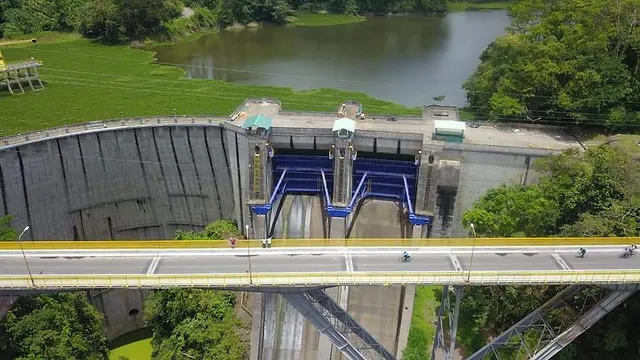
Hydropower alone supplied 9.6 TWh in 2025 (Ember, 2025), which shows the country’s commitment to sustainability and environmental protection.
Forest resources of Costa Rica
Costa Rica holds a great natural resource in its forests, its main forest region being the tropical rainforest. In 2020 the country’s forest area reached 59.44% of its land area, equivalent to 30,348.7 km².
Worldwide, Costa Rica ranks 85th for forest area.
Environmental performance and protection of Costa Rica’s natural resources
Costa Rica is a country that values and protects its natural resources. On the Environmental Performance Index (EPI) 2024, Yale University, the country scored 55.5 and ranked 40th. One reason for that performance is the preservation of its protected land and marine areas, which account for 28.2% of total territorial area (World Bank, 2025).
Natural parks of Costa Rica: the hidden wealth of natural resources
Biodiversity: animal and plant resources of Costa Rica
Birds of Costa Rica
Costa Rica is a country of great biodiversity, especially where its birdlife is concerned. With a total of 857 bird species, it ranks 24th worldwide.
It also has 8 endemic bird species, found only in this country. However, 27 bird species are endangered.
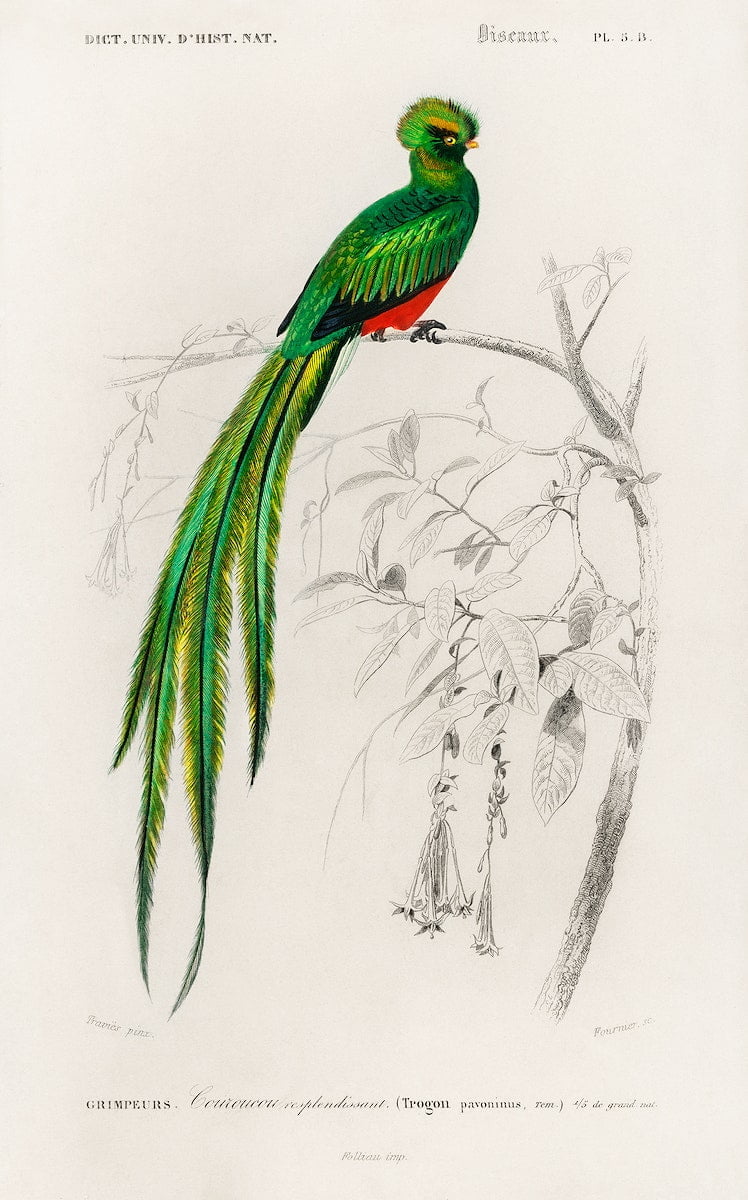
Among the country’s most emblematic species is the resplendent quetzal, although Costa Rica’s national bird is the clay-colored thrush (yigüirro).
Fish and amphibians of Costa Rica
Costa Rica stands out for its enormous diversity of amphibians and fish. In 2019, 211 amphibian species were recorded, placing the country 19th worldwide for number of species of this kind.
It also counts 1,120 fish species, the flagship species being the mahi-mahi. Despite its natural wealth, Costa Rica also faces the threat of extinction for 64 fish species.
Mammals of Costa Rica
Costa Rica is a country of great mammal diversity, with a total of 227 species as of 2016. Of those species, however, 11 are threatened.
Worldwide, Costa Rica ranks thirty-first for number of mammal species. It also had 5 endemic mammal species as of 2020, placing it thirty-eighth in the world ranking.
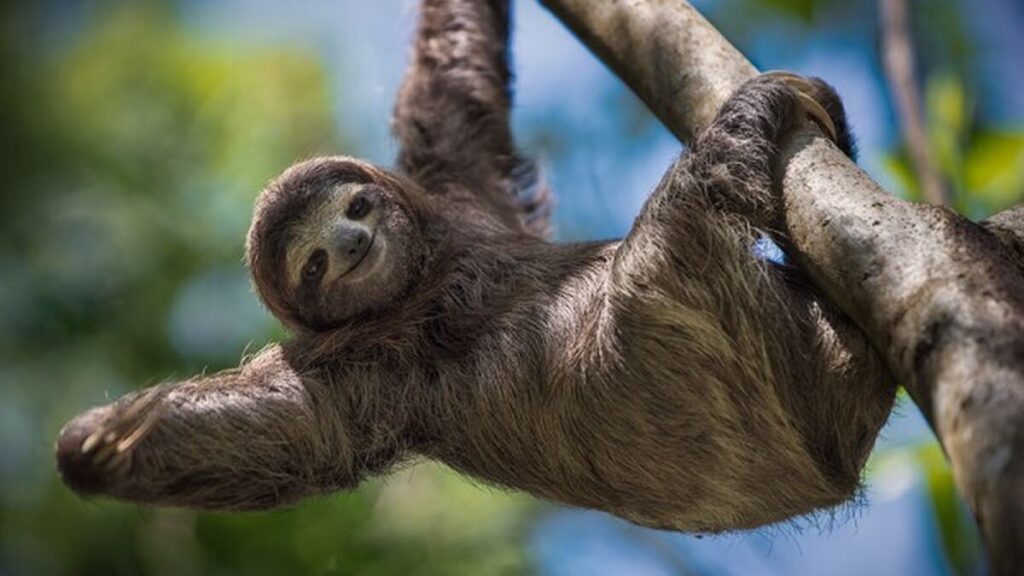
The country’s flagship mammal is the sloth, an iconic animal that represents Costa Rica’s natural wealth.
Reptiles of Costa Rica
Costa Rica is a country of great reptile diversity, with a total of 263 species as of 2019, placing it 31st worldwide. Its flagship species is the green iguana.
Plants of Costa Rica
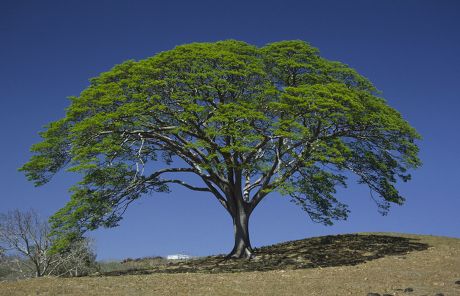
Costa Rica is a country of great biodiversity, with 11,000 vascular plant species, placing it 15th worldwide. The country’s flagship plant is the guanacaste tree.
Organizations that protect or study Costa Rica’s natural resources
- Ministry of Environment and Energy (MINAE): the ministry that sets Costa Rica’s environmental and energy policy.
- National System of Conservation Areas (SINAC): manages Costa Rica’s protected areas and national parks.
- National Forestry Financing Fund (FONAFIFO): funds environmental services and reforestation to conserve Costa Rican forests.
- Fundación Neotrópica: NGO promoting conservation and sustainable development in Costa Rican communities.
- Organization for Tropical Studies (OTS): academic consortium dedicated to research and education in tropical ecology.
- Fundación MarViva: regional organization driving the conservation of marine and coastal resources.
Electricity mix: close to 100% renewable, sustained
The renewable share of Costa Rican electricity was 99.9% in 2024. The indicator reached 100% in 2021 and 2022, according to Our World in Data, 2024. Generation rests on hydroelectric plants, with contributions from geothermal, wind and solar.
Forest cover close to 60% and payment for environmental services
Forest covers close to 60% of the territory, against a low of 40% in 1987, according to the World Bank, 2022. The recovery is linked to the Payment for Environmental Services Program, administered by the state fund FONAFIFO.
- More than 1.3 million hectares under payment-for-environmental-services contracts, according to the UNFCCC, 2020.
- More than 18,000 families benefiting from the program, according to the UNFCCC, 2020.
- USD 524 million invested in the projects, according to the UNFCCC, 2020.
Protected areas: 27% of the land territory and 29% of the sea
Protected land areas covered 26.6% of the country’s surface in 2022, according to the World Bank, 2022. Protected marine coverage rose from 2.7% in 2021 to 29% of territorial waters in 2022, according to the World Bank, 2022. The National System of Conservation Areas (SINAC) administers these areas, among them Cocos Island National Park.
Environmental performance: 40th of 180 on the 2024 EPI
Costa Rica scored 55.5 points and ranked 40th of 180 countries on the 2024 Environmental Performance Index (EPI), according to Yale EPI, 2024. On the indicator for the stringency of marine protection it scored 100 out of 100, first place worldwide, according to Yale EPI, 2024.
Species and endemism: an estimated 500,000 species
A benchmark estimate puts the country at close to 500,000 species, a figure that could double with new identification techniques, according to the Universidad Nacional, 2022.
Documented marine fauna comes to 6,778 species, close to 3.5% of the world’s known marine biodiversity, according to the Universidad Nacional, 2022. Of 85 species endemic to its waters, 41.2% live only around Cocos Island, according to the Universidad Nacional, 2022.
Frequently asked questions
What share of Costa Rica’s electricity is renewable? 99.9% of electricity came from renewable sources in 2024, with 100% in 2021 and 2022, according to Our World in Data, 2024.
How much of Costa Rica’s territory is protected? Protected areas cover 26.6% of the land surface and 29% of territorial waters, both 2022 figures, according to the World Bank, 2022.
How did Costa Rica recover its forest cover? Forest rose from a low of 40% in 1987 to close to 60%, according to the World Bank, 2022. FONAFIFO’s payment for environmental services covers more than 1.3 million hectares, according to the UNFCCC, 2020.
Leave a Reply