

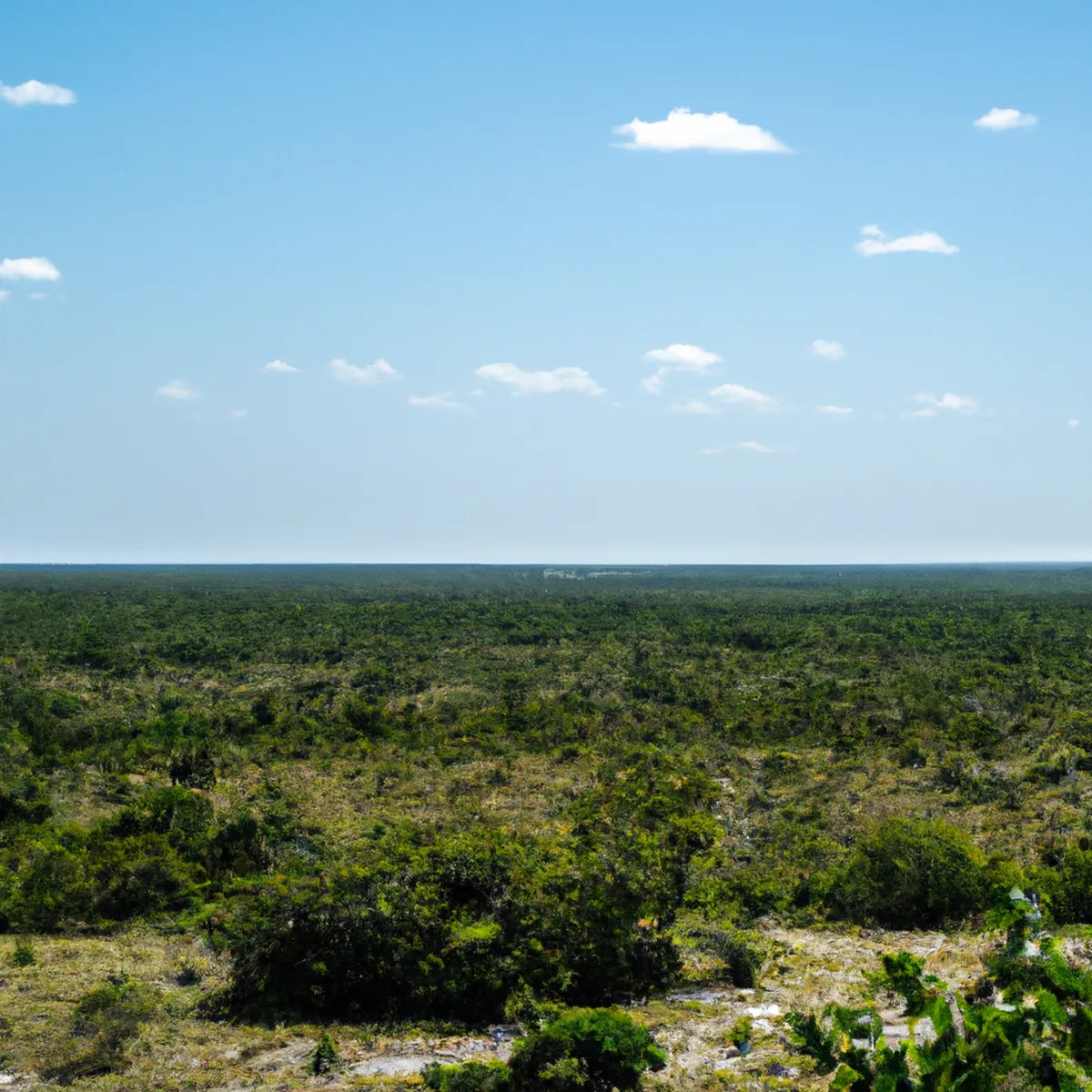
What are Belize’s natural resources? Its main sources of wealth are its forests and biodiversity: forest area covers 54.5% of the territory, about 12,436 km² (2023). The country has 18.55 km³ of renewable freshwater resources and produced around 787 barrels of oil a day in 2024, with gold and bauxite deposits that are not yet commercially exploited.
Belize has a wide variety of natural resources that have been exploited for centuries. The country’s geography features a great diversity of climates, landscapes and ecosystems, which allows the extraction of raw materials such as minerals, timber, oil and natural gas.
Table de contenidos
Its biodiversity is also rich in animal and plant species. The exploitation of Belize’s natural resources has been key to the country’s economic development, but it has also generated controversy and debate over sustainability and environmental protection.
Which natural resources set Belize apart from other countries? What natural wealth does it have? How much water does it have, and how does it generate energy? What animals and plants live in Belize? How is its land used, and how is biodiversity protected in the country?
Natural resources
Natural resources are materials or energy sources provided by or found on Earth that are useful to humans. Every product we manufacture is made up of natural resources.
- Renewable resources: these can be restored by natural processes faster than the rate at which they are consumed. Examples include solar radiation, wind, hydroelectric power, water when used properly, and plant and animal life.
- Non-renewable resources: once extracted, these are depleted and cannot regenerate. Examples include hydrocarbons, metals and minerals.
Examples of Belize’s main natural resources
Belize: environmental profile
The latest data on Belize’s land, water and biodiversity.
| Land area | 22,810 km²2023 |
|---|---|
| Forest cover | 54.5% of land area2023 |
| Agricultural land | 8.0% of land area2023 |
| Arable land | 4.4% of land area2023 |
| Renewable freshwater per capita | 37,891 m³ per year2022 |
| Threatened species | 171 mammals, birds, fish and plants2022 |
| Resource | Reserves / production | Source |
|---|---|---|
| Forest area | 54.5% of the territory (12,436 km², 2023) | World Bank |
| Renewable freshwater | 18.55 km³; 109th in the world | FAO |
| Oil | 787 barrels/day (2024) | The Global Economy 2024 |
| Average rainfall | 1,705 mm/year | World Bank |
| Oil reserves | 6,700,000 barrels (2022); 81st in the world | EIA |
Oil and mineral resources
Belize produced around 787 barrels of oil per day in 2024 (The Global Economy), a very low figure after production almost stopped in recent years. It also had oil reserves of around 6,700,000 barrels in 2022, which places it 81st in the world ranking of oil reserves.
Despite these figures, Belize is not known as an oil-producing region, since its main natural resources are its forests and its biodiversity.
Several metal and mineral deposits have been discovered in Belize, including gold, bauxite, barite and cassiterite, although not in commercially viable quantities. There is a small amount of alluvial gold, legally mined at the Ceibo Chico Creek mine in the west of the country, near the border with Guatemala.
Water resources of Belize
Belize has 18.55 km³ of renewable freshwater resources, which places it 109th in the world ranking. This Central American country has important sources of freshwater, and its main rivers are the Belize and the Sibun.

Average rainfall and soils of Belize
Belize has an average annual rainfall of 1,705 mm, which places it 41st in the world. Thanks to this moisture, much of Belize’s soil is fertile and suitable for a wide variety of plants and crops.
Renewable electricity and hydropower production in Belize
Belize’s production of renewable electricity and hydropower is very low, and its main hydroelectric plant is the Chalillo Dam, on the Macal River. Even so, the country is working to develop renewable energy to reduce its dependence on fossil fuels and help fight climate change.
Forest resources of Belize
Belize has a large forest area, covering 54.52% of its land area (2023), equivalent to 12,435.7 km². This natural resource is very important for the country’s economy and environment, and its main forest region is the Maya Forest (Selva Maya).
Environmental performance and protection of Belize’s natural resources
In Yale University’s 2024 Environmental Performance Index (EPI), the country scored 47.4 and ranked 75th. One of the reasons Belize has been able to preserve its natural environment is its terrestrial and marine protected areas, which make up 26.8% of the total territorial area (World Bank, 2025).
Natural parks of Belize: the hidden wealth of natural resources
Biodiversity: animal and plant resources of Belize
Birds of Belize
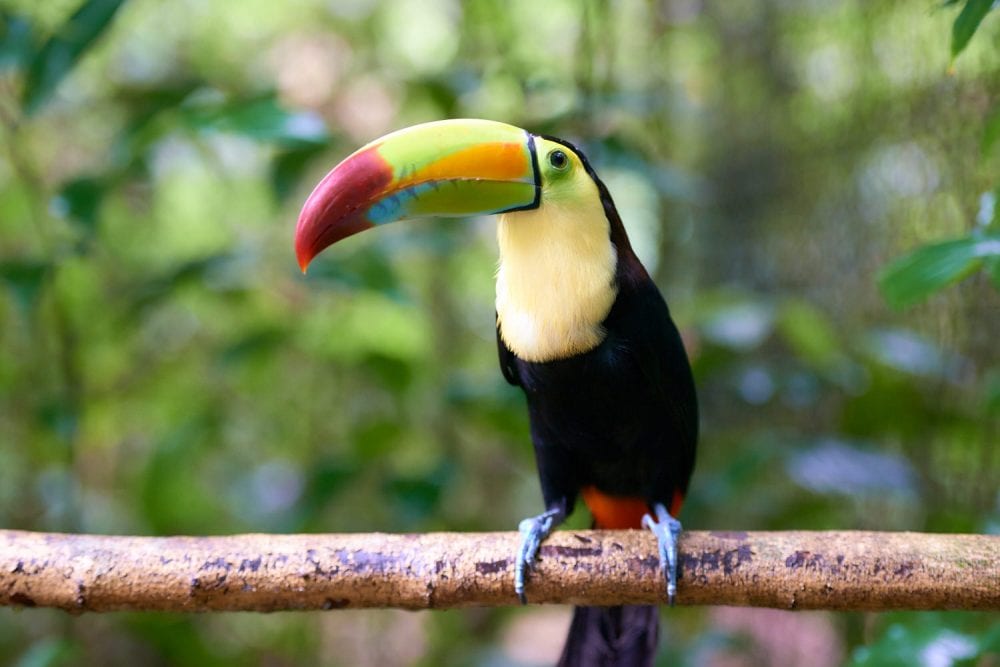
Belize has a rich diversity of birds, with a total of 549 species recorded in 2018, which places it 63rd in the world for number of species. Although it had no endemic bird species in 2020, six of its species are endangered.
Belize’s birdlife is a highly valuable natural resource, and its flagship bird is the toucan, known for its striking bill and its presence in the country’s culture and history.
Fish and amphibians of Belize
In 2019, 38 amphibian species were recorded in the country, placing it 64th in the world for number of species of this kind.
Belize also has a total of 649 fish species, and its flagship fish is the parrotfish. Worldwide, the country ranks 88th for number of fish species. However, 45 of these species are threatened, which poses a challenge for the conservation of these natural resources.
Mammals of Belize
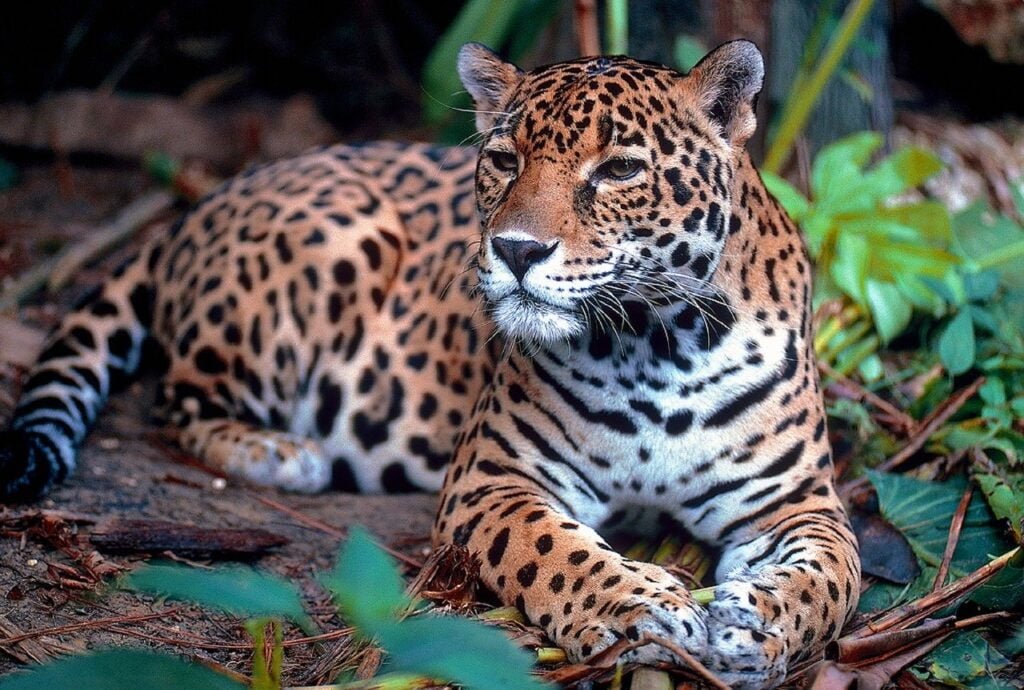
Belize has a rich diversity of mammals, with a total of 150 species recorded in 2016. However, 10 of them are threatened.
Worldwide, the country ranks 57th for number of mammal species. Although it has no endemic mammals, its wildlife is varied and valuable, and its flagship mammal is the jaguar.
Reptiles of Belize
Belize has a great diversity of reptiles, with a total of 144 species in 2019, which places it 56th in the world. This natural resource is key to the country’s biodiversity, and its flagship reptile is the black iguana, a symbol of Belizean culture and cuisine.
Plants of Belize
Belize has a great diversity of vascular plants, with a total of 4,192 species recorded in 2020, placing it 54th in the world. The country’s flagship plant is the mahogany tree, prized for its high-quality timber and natural beauty.
The Belize Barrier Reef is the second-largest coral reef system in the world, after Australia’s Great Barrier Reef, and UNESCO inscribed it as a World Heritage Site in 1996. The Belizean section stretches for about 300 km and includes 450 cayes, 3 atolls and about 500 fish species (Belize Barrier Reef, Wikipedia, 1996).
The Great Blue Hole
The Great Blue Hole is an underwater sinkhole 318 meters across and 124 meters deep, located on Lighthouse Reef atoll, 70 km from Belize City. Part of the reef’s UNESCO site, it formed when a cave system collapsed during the Quaternary glaciations. Jacques Cousteau made it famous in 1971 as one of the best diving spots on the planet (Great Blue Hole, Wikipedia).
Nature tourism, the main source of foreign exchange
Tourism is the country’s largest earner of foreign exchange: in 2011 it contributed 12% of GDP directly and 33.2% including indirect effects (Economy of Belize, Wikipedia, 2011). The reef drives this activity, attracting almost half of Belize’s 260,000 annual visitors (Belize Barrier Reef, Wikipedia). The country holds about 30% of the Mesoamerican Barrier Reef System, the largest barrier reef in the Western Hemisphere (Mesoamerican Barrier Reef System, Wikipedia).
Sugar, citrus and bananas: agricultural exports
On land, agricultural exports sustain the rural economy. Cane sugar is the main export; in 2018 Belize produced 1.7 million tonnes of sugar cane. Citrus is the second-largest crop, with 100,000 tonnes of oranges that year, and bananas reached 80,000 tonnes and accounted for as much as 16% of total exports in 1999 (Economy of Belize, Wikipedia, 2018).
Sources used
- Lists of countries by mineral production
- Economic data by country
- Forest area (km²)
- Forest area (% of land area)
- Arable land area (km²)
- Belize oil reserves
- Coal reserves
- Water and agriculture statistics
- Precipitation (mm)
- Environmental Performance Index (EPI) 2024
- CO2 emissions (tonnes per capita)
- Bird species
- Amphibian species by country
- Mammal species
- Plant species
- Reptile species by country
Organizations that protect or study Belize’s natural resources
- Belize Forest Department: Government agency that manages and protects Belize’s forest resources.
- Belize Fisheries Department: Department that manages Belize’s aquatic resources and marine reserves.
- Belize Audubon Society: Conservation NGO that has co-managed several of Belize’s protected areas since 1969.
- Ya'axché Conservation Trust: Belizean organization that conserves biodiversity and protected areas in the south of the country.
- Toledo Institute for Development and Environment (TIDE): Community-based institution that manages natural resources and protected areas in southern Belize.
- Wildlife Conservation Society Belize: International organization dedicated to marine and terrestrial conservation in Belize.
Last updated: September 26, 2026
Leave a Reply